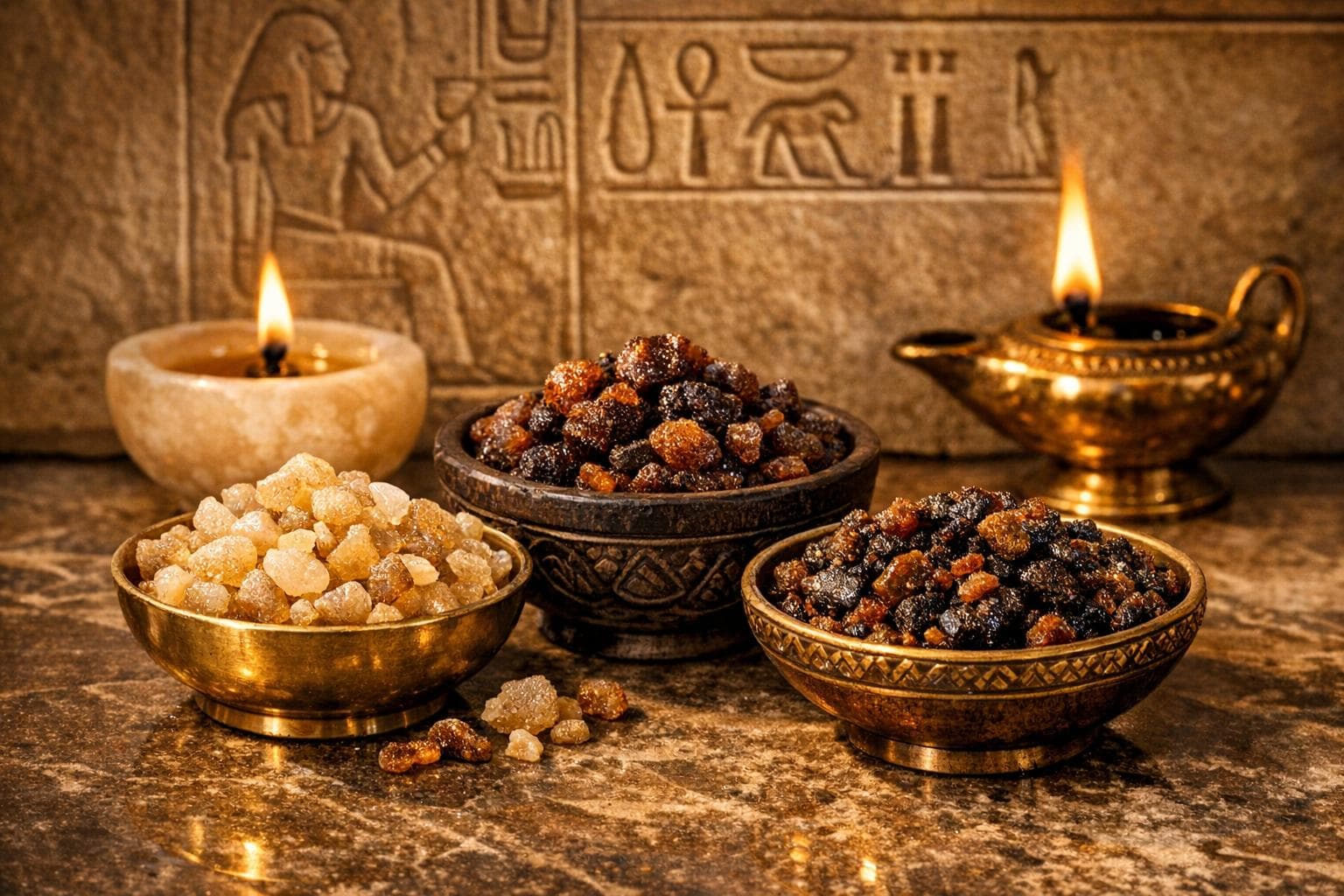
Il profumo nell’antico Egitto era molto più di un lusso: era profondamente legato alla spiritualità, ai rituali e persino all’aldilà. Resine sacre come l’incenso e la mirra erano centrali nella loro cultura, apprezzate quanto l’oro e impiegate nelle cerimonie templari, nella mummificazione e nelle fragranze personali. Queste resine, provenienti da regioni come l’Arabia meridionale e la Terra di Punt, erano considerate sostanze divine, con impieghi che andavano dalla purificazione alla conservazione.
- Incenso: bruciato all’alba nei templi per purificare gli spazi e connettersi con gli dèi. Possedeva anche proprietà calmanti grazie a composti come l’acetato di incensolo.
- Mirra: utilizzata nei rituali di mezzogiorno, nella mummificazione e in profumi sontuosi come il Mendesiano. Simboleggiava l’essenza del dio sole Ra e preservava lo spirito del defunto.
- Kyphi: una complessa miscela d’incenso bruciata al crepuscolo, che univa ingredienti come mirra, incenso, miele e vino. Veniva impiegata nei rituali, in medicina e persino come rinfrescante per l’alito.
Le resine venivano raccolte con metodi laboriosi e trasportate lungo antiche rotte commerciali, con l’Egitto che dipendeva dalle importazioni da regioni come la Nubia e l’Arabia. Oggi, queste resine restano ingredienti fondamentali nella profumeria moderna, donando profondità e ricchezza alle fragranze. Le maison di profumeria continuano a trarre ispirazione dagli antichi rituali egizi, fondendo tradizione e creatività contemporanea.
🌿 Alchimia del Nilo: l’antica arte della creazione dei profumi
Resine sacre nei profumi dell’antico Egitto
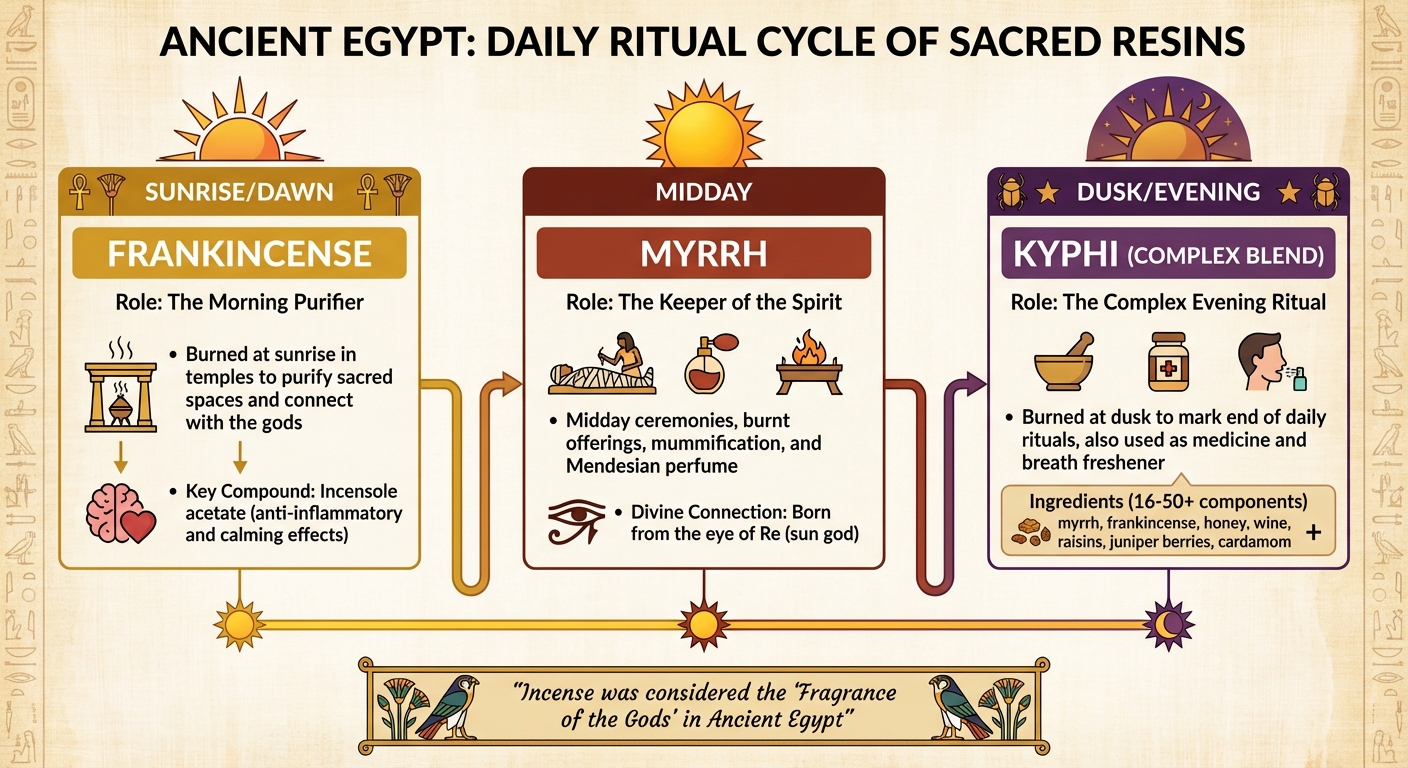
Cronologia quotidiana rituale delle resine sacre nell’antico Egitto
Incenso: il purificatore del mattino
Nel ritmo quotidiano della vita templare egizia, l’incenso occupava un posto speciale come resina dell’aurora. Al sorgere del sole, i sacerdoti bruciavano questa resina per purificare gli spazi sacri e infondere al tempio un’energia divina.
"Nell’antico Egitto l’incenso era considerato la ‘Fragranza degli Dèi’. Preparare l’incenso significava, in modo misterioso, creare il corpo degli dèi e comunicare con loro." – Alessandra Avanzi, ricercatrice
Le moderne analisi chimiche della resina d’incenso proveniente da Qasr Ibrîm, un insediamento della Nubia egizia, hanno rivelato la presenza di acetato di incensolo. Questo composto possiede notevoli effetti antinfiammatori e calmanti, suggerendo che gli antichi rituali potessero offrire ai partecipanti non solo benefici spirituali, ma anche fisici. Se l’incenso purificava simbolicamente gli spazi sacri all’alba, un’altra resina, la mirra, diventava protagonista con il procedere del giorno.
Mirra: la custode dello spirito
La mirra svolgeva un ruolo centrale nelle cerimonie di mezzogiorno e nei rituali di conservazione. Secondo le credenze egizie, la mirra nacque dall’occhio del dio sole Ra, il che le conferiva un’origine divina. Durante la Bella Festa della Valle, i sacerdoti utilizzavano olio profumato alla mirra in spettacolari offerte combuste, liberando un fumo fragrante e dolcemente aromatico. L’arte funeraria, come le scene nella tomba di Nakht (TT 52), raffigura questo rituale, mostrando olio di mirra versato sulle offerte in onore della triade tebana.
Le sue qualità conservative rendevano la mirra indispensabile nella mummificazione. Era un ingrediente chiave dei Sette Oli Sacri, usati per restituire identità al defunto e trasformarlo in un akh, uno spirito benedetto. Oltre al suo ruolo nelle pratiche funerarie, la mirra era anche una pietra angolare del profumo Mendesiano, una delle fragranze più lussuose del mondo antico. Questo profumo veniva creato attraverso la tecnica dell’enfleurage, nella quale mirra, cassia e altre resine venivano lasciate in infusione nell’olio per creare una miscela ricca e aromatica. Se la mirra donava profondità ai rituali a resina singola, gli Egizi eccellevano anche nelle miscele complesse come il Kyphi.
Kyphi: il complesso rituale della sera
Il Kyphi, noto anche come Kapet, rappresentava il culmine della maestria egizia nella creazione delle fragranze. Questa miscela sacra d’incenso veniva bruciata al crepuscolo, segnando la fine dei rituali quotidiani e offrendo una presenza rasserenante agli dèi. La ricetta del Kyphi variava, sebbene Plutarco abbia celebremente registrato una versione con 16 ingredienti, mentre le iscrizioni templari suggeriscono che alcune miscele includessero oltre 50 componenti.
"Il Kyphi è una mistura composta da sedici ingredienti; di miele e vino, uvetta e galanga, resina di pino e mirra... insieme ai due tipi di bacche di ginepro... cardamomo e calamo aromatico." – Plutarco
Il Kyphi non era limitato all’uso rituale. Gli Egizi lo assumevano anche come medicina e lo masticavano persino per rinfrescare l’alito. Il suo duplice ruolo, al tempo stesso offerta sacra e rimedio pratico, mette in luce quanto profondamente la fragranza fosse intrecciata al tessuto della vita quotidiana nell’antico Egitto. Dal purificare gli spazi all’alba al lenire il divino al crepuscolo, resine come incenso, mirra e Kyphi erano molto più che profumi: erano ponti tra l’umano e il divino.
Raccolta e commercio delle resine sacre
Da dove provenivano incenso e mirra
I templi egizi si affidavano a resine provenienti da regioni ben oltre la Valle del Nilo. Incenso e mirra, due tra le resine più pregiate, venivano raccolti principalmente nell’Arabia meridionale e lungo la costa dell’Africa orientale. Le testimonianze storiche indicano la Terra di Punt come uno dei principali fornitori di questi materiali preziosi.
La raccolta di queste resine era un’arte tramandata di generazione in generazione. Per l’incenso, il processo prevedeva un metodo noto come "striping". I raccoglitori incidevano con cura la corteccia degli alberi di Boswellia, permettendo a gocce lattiginose di resina di fuoriuscire. Queste gocce si indurivano nel corso di due o tre settimane prima di essere raccolte.
"Gettiamo via le prime raschiature. Un secondo taglio, settimane dopo, dà una qualità inferiore. Solo il terzo taglio produce vero incenso." – Haj Mahana bin Saleim
Ogni albero produceva in genere circa 0,5 kg di resina per raccolto. Dopo cinque o sei anni di utilizzo costante, agli alberi veniva concesso un periodo di riposo.
La mirra veniva estratta con un approccio simile. I lavoratori praticavano tagli obliqui nella corteccia degli alberi di Commiphora, liberando una linfa limpida, giallo-bruna, che si solidificava in una resina di colore rosso-bruno scuro. La mirra era altamente preziosa, arrivando spesso a costare tre volte più dell’incenso. Questo la rendeva un bene di lusso, riservato a usi d’élite come l’imbalsamazione.
Una volta raccolte, queste resine intraprendevano viaggi ardui lungo le antiche rotte commerciali.
Antiche rotte commerciali
In epoca romana, la domanda di incenso era immensa, con oltre 3.000 tonnellate spedite ogni anno. Le rotte commerciali collegavano i centri di produzione in Oman, Yemen e Somalia ai mercati di Egitto, Roma e India, sfruttando sia percorsi terrestri sia marittimi.
I regni dell’Arabia meridionale, incluso il Regno di Saba, celebremente associato alla Regina di Saba, controllavano il commercio con pugno di ferro. Deviare dalle rotte ufficiali era punibile con la morte. In Egitto, lo stato gestiva il commercio e la lavorazione delle sostanze aromatiche, mentre la Nubia fungeva da cruciale intermediario per le resine dirette ai mercati egizi. Un esempio notevole di questo commercio è la spedizione della regina Hatshepsut nella Terra di Punt nel XV secolo a.C., che riportò alberi d’incenso e sacchi di resina.
Nell’antica Roma, l’incenso era così prezioso da essere talvolta commerciato a prezzi paragonabili all’oro, consolidando la sua reputazione come una delle merci più ambite del mondo antico.
Il tuo esperto di profumi personale ti aspetta
Fai il nostro veloce quiz olfattivo per scoprire autentici profumi di design e di nicchia scelti in base ai tuoi gusti: esplorali in decant e campioni da 2–8ml, così puoi provarne ognuno prima di scegliere il flacone intero.
Trova il tuo profumoResine sacre nella profumeria moderna
Incenso e mirra nei profumi di oggi
Resine antiche come incenso e mirra sono diventate elementi essenziali della profumeria moderna, celebrate per la loro capacità di donare profondità, ricchezza e persistenza alle fragranze. Questi ingredienti senza tempo sono particolarmente apprezzati come note di fondo, dove fungono da ossatura di molte composizioni.
La loro versatilità consente abbinamenti magnifici con un’ampia gamma di elementi. L’incenso, per esempio, apporta un carattere speziato e legnoso e una base duratura che completa la fumosità dell’oud, il tocco floreale e vellutato della rosa o la luminosità delle note agrumate come bergamotto e lime.
Tra gli esempi più notevoli figurano Maison Margiela REPLICA: By the Fireplace, DIOR Homme Eau de Toilette e Carolina Herrera Bad Boy Extreme. Queste fragranze combinano magistralmente l’incenso con altre note per evocare sensazioni di calore, raffinatezza o un fascino speziato e ambrato. Tali creazioni non solo esaltano il fascino intramontabile di queste resine, ma ispirano anche i profumieri di nicchia ad attingere alle tradizioni antiche mentre plasmano moderne esperienze olfattive.
Ispirazione dell’antico Egitto nelle fragranze di nicchia
L’influenza degli antichi rituali continua a risuonare nella profumeria di nicchia, dove gli artigiani reinterpretano tradizioni sacre attraverso le loro miscele. La crescente domanda globale di olio di incenso, oggi un’industria da 7 miliardi di dollari, dimostra un rinnovato fascino per questi materiali ancestrali.
Creazioni degne di nota come Parfums d’Empire Wazamba, DSH Perfumes Mahjoun e Huitième Art Myrriad ne sono esempi emblematici. Queste fragranze incanalano l’essenza sacra che gli antichi Egizi chiamavano sntr, ossia "rendere divino".
"L’incenso trascende il tempo come simbolo di lusso e connessione spirituale." – IRFE
Anche i profumieri contemporanei traggono ispirazione dal Kyphi, il sacro incenso templare dell’antico Egitto, che univa mirra, incenso e altre sostanze aromatiche. Oggi, questa formula antica viene reinterpretata con aggiunte inaspettate come sale marino, tè verde e zafferano, conferendole un tocco contemporaneo.
Nell’agosto 2022, la conferenza "Scents of Arabia" presso la Humboldt — Universität zu Berlin ha riunito profumieri e studiosi per esplorare come ingredienti antichi come incenso e mirra possano essere reinterpretati nell’arte olfattiva moderna. Questo sforzo collaborativo sottolinea una tendenza crescente a fondere tradizioni storiche e approcci innovativi, dando vita a fragranze che uniscono passato e presente in modo affascinante.
Scopri fragranze senza tempo con Scento
Vivi la magia delle resine sacre
Scento porta il fascino degli ingredienti antichi nelle mani degli appassionati di fragranze contemporanei. Un tempo amate dagli antichi Egizi, resine sacre come incenso e mirra continuano ad affascinare con i loro profili ricchi e complessi. Invece di impegnarti nell’acquisto di un flacone intero dal prezzo superiore a 300 $, Scento offre formati decant che ti consentono di esplorare queste note lussuose senza un investimento oneroso.
Disponibili nei formati da 0,75 ml, 2 ml e 8 ml, i decant di Scento mettono in risalto le caratteristiche uniche di queste resine. L’incenso, ad esempio, dona accenti legnosi, erbacei e agrumati alle sofisticate composizioni di oggi. La mirra, invece, introduce un calore speziato che approfondisce e arricchisce la fragranza.
La bellezza di questi decant risiede nella loro capacità di mostrare come i profumi a base di resine si evolvano sulla pelle. I profumi dell’antico Egitto erano tutt’altro che semplici; erano combinazioni elaborate di resine, oli e catrami. Con la selezione curata di Scento, puoi scoprire se sei attratto dalla brillantezza energizzante dell’incenso per il mattino, dal calore avvolgente della mirra per il mezzogiorno o dalle note rilassanti e ispirate all’incenso del Kyphi per la sera. Ogni decant da 8 ml offre circa 120 vaporizzazioni, dandoti tutto il tempo necessario per valutare le prestazioni e la versatilità di una fragranza.
Eleva la tua collezione di fragranze
Scento trasforma il modo in cui costruisci il tuo guardaroba olfattivo puntando sulla scoperta e sulla riduzione degli sprechi. Con un catalogo che presenta oltre 1.000 opzioni tra designer e nicchia, puoi provare fragranze arricchite da ingredienti come il Pistacia mediterraneo o l’incenso dell’Arabia meridionale prima di impegnarti con un flacone intero.
Man mano che le tue preferenze crescono e si affinano, Scento offre un percorso fluido verso formati più grandi, aiutandoti a passare dall’esplorazione a una collezione attentamente curata. Che tu stia appena iniziando il tuo viaggio o aggiungendo nuove scoperte a una selezione già consolidata, Scento fa sì che ogni scelta appaia intenzionale e appagante.
Conclusione
Per secoli, resine sacre come incenso e mirra hanno attraversato il tempo, evolvendosi dai rituali templari fino a diventare pilastri della moderna profumeria di nicchia. Nell’antico Egitto, questi materiali erano molto più che sostanze aromatiche: simboleggiavano il divino e svolgevano un ruolo vitale sia nelle cerimonie spirituali sia nelle consuetudini regali.
"Il profumo è sempre stato un ponte tra le persone, tra i mondi, tra il mortale e il divino. In Egitto, costruivano quel ponte con oli, fiori e resine, e ancora oggi esso resiste, portando la loro memoria nel vento."
- Archeologa/Autrice, HeritageHers
Ciò che rende queste resine così durature è la loro straordinaria capacità di equilibrare profondità spirituale e bellezza concreta.
Oggi, la loro influenza è intrecciata al tessuto stesso dell’alta profumeria. Che tu sia affascinato dall’eleganza fumosa dell’incenso o dalla ricchezza calda e speziata della mirra, questi materiali antichi offrono un legame diretto con tradizioni in cui il profumo era parte integrante tanto del lusso quanto dell’esperienza sacra. Scopri come questi elementi senza tempo continuano a plasmare la profumeria moderna e a riflettere il tuo personale senso dello stile.
Domande frequenti
Come raccoglievano gli antichi Egizi resine sacre come incenso e mirra per profumi e rituali?
Gli antichi Egizi attribuivano grande valore a resine sacre come incenso e mirra, estraendole con cura da alberi specifici. L’incenso proveniva dagli alberi di Boswellia, mentre la mirra si otteneva da specie di Commiphora. Per raccogliere queste resine, i raccoglitori praticavano piccole incisioni nella corteccia, permettendo a una linfa appiccicosa di fuoriuscire. Una volta esposta all’aria, la linfa si solidificava in piccoli frammenti aromatici facili da raccogliere.
Queste resine avevano grande importanza e venivano spesso usate in profumi, incensi e rituali religiosi, simboleggiando purezza e connessione con il divino. Le attente tecniche di raccolta garantivano che gli alberi rimanessero produttivi, sostenendo questa pratica per generazioni.
Che cos’era il Kyphi e come veniva utilizzato nell’antico Egitto?
Il Kyphi, venerato incenso dell’antico Egitto, era composto da una ricca miscela di ingredienti come resine, miele, spezie, radici e vino. Questa complessa preparazione aveva un significato profondo nei rituali religiosi, durante i quali i sacerdoti la bruciavano per purificare i templi, consacrare le statue e accompagnare le offerte sacre. Il suo utilizzo seguiva un ritmo quotidiano preciso: incenso al mattino, mirra durante il giorno e Kyphi riservato alla sera.
L’importanza del Kyphi si estendeva oltre le mura del tempio. Arrivò a rappresentare purezza e protezione, trovando posto sia nelle cerimonie pubbliche sia nelle abitazioni private. Inoltre, la sua produzione e il suo commercio svolgevano un ruolo vitale nell’economia egizia, favorendo i legami con le regioni vicine. Questo incenso non era soltanto uno strumento spirituale, ma una parte integrante della vita quotidiana nella società dell’antico Egitto.
In che modo le resine dell’antico Egitto influenzano i profumi moderni?
Gli antichi Egizi tenevano in altissima considerazione incenso e mirra, non solo per i loro profili aromatici ricchi e avvolgenti, ma anche per il loro profondo significato spirituale. Queste resine venivano spesso combinate con oli per creare fragranze persistenti, impiegate sia nella vita quotidiana sia nelle cerimonie sacre.
Oggi, i profumieri moderni continuano a trovare ispirazione in questi materiali ancestrali. Incenso e mirra compaiono spesso come note resinose o ambrate nelle fragranze contemporanee, conferendo profondità, calore ed eleganza senza tempo. Grazie ai progressi scientifici, come l’analisi dei residui antichi, i profumieri possono oggi ricreare questi sentori con notevole precisione. Oltre ai profumi, queste resine restano apprezzate anche nell’aromaterapia e nelle fragranze per la casa, celebrate per le loro qualità lenitive e quasi meditative.