Kupując perfumy niszowe za 200–300 € lub więcej, nigdy nie polegam na pojedynczej przesłance. Zawsze weryfikuję sześć elementów łącznie: kod partii (batch code), jakość flakonu i pudełka, wiarygodność sprzedawcy, kody QR i kreskowe, ewolucję zapachu na skórze oraz porównanie z pewną próbką wzorcową.
Oto wersja skrócona:
- Porównaj kod partii na flakonie i pudełku
- Oceń wykonanie opakowania i atomizera
- Zweryfikuj sprzedawcę oraz cenę
- Zeskanuj kody QR i kreskowe
- Przetestuj trwałość zapachu przez ponad 8 godzin
- Zestaw go z zaufaną odlewką lub próbką
Dlaczego to tak istotne: w 2024 roku służby celne w UE zatrzymały 112 milionów podrabianych artykułów o łącznej wartości 3,8 miliarda €, a perfumy stanowiły znaczącą część tego procederu. W przypadku zapachów niszowych, gdzie jeden flakon kosztuje 150–350 €, nietrafiony zakup staje się wyjątkowo kosztownym błędem.
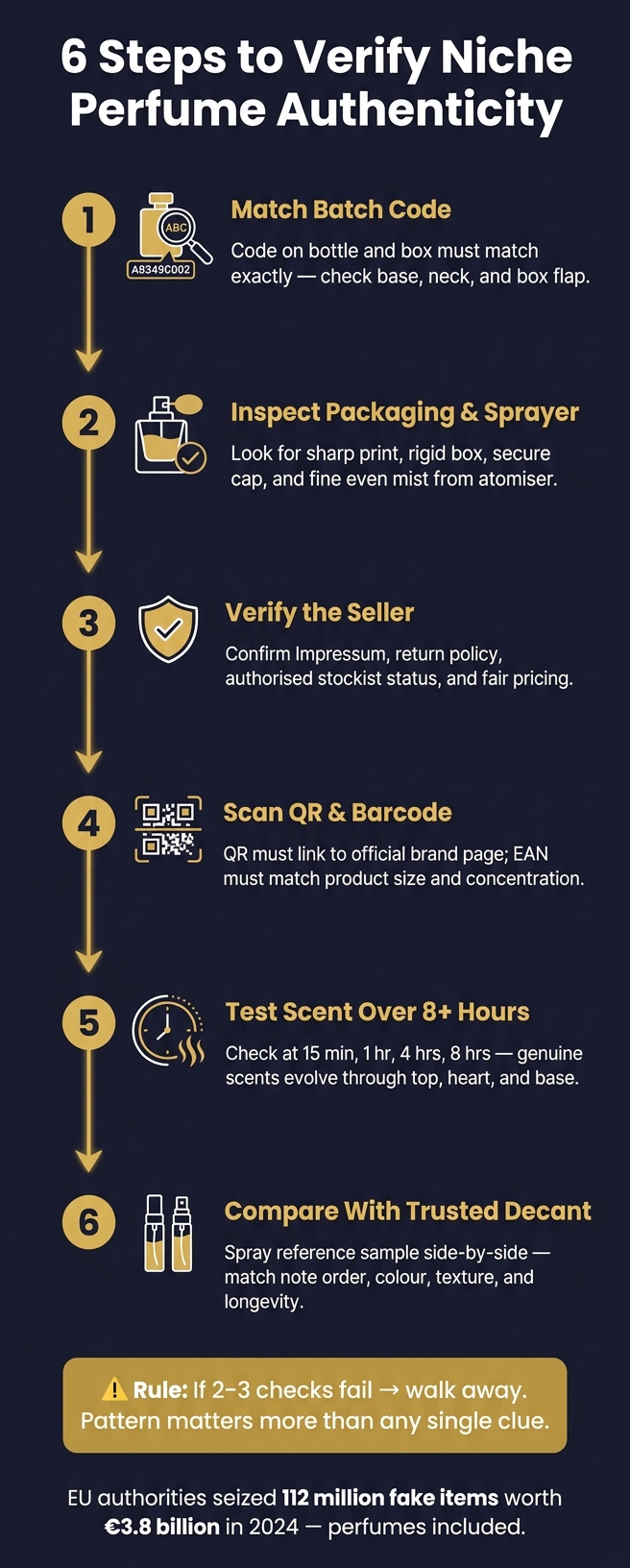
6-etapowa weryfikacja autentyczności perfum niszowych
Quick Comparison
| Krok | Co weryfikuję | Co powinno wzbudzić czujność |
|---|---|---|
| Kod partii (batch code) | Zgodność kodu na flakonie i kartoniku | Brak kodu, niezgodność, data z przyszłości |
| Opakowanie | Wyraźny druk, sztywny karton, płynny natrysk | Rozmyty tekst, wiotki kartonik, plujący atomizer |
| Sprzedawca | Pełne dane firmy, rynkowa cena, prawo do zwrotu | Zniżki rzędu 70–90%, niejasne źródło, wyłącznie przelew |
| Kod QR / kreskowy | Oficjalna strona marki, właściwy wariant produktu | Niedziałający link, błędna pojemność lub nazwa |
| Test na skórze | Wyraźne nuty głowy, serca i bazy | Płaski bukiet, ostry alkohol, znikoma trwałość |
| Próbka wzorcowa | Identyczna struktura i charakter kompozycji | Wyraźne różnice w nutach, barwie lub projekcji |
Moja zasada jest bezkompromisowa: poszukuję spójności, a nie pojedynczego szczegółu. Jeśli flakon zawodzi w dwóch lub trzech aspektach, rezygnuję z zakupu.
Dlaczego autentyczność ma szczególne znaczenie w perfumerii niszowej
Perfumy niszowe pochodzą zazwyczaj z mniejszych domów perfumeryjnych i trafiają do bardzo selektywnej sieci dystrybucji: autorskich butików, wyspecjalizowanych perfumerii oraz wyselekcjonowanych sklepów internetowych. Próżno szukać ich na półkach drogerii czy w popularnych domach towarowych. Cenowa specyfika mówi sama za siebie – pełnowymiarowy flakon kosztuje przeważnie od 150 do 350 €, a rzadkie edycje lub wycofane kompozycje osiągają znacznie wyższe kwoty.
To specyficzne połączenie – ograniczona podaż, wysokie ceny i ogromne zainteresowanie koneserów – czyni z perfum niszowych wymarzony cel dla fałszerzy. Ryzyko rośnie błyskawicznie, gdy decydujesz się na zakupy na platformach handlowych, serwisach z ogłoszeniami czy od osób prywatnych, gdzie dokumentacja pochodzenia bywa znikoma, a historia sprzedawcy budzi wątpliwości.
Fałszowanie perfum nie jest marginalnym zjawiskiem. W 2024 roku służby celne UE zatrzymały 112 milionów podrobionych towarów o wartości 3,8 miliarda €, a perfumy i kosmetyki znajdowały się w czołówce skonfiskowanych kategorii. Podróbka to nie tylko strata finansowa – to także realne ryzyko kontaktu z niebezpiecznymi substancjami chemicznymi, które omijają rygorystyczne europejskie normy bezpieczeństwa kosmetyków.
Wybór miejsca zakupu jest równie kluczowy, jak ocena samego flakonu. Autoryzowani dystrybutorzy z Niemiec i innych krajów UE niosą ze sobą najniższe ryzyko. Platformy zakupowe i fora z odsprzedażą plasują się pośrodku. Najwięcej niepewności wiąże się natomiast z zakupami w mediach społecznościowych oraz transakcjami transgranicznymi z osobami prywatnymi.
Z tego powodu weryfikacja kodu partii stanowi doskonały punkt wyjścia. Jest szybka, intuicyjna i pozwala błyskawicznie wychwycić potencjalne nieprawidłowości.
Rzetelna ocena wymaga zachowania określonej kolejności: zacznij od flakonu, następnie potwierdź wiarygodność sprzedawcy i oznaczenia cyfrowe, a na końcu przetestuj zapach na skórze. W praktyce weryfikacja obejmuje cztery obszary:
- Oględziny fizyczne
- Weryfikację sprzedawcy
- Identyfikację cyfrową
- Testy na skórze
Każdy z nich ujawnia inne metody fałszerskie. Poniższe sześć kroków systematycznie prowadzi przez te etapy, zaczynając od kodu partii.
1. Porównaj kod partii na flakonie i pudełku
Kod partii (batch code) to krótki ciąg liter i cyfr, zazwyczaj nadrukowany lub wygrawerowany na flakonie oraz zewnętrznym kartoniku. Wskazuje on na konkretną partię produkcyjną i pozwala ustalić datę napełnienia flakonu. Traktuj go jako wstępną selekcję, a nie ostateczny dowód oryginalności.
Podstawowa zasada brzmi: kod na flakonie i kod na kartoniku muszą być całkowicie identyczne. Na flakonie szukaj go na szklanym spodzie, dolnej części szyjki lub metalowym kołnierzu atomizera. Na pudełku znajduje się zwykle na dolnej klapce lub u dołu tylnej ścianki. Każda rozbieżność to poważny sygnał ostrzegawczy.
Następnie zweryfikuj kod w dwóch niezależnych dekoderach kodów partii lub poproś markę o bezpośrednie potwierdzenie. Uzyskana data musi pokrywać się z okresem obecności produktu na rynku i w żadnym wypadku nie może wskazywać na datę z przyszłości. Jeśli bazy podają sprzeczne dane, nie zgaduj – uznaj flakon za niezweryfikowany i skontaktuj się bezpośrednio z domem perfumeryjnym.
Pamiętaj o jednym: poprawny kod partii nie gwarantuje w pełni oryginalności perfum. Wytwórcy podróbek potrafią nanosić autentyczne kody, a sam kod nie zdradza niczego na temat warunków, w jakich flakon był przechowywany.
Kolejnym etapem jest szczegółowa ocena opakowania, flakonu i atomizera.
2. Oceń wykonanie opakowania, flakonu i atomizera
Po weryfikacji kodu partii przyjrzyj się opakowaniu, flakonowi i mechanizmowi rozpylającemu. To szybka selekcja wizualna, która choć nie potwierdza ostatecznie autentyczności, pozwala odrzucić oczywiste falsyfikaty jeszcze przed wykonaniem pierwszego psiknięcia.
Zacznij od zewnętrznego pudełka. Oryginalne kartoniki perfum niszowych powstają z grubego, sztywnego kartonu o idealnych krawędziach i nienagannym druku. Przyjrzyj się im w dobrym świetle. Rozmyte litery, rozlany tusz czy subtelnie przekłamane barwy to klasyczne sygnały ostrzegawcze. Jeśli opakowanie jest ofoliowane, celofan powinien ściśle przylegać, być równo zgrzany na gorąco i precyzyjnie spasowany. W przypadku produktów na rynek UE upewnij się, że skład INCI, ostrzeżenia, symbol PAO, pojemność oraz dane dystrybutora zgadzają się z oficjalnymi informacjami marki.
Następnie oceń flakon i korek. Flakon powinien pewnie i ciężko leżeć w dłoni, zachowując idealny balans. Szkło w perfumach luksusowych wyróżnia się precyzyjnymi grawerami i brakiem widocznych szwów odlewniczych. Korek musi zatrzaskiwać się z precyzją i stabilnie przylegać. Jeśli jest lekki, niestabilny lub luźny, niemal na pewno masz do czynienia z imitacją.
Wykonaj jedno naciśnięcie atomizera. W oryginalnych kompozycjach niszowych atomizer uwalnia drobną, gęstą i równomierną mgiełkę. Podróbki często plują, uwalniają duże krople lub pryskają nierównym strumieniem. Spójrz również na rurkę zanurzeniową – w oryginałach jest zazwyczaj cienka, prosta i niemal niewidoczna w płynie.
Potraktuj te elementy jako wstępny filtr, a następnie przyjrzyj się reputacji samego sprzedawcy.
3. Zweryfikuj sprzedawcę oraz kanał dystrybucji
Punktem wyjścia jest zawsze źródło zakupu. Autoryzowane butiki oraz renomowane perfumerie gwarantują najwyższy poziom bezpieczeństwa. Serwisy aukcyjne, ogłoszenia drobne i profile w mediach społecznościowych wiążą się ze znacznie większym ryzykiem. Jeśli sam kanał sprzedaży budzi Twoje wątpliwości, najlepiej zrezygnować jeszcze przed oględzinami flakonu.
W przypadku sklepów operujących na rynku niemieckim lub unijnym zwróć uwagę na obecność noty prawnej (Impressum), pouczenia o prawie do odstąpienia od umowy (Widerrufsrecht) oraz przejrzystej polityki zwrotów. Braki w tych sekcjach, szczątkowe informacje lub rażące błędy językowe to wyraźne sygnały alarmowe. Perfumeria niszowa powinna w sposób transparentny prezentować specyfikację produktów, wskazywać źródło ich pochodzenia oraz podawać czytelne ceny w euro.
Cena to doskonały pierwszy wskaźnik. Jeśli kompozycja kosztująca standardowo 220 € jest oferowana za 70 € bez racjonalnego uzasadnienia, zachowaj szczególną ostrożność. Wyraźne obniżki mają zazwyczaj konkretny powód: wyprzedaż końcówek serii, testery oznaczone jako „Tester ohne Deckel” (tester bez zatyczki) czy oficjalne akcje sezonowe. Pojedyncza poszlaka może nie przesądzać o niczym, ale kilka wątpliwych detali układa się w spójny obraz.
| Cecha | Wiarygodny sprzedawca | Podejrzany sprzedawca |
|---|---|---|
| Dane firmy | Zarejestrowana działalność, pełne Impressum | Anonimowy profil lub wyłącznie konto na platformie handlowej |
| Polityka cenowa | Rzadko powyżej 30% poniżej sugerowanej ceny detalicznej (RRP) | Rabaty 70–90% bez racjonalnego powodu |
| Zdjęcia i informacje | Autorskie zdjęcia produktu, dane o partii (batch) | Generyczne zdjęcia katalogowe, brak danych o partii |
| Metody płatności | Karty płatnicze, bezpieczne bramki z ochroną kupującego | Wyłącznie przelew tradycyjny, brak rachunku lub faktury |
| Opinie klientów | Zrównoważone, zweryfikowane, dotyczące perfum | Wyłącznie ogólnikowe, przesadnie entuzjastyczne oceny |
Warto sprawdzić również oficjalną stronę marki, gdzie niszowe domy perfumeryjne często publikują listę autoryzowanych dystrybutorów. Wiele z nich potwierdza status partnera handlowego także drogą mailową. Jeśli sklep nie figuruje w wykazie i unika jasnych odpowiedzi w kwestii pochodzenia towaru, najrozsądniej jest zrezygnować z transakcji.
Weryfikacja sprzedawcy pozwala odrzucić większość niepewnych ofert. Następnym krokiem jest analiza oznaczeń na samym produkcie.
Twój osobisty ekspert od zapachów już czeka
Wypełnij nasz szybki quiz zapachowy i odkryj autentyczne perfumy designerskie i niszowe dobrane do Twojego gustu – poznaj je w postaci dekantów i próbek 2, 5, 8 i 30 ml, aby przetestować każdy z nich, zanim zdecydujesz się na pełny flakon.
Znajdź swój zapach4. Zeskanuj kody QR, kreskowe oraz użyj narzędzi weryfikacyjnych marki
Kody QR, kody kreskowe EAN i kody partii odpowiadają za różne poziomy weryfikacji. Żaden z nich z osobna nie przesądza o oryginalności. Najlepszą praktyką jest rozpoczęcie od kodu QR, a następnie sprawdzenie danych z kodu kreskowego i numeru partii.
Zeskanuj kod QR i dokładnie sprawdź domenę. Powinien on prowadzić bezpośrednio do oficjalnego serwisu internetowego marki, a nie do skracacza linków, ogólnej domeny typu .info lub .xyz, czy strony z łamanym, maszynowo tłumaczonym tekstem. Każda nieścisłość w adresie URL powinna wzbudzić czujność. Kody QR stosowane przez marki bywają dynamiczne, podczas gdy fałszerze przeważnie powielają jeden statyczny wzorzec.
Jeśli kod QR kieruje we właściwe miejsce, przejdź do numeru partii. Kod partii to najpewniejszy element weryfikacji krzyżowej. Skopiowanie legalnego numeru EAN z oryginalnego produktu nie stanowi problemu, ale powielenie spójnych danych partii produkcyjnej w zewnętrznych narzędziach jest znacznie trudniejsze. Skorzystaj z co najmniej dwóch niezależnych baz kodów. Jeśli kod nie zostaje rozpoznany lub wskazuje nielogiczną datę produkcji, wycofaj się z zakupu.
Kod kreskowy identyfikuje konkretny wariant artykułu, a nie pojedynczą butelkę. Zeskanuj numer EAN dedykowaną aplikacją i upewnij się, że w pełni odpowiada nazwie zapachu, pojemności (np. 50 ml, 100 ml) oraz koncentracji trzymanego w dłoni flakonu. Brak zgodności to oczywisty sygnał ostrzegawczy. Na oryginalnym pudełku kod kreskowy umieszczony jest zazwyczaj na dole tylnej ścianki – nadruk na boku opakowania nierzadko zwiastuje falsyfikat.
Autorskie systemy QR lub układy NFC marki gwarantują wyższy poziom ochrony niż standardowe oznaczenia. Wybrane niszowe manufaktury stosują szyfrowane kody, które potrafią natychmiast wykryć próbę ich zduplikowania. Jeśli producent oferuje dedykowaną aplikację do uwierzytelniania, użyj jej w pierwszej kolejności, zanim sięgniesz po uniwersalne skanery.
Oceniaj poszczególne oznaczenia przez pryzmat ich funkcji, a nie wyłącznie estetyki:
| Typ kodu | Co potwierdza | Główny sygnał ostrzegawczy |
|---|---|---|
| Kod QR | Odsyła do strony marki lub karty produktu | Przekierowanie do podejrzanej domeny lub błąd strony |
| Kod kreskowy EAN (13 cyfr) | Dokładny wariant, pojemność i koncentrację | Niezgodna nazwa produktu lub brak wpisu w bazie |
| Kod partii (batch code) | Datę i numer serii produkcyjnej | Brak w bazie, rozbieżność lub nielogiczna data |
| Zabezpieczony tag QR / NFC | Zaszyfrowany kod weryfikowany aplikacją marki | Komunikat w aplikacji o sklonowanym kodzie |
Cyfrowe narzędzia weryfikują spójność danych identyfikacyjnych. Nie dają jednak pewności co do samej zawartości flakonu. Gdy oznaczenia nie budzą zastrzeżeń, pora ocenić samą kompozycję zapachową.
5. Przetestuj ewolucję zapachu, jego trwałość oraz projekcję
Opakowanie i kody można podrobić. Zachowanie zapachu na ciele jest jednak nie do podrobienia. Po pozytywnej ocenie wizualnej nanieś perfumy na skórę i uważnie obserwuj ich rozwój w czasie. To jeden z najbardziej miarodajnych etapów weryfikacji, wymagający jednak sporej dyscypliny i uwagi.
Prawdziwe kompozycje niszowe cechuje wieloetapowa ewolucja. Oryginalna woda perfumowana (eau de parfum) otwiera się świetlistymi nutami głowy wyczuwalnymi przez pierwsze 15–30 minut, by po 1–2 godzinach płynnie przejść w serce zapachu, zdominowane przez akordy kwiatowe, drzewne lub korzenne. Na końcu ujawnia się baza złożona z piżma, ambry czy żywic, która w zależności od stężenia olejków i chemii Twojej skóry może trwać od 6 do ponad 10 godzin. Podróbki oraz rozcieńczone kompozycje są pozbawione tej głębi – uderzają intensywnym otwarciem, po czym bardzo szybko tracą jakąkolwiek strukturę.
Praktyczny schemat testu:
- Aplikuj 2 naciśnięcia na czystą, suchą skórę w temperaturze otoczenia ok. 22 °C.
- Oceń zapach po 15 minutach, 1 godzinie, 4 godzinach oraz 8 godzinach.
- Zwróć uwagę, czy kompozycja przechodzi naturalne przeobrażenia między poszczególnymi fazami.
Niepokojące symptomy:
- Głośne otwarcie, które znika po 1–2 godzinach, nie pozostawiając bazy (dry-down)
- Płaska, jednostajna woń od pierwszej chwili do wygaśnięcia
- Ostry, spirytusowy zapach utrzymujący się dłużej niż 20–30 minut
- Brak wiodących, deklarowanych nut (np. oud pozbawiony głębi drewna)
Projekcja i ogon zapachowy działają bardzo podobnie. Rozpyl zapach 2–3 razy, odczekaj 30 minut, a następnie zapytaj kogoś stojącego w odległości około 1–2 metrów, czy wyraźnie go czuje. Sprawdź ponownie po 3–4 godzinach. Prawdziwy zapach niszowy zwykle pozostawia wyważony, łatwy do rozpoznania ślad w ciągu pierwszych 1–2 godzin, a z upływem czasu staje się bliższy skórze. Jeśli na początku jest bardzo intensywny, a po około godzinie zdaje się znikać, to częsty schemat w przypadku podróbek.
Pamiętaj jednak, że parametry użytkowe powinny stanowić potwierdzenie, a nie wyłączną podstawę werdyktu. Sucha skóra, niska temperatura, przyjmowane leki czy niewłaściwe przechowywanie potrafią osłabić nawet najdoskonalsze perfumy. Co więcej, reformulacje przeprowadzane przez producentów wpływają na moc bez udziału fałszerzy. Zanim wydasz ostateczną ocenę, zestaw wrażenia węchowe z kodem partii, jakością flakonu i wiarygodnością sprzedawcy. W przypadku dalszych wątpliwości skonfrontuj flakon z pewną próbką odniesienia.
6. Zestaw zapach ze sprawdzoną odlewką lub próbką referencyjną
Poprzednie kroki koncentrowały się na atrybutach zewnętrznych. W tym miejscu przechodzimy do sedna sprawy: samego płynu.
Próbka wzorcowa to najprostszy i najbardziej bezwzględny sposób na sprawdzenie, czy zawartość flakonu odpowiada oryginalnemu profilowi zapachowemu stworzonemu przez perfumiarza. Jeśli wcześniejsza inspekcja pozostawia cień niepewności, bezpośrednie porównanie rozwieje wszelkie wątpliwości.
Zacznij od szybkiej oceny wizualnej. Porównaj barwę ekstraktu, jego gęstość oraz charakter rozpylanej mgiełki w identycznym oświetleniu. Następnie zaaplikuj obie próbki w tym samym czasie i w identycznych warunkach:
- taka sama liczba psiknięć: dokładnie po 2
- ten sam obszar skóry lub identyczne blottery papierowe
- temperatura otoczenia rzędu 20–22 °C
Następnie porównaj otwarcie, nuty serca oraz bazę obu zapachów równolegle. Oryginalny flakon powinien odsłaniać poszczególne akordy w identycznej kolejności jak wzorzec. Trwałość powinna być zbliżona, z zachowaniem porównywalnej projekcji w promieniu 0,5–1,5 m. Podróbka lub zawartość rozcieńczona szybko straci równowagę i wygaśnie znacznie wcześniej, niż przystało na kompozycję niszową.
Najlepszym punktem odniesienia jest oryginalna firmowa próbka. Jeśli nie masz do niej dostępu, doskonale sprawdzi się rzetelnie przygotowana odlewka (decant) – pod warunkiem, że znasz flakon bazowy oraz kod partii, z której została pobrana. Dostępne w Scento fiolki 2 ml, 5 ml i 8 ml, a przy większości perfum także odlewka we flakonie 30 ml pozwalają na wielokrotne testy porównawcze bez konieczności ponoszenia kosztu całego flakonu.
Warto jednak podkreślić: to sprawdzian struktury, a nie wyłącznie intensywności.
Drobne różnice nie oznaczają automatycznie, że flakon jest podrobiony. Domy niszowe bywają zmuszone do reformulacji ze względu na wytyczne IFRA lub wahania jakości naturalnych surowców. Nie skupiaj się więc tylko na sile wyrazu. Sprawdź architekturę zapachu: czy nuty głowy, serca i bazy rozwijają się w tym samym rytmie i czy obcujesz z tą samą ideą olfaktoryczną? Subtelne odchylenia w mocy są naturalne; rażące dysonanse w bukiecie stanowią natomiast jednoznaczny dowód.
Połącz ten etap z weryfikacją kodu partii. Równoległy test na skórze pozwoli oddzielić pewne flakony od wątpliwych egzemplarzy, a ostateczne wnioski warto zestawić z poniższą tabelą.
Zestawienie cech oryginalnych i podejrzanych
Poniższa tabela stanowi podręczny przewodnik podczas oględzin flakonu. Pojedynczy nietypowy detal nie zawsze oznacza najgorsze – to suma cech tworzy wiarygodny obraz.
| Element kontroli | Cechy produktu oryginalnego | Sygnały ostrzegawcze |
|---|---|---|
| Kod partii (batch code) | Czysty nadruk lub grawer; idealna zgodność na kartoniku i flakonie; format zgodny ze standardem marki | Brak kodu na flakonie lub pudełku; rozbieżność numerów; nadruk na naklejce; starty bądź rozmazany tusz |
| Opakowanie | Sztywny karton; perfekcyjnie napięta folia; doskonała typografia, logotypy, kolory i oznaczenia prawne | Luźna, pofałdowana folia; literówki lub nieostre logo; przekłamana kolorystyka; miękki karton; brak oznaczeń prawnych |
| Flakon i atomizer | Gładkie szkło wysokiej próby; stabilny korek; atomizer tworzy drobną, równomierną mgiełkę bez wycieków | Ostre, surowe szwy szkła; krzywy lub luźny korek; plujący, kapiący lub nieszczelny atomizer |
| Sprzedawca i kanał dystrybucji | Autoryzowany partner lub renomowany sprzedawca odlewek z pełnymi danymi, jawnym źródłem i procedurą zwrotu | Anonimowe konto na platformie ogłoszeniowej; brak danych rejestrowych firmy; podejrzanie niska cena bez powodu |
| Kod QR i kreskowy | Kod QR kieruje do oficjalnej domeny marki lub panelu weryfikacji; czytelny kod kreskowy zintegrowany z projektem pudełka | Kod QR prowadzi do błędu lub przypadkowej strony; kod kreskowy jest rozmyty, podwojony lub naklejony prowizorycznie |
| Ewolucja kompozycji | Płynne przejście między otwarciem, sercem i bazą; parametry zgodne ze stylem i koncentracją dzieła | Ostry odór alkoholu, który nie ustępuje; płaski, jednowymiarowy bukiet; nuty syntetyczne i chemiczne; ekspresowe zanikanie |
| Próba wzorcowa | Pełna harmonia w otwarciu, bazie, strukturze, barwie i projekcji w zestawieniu ze sprawdzoną próbką | Ewidentne różnice w balansie nut, odcieniu płynu czy trwałości w porównaniu z zaufaną odlewką lub próbką firmową |
Rozbieżny kod partii połączony z płytkim, nietrwałym zapachem to zbyt wiele, by mówić o przypadku. Właśnie w takich momentach zaufana odlewka staje się niezastąpiona: pozwala wyeliminować domysły i daje pewny punkt odniesienia.
Jak pewne odlewki chronią miłośników niszowych perfum przed kosztownymi pomyłkami
Gdy oryginalność flakonu budzi Twoje obawy, sprawdzona odlewka stanowi najdoskonalsze narzędzie weryfikacji. To bezpieczny i przystępny sposób na dogłębne poznanie kompozycji przed zainwestowaniem w pełnowymiarowy produkt.
Pojemności 2 ml, 5 ml lub 8 ml wystarczą na wielokrotne testy globalne, co pozwala precyzyjnie ocenić pełen rozwój zapachu na własnej skórze – od pierwszych sekund otwarcia, przez serce, aż po wielogodzinną bazę. Żaden pośpieszny test na pasku papieru nie zapewni takiej wiedzy.
Jeśli po późniejszym zakupie pełnego flakonu poczujesz wyraźną dysharmonię w kompozycji nut, gęstości płynu czy trwałości w zestawieniu ze swoją sprawdzoną odlewką, potraktuj te różnice z pełną powagą. Może to być bezpośredni sygnał, że produkt nie jest oryginalny.
Dla pasjonatów poszukujących pewnego punktu odniesienia, profesjonalnie przygotowane próbki są optymalnym rozwiązaniem. Scento oferuje starannie przygotowane fiolki 2 ml, 5 ml i 8 ml, a przy większości perfum także odlewka we flakonie 30 ml, pozyskiwane wyłącznie z oryginalnych flakonów pochodzących od autoryzowanych europejskich dystrybutorów.
Podsumowanie
Pewność co do autentyczności wynika z analizy całościowej, a nie z pojedynczego szczegółu. Żaden odosobniony parametr nie daje pełnej gwarancji. Liczy się niezmienna zgodność na każdym etapie: od kodu partii, przez detale wykonania, profil sprzedawcy i oznaczenia cyfrowe, aż po zachowanie zapachu na skórze i jego zestawienie z próbką wzorcową.
Upust sięgający 40–60% na aktualne wydanie perfum niszowych powinien od razu wzbudzić czujność, o ile sprzedawca nie potrafi go logicznie i wiarygodnie uargumentować. Podróbki wciąż przenikają do powszechnego obrotu, dlatego daleko posunięta ostrożność jest w pełni uzasadniona. Zachowaj oryginalne pudełko, ulotki, potwierdzenie nadania, fakturę oraz szczegółowe zdjęcia kodu partii, kodu EAN i atomizera do czasu, aż zyskasz stuprocentową pewność. Ta dokumentacja zabezpiecza Twoje prawa konsumenckie i ułatwia ewentualne odstąpienie od umowy zawartej na odległość zgodnie z prawem polskim i unijnym.
Zawsze trzymaj się sprawdzonego schematu:
- Zweryfikuj realność ceny
- Obejrzyj starannie flakon i pudełko
- Sprawdź wiarygodność sprzedawcy
- Przetestuj rozwój zapachu na ciele
- Porównaj go z zaufaną próbką referencyjną
Często zadawane pytania
Czy podrobione perfumy mogą mieć autentyczny kod partii?
Tak. Falsyfikaty perfum mogą posiadać autentyczny i poprawnie weryfikujący się kod partii, ponieważ osoby zajmujące się podrabianiem często kopiują rzeczywiste kody z oryginalnych flakonów.
Zgodny kod partii to zaledwie jeden z sygnałów, a nie ostateczny dowód. Zawsze zestawiaj go z innymi aspektami, takimi jak jakość druku, waga i klarowność szkła, precyzja wykonania opakowania oraz wiarygodność samego sprzedawcy.
Co zrobić, jeśli jeden z elementów weryfikacji budzi wątpliwości?
Jeśli pojedynczy szczegół budzi Twoje obawy, nie opieraj wyroku na jednej przesłance. Zastosuj ocenę wieloaspektową, aby rzetelnie ocenić autentyczność flakonu. Bazy kodów mogą zawierać luki, a drobne mankamenty bywają czasem wynikiem uszkodzeń w transporcie lub zmian wprowadzonych przez samą markę.
Spójrz na produkt całościowo:
- jakość wykonania kartonika i flakonu
- precyzja logotypów i ostrość druku
- wielogodzinna ewolucja kompozycji na skórze
- historia i rzetelność sprzedawcy
W przypadku zidentyfikowania więcej niż jednego niepokojącego sygnału, wstrzymaj się z użytkowaniem perfum, zabezpiecz dowody i niezwłocznie skontaktuj się ze sprzedawcą lub marką.
Jak zdobyć wiarygodną próbkę wzorcową przed zakupem pełnowymiarowego flakonu?
Wybieraj odlewki (decanty): poręczne porcje zapachu odlewane bezpośrednio z oryginalnych, fabrycznie zamkniętych flakonów. Zapewniają one bezpieczną możliwość poznania zachowania zapachu na skórze przed zainwestowaniem w pełnowymiarowy produkt.
Scento oferuje bogatą kolekcję starannie wyselekcjonowanych odlewek o pojemnościach 2 ml, 5 ml i 8 ml, a przy większości perfum także odlewkę we flakonie 30 ml. Wybierając dostawcę, stawiaj na podmioty zaopatrujące się wyłącznie u autoryzowanych dystrybutorów i działające w sposób w pełni transparentny.

