Vrei ca parfumul tau sa reziste mai mult? Secretul este sa il pastrezi in conditii potrivite. Parfumurile sunt sensibile la caldura, lumina si umiditate, care le pot degrada compusii delicati. Temperatura ideala de pastrare este intre 60–70°F (15–21°C), iar mentinerea unor conditii constante este la fel de importanta ca temperatura in sine. Evita greselile frecvente, cum ar fi sa pastrezi sticlele in baie, langa ferestre sau in masini incinse, deoarece acestea pot face ca aromele sa se degradeze rapid.
Sfaturi rapide pentru depozitarea parfumurilor:
- Temperatura: Pastreaza-le la 60–70°F; la temperaturi mai scazute (50–59°F) pentru parfumuri rare sau vintage.
- Lumina: Pastreaza-le intr-un loc intunecat, precum un sertar sau un dulap, ori in cutia originala.
- Umiditate: Evita baile; urmareste o umiditate de 40–50 % si foloseste pliculete cu silicagel daca este nevoie.
- Pozitie: Pastreaza intotdeauna sticlele in pozitie verticala, pentru a evita expunerea la aer.
- Manipulare: Evita sa le muti sau sa le agiti des; inchide bine sticlele dupa utilizare.
Refrigerarea este necesara doar in climatele foarte calde, dar implica riscuri precum condensul si estomparea mirosului. De obicei, un mediu stabil, intunecat si racoros este tot ce ai nevoie pentru a-ti pastra parfumurile proaspete si vibrante.
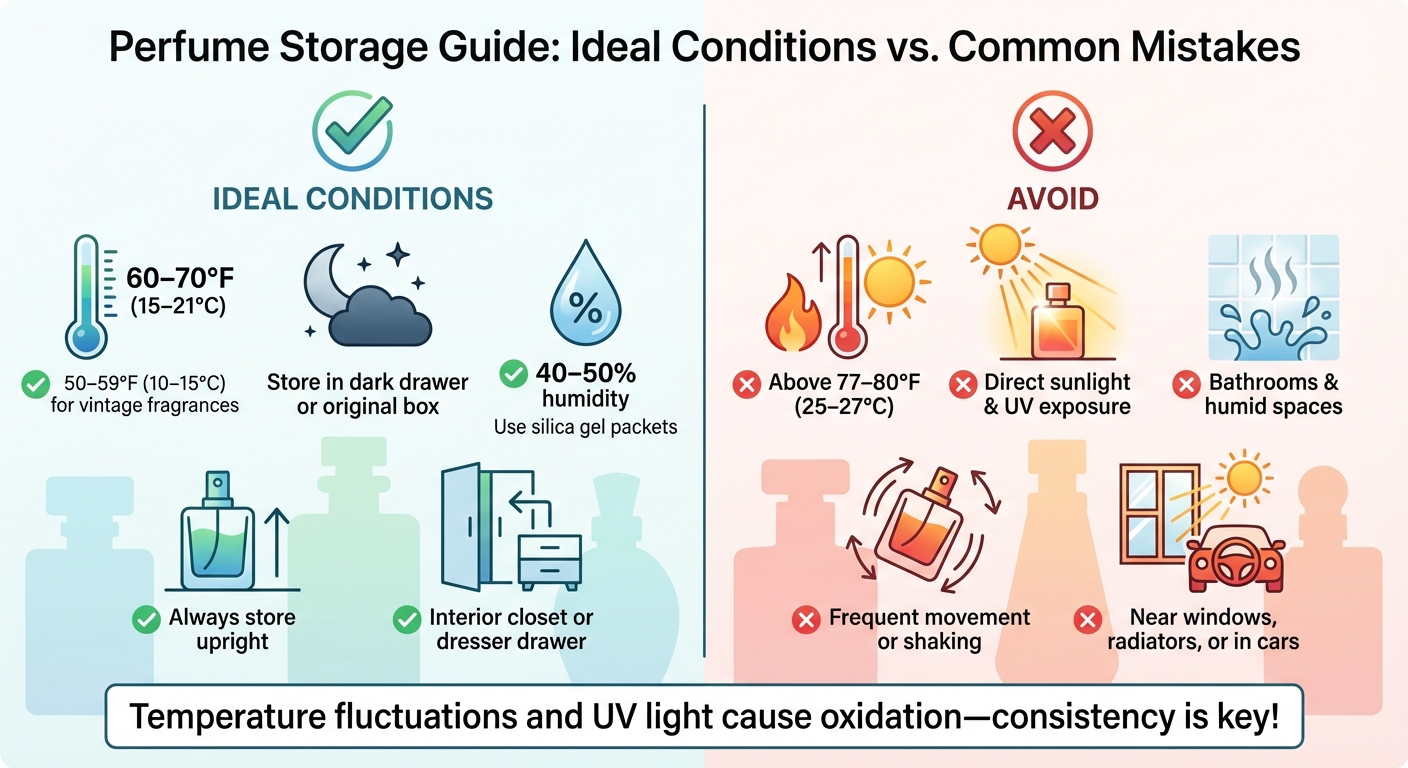
Ghid de pastrare a parfumurilor: conditii ideale si greseli frecvente
Ce temperatura este ideala pentru pastrarea parfumurilor
Intervalul de temperatura potrivit
Pentru a-ti pastra parfumurile in conditii optime, temperatura ideala de depozitare este intre 60–70°F (15–21°C), interval care corespunde, in mod convenabil, temperaturii medii din interiorul majoritatii locuintelor din SUA. Pentru parfumuri rare, vintage sau de nisa, de lux, o temperatura ceva mai scazuta — in jur de 50–59°F (10–15°C) — le poate ajuta sa-si pastreze calitatea in timp.
Constanta este la fel de importanta ca temperatura in sine. Variatiile frecvente pot accelera oxidarea, cel mai mare dusman al unui parfum. Un parfum pastrat constant la 68°F va imbatrani mai frumos decat unul expus la schimbari repetate intre cald si rece. Aceasta stabilitate ajuta la pastrarea nu doar a mirosului, ci si a culorii si a integritatii generale a formulei.
Intelegerea acestor conditii optime este esentiala pentru a intelege cum pot temperaturile extreme sa-ti afecteze parfumurile.
Cum afecteaza temperaturile ridicate si scazute parfumurile
Temperaturile din afara intervalului ideal pot afecta grav parfumul. Caldura excesiva este deosebit de daunatoare, deoarece descompune uleiurile esentiale si substantele aromatice, ducand la evaporarea mai rapida si la decolorare. Parfumurile supraincalzite isi pierd adesea notele de varf vibrante, iar aroma devine dezechilibrata sau chiar acra. Lichidul se poate inchide la culoare, iar caracterul original al parfumului se poate modifica definitiv.
Pe de alta parte, frigul extrem nu este cu mult mai bun. Temperaturile scazute pot perturba structura unui parfum, facandu-l tulbure sau provocand formarea unui sediment. Unele branduri de lux avertizeaza ca pastrarea parfumurilor la temperaturi la fel de scazute ca in frigider poate „socata” moleculele olfactive, estompand intensitatea si modificand evolutia notelor. Deteriorarea se accentueaza cand parfumurile trec repetat prin cicluri de racire si incalzire, ceea ce poate dezechilibra definitiv compozitia.
Pentru a-ti proteja parfumurile de aceste riscuri, mentine-le intr-un mediu constant. Pentru decanturi mici sau pentru utilizarea de zi cu zi, de obicei este suficienta temperatura normala a camerei — intre 60–70°F — si pastrarea intr-un sertar sau dulap intunecat.
Cum sa organizezi corect pastrarea parfumurilor
Unde sa-ti pastrezi parfumurile
Pentru a-ti pastra parfumurile in conditii optime, depoziteaza-le in sertare, dulapuri sau debarale inchise, la o temperatura constanta intre 60–75°F. Un sertar interior al unei comode sau un raft dintr-un sifonier, departe de peretii exteriori, sunt alegeri deosebit de potrivite, deoarece aceste locuri evita lumina directa a soarelui si ajuta la mentinerea unei temperaturi constante.
Evita sa pastrezi parfumurile in locuri predispuse la umiditate, precum baile, sau pe pervazuri expuse la soare si caldura. De asemenea, nu le aseza langa surse de caldura, deoarece variatiile de temperatura pot degrada parfumul.
Daca locuiesti intr-o zona cu clima mai calda, alege cea mai racoroasa incapere din casa pentru depozitare. Mentinerea unor conditii constante este esentiala pentru a-ti pastra parfumurile in timp.
Controlul nivelului de umiditate
Umiditatea excesiva poate afecta parfumurile, permitand umezelii sa patrunda in sticle, ceea ce poate dilua parfumul si accelera oxidarea. Incearca sa le pastrezi intr-un spatiu cu o umiditate relativa de 40–50 %. Asa cum temperaturile constante protejeaza aroma, controlul umiditatii ajuta la prevenirea schimbarilor nedorite.
O modalitate simpla de a controla umiditatea este sa pui pliculete cu gel de siliciu in spatiul de depozitare. Aceste pliculete, pe care le gasesti adesea in cutiile de pantofi, absorb eficient umezeala — nu uita doar sa le inlocuiesti la cateva luni. In regiunile cu umiditate deosebit de ridicata, ia in considerare folosirea unui dezumidificator sau a unui absorbant de umezeala in dulap, pentru a crea un mediu uscat, chiar daca in restul casei atmosfera pare umeda.
Blocarea expunerii la lumina UV
Protejarea parfumurilor de lumina UV este la fel de importanta ca mentinerea temperaturii si umiditatii sub control. Razele UV pot descompune moleculele parfumului, provocand decolorarea si modificand aroma. Cea mai simpla solutie? Pastreaza parfumurile in cutiile originale, concepute pentru a bloca lumina. La fel de bine functioneaza si un sertar intunecat sau un dulap inchis.
Pentru decanturi, alege pulverizatoare inchise la culoare sau opace, care blocheaza in mod natural mai multa lumina decat sticla transparenta. Daca vrei sa tii sticlele la vedere, pune-le intr-o cutie opaca sau in spatele usii unui dulap, in loc sa le lasi expuse pe un raft insorit. Combinand aceste strategii — de exemplu, pastrand parfumurile in cutii intr-un sertar inchis — obtii o protectie excelenta impotriva razelor UV, fara sa ai nevoie de instrumente speciale.
How to Handle Perfume Bottles Correctly
Felul in care manevrezi sticlele de parfum este la fel de important ca modul in care le depozitezi. Obiceiurile marunte pot face o diferenta semnificativa in pastrarea calitatii si longevitatii aromelor tale preferate.
Pastreaza sticlele in pozitie verticala
Pastreaza intotdeauna sticlele de parfum in pozitie verticala. Daca o sticla este inclinata sau asezata pe o parte, parfumul se poate infiltra in capac sau in garnitura. Astfel, bariera de protectie se slabeste, permitand patrunderea aerului si accelerand oxidarea. Pastrand sticlele in pozitie verticala, reduci expunerea la aer si ajuti aroma sa ramana fidela compozitiei originale.
Evita miscarile si agitarea excesive
Cel mai bine este sa lasi parfumurile intr-un singur loc. Mutarea lor frecventa sau agitarea inutila a sticlei expune parfumul la aer, ceea ce il poate degrada mai repede. Nici transportarea sticlelor pline in genti nu este ideala, deoarece zdruncinaturile constante si schimbarile de temperatura pot slabi garnitura. Daca vrei sa ai aroma cu tine, transfera o cantitate mica intr-un pulverizator potrivit pentru calatorii, in loc sa iei intreaga sticla.
Inchide bine sticlele
Dupa fiecare folosire, asigura-te ca sticla este inchisa bine. O inchidere etansa impiedica patrunderea aerului, incetinind evaporarea compusilor volatili ai parfumului. De asemenea, este bine sa verifici din cand in cand daca sticlele au fisuri sau daca garnitura s-a slabit. Daca observi ca nivelul lichidului scade neobisnuit de repede sau ca aroma pare mai slaba, este posibil ca inchiderea sa nu mai fie etansa. In astfel de cazuri, transferarea parfumului intr-o sticla care se inchide bine il poate proteja.
Aceste sfaturi se aplica atat sticlelor de dimensiuni obisnuite, cat si decanturilor mai mici, pentru ca parfumurile tale sa ramana proaspete si vibrante cat mai mult timp.
sbb-itb-fb213bc
Este o idee buna sa pastrezi parfumurile la frigider?
Ideea de a pastra parfumurile la frigider poate parea tentanta, dar pentru majoritatea oamenilor nu este necesar. In locuintele obisnuite din SUA, cu temperatura controlata, un dulap sau un sertar racoros si intunecat — departe de ferestre si surse de caldura — este suficient pentru a pastra parfumul. De fapt, refrigerarea poate face uneori mai mult rau decat bine. Sa vedem cand ar putea avea sens refrigerarea si ce riscuri implica.
Cand are sens refrigerarea
Merita sa iei in considerare refrigerarea doar daca locuiesti intr-o zona cu clima foarte calda, unde temperaturile din interior depasesc in mod regulat 77–80°F (25–27°C). In astfel de conditii, pastrarea parfumurilor la o temperatura mai scazuta — in jur de 50–60°F (10–16°C) — poate incetini degradarea uleiurilor parfumate si a alcoolului.
Totusi, nu e suficient sa pui parfumul preferat in frigider. Foloseste un frigider dedicat cosmeticelor sau vinului, setat la o temperatura moderata si stabila. Pastreaza sticlele in pozitie verticala, in recipiente etanse, pentru a le proteja de umezeala si de mirosurile alimentelor. Daca intentionezi sa folosesti parfumul des, evita sa muti sticla in si din frigider. In schimb, transfera o cantitate mica intr-un pulverizator pastrat la temperatura camerei, pentru utilizarea de zi cu zi. Branduri precum Scento ofera decanturi in cantitati mai mici (0.75–8 ml), perfecte in acest scop si care pot fi pastrate la temperatura camerei.
Riscurile pastrarii parfumurilor la frigider
In ciuda beneficiilor potentiale, refrigerarea vine cu propriile dezavantaje. Cea mai mare problema este socul termic. Mutarea frecventa a unui parfum intre frigider (37–41°F [3–5°C]) si temperatura camerei poate afecta parfumul, estompandu-i aroma in timp.
Umiditatea din frigider este un alt motiv de ingrijorare. Pe sticla se poate forma condens, care ar putea patrunde in pulverizator sau chiar in lichid si ar putea degrada aroma. In plus, daca sticlele nu sunt inchise corespunzator, pot absorbi mirosuri de mancare, modificand subtil parfumul. In cele din urma, manipularea mai frecventa a parfumurilor din cauza pastrarii la frigider creste riscul de a le deteriora accidental si de a le expune la fluctuatii suplimentare de temperatura.
Atunci cand decizi cum sa iti pastrezi parfumurile, gaseste un echilibru intre caracterul practic si grija, pentru ca aromele sa ramana la fel de proaspete si vibrante ca in ziua in care le-ai cumparat.
Verificarea si ajustarea conditiilor de pastrare
Conditiile de pastrare a parfumurilor se pot schimba odata cu anotimpurile — ce functioneaza in martie s-ar putea sa nu mai fie potrivit in iulie. In general, parfumurile se pastreaza cel mai bine in medii cu temperaturi intre 60–75°F (15–24°C) si umiditate moderata. Verificarea periodica a spatiului de depozitare te poate ajuta sa identifici si sa rezolvi eventualele probleme inainte ca acestea sa provoace daune permanente.
Semne de deteriorare a parfumului
Incepe prin a-ti examina vizual parfumul. Daca lichidul s-a inchis la culoare sau a devenit galben ori chihlimbariu, considera acest lucru un semn de avertizare. La fel, daca un parfum care era limpede devine tulbure sau apar particule mici in el, formula incepe sa se degradeze. Apoi, foloseste-ti mirosul — daca parfumul miroase acru, a otet, a statut sau prea puternic a alcool, in loc sa-si pastreze echilibrul obisnuit, acesta este un alt semnal de alarma. S-ar putea sa observi si ca notele de varf dispar repede, lasand in urma o baza plata, sau ca parfumul se estompeaza pe piele mai repede decat inainte. In cele din urma, verifica sticla. Un capac slabit, un pulverizator lipicios sau reziduuri in jurul gatului sticlei pot indica expunerea nedorita la aer sau la contaminanti.
Identificarea acestor simptome iti arata ca e timpul sa regandesti cum si unde iti pastrezi parfumurile.
Cat rezista o sticla, ce spun etichetele din UE despre asta si cum o datezi dupa codul de lot gasesti in ghidul nostru despre expirarea parfumului.
Remedierea problemelor de depozitare
Daca observi semne de deteriorare, muta-ti imediat parfumurile intr-un loc mai racoros si cu temperatura mai constanta. Dulapurile interioare sau sertarele comodei, departe de ferestre, calorifere si guri de aerisire, sunt optiuni ideale. Foloseste un termometru de interior pentru a confirma ca temperatura ramane in intervalul 60–75°F (15–24°C). Umiditate ridicata? Evita sa pastrezi sticlele in spatii umede, precum baile. Pentru a le proteja de lumina, pastreaza parfumurile in cutiile originale sau depoziteaza-le intr-un dulap intunecat.
Pentru sticlele care prezinta semne usoare de deteriorare, ia in considerare sa le folosesti zi de zi, pastrand parfumurile mai bine conservate pentru ocazii speciale. Decanturile mai mici, precum vialele de 2 ml, 5 ml si 8 ml de la Scento si decantul de 30 ml din sticla pentru majoritatea parfumurilor, sunt o modalitate practica de a te bucura de o varietate de parfumuri fara riscul deteriorarii sticlelor mai mari si mai scumpe.
Concluzie
Pastrarea corecta este esentiala pentru ca parfumurile tale sa-si pastreze mirosul asa cum trebuie. Alege un mediu racoros, cu temperatura constanta — ideal intre 60–75°F (15–24°C) — ferit de lumina directa a soarelui, caldura si umiditate. Un dulap din dormitor, un sertar de comoda sau un dulap inchis reprezinta un loc excelent pentru depozitare. Aceste conditii ajuta la mentinerea integritatii parfumului in timp.
Pastreaza intotdeauna sticlele in pozitie verticala si asigura-te ca sunt bine inchise dupa fiecare utilizare. Astfel previi scurgerile si limitezi expunerea la aer, care poate degrada parfumul. Deoarece lumina, caldura si umiditatea pot compromite rapid calitatea unui parfum, pastrarea lui in cutia originala ofera un strat suplimentar de protectie impotriva razelor UV si il fereste de fluctuatiile mici de temperatura. Incearca sa nu-ti expui parfumurile la frig extrem sau la schimbari bruste de temperatura, deoarece acestea pot destabiliza formula.
Aceste sfaturi nu se aplica doar sticlelor de dimensiuni mari — si decanturile mici, precum vialele de 2 ml, 5 ml si 8 ml de la Scento si decantul de 30 ml din sticla pentru majoritatea parfumurilor, au nevoie de aceeasi grija. Raportul mai mare dintre aer si lichid le face mai vulnerabile la oxidare, asa ca manipularea atenta este cu atat mai importanta pentru aceste formate mai mici.
Intrebari frecvente
De ce este important sa pastrezi parfumurile in pozitie verticala?
Pastrarea corecta este esentiala pentru mentinerea calitatii si duratei de viata a parfumurilor. Pastreaza intotdeauna sticlele in pozitie verticala. Cand o sticla este inclinata sau asezata orizontal, lichidul poate intra in contact prelungit cu capacul sau pulverizatorul, ceea ce poate duce la scurgeri sau chiar la contaminare. Pastrarea in pozitie verticala ajuta, de asemenea, la limitarea expunerii parfumului la aer, reducand riscul ca acesta sa se degradeze in timp.
Pentru cele mai bune rezultate, pune parfumul intr-un loc racoros si intunecat, ferit de lumina directa a soarelui si de caldura. Astfel, ii vei pastra prospetimea si vei mentine mirosul cat mai aproape de compozitia sa originala.
Pot sa-mi pastrez parfumurile in frigider?
Pastrarea parfumurilor in frigider poate parea o idee buna, dar nu este alegerea ideala. Frigul extrem poate afecta echilibrul parfumului si ii poate reduce durata de viata. Pentru a-ti pastra parfumurile, alege un loc racoros si intunecat, cu temperatura constanta — intervalul dintre 55°F and 70°F este perfect. Tine-le departe de caldura, lumina si umiditate, deoarece acesti factori pot degrada mirosul si ii pot altera calitatea in timp.
Care este cel mai bun mod de a pastra parfumurile pentru a le proteja de umiditate?
Pentru ca parfumurile tale sa ramana in cea mai buna stare, pastreaza-le intr-un loc racoros si uscat, ferit de lumina directa a soarelui si de umezeala. Umiditatea ridicata poate modifica compozitia parfumului si ii poate reduce durata de viata. Evita baile si alte spatii umede, deoarece umezeala poate degrada treptat calitatea parfumurilor tale.
Pentru o pastrare mai buna, incearca sa mentii o temperatura constanta intre 60°F and 72°F. Daca iti construiesti o colectie de parfumuri, ia in considerare amenajarea unui spatiu dedicat depozitarii, precum un sertar sau un dulap, pentru a-ti proteja sticlele de schimbarile de temperatura si umiditate. Acest mic efort poate contribui mult la pastrarea intensitatii parfumurilor, asa cum erau in ziua in care le-ai primit.

