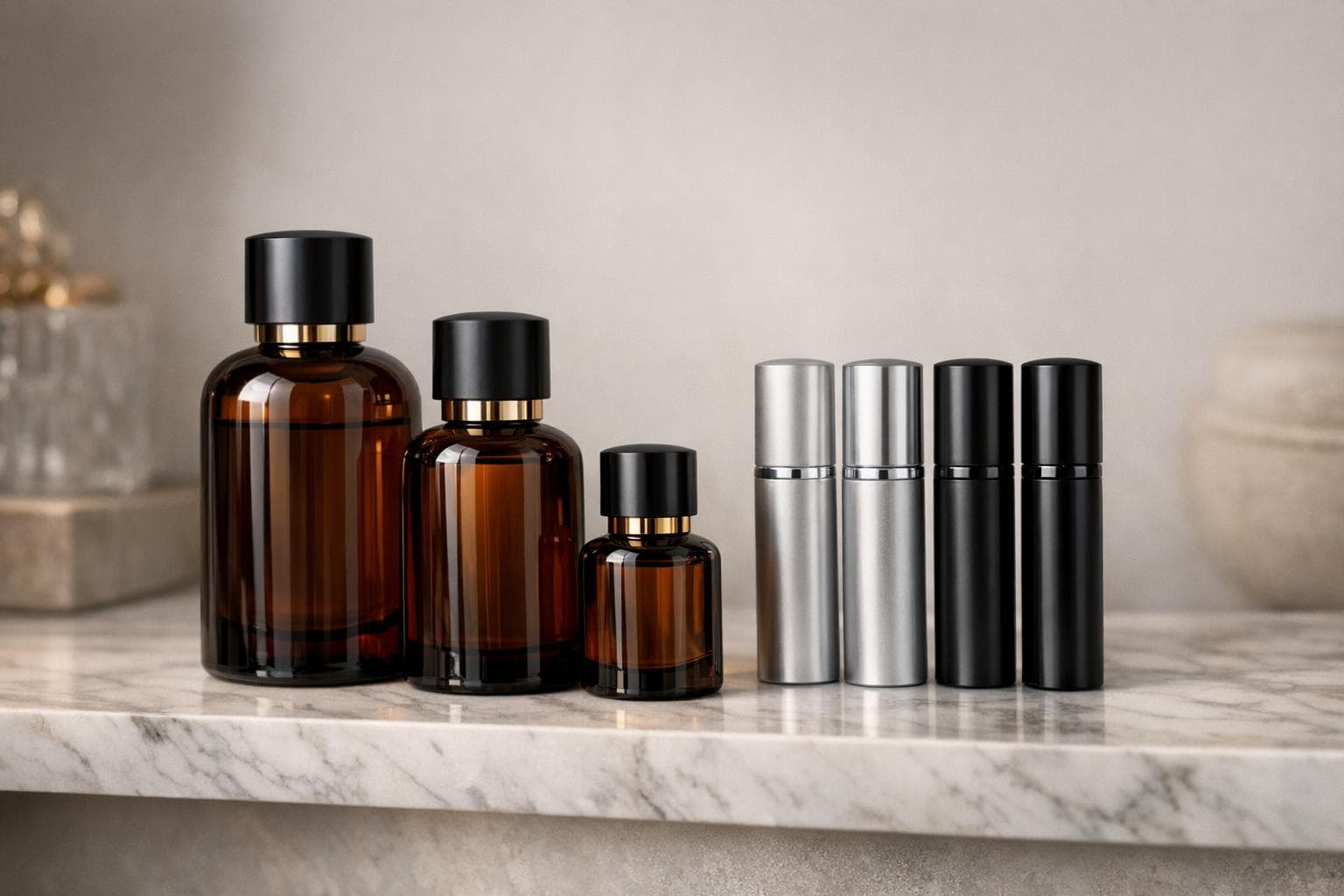
Parfumul este sensibil la lumina, caldura, aer si umiditate, factori care ii pot degrada mirosul si calitatea. O pastrare corecta poate ajuta parfumurile sa dureze intre 3 si 5 ani sau chiar mai mult. Iata ce trebuie sa stii atunci cand alegi recipientele de depozitare:
- Materialul conteaza: Foloseste sticla de culoare inchisa (cum ar fi cea chihlimbarie sau albastru-cobalt) sau aluminiul pentru a bloca razele UV si a preveni oxidarea. Evita plasticul pentru pastrarea pe termen lung, din cauza migrarii compusilor chimici.
- Dimensiunea este esentiala: Alege o dimensiune a recipientului adaptata volumului de parfum pentru a reduce la minimum contactul cu aerul. Recipientul de mici dimensiuni (2–10 mL) este perfect pentru calatorii.
- Calitatea inchiderii: Inchiderea etansa este esentiala pentru a preveni evaporarea si oxidarea.
- Protectia impotriva luminii: Opteaza pentru materiale opace pentru a proteja parfumurile impotriva degradarii cauzate de radiatiile UV.
- Durabilitate: Pentru calatorii, recipientele din aluminiu sunt usoare, incasabile si sigure.
Pentru depozitarea pe termen lung, alege sticla de culoare inchisa sau aluminiul. Pentru deplasari, atomizoarele din aluminiu sunt ideale. Pastreaza intotdeauna parfumurile in locuri racoroase si intunecate (54–59°F) pentru a le mentine calitatea intacta.
What to Look for in Perfume Storage Containers
Alegerea recipientului potrivit joaca un rol esential in mentinerea aromei si a calitatii parfumului tau. Un recipient bun iti apara creatia olfactiva de lumina, oxigen si fluctuatii de temperatura — factori ce pot duce la alterarea acesteia in timp. Cand alegi un recipient, acorda atentie catorva elemente critice care influenteaza in mod direct longevitatea parfumului.
Materialul recipientului
Materialul din care este realizat recipientul este unul dintre cele mai importante criterii. Sticla inchisa la culoare, cum ar fi cea chihlimbarie sau albastru-cobalt, este extrem de recomandata deoarece filtreaza razele UV si este inerta din punct de vedere chimic. Aluminiul reprezinta o alta alegere excelenta, in special pentru calatorii, fiind usor, rezistent la socuri si opac in mod natural. Evita insa plasticul pentru orice utilizare dincolo de o perioada foarte scurta — acesta poate elibera substante chimice in parfum si permite patrunderea oxigenului, ceea ce compromite compozitia in timp. Pentru o pastrare indelungata, alege intotdeauna sticla de inalta calitate sau aluminiul, datorita proprietatilor lor protectoare si stabile.
„Flacoanele originale pentru toate parfumurile si apele de colonie sunt concepute pentru a fi etanse si dispun de un pulverizator specific, menit sa disperseze cantitatea perfecta de parfum si sa previna contaminarea cu aer.” – Leanna Serras, Fragrance Writer
Dimensiune si capacitate
Dimensiunea recipientului este la fel de importanta ca materialul. Pentru a mentine prospetimea esentei, adapteaza capacitatea recipientului la volumul de parfum pe care il transferi. De exemplu, daca transferi o mostra de 2ml, alege un recipient cu un volum cat mai apropiat de aceasta cantitate, pentru a reduce la minimum spatiul de aer din interior. Recipientele mai mici, de obicei intre 2ml si 10ml, sunt ideale pentru calatorii si ajuta la reducerea riscului de expunere la factorii de mediu. Ca reper, un atomizor de 5ml ofera aproximativ 75 de pulverizari, in timp ce o varianta de 10ml asigura in jur de 150 de pulverizari.
Protectia impotriva luminii si a razelor UV
Lumina, in special radiatiile UV, este un inamic major al parfumului. Radiatia UV descompune moleculele aromatice, generand modificari chimice ce pot altera ireversibil mirosul. Acest proces, cunoscut sub numele de foto-oxidare, poate reduce semnificativ calitatea parfumului. Spre exemplu, notele de varf citrice sunt deosebit de sensibile si se pot degrada in proportie de pana la 80 % dupa doar o luna de expunere la lumina. Pentru a-ti proteja parfumul, opteaza pentru recipiente din materiale opace precum aluminiul sau sticla inchisa la culoare, care actioneaza ca o bariera de incredere impotriva radiatiilor daunatoare.
Durabilitate si portabilitate
Daca esti in deplasare, durabilitatea devine prioritara. Desi sticla este ideala pentru pastrarea de acasa, ea nu este cea mai practica solutie in miscare din cauza fragilitatii sale. Atomizoarele din aluminiu reprezinta o alternativa superioara pentru calatorii — sunt robuste, usoare si rezistente la socuri. Cauta modele dotate cu capace sigure si etanse, pentru a preveni scurgerile accidentale. Pentru protectie suplimentara, umple complet recipientele de calatorie; astfel reduci expunerea la aer si agitarea lichidului in timpul miscarii, factori care pot grabi degradarea parfumului.
Materiale obisnuite pentru pastrarea parfumurilor
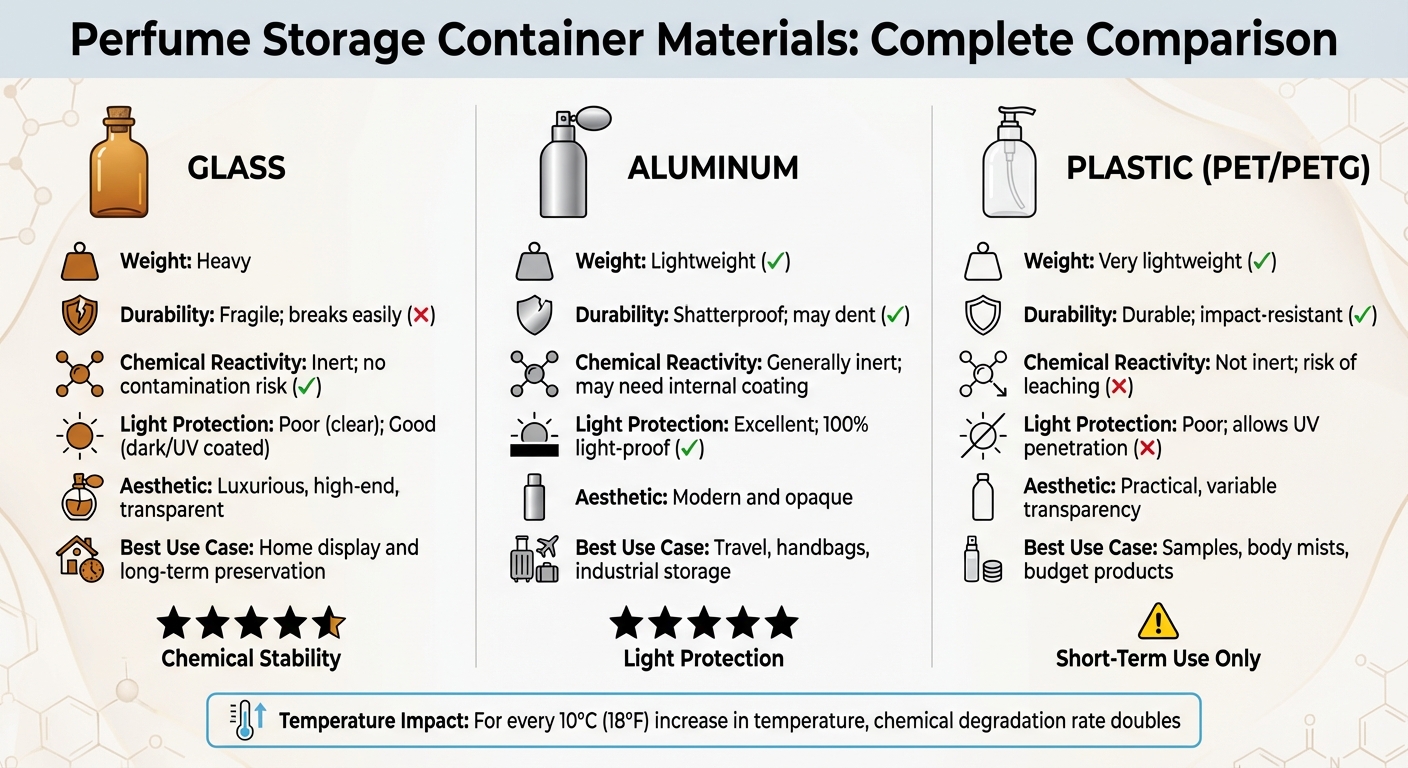
Perfume Storage Container Materials Comparison: Glass vs Aluminum vs Plastic
Cand vine vorba de pastrarea parfumurilor, materialul recipientului joaca un rol esential in mentinerea calitatii si a longevitatii compozitiei. Fie ca vrei sa protejezi o sticla pretioasa in colectia de acasa sau sa iei cu tine un decant in calatorii, alegerea materialului potrivit — sticla, aluminiu sau plastic — poate face toata diferenta. Fiecare optiune are avantaje si limitari, asadar haide sa le analizam in detaliu.
Recipiente din sticla
Sticla ramane alegerea de referinta pentru pastrarea parfumurilor, si pe buna dreptate. Este inerta chimic si non-poroasa, ceea ce inseamna ca nu reactioneaza cu lichidul din interior si nu permite patrunderea aerului sau a umiditatii. Acest lucru minimizeaza riscul de oxidare, pastrand parfumul proaspat pentru mai mult timp. Cu toate acestea, sticla are si puncte slabe: este fragila si mai grea, fiind mai putin practica pentru calatorii. Daca totusi optezi pentru sticla in deplasari, flacoanele de culoare chihlimbarie sau albastru-cobalt sunt cele mai recomandate — ele blocheaza lumina nociva — si asigura-te ca sunt intotdeauna bine protejate la transport pentru a preveni spargerea.
Recipiente din aluminiu
Aluminiul ofera un echilibru remarcabil intre durabilitate si portabilitate, fiind solutia de top pentru deplasari. Structura sa opaca blocheaza complet lumina, protejand parfumul impotriva foto-oxidarii. In plus, este usor si rezistent la spargere, ideal pentru a fi purtat in geanta fara nicio grija. Ai grija doar ca recipientul din aluminiu sa dispuna de un strat protector interior care sa impiedice orice reactie chimica cu notele parfumului.
„Aluminiul functioneaza excelent pentru pastrarea parfumului: blocheaza lumina complet, nu se sparge si ramane usor pentru calatorii.” – nyc.ph
Recipiente din plastic
Recipientele din plastic, in special cele fabricate din PET sau PETG, reprezinta o alternativa accesibila si usoara, utila mai ales pentru mostre sau utilizare de scurta durata. Rezistenta lor la impact le face convenabile in deplasari. Cu toate acestea, plasticul prezinta dezavantaje majore: poate elibera substante chimice in parfum si permite oxigenului sa patrunda, ceea ce altereaza buchetul aromatic. Mai mult, plasticul este vulnerabil la caldura si lumina, riscand sa se deformeze sau sa degradeze parfumul in timp.
„Expunerea la lumina descompune structura unui lichid parfumat si poate chiar topi flaconul daca acesta este din plastic.” – Leanna Serras
Din aceste considerente, plasticul este mai potrivit pentru spray-uri de corp sau creatii sintetice lejere decat pentru parfumuri exclusiviste sau extracte naturale. Retine ca pentru fiecare crestere a temperaturii cu 10°C (18°F), rata de degradare chimica a unui parfum se dubleaza. Prin urmare, daca folosesti plastic, evita categoric expunerea sa la caldura sau lumina directa.
Comparatie intre materialele recipientelor
Iata o privire detaliata asupra modului in care se compara principalele materiale destinate recipientelor:
| Caracteristica | Sticla | Aluminiu | Plastic (PET/PETG) |
|---|---|---|---|
| Greutate | Greu | Usor | Foarte usor |
| Durabilitate | Fragila; se sparge usor | Incasabil; se poate indoi usor | Durabil; rezistent la impact |
| Reactivitate chimica | Inerta; fara risc de contaminare | In general inert; poate necesita captuseala interioara | Nu este inert; risc de migrare chimica |
| Protectie impotriva luminii | Scazuta (transparenta); Buna (inchisa/strat UV) | Excelenta; 100 % opac | Scazuta; permite patrunderea razelor UV |
| Estetica | Luxoasa, rafinata, transparenta | Moderna si opaca | Practica, transparenta variabila |
| Cea mai buna utilizare | Expunere acasa si conservare pe termen lung | Calatorii, geanta de mana, pastrare practica | Mostre, spray-uri de corp, produse accesibile |
Sticla ramane alegerea favorita pentru flacoanele de parfum, apreciata in special pentru caracterul sau non-reactiv si capacitatea de a pastra intacta armonia compozitiei. Asa cum explica Global Packaging:
„Sticla este preferata pentru flacoanele de parfum deoarece este non-reactiva. Sticla nu interactioneaza cu parfumul din interior, un detaliu crucial pentru mentinerea integritatii sale”.
Aluminiul iese in evidenta prin portabilitate si capacitatea totala de a bloca razele UV, fiind solutia de referinta pentru transport si utilizare zilnica.
Plasticul, desi avantajos ca pret si versatil, vine cu compromisuri. Acesta afecteaza adesea calitatea parfumului din cauza migrarii chimice si a retentiei olfactive reziduale, fenomen prin care moleculele de parfum adera la material, facand aproape imposibila refolosirea recipientului pentru alte arome.
In concluzie, alegerea materialului depinde intotdeauna de necesitatile tale specifice, stabilind un echilibru intre durabilitate, estetica si conservarea autentica a parfumului.
sbb-itb-fb213bc
Colectia de atomizoare Scento
Cand vine vorba de pastrarea parfumurilor tale in conditii perfecte de siguranta si prospetime, Scento iti ofera solutia ideala prin colectia sa eleganta si practica de atomizoare. Conceputa special pentru decanturi de 8 mL, colectia reuneste patru modele unice: Limone di Capri, Rosso Fiore, Le Moooo si Toile de Jouy. Aceste atomizoare imbina functionalitatea desavarsita cu o estetica rafinata, urmand sa fie imbogatite cu noi editii sezoniere si colaborari artistice.
Aceste atomizoare raspund direct provocarilor legate de depozitare. Realizate din sticla securizata sau aluminiu, ele blocheaza eficient razele UV ce pot altera parfumurile in timp. Aceasta constructie atenta preia exact principiile discutate anterior privind prelungirea vietii aromelor tale. Compacte si usoare, ele incap fara efort intr-un clutch, in geanta de zi cu zi sau chiar in buzunar, fiind ideale atat pentru utilizarea zilnica, cat si pentru completarea colectiei de acasa.
Pentru cei ce calatoresc frecvent, capacitatea de 8 mL este perfecta. Se incadreaza confortabil in limita de 100 ml pentru lichide stabilita de regulile UE pentru bagajul de mana. Astfel, poti trece fara emotii de controalele de securitate din aeroport, avand intotdeauna esentele preferate alaturi. Portabile si protectoare, aceste atomizoare sunt create exclusiv pentru confortul tau.
Fiecare atomizor este finisat pentru a garanta o inchidere perfect etansa, prevenind evaporarea si oxidarea, in timp ce materialele opace sau finisajul din aluminiu ofera o bariera ideala impotriva luminii. Spre deosebire de sticla transparenta obisnuita, aceste piese se asigura ca parfumul tau ramane pur, indiferent daca este asezat pe masa de toaleta sau purtat in miscare.
Ceea ce diferentiaza Scento este imbinarea dintre functionalitate si atractivitate estetica. Fie ca preferi atmosfera vibranta a Limone di Capri sau expresivitatea indrazneata a Rosso Fiore, exista un design care se potriveste stilului tau personal. Dincolo de aspectul placut, aceste atomizoare reflecta dedicarea Scento de a oferi lux cu un scop precis - pastrandu-ti parfumurile in siguranta si adaugand o nota de eleganta rutinei tale zilnice.
Cum sa alegi recipientul potrivit pentru pastrarea parfumului
Pasul 1: Defineste-ti nevoile de pastrare
Incepe prin a clarifica modul in care vei folosi recipientul. Vrei sa depozitezi parfumul acasa, sa il iei zilnic cu tine sau sa il iei in calatorii? Pentru testarea mostrelor, o fiola de 2 mL (in jur de 30 de pulverizari) este perfecta. Daca te pregatesti pentru o calatorie de o saptamana, un atomizor de 5 mL (aproximativ 75 de pulverizari) sau un recipient de 10 mL (aproape 150 de pulverizari) reprezinta alegerea corecta. Pentru utilizarea zilnica, un atomizor de 8 mL este suficient de discret pentru a incapea in orice geanta mica. Pentru colectia de acasa, indreapta-te spre dimensiuni mai generoase, precum 10–30 mL, pentru a economisi spatiu si a pastra colectia impecabil organizata. Odata stabilite nevoile, alege materialele adecvate pentru conservarea compozitiilor tale.
Pasul 2: Alege materiale etanse si opace la lumina
Sticla de culoare inchisa ramane cea mai buna solutie pentru pastrarea pe termen lung. Flacoanele din sticla chihlimbarie sau albastru-cobalt filtreaza radiatiile UV nocive si sunt inerte din punct de vedere chimic, garantand ca nu vor interactiona cu notele parfumului. Deoarece lumina poate degrada parfumurile foarte rapid, utilizarea materialelor opace este un pas obligatoriu.
Pentru calatorii, recipientele din aluminiu garanteaza protectie totala impotriva luminii si sunt suficient de rezistente pentru a face fata loviturilor. Evita flacoanele transparente din plastic — acestea permit difuzia oxigenului si pot elibera compusi chimici in parfum. Alege intotdeauna atomizoare cu pulverizator in detrimentul sticlelor tip splash sau roll-on. Atomizorul pastreaza esenta protejata de aer, in timp ce deschiderea larga a unui flacon simplu expune intregul continut la oxigen la fiecare utilizare.
Pasul 3: Verifica etanseitatea inchiderii
O inchidere ireprosabila este esentiala pentru a opri evaporarea si oxidarea. Asigura-te ca sistemul de inchidere se infileteaza sau se fixeaza ferm, fara interstitii. Pentru a verifica etanseitatea, lasa recipientul asezat vertical timp de 24 de ore — daca observi vreo urma de lichid, garnitura nu este suficient de stransa.
„Aerul este cel mai mare dusman al parfumului. Odata patruns in sticla, aerul altereaza moleculele aromatice.” – The Fragrance World
Pentru uleiurile de parfum, picuratoarele speciale sau aplicatoarele roll-on sunt de preferat, deoarece limiteaza contactul direct cu aerul. Flacoanele decorative prevazute cu dopuri libere pot parea seducatoare vizual, insa adesea nu ofera etanseitatea absolut necesara parfumurilor tale fine.
Pasul 4: Adapteaza marimea recipientului la volumul decantului
Reducerea spatiului gol din recipient (headspace) este o conditie obligatorie pentru a incetini oxidarea. O sticla pe jumatate goala contine mai mult aer, ceea ce accelereaza degradarea esentei. Pentru a preintampina acest lucru, transfera parfumurile consumate partial in recipiente mai mici. De exemplu, foloseste un atomizor de 5 mL pentru un decant de 5 mL si un recipient de 10 mL pentru o cantitate de 10 mL.
Cand umpli atomizoarele de calatorie, asigura-te ca le incarci complet pentru a reduce spatiul de aer. Daca expediezi un decant, lasa doar o marja infima pentru a prelua variatiile de presiune din transport. Dupa ce ai stabilit marimea optima, acorda atentie durabilitatii si sustenabilitatii recipientului ales.
Pasul 5: Opteaza pentru variante durabile si sustenabile
Pentru o abordare sustenabila, mizeaza pe recipiente reincarcabile. Atomizoarele din sticla si aluminiu pot fi reumplute la nesfarsit, fiind net superioare plasticului de unica folosinta. Alege constructii solide, precum sticla calita combinata cu mecanisme metalice de pulverizare sau aluminiu anodizat, rezistent la zgarieturi si deformari.
O solutie de exceptie este colectia de atomizoare Scento. Atomizoarele lor de 8 mL sunt realizate cu materiale ce blocheaza razele UV, beneficiaza de inchidere perfect etansa si au un format creat special pentru calatorii. Linia include optiuni stilate precum Limone di Capri, Rosso Fiore, Le Moooo si Toile de Jouy, urmand sa fie completata de creatii sezoniere. Aceste accesorii iti protejeaza pretioasele arome si se integreaza cu distinctie in ritualul tau zilnic, acasa sau la drum.
Concluzie
Cand vine vorba de pastrarea nealterata a parfumurilor tale, trei factori raman decisivi: materialul recipientului, dimensiunea acestuia si calitatea etansarii. Recipientele realizate din sticla inchisa la culoare sau aluminiu sunt variante excelente pentru a izola compozitiile de radiatiile UV nocive. O inchidere ermetica este la fel de vitala, blocand patrunderea oxigenului si prevenind astfel oxidarea sau denaturarea aromelor. Alegerea unei capacitati adaptate cantitatii de parfum reduce aerul rezidual, incetinind oxidarea si mentinand esenta proaspata pentru mult timp.
Pentru persoanele mereu in miscare, atomizoarele reincarcabile reprezinta o optiune practica si eleganta. Aceste accesorii ingenioase protejeaza sticla principala de acasa si respecta fara cusur limita de 100 ml pentru lichide stabilita de UE pentru zboruri. Variantele reincarcabile din sticla si aluminiu sunt mult mai sustenabile decat flacoanele de unica folosinta din plastic, oferind atat performanta tehnica, cat si responsabilitate fata de mediu.
Un exemplu elocvent il reprezinta atomizoarele de 8 mL de la Scento. Aceste piese sofisticate, disponibile in versiuni precum Limone di Capri, utilizeaza materiale rezistente la razele UV si garnituri perfect sigure, garantand ca parfumul tau nu isi pierde calitatile. Indiferent ca iti construiesti o garderoba de parfumuri sau explorezi decanturi noi, recipientul potrivit te asigura ca fiecare pulverizare reda compozitia exact asa cum a gandit-o parfumierul.
Nu in ultimul rand, nu neglija temperatura ambientala. Parfumurile se pastreaza cel mai bine intr-un mediu racoros, ideal intre 54–59°F (12–15°C), pentru a-si mentine stabilitatea si performanta de-a lungul anilor. Investind in recipiente de pastrare adecvate, te vei bucura din plin de parfumurile tale preferate, la cea mai inalta intensitate, mult timp de acum inainte.
Intrebari frecvente
De ce este sticla inchisa la culoare cea mai buna alegere pentru pastrarea parfumului?
Flacoanele din sticla inchisa la culoare sunt alegerea ideala pentru pastrarea parfumului, deoarece opresc razele UV si lumina vizibila. Aceasta protectie previne degradarea moleculelor fine si fotosensibile din compozitie, pastrand parfumul vibrant si echilibrat pentru o perioada indelungata.
Alegerea recipientelor din sticla inchisa nu doar ca asigura o longevitate superioara parfumului tau, ci ofera si o nota incontestabila de rafinament pe masa ta de toaleta.
De ce sunt recipientele din aluminiu ideale pentru transportul parfumurilor in calatorii?
Recipientele din aluminiu sunt o solutie excelenta pentru pastrarea parfumurilor in timpul deplasarilor. Sunt deosebit de usoare, usor de purtat si suficient de rezistente pentru a suporta socurile sau caderile accidentale. De asemenea, ele ofera o bariera opaca impotriva luminii, conservand mirosul si calitatea esentei. In plus, constructia lor robusta elimina riscul de fisurare sau scurgere, pastrandu-ti parfumul in deplina siguranta oriunde calatoresti.
Care sunt dezavantajele pastrarii parfumului in recipiente din plastic?
Pastrarea parfumului in recipiente din plastic prezinta numeroase neajunsuri. Materialele plastice contin adesea aditivi chimici, precum ftalatii, care pot migra in timp in parfum, in special la caldura sau in cazul depozitarii prelungite. Acest proces poate altera definitiv formula olfactiva si poate introduce compusi nedoriti in amestec.
Totodata, plasticul este mult mai putin stabil in comparatie cu sticla sau metalul. Se poate deforma, crapa sau chiar inmuia sub actiunea caldurii sau a razelor de soare, ceea ce genereaza scurgeri nedorite. Asemenea pierderi nu doar ca iti irosesc parfumul, ci iti pot pata obiectele personale si ridica semne de intrebare legate de mediu.
Pentru a pastra parfumul in cele mai bune conditii, alege intotdeauna recipiente din sticla sau metal. Aceste materiale ofera o protectie superioara impotriva interactiunilor chimice si a factorilor externi, pastrand parfumul pur si fidel compozitiei originale.

