The fragrance industry is transforming fast, driven by tools like AI that predict trends with up to 92% accuracy. What once took months - developing a scent - can now happen in just 48 hours. Consumer habits are shifting too: the "scent wardrobe" concept is replacing the idea of a single signature scent. Social media (especially TikTok) is a major driver, turning conversations into sales trends.
Key advancements include:
- AI Tools: Platforms like ScentRadar™ analyze global data to predict emerging preferences.
- Neuroperfumery: Uses brain activity to design scents evoking specific emotions.
- Social Listening: Tracks consumer sentiment to link online buzz with actual sales.
- Data Visualization: Simplifies complex analytics into actionable insights.
For 2025/2026, expect "Clean", "Solar", and "Pink Pepper" notes to dominate. Brands combining AI precision with expert craftsmanship are leading the charge. Want to stay ahead? Leverage these tools to spot trends early, create unique products, and connect with evolving consumer desires.
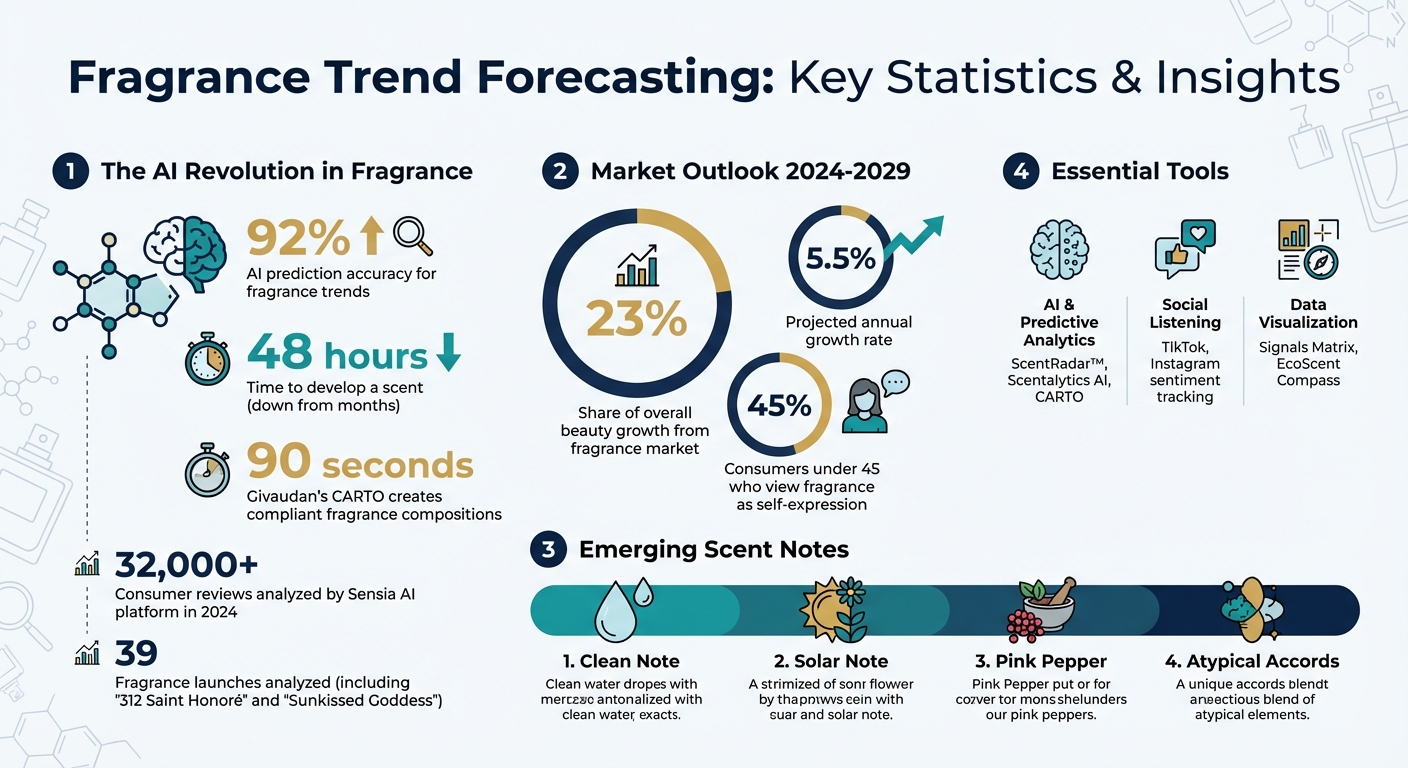
Fragrance Industry AI Impact: Key Statistics and 2025 Trend Predictions
Fragrance Trend Forecasting Tools
The fragrance industry today relies on three primary types of tools to anticipate emerging trends. These tools transform vast amounts of data - from social media activity to sales metrics - into actionable strategies for crafting new products and marketing campaigns.
AI and Predictive Analytics
AI-driven platforms are reshaping how trends are identified, analyzing millions of global data points to uncover subtle patterns. For instance, ScentRadar™ tracks social media discussions, search trends, and broader societal changes in real time, spotting which scent-related topics are gaining traction before they become mainstream. Similarly, Scentalytics AI refines these findings by using neural networks to predict specific composition elements, such as accords, fragrance families, gender preferences, and seasonal appeal, based on both chemical profiles and consumer feedback.
Innovative systems are also incorporating neuroperfumery, analyzing brain activity and EEG data to map emotional responses to different ingredient blends. Generative AI takes this a step further by translating these insights into fragrance formulas, predicting molecular interactions and ensuring stability. A notable example is Givaudan‘s CARTO, which can create compliant fragrance compositions in under 90 seconds, dramatically reducing development times. In 2024, the AI platform Sensia analyzed over 32,000 consumer reviews and comments from 39 fragrance launches - including "312 Saint Honoré" by BDK and "Sunkissed Goddess" by Kilian. The analysis highlighted the prominence of "Clean", "Solar", and "Pink Pepper" notes, shaping forecasts for 2025 trends. This example underscores how AI transforms scattered consumer signals into actionable guidance for fragrance design.
While AI excels at predictive analytics, social listening tools bring consumer sentiment directly into the equation.
Social Listening Platforms
Social listening tools capture and interpret consumer sentiment from digital conversations, offering a direct line to how people feel about specific fragrances. By analyzing language and tone, these tools reveal whether a perfume is perceived as comforting, luxurious, or underwhelming. Platforms like ScentRadar™ go a step further by linking sentiment analysis to sales data, uncovering connections between digital buzz and purchasing behavior. This approach also highlights how fragrance trends spill over into related categories like skincare, haircare, and home fragrances, helping brands pinpoint untapped opportunities.
To make sense of these insights, data visualization tools are essential for turning complex analytics into clear strategies.
Data Visualization Tools
Data becomes actionable when it’s easy to understand. Visualization tools simplify intricate analytics, presenting them in formats that clearly outline potential risks and opportunities. For example, ScentRadar™’s Signals Matrix and Givaudan’s CARTO offer real-time visual insights into fragrance trends . For brands focused on eco-conscious practices, DSM-Firmenich‘s EcoScent Compass provides a visual overview of the environmental impact of ingredient choices, tracking carbon emissions while ensuring creative flexibility. These dashboards empower brands to make informed decisions that align with both market trends and sustainability goals.
Fragrance Trend Forecasting Methods
Predicting fragrance trends isn’t just about using advanced tools; it’s about combining diverse data sources effectively. The best methods blend numbers with human insights, ensuring forecasts capture both market dynamics and consumer desires.
Combining Sales Data and Consumer Feedback
The most reliable signals come from linking what consumers say to what they actually buy. This involves connecting search trends and sales data to see which online conversations lead to purchases. For instance, a fragrance note gaining traction on TikTok might spark thousands of comments, but only sales figures can confirm if those discussions translate into actual demand.
To achieve this, brands now integrate e-commerce reviews with trend monitoring on platforms like TikTok and Instagram. This multi-channel approach helps identify which "scent signals" resonate with consumers. Tools like AI-powered sentiment analysis dig into social media chatter, turning emotions and language into actionable insights for product development.
Visualising this data is crucial. By mapping how consumer interest aligns with retail performance, brands can decide which trends are worth pursuing.
Tracking Seasonal and Cultural Shifts
Fragrance preferences naturally change with the seasons and cultural events. AI models are now being used to classify scents based on their seasonal appeal and suitability for different times of the day, aligning with how people live and shop. This helps brands anticipate demand for lighter citrus scents in summer or warm amber notes as winter approaches.
Cultural influences are equally important. Platforms like TikTok provide real-time insights into trending fragrance families or ingredients. These trends can be validated with sales data and quickly adapted into new products. For example, a viral post celebrating a particular note can inspire rapid product development to meet emerging demand.
Encouraging Cross-Department Collaboration
Forecasting often fails when teams work in isolation. The most accurate predictions come from collaboration between marketing, R&D, and sales. Some brands are even moving away from external fragrance houses, opting instead for in-house perfumers to ensure tighter integration and a stronger brand identity. This shift enables quicker responses to trends while maintaining authenticity.
Neuroscience is also helping bridge gaps between departments. Techniques like neuroperfumery, which uses EEG data to track emotional responses, align R&D’s scent designs with marketing’s understanding of consumer preferences. When teams share unified, data-driven insights, trend forecasting becomes more precise and actionable, influencing everything from product development to marketing strategies.
These integrated methods not only improve the accuracy of trend predictions but also allow teams to shape fragrance collections and campaigns with confidence.
Your Personal Fragrance Expert Awaits
Take our quick scent quiz to discover authentic designer and niche fragrances matched to your taste — explore them as 2ml, 5ml, 8ml & 30ml decants and samples, so you can try each one before committing to a full bottle.
Find Your ScentUsing Trend Insights in Practice
Gathering trend data is just the starting point; the real challenge is turning those insights into actionable steps for product selection and marketing. Whether it’s deciding which fragrances to spotlight, creating engaging campaigns, or launching products at the perfect time, these insights can directly influence success.
Curating Fragrance Collections
Trend forecasting plays a key role in determining which scents to prioritize and when to introduce them. For example, some of the major scent trends predicted for 2025 include "Clean Note", "Solar Note", "Pink Pepper", and "Atypical Accords". Armed with this knowledge, curators can source and feature fragrances that align with these preferences before they hit peak demand.
Seasonal timing is equally crucial. Keeping collections aligned with shifting consumer preferences throughout the year ensures they stay relevant.
For discovery platforms like Scento, which offers 2 ml, 5 ml and 8 ml vials, and a 30 ml bottle decant on most perfumes, trend insights are essential in deciding which designer and niche fragrances to showcase. By analyzing millions of global signals from platforms like TikTok and Instagram, brands can spot emerging "scent signals" and introduce them to consumers before they become widely popular.
These insights don’t just refine the fragrance selection; they also shape the stories brands tell to connect with their audience.
Informing Marketing Strategies
Beyond product curation, trend insights guide marketing narratives. Understanding which scent notes evoke specific emotions allows marketers to create campaigns that resonate deeply. The table below illustrates how pairing scent families with sensory elements can enhance their emotional appeal:
| Scent Note | Sound Pairing | Visual Pairing | Emotional Impact |
|---|---|---|---|
| Fruity/Citrus | High-pitched melodies | Bright yellows, oranges | Energy, freshness |
| Sweet | Soft piano tones | Pastels, curved shapes | Comfort, pleasure |
| Musky/Coffee | Low brass or bass tones | Deep browns, blacks | Maturity, depth |
| Spicy | Sharp, staccato sounds | Vibrant reds, angles | Excitement, heat |
These multisensory combinations help brands design cohesive campaigns across platforms, from Instagram visuals to TikTok audio tracks. By linking search trends and retail data, marketers can identify which social media-driven trends are actually influencing purchases. This approach minimizes the risk of investing in fleeting viral moments that don’t translate into sales.
Real-time social listening also provides the flexibility to adjust campaigns on the fly. For instance, if a specific note or fragrance family gains traction online, marketing teams can quickly adapt their messaging to highlight those elements. This ensures campaigns stay timely and resonate with current consumer interests.
Conclusion
The fragrance industry is evolving rapidly, with tools like ScentRadar™ scanning everything from TikTok trends to online conversations to identify emerging patterns. At the same time, AI and neuroperfumery are speeding up development timelines and providing insights into how scents resonate emotionally.
Despite these advancements, human expertise remains irreplaceable. Christophe Laudamiel, Master Perfumer at Osmo, captures this sentiment perfectly:
"Brands will realise they need credibility, artistry, and authenticity. This is very hard to achieve without a perfumer in the house. It would be like having no fashion designer in a house."
The winning formula lies in merging AI’s precision with the timeless artistry of skilled perfumers.
The market trends underscore why this balance is crucial. The global fragrance market is expected to account for 23% of overall beauty growth between 2024 and 2029, with a projected annual growth rate of 5.5%. Additionally, nearly 45% of consumers under 45 now view fragrance as a way to express their individuality. The growing interest in "scent wardrobes", where people curate fragrances for different moods and occasions, further amplifies the need for faster, more flexible product development.
Platforms like Scento are already leveraging these insights. By offering decants in sizes like 2 ml, 5 ml and 8 ml vials, and a 30 ml bottle decant on most perfumes, they use predictive tools to select which fragrances to highlight each month. This strategy connects real-time cultural trends with actual sales data, helping brands introduce new scents to consumers before they peak in popularity - while steering clear of short-lived viral fads that fail to convert into sales.
As outlined in this guide, combining AI-driven insights with traditional expertise creates a smooth path from trend identification to market-ready products. By integrating advanced technology into their strategies, brands can innovate in ways that resonate with consumers. The most successful players will be those who bridge the gap between emotional storytelling and scientific precision - translating social media sentiment into olfactive experiences, using real-time feedback to refine offerings, and tailoring products to regional tastes.
FAQs
How can I tell if a TikTok fragrance trend will actually sell?
To determine whether a TikTok fragrance trend will translate into sales, it’s important to go beyond the surface of virality. Focus on consumer demand signals such as social media sentiment, purchasing patterns, and search trends. Tools that monitor growing discussions around scents and track retail performance can help confirm if the buzz is leading to actual sales. Moreover, success often hinges on compelling storytelling and live commerce, which replace the need for physical scent testing by creating emotional connections and engaging audiences on a deeper level.
What does neuroperfumery measure, and how is it used in scent creation?
Neuroperfumery delves into the fascinating connection between fragrances and the brain, exploring how scents shape our mood, emotions, and mental vitality. This field focuses on how fragrances interact with the limbic system - the part of the brain responsible for emotion and memory. By understanding this interaction, perfumers can craft scents that influence emotional states, whether the goal is to promote relaxation, energize the mind, or uplift the mood. This approach paves the way for creating perfumes that are not just pleasant but also serve a specific purpose, offering a tailored and functional dimension to scent design.
How can brands combine AI forecasts with perfumer expertise without losing authenticity?
Brands have the opportunity to combine AI-driven forecasts with the refined expertise of perfumers by treating AI as a supporting tool for analyzing data and predicting trends. While AI can provide valuable insights, it’s the perfumers who should interpret this information and let their creative instincts shape the final fragrance. This approach helps ensure that scents maintain their emotional resonance and reflect the cultural subtleties that only human artistry can capture. Being open about AI’s involvement can also strengthen consumer trust, showcasing a thoughtful balance between technological advancement and the personal touch of craftsmanship.

