
Germany — Europe's third-largest fragrance market by value — has been quietly rewiring its niche segment. Until 2022, German fragrance buyers were the textbook designer-loyalist: Boss Bottled, Hugo, Jil Sander, Joop, Davidoff Cool Water — broad, accessible, anchored in mass specialist retail. By 2026, the German niche segment has become one of the highest-momentum sub-categories in European beauty, gaining share even as the broader market stabilises into mid-single-digit growth.
Across 2,195 German niche fragrance buyers Scento's analysis tracked between October 2025 and April 2026, niche houses captured a 14.9% per-decant average-order-value premium over designer (€68.84 versus €59.93). The niche-to-designer ratio in Germany sits at roughly 55/45 in our cohort — slightly more niche-tilted than the 65/35 split observed across the pan — European data, and a clear inversion of the designer-default pattern that defined German fragrance retail through the 2010s.
Scento's analysis places the total German fragrance market at €4.19 billion in 2025, projected to reach €5.56 billion by 2030 at a 5.7% compound annual growth rate. Within that, niche-segment value is gaining share faster than the headline market, driven by premium-buyer migration that mirrors patterns first observed in the UK and France. For the global niche perfume context — total market size, top brands by share, and price-tier economics across regions — see Scento's 2026 niche perfume statistics report. This article covers what diverges in Germany.
The framing matters because Germany is the reference market other European niche operators read against. France leads on heritage and creative-direction credibility; the UK leads on Gen Z-led niche-velocity and the dupe-and-resurgence dynamic; Italy leads on artisan craft. Germany leads on disciplined buyer behaviour — the consumer who decides slowly, samples thoroughly, and converts loyally once a signature emerges. That behavioural profile, applied to a €4.19 billion market with a fast-growing niche slice, is what makes the German segment strategically important well beyond its absolute size.
DE Niche Market Size
The headline number for German fragrance is €4.19 billion in 2025, projected to €5.56 billion by 2030 at a 5.7% compound annual growth rate. The premium segment carries an outsized share of that revenue — approximately 69.6% — the highest premium concentration in Western Europe. Within the premium tier, the ultra-premium niche slice (€120–€350 retail) is the fastest-growing sub-segment, compounding at high single digits while the headline market grows at mid-single digits.
Triangulating across leading methodologies, the DE niche segment represents roughly 18–22% of the total fragrance market by value in 2025 — significantly higher than the European average of 12–15%. The variance band reflects honest analytical uncertainty: no single methodology publishes a clean DE-niche-only line item, so Scento reads across premium-tier disclosures, niche-house growth signals, and the order-mix observed in our German cohort to produce the range.
The order-mix tells the more interesting story. Based on Scento's analysis of 2,961 German fragrance buyers and 3,247 orders, niche purchases now account for 55.1% of orders and 58.4% of GMV in our German order data — a clear inversion of the traditional German-buyer designer-default. Among DE buyers who purchased through Scento, niche orders carried an average value of €68.84, against €59.93 for designer-only orders — a 14.9% premium per basket.
The cohort breaks down cleanly by category: 2,195 niche-buying customers placed 2,380 niche-only orders, while 1,803 designer-buying customers placed 1,943 designer-only orders. The customer-count overlap (some buyers cross categories) is consistent with broader European patterns, but the German tilt toward niche over designer is sharper than every other major Western European market in Scento's data except the UK.
The forecast comparison frames the size question. German fragrance estimates range from $3.6 billion (a conservative consumption-only methodology in 2024) to $4.0 billion (a broader retail-channel methodology in 2024) to roughly €2.0 billion (a narrower retail-only base from 2023). All converge on directionally similar 5.7%–7.0% growth into 2030. The niche slice within that compounds faster — closer to 8–10% — because Germany is catching up to UK and French niche penetration from a more designer-dominant base.
Regional consumption density is uneven. North Rhine — Westphalia, Bavaria, and Baden — Württemberg lead absolute fragrance revenue by sheer population and GDP weight. Per-capita niche spend, however, concentrates in Berlin, Munich, Hamburg, and Düsseldorf — the cities where niche-aware urban-professional cohorts are densest. The regional split matters because retail strategy follows it: department-store luxury anchors in Berlin and Munich; the Niche Beauty Hamburg base captures the northern professional cohort; Düsseldorf's KÖ retail mile carries disproportionate niche weight relative to its population. East — German cities outside Berlin remain underdeveloped on niche-retail infrastructure, which is part of why the cohort skews toward online — DTC discovery for buyers in Leipzig, Dresden, and Erfurt.
German niche is no longer a niche-of-a-niche. It's a structurally premium-skewed segment growing faster than the headline market, which makes the brand-level competitive picture worth understanding in detail.
Top Niche Houses Sold in DE
Seven niche houses anchor the German niche segment based on Scento's category-level buyer signal. The list is curated, not share-ranked — brand-by-country share is withheld per editorial policy, but the order reflects how German niche buyers cluster their purchases by house DNA. Heritage-and-ultra-premium positioning leads (Amouage, PdM, Creed, MFK, Xerjoff); minimalist-luxury follows (Le Labo, Byredo).
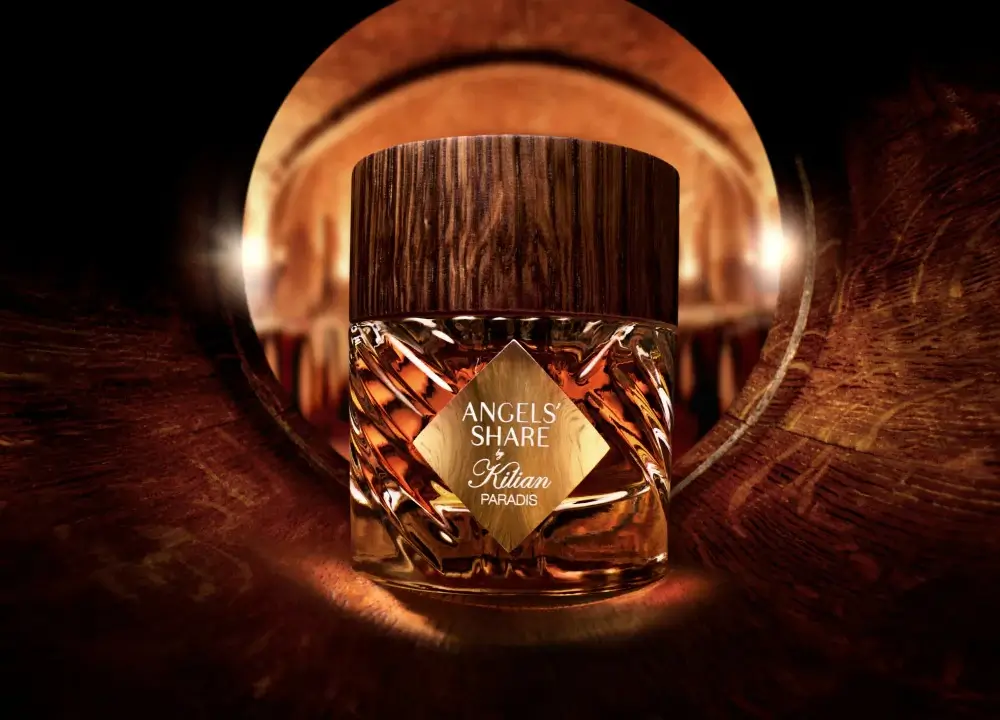
Amouage leads German niche orders. The Omani house anchors the ultra-premium oudh-and-frankincense end of the segment — Interlude Man, Reflection 45, the Library Collection. German buyers attracted to statement fragrances reach for Amouage because the house DNA matches what they want from luxury: depth, opulence, layered composition. The Omani heritage and the dense raw-material sourcing carry weight with the German consumer who values craftsmanship-as-justification for the price.
Parfums de Marly follows. The French neo-classical house — inspired by 18th-century court perfumery — has become the German entry point into niche over the last three years. Layton, Delina, and Pegasus do most of the heavy lifting. PdM's appeal in Germany comes from its position as approachable luxury: recognisable elegance without the Brooklyn-minimalist abstraction of Le Labo or Byredo. The German buyer who finds Le Labo too understated frequently lands on Parfums de Marly.
Creed sits third. Aventus has done more for the niche-as-mainstream conversation in Germany than any other single fragrance — the marine-fruity-leather DNA crossed from niche enthusiast circles into German mainstream awareness during 2018–2022 and never receded. The Creed catalogue beyond Aventus (Royal Oud, Green Irish Tweed, Silver Mountain Water) carries strong German recognition; the Kering acquisition has not noticeably affected German buyer signal.
Maison Francis Kurkdjian ranks fourth. Baccarat Rouge 540 catalysed the German niche-curiosity wave — particularly among 28–45-year-old women in Berlin, Munich, Hamburg, and Düsseldorf — and pulled the broader MFK catalogue (Oud Satin Mood, Grand Soir, Aqua Universalis, Gentle Fluidity) into German buyer awareness. MFK's strong sample program and the LVMH-distribution backbone mean trial is unusually accessible for a luxury-tier house.
Xerjoff holds the fifth position. The Italian house has cultivated a deeply respected following in the German niche-collector subculture — Naxos, Erba Pura, Alexandria II, the Lira and Mefisto duos. Xerjoff's position is interesting: stronger with the dedicated enthusiast cohort than with the mainstream niche-curious buyer. The brand performs above expectation in Scento's German collector subset.
Le Labo sits sixth. Santal 33 has crossed from niche signifier into German mainstream awareness — particularly with the 25–35-year-old urban cohort in Berlin Mitte, Hamburg's Schanzenviertel, and Munich's Maxvorstadt. The Le Labo Berlin Mitte boutique has been a structural retail anchor since opening; the city-exclusive editions create a niche-collector dynamic that operates alongside the mainstream Santal 33 awareness.
Byredo rounds out the seven. Bal d'Afrique, Gypsy Water, Mojave Ghost, Bibliothèque. The Stockholm-meets — Berlin minimalism resonates with German buyers who reject the maximalism of traditional designer luxury — the aesthetic alignment is unusually precise. Byredo's position in Germany is closer to share-parity with its global niche share than the heritage houses (Amouage, Creed) which over-index in DE relative to their global position.
The structural pattern: German niche buyers cluster around either heritage / ultra-premium positioning (Amouage, Creed, MFK, Xerjoff) or new-wave minimalist-luxury positioning (Le Labo, Byredo, Parfums de Marly). The middle ground — designer-priced niche, indie-flavoured but department-store-distributed — is the weakest German niche pocket. Houses without a clear positioning at either pole tend to underperform in Germany.
The German Niche Buyer Persona
Persona framing starts with demographics. German niche buyers in Scento's cohort skew 28–45, with the 32–40 range densest. The gender split is approximately 60% women, 25% men, 15% unisex / gift — noticeably more balanced than the European average (47/28/24%), which itself reflects the catch-up dynamic: German men are entering niche at a faster rate than the European mean, partly because the German cultural-counterfeit-awareness signal lifts authentic-niche over grey-market designer.
Income tier skews to DACH professional class — €55,000–€110,000 household income, urban-concentrated across Berlin, Munich, Hamburg, Frankfurt, Cologne, Düsseldorf, and Stuttgart. North Rhine — Westphalia carries the largest absolute fragrance revenue per third-party regional data, but Berlin and Munich punch above their population weight on niche-specific spend.
Two distinct discovery routes shape German niche entry. The first is ultra-premium / oudh discovery — typically through Middle Eastern travel exposure, airport duty-free awareness of Amouage and Creed, or recommendation from a fragrance-aware peer. The second is niche-minimalism discovery — through Berlin café culture, Instagram-led scent influencers, and the broader urban-aesthetic shift that reads Byredo and Le Labo as wardrobe staples. Scento's German subscribers gravitate toward both routes; some buyers carry both signatures simultaneously.
The trial-first signal is the strongest German distinguishing pattern. Based on Scento's analysis of 2,195 German niche-buying customers, 75% of niche-decant purchases are 2ml trial sizes (8,718 lines out of 10,453 niche-decant lines tracked) — the highest sample-skew of any major European market in our dataset. 5ml decants account for roughly 10% (1,090 lines) and 8ml decants approximately 6% (645 lines), with the remainder spread across full-bottle and discovery-set purchases.
The German niche buyer is functionally a broadcast-trial buyer. They sample widely before they commit deep — typically 8 to 15 fragrances over a 60–90-day window before they convert one or two to full bottle. The cultural rationale aligns with broader German consumer-behaviour stereotypes: thoroughness, price-quality assessment, counterfeit-awareness, individual-fit prioritisation. Houses with strong sample programs — Amouage, Parfums de Marly, Maison Francis Kurkdjian — consequently over-index in German conversion. Houses without coherent sample programs convert poorly in Germany, even when their core product lines are otherwise competitive.
Three behavioural drivers structure the persona further. Sustainability sensitivity: German buyers index high on refillable, clean-label, and ESG-credentialed niche houses. The German market is one of the strongest in Europe for refillable fragrance bottle adoption — partly a reflection of broader EU regulatory leadership on cosmetics. Counterfeit awareness: higher than the European average. Niche-house authenticity is a particularly strong purchase driver in Germany; fakes are pervasive in third-party Amazon listings, and German buyers actively seek out authorised retailers and traceable supply chains. Repeat-purchase ladder: the 2ml decant → 8ml decant → full bottle path is the dominant conversion sequence in our German cohort, taking 60–90 days on average — slightly longer than the Italian and French equivalents.
A fourth driver is worth noting: cohort cross-pollination through the German fragrance-community subculture. Germany hosts one of the most active fragrance-community ecosystems in Europe — Parfumo (the German-language fragrance database) competes with Fragrantica for review-and-rating volume; the German Reddit fragrance community sustains tens of thousands of active members; the Berlin and Munich fragrance-meetup scenes have run quarterly events for over a decade. This community infrastructure shortens the discovery-to-decision cycle for German buyers entering niche: a buyer who reads Parfumo reviews and engages with the local meetup community arrives at the trial-purchase decision pre-educated, which is part of why the trial-to-bottle conversion rate in our German cohort runs slightly higher than the European mean despite the longer sample-window.
For German buyers who want to sample broadly before committing, a curated decant journey via find your scent maps the sample-to-bottle path that 75% of German niche buyers already follow.
Channel Mix: Department Stores, Specialist Retail, and DTC
Three channels share the German niche market: department-store luxury, specialist beauty retail, and direct-to-consumer. The split runs roughly 25 / 50 / 25 by revenue — meaningfully more department-store-anchored than the global niche mean.
Department-store luxury — KaDeWe, Oberpollinger, Alsterhaus. Approximately 25% of DE niche fragrance value runs through this channel. KaDeWe Berlin remains the spiritual home of niche-fragrance retail in Germany; the 2026 expansion of Niche Beauty into a dedicated KaDeWe store-floor reflects the broader maturation of niche from online-only to omnichannel. LOEWE Perfumes opened its first permanent German space at KaDeWe in late 2022. Birkholz Perfume Manufacture has anchored its Berlin retail at KaDeWe since the early 2010s. Oberpollinger Munich and Alsterhaus Hamburg run the same high-touch advisory model — perfumery counters staffed by trained advisors, multi-house portfolio, ultra-premium-curious buyer the dominant target.
Specialist beauty retail — Douglas, Parfumdreams, Niche Beauty. Approximately 50% of DE niche fragrance value. Douglas remains the dominant fragrance retailer in Germany, with niche selectively integrated into the premium tier — Xerjoff, Juliette Has a Gun, Zarkoperfume, and a handful of other niche houses are mainstream Douglas presence. Niche Beauty (Hamburg-based, ~350 brands) anchors the curated-online-luxury proposition. Its 2026 KaDeWe expansion is the canonical signal that German niche has fully crossed from online-only to omnichannel. Parfumdreams handles the trending-top-brands-at-attractive-prices tier — closer to the discounted-niche entry point that pulls in price-sensitive buyers.
Direct-to-consumer — brand boutiques, decant subscriptions, niche-specialist e-commerce. Approximately 25% of DE niche fragrance value. The DTC tier is where decant-first buying lives. Brand-direct boutiques are the apex of DTC for ultra-premium niche: Le Labo Mitte Berlin, Byredo Mitte Berlin, the Diptyque Munich Maximilianstrasse boutique, Frédéric Malle's Munich and Hamburg locations. The decant-subscription category — including Scento's perfume samples and the broader European subscription-fragrance ecosystem — captures the trial-first German buyer who wants ultra-premium access without the full-bottle commitment.
E-commerce share within all three channels is rising. German fragrance e-commerce growth tracks at approximately 7% CAGR through 2030, slightly above the headline market — driven by the broader German digital-commerce maturation and by niche-specific factors (decant subscriptions, brand-direct boutique e-commerce, the Niche Beauty online proposition). The structural read on German niche is omnichannel-dominant — neither online-only nor brick-and-mortar-only. Houses that fail to balance KaDeWe-style high-touch advisory with strong DTC sample programs underperform in Germany. The successful niche houses in DE have all built parallel infrastructure: a department-store-luxury presence for the high-touch buyer, a curated specialist-retail presence for the broad-discovery buyer, and a DTC-and-decant-program for the trial-first buyer.
The retail consequence for German operators is clear. A niche house entering Germany with online-only ambition leaves a quarter of the addressable market on the table. A niche house entering with department-store-only ambition leaves the trial-first cohort to competitors. The German niche distribution playbook — one that the seven anchor houses (Amouage, Parfums de Marly, Creed, MFK, Xerjoff, Le Labo, Byredo) have mostly internalised — runs all three channels in parallel and treats each as serving a distinct discovery-and-conversion job.
Pricing Premium: Niche vs Designer in Germany
German niche fragrance pricing operates across three retail tiers. Designer mainstream — Hugo Boss, Joop, Jil Sander, Davidoff — runs €45–€90 for 50ml EDT or EDP. Premium designer — Dior, Tom Ford, Burberry — runs €90–€160. Niche entry tier — Le Labo entry-format, Byredo travel sizes, MFK 35ml — runs €100–€220. Niche mid tier — Amouage 50ml, Parfums de Marly 75ml, Xerjoff 50ml — runs €220–€420. Niche ultra tier — Amouage Library, MFK Oud Satin Mood Extrait, Xerjoff Shooting Stars, ultra-premium artisan releases — runs €420–€1,200 and beyond.
The decant economics tell a different story. A 2ml niche decant in Scento's German basket sells for €5–€18 depending on house — translating to €2.50–€9.00 per millilitre, against typical full-bottle cost of €4.40–€8.40 per millilitre on the same fragrance. For German buyers, this inverts the conventional value equation: instead of paying less per millilitre because you commit to volume, you pay slightly more per millilitre to avoid the 50ml-blind-buy mistake. The savings show up at the blind-buy avoidance layer, not the per-millilitre layer.
Based on Scento's analysis of 4,323 German niche and designer orders, niche purchases command a 14.9% premium per order (€68.84 vs €59.93). On a per-millilitre basis, niche decants sit roughly 2.0–3.5× higher than mass fragrance — but compared to a €350 full-bottle commitment, a €10 niche 2ml decant is 2.9% of the full-commit cost. That ratio is what matters for the trial-first German buyer.
Why German niche buyers pay the premium has structural roots. First, depth of fragrance development time: niche houses typically run multi-year creative cycles where designer houses can compress to under twelve months. Second, longevity: niche tends to use higher concentrations of fragrance oil (often Parfum or Extrait at 20–40% versus EDP at 15–20%), which delivers more wear hours per millilitre. Third, brand prestige with the German cultural-aesthetic reading: niche signals taste-discrimination in a way designer no longer does, particularly among the 28–45 urban-professional cohort. Fourth, the absence of designer-tier accessibility competition at the upper price points means niche houses do not face mass-market dupe pressure on the ultra-premium tier.
VAT mechanics matter for cross-border comparison. German VAT at 19% applies to all fragrance — niche and designer alike. There is no preferential treatment, but the per-bottle absolute VAT impact is materially higher on niche (€420 niche 50ml carries roughly €67 of VAT; €70 designer 50ml carries roughly €11). German buyers comparing UK, Switzerland, and duty-free pricing weigh this carefully — particularly post — Brexit, when UK VAT-refund mechanisms changed the cross-border shopping calculus for German visitors to London niche retail.
Tariff impact through 2025–2026 has compounded the premium. Botanical-extract import duties and a 10–20% logistics-cost premium across the global supply chain have squeezed niche houses disproportionately, since niche depends more on hand-sourced raw materials than mass fragrance does. The downstream effect on German retail prices has been a 4–6% annual price increase across the niche tier, with the ultra-premium segment compounding fastest.
The German consumer-behaviour response to this price compression has been measurable in our data. The 2ml decant-share of niche purchases rose materially across our German cohort over the October 2025 to April 2026 review window, and the average sample-cart size among first-time German niche buyers expanded from approximately five fragrances to roughly seven. The pattern reads as a clear consumer-side hedge against full-bottle commitment risk: as the absolute price ceiling rises, the trial-first behaviour intensifies. Niche houses that respond with stronger sample programs (curated discovery sets, branded 2ml/5ml decants, refillable formats that stage commitment incrementally) capture incremental German share. Houses that respond with price increases without trial-program reinvestment cede ground.
Browse perfume samples for the per-millilitre cost-comparison destination.
DE Niche vs Global Niche: Where Germany Diverges
The German niche market diverges from the global niche picture in three structural respects, and each divergence is worth understanding because it shapes which houses succeed and which underperform.
Growth-rate divergence. Global niche compounds at approximately 9.1% CAGR; German fragrance overall at 5.7%. The German niche sub-segment outpaces both — closer to 10–12% on Scento's directional read — because Germany is catching up to UK and French niche penetration from a more designer-dominant base. The catch-up dynamic accelerates the share gain even as the underlying fragrance market grows at mid-single digits.
Brand-share divergence. The global top niche brands (per leading market research methodologies) cluster around Byredo, Le Labo, Jo Malone, Diptyque, Tom Ford niche, MFK, Creed, and Amouage — with Byredo and Le Labo holding the top positions globally. In Germany, Scento's DE buyer signal suggests Amouage, Parfums de Marly, MFK, and Creed punch above their global share — while Le Labo and Byredo, dominant globally, sit closer to share-parity in DE than they do in the UK or France. The structural reason: Germany's niche journey began at the ultra-premium oudh and Aventus end, not the Brooklyn-minimalist end. Heritage houses with strong sample programs over-index in DE.
Channel-mix divergence. Globally, niche is shifting online — DTC fast — global niche commerce concentrates increasingly in brand boutiques, decant subscriptions, and curated-multi-brand e-commerce. Germany retains stronger department-store and specialist-retail anchoring than the global mean. KaDeWe, Niche Beauty, and the Douglas premium tier collectively hold a larger share of German niche revenue than equivalent department-store-and-specialist channels hold in the UK or France. The 2026 KaDeWe expansion of Niche Beauty signals continued omnichannel maturation rather than the online-only convergence that characterises the global niche channel mix.
For the broader 2026 niche outlook — global market sizing, top houses by share, indie watchlist, and subscription economics — see Scento's 2026 niche perfume statistics report.
2030 Outlook
Three forecasts shape the German niche segment through 2030.
Niche-share convergence. By 2030, German niche-segment share is likely to converge toward 25–28% of the total German fragrance market by value, up from approximately 18–22% in 2025. The convergence catalyst is generational: Gen Z German buyers (born approximately 1997–2012) are materially more niche-fluent than Gen X were at the equivalent age. The cohort enters niche earlier, samples wider, and graduates to luxury-tier niche faster than any prior German generation. The sustained tailwind is structural rather than cyclical.
Channel rebalancing. The 2026 KaDeWe expansion of Niche Beauty signals the broader pattern — German niche becomes more omnichannel, not more online. By 2030, expect German niche to settle at roughly 40% specialist-retail, 35% DTC, and 25% department-store-luxury (a tighter spread than today's 50 / 25 / 25). The DTC share grows at the expense of specialist retail rather than department-store-luxury — German buyers continue to value the high-touch advisory of department-store fragrance counters, particularly for ultra-premium discovery.
Brand-hierarchy stability with one wildcard. The seven houses anchoring German niche today — Amouage, Parfums de Marly, Creed, Maison Francis Kurkdjian, Xerjoff, Le Labo, Byredo — will likely still anchor it in 2030. The wildcard is one or two DACH-native artisan houses (Birkholz Perfume Manufacture, J.F. Schwarzlose, the broader German indie-launch tier) breaking through to top-10 share. The German artisan signal is worth monitoring; ultra-premium DACH-native houses face a structural awareness gap relative to imported French and Italian niche, and any brand that successfully closes that gap captures a large share-of-cohort opportunity.
Sustainability and regulatory framing close the outlook. German EU-leadership on cosmetics regulation — REACH, refillable mandates, packaging-waste directives — means German niche will be more sustainability-credentialed than the global average by 2030. Niche houses that do not engage with this lose German share, particularly with the 28–45-year-old cohort that drives most of the segment's discretionary spending. The houses that do engage — refillable formats, transparent ingredient sourcing, ESG-credentialed supply chains — capture a structural advantage that compounds as the regulatory floor rises.
The downstream commerce read for niche operators serving the German market: differentiation matters more than price; sample-program quality matters more than retail-shelf footprint; trust-and-authenticity signal matters more than brand-aesthetic loudness. The German buyer rewards depth and patience. The German segment punishes price-led promotional behaviour and shallow brand-storytelling more than any other major European niche market in Scento's data. Houses that internalise the disciplined-buyer reality and build product, retail, and communication strategy around it compound German share through the decade. Houses that do not, lose ground to the seven anchor names already established.
Browse Scento's niche fragrance catalogue, the full perfume catalog, or curated best-sellers. For broader trial, the find-your-scent quiz maps the sample-to-bottle path that 75% of German niche buyers already follow. For the global 2026 niche perfume context — total market size, top brands by share, and price-tier economics — see Scento's 2026 niche perfume statistics report.
This analysis is based on Scento's review of the German niche fragrance market, October 2025 – April 2026. A detailed methodology is available to press on request at [email protected].