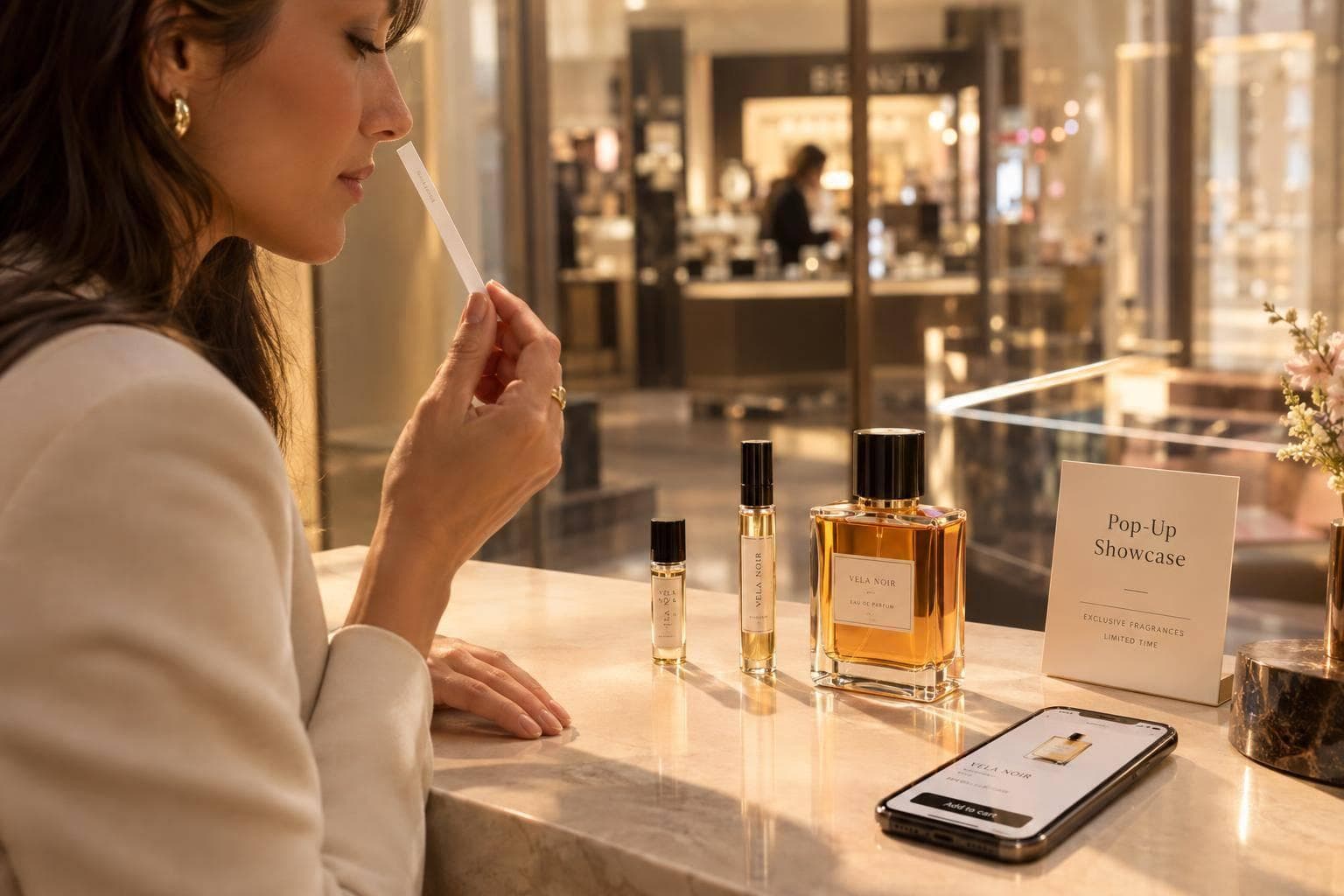
I judge fragrance pop-ups by what shoppers buy later - not just on the day. Before committing to a bottle costing 300 € or more, you need time to test how it wears. I track first-day sales separately from later decant orders and bottle purchases, then subtract each channel’s costs.
Here’s how I compare the three routes:
- Pop-up showcases: Guided skin tests help you shortlist scents, but a short event window can put pressure on you to buy.
- Online-only launches: Samples allow repeated wear at home, though delivery time and sample costs delay the decision.
- Permanent store counters: Return visits let you retest before choosing a decant or bottle.
Quick Comparison
| Channel | How you test | What builds confidence | Later sales to track |
|---|---|---|---|
| Pop-up | Guided skin test | Staff advice and time wearing the scent | Post-event decant and bottle orders |
| Online-only | At-home sampling | Repeated wear | Sample-to-decant and sample-to-bottle purchases |
| Store counter | Repeat visits | Retesting on skin | Later decant and bottle purchases |
My rule: let the scent settle before deciding. For retailers, <u>sales are not profit</u> — I compare later purchases with product, staffing, sampling, venue and fulfilment costs, counting each sale only once.
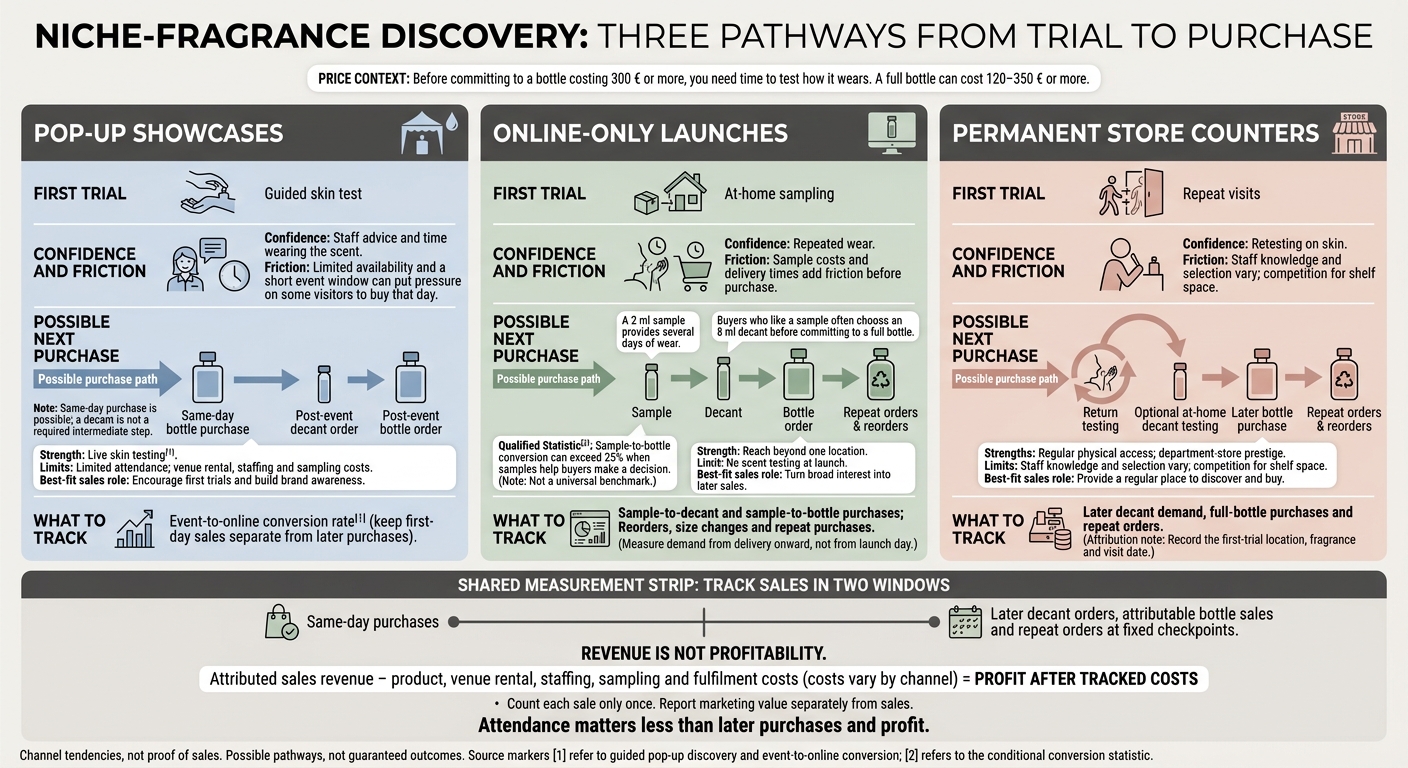
Niche Fragrance Sales: Three Discovery Channels Compared
1. Pop-Up Showcases
Unlike online-only launches, pop-ups make fragrance discovery a live, guided experience. Skin-testing with staff support is their main advantage: staff explain unfamiliar notes, help visitors compare scents and narrow down their choices on the spot.
Buyer confidence
Staff guidance helps shoppers understand a scent. But limited availability and a short event window can also put pressure on some visitors to buy that day. Pop-ups can build interest, though same-day conversion is a less reliable measure of their results.
Follow-up decant demand
Interest can continue after the event, especially when visitors want more time to wear a scent at home. That interest can lead to decant demand, extending the sales window beyond the pop-up. For niche fragrance, the event often starts the sale rather than completes it.
2. Online-Only Launches
Pop-ups bring discovery into a single visit. Online launches give buyers several days to test a fragrance at home.
Trial habits
A 2 ml sample provides several days of wear, so buyers can compare the opening and dry-down across different days.
Buyer confidence
Descriptions help buyers shortlist scents. Repeated wear at home then shows how long each fragrance lasts and how it fits their routine. Sample costs and delivery times add friction before purchase.
Follow-up decant demand
With testing happening after delivery, purchases often begin with smaller sizes. Buyers who like a sample often choose an 8 ml decant before committing to a full bottle.
Track sample-to-decant and sample-to-bottle sales separately. Sample-to-bottle conversion can exceed 25% when samples help buyers make a decision. Measure demand from delivery onward, not from launch day.
3. Permanent Store Counters
Unlike pop-ups, permanent counters let shoppers return for repeat testing. They bridge the urgency of an event and the slower pace of at-home evaluation offered online.
Trial habits
Shoppers can revisit their shortlist and retest scents before buying, giving them more time to decide than a pop-up allows.
Buyer confidence
Staff help narrow the shortlist. The next step is another skin test, not more blotters.
Follow-up decant demand
Shoppers often leave a counter interested but undecided. A decant lets them continue testing at home, turning the in-store shortlist into a possible later purchase rather than an impulse buy.
Record the first-trial location, fragrance and visit date to track whether the counter visit led to a later decant or full-bottle sale.
Your Personal Fragrance Expert Awaits
Take our quick scent quiz to discover authentic designer and niche fragrances matched to your taste — explore them as 2ml, 5ml, 8ml & 30ml decants and samples, so you can try each one before committing to a full bottle.
Find Your ScentHow Discovery Shapes Purchase Decisions
Three factors shape the comparison: how people test a scent, how confident they feel, and whether they buy straight away or later.
Trial Habits: First Sprays and Repeat Wear
| Channel | Trial habit |
|---|---|
| Pop-up showcases | Live skin testing with staff guidance |
| Online-only launches | At-home testing after initial interest |
| Permanent store counters | Repeat in-store testing |
How someone tests a fragrance shapes their confidence. But feeling confident doesn’t always mean being ready to buy.
Buyer Confidence: Guidance, Trust and Pressure
| Channel | Confidence driver |
|---|---|
| Pop-up showcases | Expert guidance and direct scent discovery |
| Online-only launches | Repeated at-home testing |
| Permanent store counters | In-person testing |
Limited availability at a pop-up can create urgency. Treat that urgency as pressure, not proof that the scent is a good fit.
The clearer sales signal often comes after the first test, rather than during it.
Follow-Up Decant Demand: From Trial to Purchase
| Channel | Follow-up behaviour | Measurement metric |
|---|---|---|
| Pop-up showcases | Post-event behaviour | Event-to-online conversion rate |
| Online-only launches | At-home testing and repeat interest | Reorders, size changes and repeat purchases |
| Permanent store counters | Continued in-store testing | Later decant demand, full-bottle purchases and repeat orders |
Track demand beyond the first encounter. Keep first-day sales separate from later decant orders, full-bottle purchases and repeat orders.
Channel Strengths, Limits and Sales Roles
The three channels serve different parts of the sales funnel: discovery, conversion and repeat purchase.
| Channel | Main strengths | Main limits | Best-fit sales role |
|---|---|---|---|
| Pop-up showcases | Live skin testing | Limited attendance; venue rental, staffing and sampling costs | Encourage first trials and build brand awareness |
| Online-only launches | Reach beyond one location | No scent testing at launch | Turn broad interest into later sales |
| Permanent store counters | Regular physical access; department-store prestige | Staff knowledge and selection vary; competition for shelf space | Provide a regular place to discover and buy |
These are channel tendencies, not proof of sales. A busy showcase may fail to cover its costs, while a large online audience may generate few purchases.
For online launches, the main hurdle is the upfront spend. A full bottle can cost 120–350 € or more before the shopper knows how it smells. Sampling can lower that barrier.
Revenue is not profitability. Compare channels by subtracting product cost, venue rental, staffing, sampling and fulfilment. Count later purchases attributed to each channel only once, and report marketing value separately from sales.
The next question is when shoppers buy: on the day or after their first trial.
Conclusion: Track Immediate and Later Sales
Pop-ups bring discovery into a single visit. Online launches let people try scents at home, while permanent counters allow repeated testing. Buyer confidence often grows after that first contact - not on the day itself.
Track sales in two windows: same-day purchases, followed by decant demand, repeat orders and attributable bottle sales at fixed checkpoints. Compare each channel against its total cost.
Attendance matters less than later purchases and profit.
FAQs
How long should I test a fragrance before buying?
Wear it over several days, rather than judging it by a quick in-store spritz. A 2 ml decant gives you 20–30 sprays - enough to see how it works on your skin and fits your morning routine, workday or night out.
German buyers typically test three or four 2 ml decants over a fortnight before buying a bottle. This helps reduce regret and build a carefully chosen scent wardrobe.
Which decant size is best for repeat testing?
A 2 ml decant is the best choice for repeat testing. It’s Europe’s dominant format and provides 25–30 sprays - enough to test longevity, projection and how the fragrance interacts with your skin over several days. Trying it more than once helps you make an informed buying decision.
For more time with a fragrance, a 5 ml decant offers several weeks of testing, while the 8 ml size supports a full month of daily wear.
How can retailers attribute later sales to a pop-up?
Retailers can use UTM tags to track sessions driven by campaigns and follow customer cohorts over 7-, 30- and 90-day windows. This shows how many customers move from an initial trial to repeat purchases or a full bottle.
Focus on cost per acquisition (CPA) and trial-to-purchase rates, not just foot traffic or impressions. These measures show whether the pop-up turns curiosity into sales - and how it contributes to business results over time.

