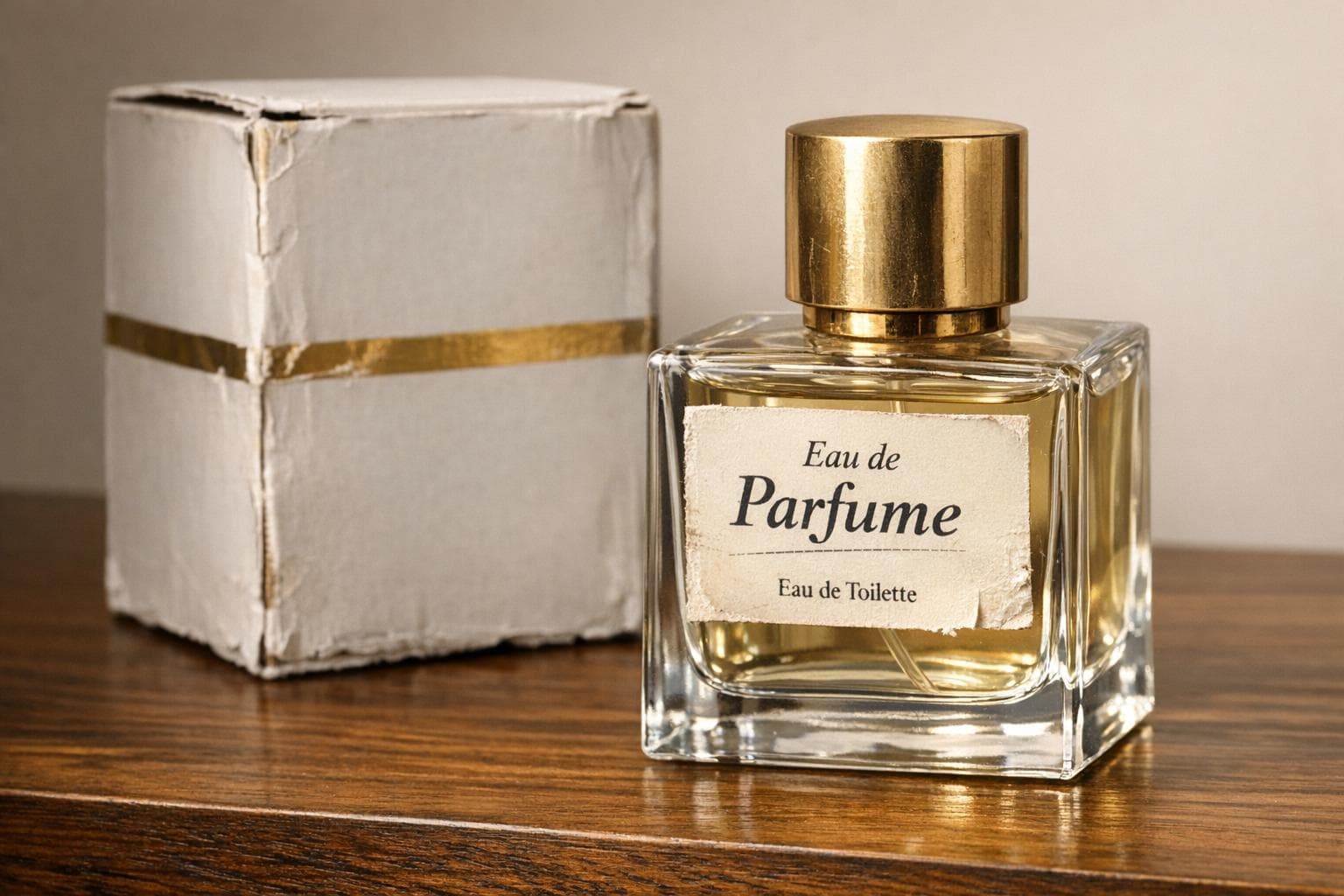
Shopping for perfume online can be risky. Counterfeit products flood the market, often leading to financial loss, health hazards, and disappointing purchases. Here’s what you need to know:
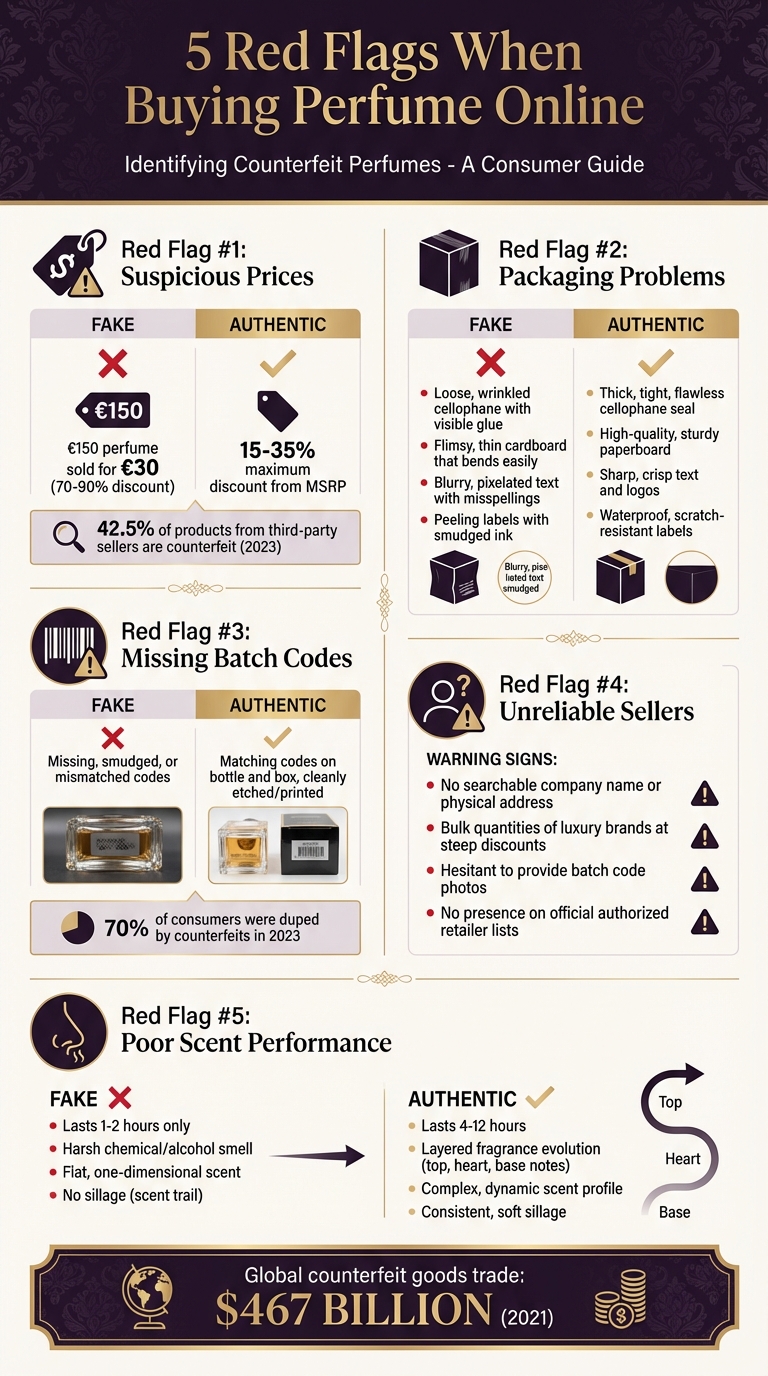
- Suspicious Prices: A €150 perfume priced at €30 is likely fake. Counterfeiters use harmful, low-cost ingredients to mimic scents.
- Packaging Issues: Look for misspellings, poor-quality materials, and mismatched barcodes or batch codes.
- Missing Batch Codes: Genuine perfumes have batch codes that match on both the bottle and packaging.
- Unreliable Sellers: Avoid third-party vendors without clear credentials or reviews. Stick to authorized retailers.
- Weak Scent Performance: Counterfeits often smell harsh, fade quickly, and lack the layered complexity of real perfumes.
To stay safe, always verify sellers, inspect packaging, and confirm batch codes. Platforms like Scento offer guaranteed genuine perfumes in smaller sizes, making it easier to test without committing to full bottles. Protect your investment and health by shopping wisely.
5 Red Flags When Buying Perfume Online: Authentic vs Counterfeit Guide
1. Prices That Seem Too Good to Be True
1.1 Why Extremely Low Prices Signal Problems
If you see a $150 designer perfume listed for just $30, alarm bells should go off. High-end fragrances are priced the way they are for a reason: they use premium ingredients, undergo rigorous testing, and adhere to strict safety standards. Luxury brands also invest heavily in their reputation and control their distribution to maintain those price points.
Counterfeiters, on the other hand, skip all of this. They use cheap and often dangerous substitutes - think floor wax, mercury, concrete, or even lead - to replicate the scent for a fraction of the cost. As Maison D’Abba puts it:
"Authentic perfumes are crafted with high-quality ingredients and have a price tag to match. A $150 perfume being sold for $30? That’s a major red flag."
Unrealistically low prices are a classic bait tactic used by scammers to attract unsuspecting buyers. Genuine retailers might offer discounts of 15%–35%, but if you see markdowns of 70%–90%, be wary. Interestingly, some counterfeiters take a different approach, pricing their fake products close to retail with minor discounts to fool savvy shoppers into thinking they’re getting the real deal.
Understanding how to benchmark prices can help you avoid falling into these traps.
1.2 How to Compare Prices Properly
Start by looking up the Manufacturer’s Suggested Retail Price (MSRP) on the brand’s official website or trusted retailers like Sephora, Nordstrom, or Macy’s . Compare these prices across official brand sites and authorized sellers. Significant differences from the average price should raise suspicion.
If you’re shopping on platforms like Amazon or Walmart, pay close attention to the "Sold by" and "Ships from" details. Buying directly from the brand or a recognized retailer is far safer than purchasing from unknown third-party sellers . Julie Zerbo, founder of The Fashion Law, emphasizes:
"If a third-party seller is selling a new product for less than the established price, that could be an indication that it’s a fake."
A 2023 report by the U.S. Government Accountability Office revealed that about 42.5% of brand-name products purchased from third-party vendors on major e-commerce sites turned out to be counterfeit.
To stay safe, check the brand’s official website for a list of authorized retailers. If you can’t find a seller listed there, proceed with extreme caution. A price that deviates too much from the established MSRP is almost always a red flag. Careful price comparison is your best defense against counterfeit products.
2. Packaging and Label Problems
2.1 What to Look for in Packaging
The packaging of an authentic perfume is where luxury and attention to detail truly shine. High-quality cellophane should be thick, tightly wrapped, and machine-sealed - no wrinkles, visible glue, or loose edges. The box itself must feel solid, crafted from high-grade paperboard that speaks to the brand’s commitment to quality.
Pay close attention to the printing. It should be sharp and flawless, with no smudges or errors. Any misspellings or blurry text are immediate red flags. The logo, too, is a critical detail - it must be perfectly centered and match the brand’s official design without deviation. As GQ India points out:
"Luxury brands invest in immaculate packaging. Authentic and legit products will have clean edges, neat cellophane wrapping, and high-quality printing."
Another key indicator is the barcode. On genuine perfume boxes, the barcode is typically located on the lower back portion. If it’s missing, smudged, or oddly placed - like on the side of the box - this could point to a counterfeit. Authentic packaging often includes embossed or metallic details, which counterfeiters frequently skip due to the cost and effort involved. Keeping an eye on these details can help you spot whether a perfume is the real deal.
2.2 Common Packaging Errors in Fake Perfumes
Counterfeit perfumes often fall short of the high standards set by authentic brands, and their packaging gives away many clues. One of the most obvious signs is loose, wrinkled cellophane that doesn’t fit snugly around the box. You might also notice excess glue marks or uneven seams, a telltale sign of hand-applied wrapping rather than the precision of machine sealing.
The box material is another giveaway. Counterfeit boxes are often made of flimsy, thin cardboard that bends or dents easily, lacking the sturdy protection of genuine packaging. Labels on fake perfumes frequently peel at the edges, have smudged ink, or display uneven spacing. Perfume collector Eliza Partington explains:
"A telltale sign of a counterfeit perfume is unusual packaging or a sloppy label. After all, perfumes are luxury items that go through strict quality-assurance processes."
Text errors are also common in counterfeit products. Look for misspellings, strange fonts, or blurry lettering with pixelated edges. Even subtle character errors on labels can indicate a fake. This issue is widespread, as the global trade in counterfeit goods - including perfumes and cosmetics - was valued at approximately $467 billion in 2021.
| Feature | Authentic Perfume | Counterfeit Red Flags |
|---|---|---|
| Cellophane | Thick, tight, flawless seal with no visible glue | Loose, wrinkled, poorly sealed with obvious glue marks |
| Box Material | High-quality, sturdy paperboard | Flimsy, thin cardboard that bends or dents easily |
| Print Quality | Sharp, crisp text and logos with consistent fonts | Blurry, pixelated text with misspellings |
| Labels | Waterproof, scratch-resistant, and perfectly aligned | Peeling edges, smudged ink, or uneven spacing |
3. Missing or Unverifiable Batch Codes
3.1 What Batch Codes Are and Why They’re Important
When checking the authenticity of a perfume, batch codes are just as crucial as examining price and packaging.
A batch code is a unique combination of letters and numbers either printed or etched onto the bottle and its packaging. This code provides critical details about when and where the product was manufactured. Essentially, it serves as a fingerprint for the product’s origin.
Batch codes are not only used to confirm authenticity but also to determine production dates. In genuine luxury perfumes, the batch code on the bottle matches the one on the box. These codes are often etched directly into the glass rather than printed on a label. Since most perfumes last over 30 months and aren’t required to display a "Best before" date, the batch code becomes the primary way to verify the production date.
Counterfeit perfumes, on the other hand, often have missing, smudged, or altered codes. Alarmingly, in 2023, nearly 70% of consumers reported being duped into buying counterfeit goods online at least once. As explained on checkcosmetic.net:
"The batch code allows manufacturers or suppliers to identify the batch in which the product was produced. If the product is not made in a batch, then the code should enable the date and place of manufacture to be identified."
Understanding the importance of batch codes is just the first step. Next, let’s explore how to verify them effectively.
3.2 How to Check Batch Codes and QR Codes
To locate the batch code, check the bottom of the bottle or near the barcode on the box. The code on the bottle should match the one on the packaging exactly - any mismatch is a clear sign of a counterfeit.
Many perfume brands provide official verification tools on their websites. These tools allow you to input the batch code to confirm the product’s authenticity and production history. Some brands also include QR codes on their packaging, which can be scanned using brand-specific apps for instant validation. Perfume collector Eliza Partington highlights this convenience:
"Brands also usually provide ways to verify batch codes through their website so you can check if the code on your bottle is legitimate."
If an online verification tool isn’t available, you can always reach out to the brand’s customer service with the batch code for confirmation. They can verify whether the code exists in their production database. However, avoid relying on third-party calculators, as only the manufacturer’s verification is trustworthy.
Pay attention to physical quality indicators as well. Authentic batch codes are typically cleanly printed or embossed. Blurry, smudged, or easily removable codes are red flags. Additionally, if a seller hesitates to provide clear photos of the batch code or if the barcode appears on the side of the box instead of the bottom back portion, it’s best to steer clear.
4. Questionable Seller Background
4.1 How to Identify Unreliable Sellers
Once you’ve verified the product details, it’s time to dig into the seller’s background. This step can help you avoid falling victim to scams. Even if a perfume seems to have the right price and packaging, the seller’s credibility can make or break your purchase experience.
Start by examining the "Sold by" field on platforms like Amazon or Walmart. These sites often host third-party vendors, some of whom may sell counterfeit products. Counterfeiters frequently exploit these third-party marketplaces. Kari Kammel, Director at the Center for Anti-Counterfeiting and Product Protection at MSU, points out:
"Counterfeiters have found this [third-party marketplaces] to be a loophole to get in front of consumers."
A trustworthy seller should have a searchable company name, physical address, and a professional website. If you can’t find any trace of them online, that’s a red flag. On platforms like eBay or Mercari, be cautious of sellers offering bulk quantities of high-end, "new in box" perfumes. These could be stolen goods or fakes.
Customer reviews can also be revealing, but don’t just rely on the overall rating. On large marketplaces, reviews are often pooled across all sellers, so a high score doesn’t necessarily guarantee the credibility of the specific vendor you’re dealing with. Look for recurring complaints about unusual scents, poor longevity, or damaged packaging. On the flip side, if a seller has no negative feedback at all, it could indicate manipulated or fake reviews. In 2023, Amazon blocked over 250 million suspected fake reviews globally to address this issue.
Transparency is another key factor. Ask for clear photos of the batch code or inquire about their return policy. Legitimate sellers will provide straightforward answers and clear images. If they avoid showing the bottom of the box or sidestep questions about the product’s origin, it’s best to move on.
4.2 Why Authorized Retailer Lists Matter
Beyond researching sellers, check the official retailer lists provided by the brand. Buying from authorized retailers is one of the best ways to ensure you’re getting an authentic product. Most luxury fragrance brands maintain official lists of authorized sellers on their websites. Taking a few minutes to cross-check a seller against these lists can save you from wasting money on counterfeits.
This distinction is more critical than it may seem. A study by the U.S. Government Accountability Office revealed that 20 out of 47 brand-name products purchased from third-party vendors on popular websites were counterfeit. As Kammel explains:
"There’s no way to know with certainty whether the item from a third-party seller is an authentic product. The only one who can do that is the brand or the manufacturer."
When shopping on major platforms, prioritize listings labeled "Sold by [Brand Name]" or "Sold by Amazon/Walmart" over those from unknown third-party sellers. While not all third-party vendors are untrustworthy, the risk of encountering a counterfeit is significantly higher. If you’re considering a new seller, review their other listings. If they offer bulk quantities of multiple luxury brands at steep discounts, it’s a strong warning sign.
For extra caution, join online fragrance communities on platforms like Facebook or Reddit to do a "legit check". Seasoned collectors in these groups often recognize problematic sellers and can share their insights. This simple step can help you avoid joining the nearly 70% of consumers who were duped into buying counterfeit goods online in 2023.
Your Personal Fragrance Expert Awaits
Take our quick scent quiz to discover authentic designer and niche fragrances matched to your taste — explore them as 2ml, 5ml, 8ml & 30ml decants and samples, so you can try each one before committing to a full bottle.
Find Your Scent5. Off Scent and Poor Longevity
5.1 Scent Warning Signs to Watch For
Even if the price and packaging seem correct, the scent itself can reveal a counterfeit. Genuine perfumes are carefully crafted to evolve through top, heart, and base notes, creating a layered and dynamic experience. Counterfeit perfumes, on the other hand, are often flat and one-dimensional, offering an initial burst that quickly fades.
At the first spray, fake perfumes often hit you with a sharp, overpowering alcohol smell or a harsh chemical aroma that masks the intended fragrance. This happens because counterfeiters replace high-quality essential oils with cheap synthetic chemicals and industrial solvents. Some counterfeits may even develop an unpleasant sour finish as they sit on the skin.
Pay close attention to how the scent changes over time. Authentic perfumes interact with your body heat, gradually revealing deeper, more complex layers. Counterfeits, however, tend to stay static, mimicking only the top notes. As Delacourte Paris points out:
"The olfactory pyramid is truncated because counterfeiters do not use costly and complex heart and base notes."
Another red flag is weak or completely absent sillage - the delicate scent trail that lingers after you. Genuine fragrances create a consistent, soft presence, while counterfeits rarely project beyond the initial application.
The staying power of a fragrance also serves as a critical clue. Authentic perfumes evolve over time, offering a rich and lasting experience, while imitations often fail to do so.
5.2 How Longevity Reveals Authenticity
Longevity is one of the most reliable indicators of a perfume’s authenticity. Genuine fragrances typically last between 4 to 12 hours, whereas counterfeit versions fade away in just 1 to 2 hours.
This difference lies in the quality of ingredients. High-end perfumes often contain 25% to 30% rare and luxurious natural materials, like natural oud or iris pallida butter, which contribute to their long-lasting nature.
To test longevity, apply the perfume to your pulse points and give it time to develop. Avoid making judgments based on the initial spray. Wait at least 30 minutes to see if it transitions into richer, more complex notes. If the scent remains unchanged or disappears quickly, it’s likely a counterfeit. As fragrance writer Leanna Serras explains:
"Longevity will be the telltale sign of a fake perfume... A real perfume will last way longer on the skin."
Additionally, watch for any adverse skin reactions. Counterfeit perfumes often skip proper safety and dermatological testing, meaning they can include banned fixatives or harmful chemicals. If you experience redness, itching, or discomfort, it’s a strong indicator that the perfume may not be authentic.
6. How to Shop Safely for Real Perfumes Online
6.1 Trusted Platforms and Verification Methods
Stick to purchasing from authorized retailers or official brand boutiques when shopping for perfumes online. Reputable stores like Sephora, Nordstrom, or Macy’s follow strict sourcing guidelines and offer reliable return policies, ensuring peace of mind.
To avoid counterfeits, verifying batch codes and seller authenticity is crucial. When your perfume arrives, check the batch code - a unique combination of letters and numbers - found on both the bottle’s base and the outer packaging. These codes should match perfectly. Use official tools to confirm their legitimacy. As Beautinow explains:
"Authentic perfumes display serial numbers in consistent locations, typically on the bottle bottom, box exterior, or both".
If you’re considering platforms like Amazon or Walmart, proceed with caution. A 2023 study revealed that many products from third-party sellers on these platforms were counterfeit. Kari Kammel, Director at the Center for Anti-Counterfeiting and Product Protection at MSU, emphasizes:
"There’s no way to know with certainty whether the item from a third-party seller is an authentic product. The only one who can do that is the brand or the manufacturer".
Before committing to a full-size bottle, test with samples or decants. This allows you to evaluate the fragrance’s scent profile and how it interacts with your skin without spending a significant amount. Additionally, inspect the sprayer mechanism - it should produce a fine, even mist. A wobbly nozzle or uneven spray can indicate a counterfeit.
By following these steps, you can shop with confidence, especially on platforms that prioritize authenticity.
6.2 Scento: A Safe Way to Buy Authentic Fragrances
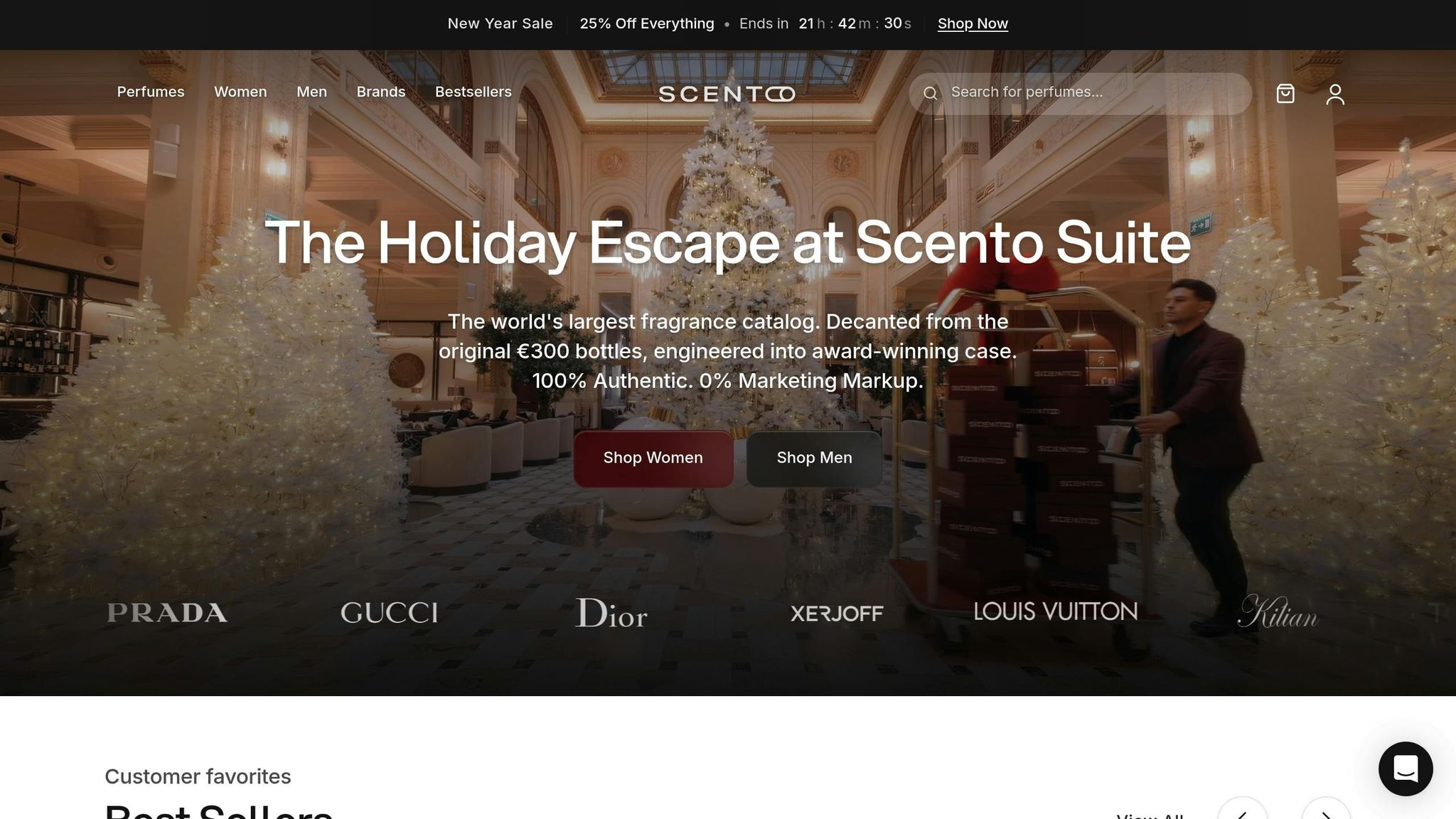
Scento takes these safety measures to the next level, offering a reliable way to purchase authentic fragrances online. The platform specializes in designer and niche perfumes in flexible sizes, eliminating the risk of spending over €300 on a full bottle from an unreliable seller. Instead, you can try curated 2 ml, 5 ml and 8 ml vials, and a 30 ml bottle decant on most perfumes.
Every fragrance on Scento comes with an authenticity guarantee and is sourced under strict standards. The 8 ml size, for example, provides around 120 sprays, giving you plenty of time to experience the scent’s full development, longevity, and how it interacts with your skin. This is particularly helpful since genuine perfumes typically last 6 to 12+ hours, while counterfeits fade within 2 to 4 hours.
Scento also offers a 30-day satisfaction guarantee, allowing you to verify the quality risk-free. With fast shipping across the country and personalized fragrance recommendations, Scento makes discovering new scents both secure and enjoyable.
6.3 Comparison Table: Warning Signs vs. Scento Advantage
| Warning Sign | Scento Advantage |
|---|---|
| Extremely Low Prices | Transparent pricing for curated 8 ml decants |
| Questionable Authenticity | Guaranteed authentic fragrances with strict sourcing |
| Poor Longevity/Off Scent | High-quality original oils that retain scent complexity |
| No Recourse for Fakes | 30-day satisfaction guarantee |
| Bulk/Suspicious Sellers | Curated selection of verified luxury fragrances |
| Missing Batch Codes | All products include proper verification details |
| Uncertain Return Policies | Clear refund policy with dedicated customer support |
Conclusion
Shopping for perfume online can be a secure and rewarding experience - if you know what to watch out for. Be cautious of red flags like prices that seem too good to be true, errors in packaging, missing batch codes, unreliable sellers, or weak scent performance. These are often telltale signs of counterfeit products, a problem that affected nearly 7 in 10 consumers in 2023. Beyond wasting your money, counterfeit perfumes can contain harmful chemicals and lack the sophisticated scent development of genuine fragrances . As Kari Kammel, Director at the Center for Anti-Counterfeiting and Product Protection at MSU, emphasizes:
"One of the most important things you can do is know where you’re shopping from".
To avoid these risks, consider platforms like Scento, which guarantees authentic designer and niche fragrances in convenient 2 ml, 5 ml and 8 ml vials, and a 30 ml bottle decant on most perfumes. This lets you explore premium scents without the commitment of a full-sized bottle. Every purchase is backed by rigorous sourcing standards and a 30-day satisfaction guarantee, ensuring a safe and satisfying shopping experience. Whether you’re searching for your next signature scent or curating a fragrance wardrobe, Scento makes it easy to enjoy genuine perfumes with confidence.
Protect your health and your investment by sticking to trusted sellers and verifying every purchase. Authentic fragrances not only enhance your daily life but also ensure your peace of mind. Choose wisely - your senses and wallet will thank you.
FAQs
What are the best ways to ensure a perfume bought online is authentic?
To ensure a perfume is genuine, begin by examining the batch or serial code on its packaging and compare it with the brand’s official database. Carefully inspect both the box and bottle for sharp, precise printing, accurate fonts, and batch numbers that align. Look closely at details such as the cap, spray mechanism, and the overall weight of the bottle - authentic perfumes tend to feel solid and well-crafted.
When uncertain, stick to purchasing from reputable retailers that promise authentic designer fragrances. For example, Scento specializes in offering only genuine perfumes, thoughtfully selected for discovery.
What health risks can counterfeit perfumes cause?
Counterfeit perfumes come with serious health risks due to their unregulated and often low-quality ingredients. These fake products can trigger skin irritation, including rashes, burning sensations, or allergic reactions - particularly for individuals with sensitive skin. Beyond skin issues, inhaling or spraying counterfeit fragrances may aggravate the respiratory system, causing symptoms such as coughing or wheezing.
Worse yet, some counterfeit perfumes have been found to contain toxic chemicals and even unsanitary substances. These contaminants not only increase the likelihood of skin staining but also pose long-term health dangers through repeated exposure. Since counterfeit fragrances lack proper safety testing, they present a significant hazard, underscoring the importance of buying authentic products from reliable sources.
Why don’t counterfeit perfumes last as long as authentic ones?
Counterfeit perfumes are typically made with inexpensive, low-grade synthetic materials that fall far short of the depth and stability found in genuine fragrances. These knockoffs bypass the meticulous testing and quality checks that authentic perfumes undergo, resulting in scents that deteriorate quickly and lose their aroma far sooner.
In contrast, authentic perfumes are thoughtfully designed to deliver a well-rounded and enduring scent experience - something counterfeit versions just can’t match.

