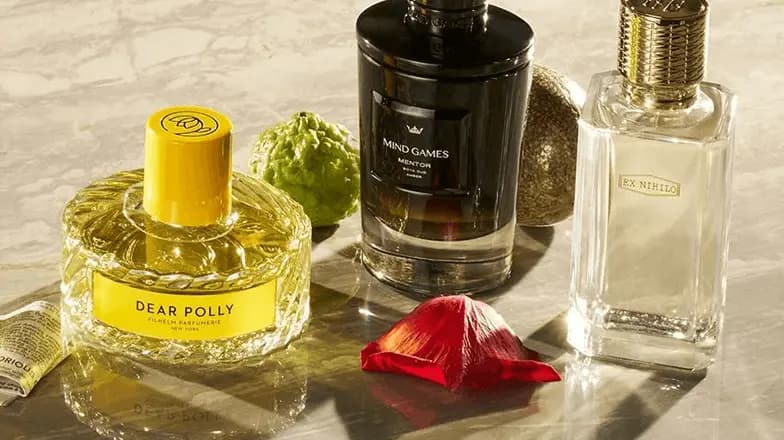


The UK fragrance market is the only major European market simultaneously running two opposing growth engines. On one side, dupes and discounters are pulling cost-conscious buyers toward £12-£25 alternatives that smell remarkably close to £200 designer originals. On the other side, niche houses are growing premium-tier share faster than at any point in the past decade.
The result is a market that is bigger in absolute revenue than five years ago, but where the middle of the price range is being hollowed out from both directions. This is the single most distinctive structural pattern in any major European fragrance market in 2026, and the contrarian "the fragrance bubble is about to burst" warning attached to the UK by leading consumer-behaviour research is the load-bearing context for everything that follows.
This piece sets out what the UK fragrance market actually looks like in 2026: how big it is, how the dupe economy works, where niche British heritage fits, why Gen Z is the volume driver, where buyers actually transact, and where the next four years go. Scento's curated catalogue sits inside this market as a sample-led discovery layer for buyers navigating the dupe-to-niche bifurcation.
How Big Is the UK Fragrance Market in 2026?
The headline number depends on methodology. The 2024 UK fragrance retail market reached $2.83 billion (£2.27 billion) at 4.7% CAGR over 2019-2024 in the most-cited methodology. An alternative 2024-2025 measurement places the market at $2.45 billion in 2024 with growth to $3.53 billion by 2030 at 6.33% CAGR. A broader-scope 2025 methodology places the market at $4.31 billion in 2025 with growth to $7.04 billion by 2034 at 5.64% CAGR. The forecast that anchors UK industry coverage: the UK fragrance market will surpass £2 billion in retail value before 2030 in the dominant editorial methodology.
Volume context matters as much as value. 77.1 million units sold in 2024, growing at 1.2% CAGR over 2019-2024 — meaningfully slower than value growth. The gap between value and volume growth indicates premiumisation at the top of the market plus dupe-trade-down at the bottom, with the £40-£120 designer mid-tier compressed.
Manufacturing footprint: UK perfume-and-toiletry manufacturing market size sat at £3.1 billion-£3.3 billion in 2024-2025, growing 1.3% year-on-year. As of March 2024, the UK had 60 perfume-and-toiletry manufacturing enterprises with turnover above £5 million, and 840 enterprises in total when including micro-businesses. The country is a meaningful fragrance producer in absolute terms, but a net importer in value — like Germany, the buyer's market is bigger than the maker's market.
Market growth drivers: TikTok-driven category interest (Gen Z fragrance discovery), prestige fragrance launches (which grew 13% in H1 2024), the rise of body sprays (revenue more than doubled versus 2023 in the dominant tracked sub-category), and explicit dupe-segment expansion. The UK is the only major European market where dupe-segment expansion is now an explicit, named growth driver in mainstream consumer-research outputs.
For commerce orientation, the UK shelf splits cleanly between women's fragrances and men's fragrances, with the gender-fluid niche tier — Le Labo Santal 33, MFK Baccarat Rouge 540, Tom Ford private blend — straddling both filters.
Within the UK fragrance economy, three structural conditions distinguish the market from continental peers. First, the high-street retail concentration in Boots, Superdrug, and The Perfume Shop creates a gateway-channel structure where the under-25 first-purchase buyer often makes their initial fragrance decision inside one of these chains, then graduates outward to specialty or department-store retail. Second, the cost-of-living squeeze that intensified through 2022-2024 created the demand conditions for dupe-segment expansion in a way that has not been replicated in Germany or France at comparable scale. Third, the UK's structural connection to global fragrance trends through London-based luxury retail (Selfridges, Harrods) and London's role as a multinational beauty corporate hub means that what surfaces in UK consumer behaviour often anticipates what will appear in continental European behaviour 12-18 months later. The dupe wave is the most immediate example.
The Dupe Economy — The UK's Defining Story
The dupe segment is now meaningfully tracked in UK fragrance market reports as a primary growth engine. The named participants: Lattafa, Maison Alhambra, Armaf, Al Haramain, Ard Al Zaafaran (Middle Eastern dupe houses), Dossier (US transparency-focused), Oakcha (US), and Zara (Spanish fashion-retail house operating a 270+ SKU fragrance catalogue at high-street price points).
The flagship comparison anchors the entire dupe conversation. Maison Francis Kurkdjian Baccarat Rouge 540 retails at roughly £380 for 100ml. The most-cited UK-shelf dupes for that single fragrance: Zara Red Temptation 80ml under £25 with reported 8/10 closeness; Dossier Ambery Saffron 50ml at roughly £39 with reported 8/10 closeness; Maison Alhambra Baroque Rouge 540 100ml at roughly £15 with 7/10 closeness; Lattafa Khamrah 100ml at roughly £25 with 5/10 closeness as a boozy-gourmand layering partner; Aldi Lacura Cardinal Red 50ml under £6 as a periodic Specialbuy with 6/10 closeness. The single most expensive niche-prestige fragrance in mass UK awareness now has five widely-distributed alternatives at less than 7% of its price.
The high-street is fully participating. M&S, Boots, Superdrug, Aldi, and The Perfume Shop are all running dupe-style ranges. M&S's £12 Fresh Mandarin EDT has been viral-positioned as a Carolina Herrera Good Girl-equivalent; the M&S range alone now anchors meaningful incremental category spend at the under-£15 price point. The Essence Vault is a UK-emerging dupe specialist that captured holiday-shopping spend in 2024.
The reach data: 88% of UK fragrance users now think the scent itself is more important than the brand name. This is a structural reframing of fragrance value — historically anchored to brand prestige, now anchored to scent quality alone. This is the single most consequential consumer-attitude shift in UK fragrance in the past decade, and it cuts in both directions: it drives dupe interest at the bottom and niche interest at the top, simultaneously.
The motivational data: dupe purchase drivers are dominated by replica-seeking — buyers explicitly want the same scent at a lower price, not a different scent. This is not the budget-fragrance buyer pattern of the 2010s drugstore alternatives. The dupe buyer of 2026 has identified the niche reference scent (often through TikTok) and has decided that the £15 alternative is sufficient.
The demographic data: dupe curiosity converts into strong sales across the demographic spectrum, not just younger or budget-constrained buyers. Dupes have penetrated middle-class millennial households as primary fragrance purchases. The buyer who would have bought one full bottle of Maison Francis Kurkdjian in 2018 now buys three Lattafa bottles for layering and rotation in 2026.
The growth scale: Zara has built a 270+ SKU fragrance catalogue. Dossier — the US-founded transparency-focused dupe brand — ships directly into the UK with named-reference comparisons baked into product copy. Lattafa is the dominant Middle Eastern dupe house in UK awareness; Khamrah and Yara are the household-name SKUs.
The strategic threat: prestige brands are forced to differentiate. The leading consumer-behaviour research framing for the UK market is direct — the fragrance bubble is about to burst — meaning prestige price points cannot continue to disconnect from the scent-quality / dupe-availability ratio without consumer pushback. Dior Sauvage and Bleu de Chanel hold the top of the men's market through brand equity rather than scent uniqueness; Creed Aventus holds the niche-prestige top through legacy positioning. The £40-£120 designer mid-tier is where the dupe pressure compresses pricing.
Discovery sample sets at £15-£25 are the structurally honest answer to the dupe-niche question: try the niche reference scent at decant volume before deciding whether the £200 full-bottle commitment is worth it. The Scento scent quiz is the curated discovery alternative to dupe-shopping for buyers who do not yet have a niche reference scent in mind.
The dupe-segment infrastructure has matured beyond simple price arbitrage. UK-based dupe specialists now operate full-funnel consumer marketing — TikTok content, blog reviews, side-by-side scent comparisons, longevity testing — that mirrors the structure of premium-fragrance brand marketing rather than the structure of discount-retailer marketing. The Essence Vault, Match Fragrances, and several smaller UK independents have built six-figure social followings around dupe content. The category has graduated from its 2020-2022 "hidden" status into a fully-mainstream consumer category that anchors meaningful UK retail discovery.
The dupe-segment buyer profile is also broader than the early framing suggested. The cost-of-living-driven explanation ("buyers cannot afford the original, so they buy the dupe") covers roughly half the dupe-segment buyer base. The other half is structurally different: buyers who can afford the original but choose the dupe because they want multi-bottle wardrobe variety at a single budget tier, or because they specifically want to use a fragrance freely (work, gym, travel) without rationing a £200 prestige bottle. The latter group is structurally important because it is brand-loyal to the dupe segment specifically — these are repeat dupe buyers, not graduating prestige buyers.
The legal and ethical dimensions of the dupe segment have not yet meaningfully constrained category growth. Most UK dupes are formulated to fall outside trademark protection — same accord composition, different name, different packaging — and consumer awareness of the formulation-versus-trademark distinction is rising rather than falling. The 88% scent-over-brand finding is the structural permission slip that allows the buyer to choose the dupe without feeling that they are buying a counterfeit product.
The Niche Comeback — UK's Quiet Counter — Story
Despite the dupe wave, the UK is also seeing the strongest niche resurgence in any major European market. The British niche houses anchor the £80-£300 price band with British-heritage storytelling: Jo Malone London (now Estée Lauder), Penhaligon's, Floral Street, Miller Harris, Ormonde Jayne, Roja Dove. Two of these houses — Floral Street and Miller Harris — are not yet on the Scento curated catalogue at the time of writing but anchor the wider UK niche — British category alongside the houses Scento does carry.
Jo Malone London is the volume anchor — Cologne Intense and Cologne Collection lines hold meaningful prestige-tier share in the UK. The brand's accessibility (£60-£100 typical price point for Cologne; £140-£170 for Intense) bridges the dupe-mid-tier gap that the broader market is hollowing out. Penhaligon's holds the heritage-aristocratic positioning; Halfeti and Endymion have viral runs across PerfumeTok and into mainstream UK retail. Floral Street is the modern — British niche anchor founded in 2017 in Covent Garden. Miller Harris holds the Bloomsbury / British-perfumer storytelling niche.
The 88% scent-over-brand finding cuts both ways. It drives dupe interest at the bottom of the market — buyers willing to swap brand for scent fidelity at a lower price. It also drives niche interest at the top — buyers willing to pay more for scent quality regardless of brand recognition. The same structural belief produces opposing buying behaviours at opposite ends of the price band.
The niche-launch growth signal: 36% of UK luxury-brand buyers purchased a luxury fragrance (including aftershave) in the 18 months to July 2024, making fragrance the second-most-frequently-purchased luxury goods category after footwear. The Boots data: 42% of UK Advantage Card shoppers bought fragrance in a year. This penetration rate is meaningfully higher than peer markets and grows with Gen Z entry to the category.
Niche fragrance brand growth in the UK: indie fragrance brands grew +46.3% globally in 2025 versus +11.4% for conglomerates — the indie-vs-giant gap is wider in fragrance than in any other beauty sub-category. UK niche houses operating in the £100-£250 price band are growing at indie-pace despite running on conglomerate ownership structures (Jo Malone inside Estée Lauder; Penhaligon's inside Puig).
The international niche tier sells alongside British niche on the UK shelf: Le Labo, Byredo, Tom Ford, Maison Francis Kurkdjian, Creed. The mix is roughly half-and-half on Selfridges' Beauty Hall and the Harrods Perfumery floor: British heritage on one side, international niche on the other, both growing.
The British niche houses' geographic identity matters commercially in a way that has no exact equivalent in the German market. Penhaligon's flagships in Mayfair, Burlington Arcade, and on Wellington Street function as cultural-tourism venues as much as retail venues — international visitors to London routinely purchase Penhaligon's specifically as a London-experience souvenir, in the same way that international visitors to Paris purchase Diptyque or Goutal. The British-heritage premium is therefore export-relevant as well as domestically relevant, and the niche — British category is gaining international shelf placement faster than at any point in the past two decades.
The Roja Dove and Ormonde Jayne tier sits one notch above Jo Malone and Penhaligon's on price and shelf-positioning. Roja Dove's compositions retail at £400-£900+ for 100ml, anchoring the British ultra-niche category in a way that maps closer to Clive Christian or Maison Christian Dior than to mainstream British heritage. The category is small in absolute volume but commercially important because it sets the price ceiling for British niche overall — and that ceiling has steadily risen across 2022-2025 rather than compressed.
Gen Z Drivers — How TikTok Reshaped UK Fragrance Discovery
The 2024 UK fragrance "boom" was spearheaded by TikTok. The Fragrance Shop's annual report identified +70% year-on-year growth in younger shoppers in 2024 alone. #PerfumeTok and #FragranceTok have become primary UK fragrance discovery vectors. The dataset showed TikTok had 278 million fragrance-related posts as of October 2024.
Gen Z behaviour pattern: discovery on social platforms, in-store testing, online or in-store purchase — the path is multi-channel by default. Physical stores remain dominant for first purchase; online for repeat. The Boots store on Oxford Street and the Selfridges Beauty Hall both report disproportionate Gen Z footfall driven directly by TikTok-referenced product searches.
The fragrance-wardrobe adoption: the term gained primary traction within UK PerfumeTok culture. The dedicated PerfumeTok community drove 150 million TikTok posts on the wardrobe concept. The pattern: a daytime scent, a date-night scent, a winter-warmth scent, a summer-fresh scent, a signature anchor scent — five bottles minimum, often eight to twelve. The behaviour is structurally different from the single-signature pattern that defined British fragrance buying through the 1990s and 2000s.
The Gen X reverse-spillover is the underdiscussed half of the TikTok story. TikTok #makeupover40 grew 75% year-on-year in views, and Gen X became the fastest-growing cohort of UK beauty spenders — over-indexing in fragrance, makeup, and haircare at Boots in 2024 versus Boomers, Millennials, and Gen Z. Translation: TikTok did not just create Gen Z buyers; it reactivated Gen X buyers too. The platform is age-agnostic in fragrance; the under-25 first-purchase buyer and the 45+ wardrobe-rebuilder buyer are using the same content.
The teen-boy segment specifically: prestige fragrance launches grew 3 percentage points 2021-2023 globally per the New Product Database tracking; UK-specific consumption among teens has been the standout growth segment with +44% reported teen-boy fragrance growth and +936% growth in "edible" (gourmand) fragrance interest. The scent grammar of UK Gen Z men in 2026 is structurally gourmand, often with vanilla, tonka, and amber driving the top end of the buying behaviour.
The mood-driven buying pattern: scent is increasingly purchased for mood evocation, self-care, and identity expression rather than impression management. This is the structural shift TikTok accelerated, and it is the deepest reason the UK market behaves differently from the German or French markets despite similar absolute size.
The PerfumeTok dupe-niche bridge: PerfumeTok content is roughly 40% dupes, 30% niche, 30% designer recommendations — a ratio that mirrors the macro-market shift this article documents. The same TikTok account that recommends a Lattafa Khamrah at £25 will recommend a Penhaligon's Halfeti at £225 in the next post. The discovery channel is structurally agnostic about price tier; the buyer self-sorts by budget after.
For Gen Z gifting, Scento's gift collection sits at the intersection: curated for taste, sample-led to mitigate gifting risk, priced at decant levels that fit the under-25 budget without abandoning niche-house references.
Channel Shift — Where UK Buyers Actually Spend
The UK channel mix as of 2024-2025 splits into five categories with shifting share between them. Health and beauty retailers (Boots, Superdrug) anchor primary discovery and impulse purchases. Fragrance specialists (The Perfume Shop) lead premium consultation and gifting. Online-only retailers (Notino, Allbeauty, FragranceX, direct-from-brand DTC) capture rising share, particularly for repeat purchases and dupe-house imports. Department stores (Selfridges, Harrods, John Lewis) anchor premium and ultra-premium tier purchases. Discounters (Aldi, B&M) held strong dupe-fragrance momentum but lost some momentum in 2025 versus the 2023-2024 peak.
The Coty dominance signal: Coty remains the single largest fragrance-portfolio holder in the UK — Calvin Klein, Hugo Boss, Chloé, Marc Jacobs, Davidoff, Burberry, Gucci. The brand-management discipline retained market share through the dupe-pressure era by leaning into hero franchises (Boss Bottled, CK One, Burberry Her) rather than diluting brand equity across new launches.
Online-only retailer growth: Notino, Allbeauty, FragranceX, and direct-from-brand DTC have captured the previous specialty-store browsing share. Notino's UK presence in particular has scaled significantly; the platform is now the price-comparison reference for UK fragrance buyers in the £40-£100 designer band. Sephora UK reopened in the UK in 2023 and has been opening physical stores in 2024-2025 as part of LVMH's UK retail expansion.
In-store experiential premium: prestige fragrance specialists are responding to dupe-pressure by deepening in-store experience — exclusives, sampling programmes, fragrance-consultation services. Selfridges' Beauty Hall and Harrods Perfumery have both invested heavily in consultation and bespoke services as the differentiation versus dupe-shopping online.
The discounter dynamic: discounters benefited from increased footfall during the cost-of-living crisis but have lost fragrance momentum as dupe-specialists (Zara, M&S) absorbed the value-conscious buyer with greater scent-fidelity. Aldi's Lacura range still anchors the under-£8 fragrance tier for periodic Specialbuy events but no longer leads the broader dupe segment.
Loyalty programme activity: heritage brands are leveraging loyalty programmes to hold spend. Boots Advantage Card data shows fragrance buyers convert into higher-value shoppers when retained over multiple-year cycles — the buyer who purchases one £35 fragrance in year one buys £80-£120 worth across two purchases in year three.
For commerce orientation across the UK channel mix, the Scento bestseller catalogue reflects the same dupe-vs-niche bifurcation visible at retail: niche-international houses on the prestige side, sample-led discovery formats on the entry side, with mid-tier designer franchises holding only through hero — SKU strength.
2030 Outlook — Will the Bubble Burst or the Premium Hold?
The UK fragrance market forecast: projected to surpass £2 billion before 2030 in retail value in the dominant methodology. Alternative methodologies project $3.53 billion-$7.04 billion at 5.64-6.33% CAGR depending on segment scope. The directional answer: the market grows, but growth concentrates at the ends of the price band rather than the middle.
The burst scenario: if dupes continue to grow at current pace and the 88% scent-over-brand sentiment hardens, the prestige-mid-tier (Coty / L'Oréal / Estée Lauder mass-prestige) could see meaningful share loss. Hero designer franchises (Sauvage, Bleu de Chanel, Aventus) likely retain dominance through brand equity; the squeeze is in the £40-£120 mid-tier where dupes have strongest scent-credibility. A 5-10% share shift from this band into the under-£40 dupe tier over the 2026-2030 window represents £200-£300 million of incremental dupe-segment revenue.
The hold scenario: niche British heritage (Jo Malone, Penhaligon's, Floral Street) continues to absorb prestige-curious dupe buyers who graduate up. Sample-discovery and decant formats become the bridge between dupe-curiosity and full-bottle commitment. Both ends of the market grow; the middle compresses. Sample-led discovery is the structural mechanism that converts the £15 dupe buyer into the £80 niche — British buyer over a 12-18 month cycle.
The most likely outcome: continued bifurcation. Dupes scale toward £200-£300 million in UK retail by 2030; niche British and international heritage scales toward £400-£500 million; mass-prestige consolidates into hero franchises only. The implication for the buyer is structurally simple — the £40-£80 designer purchase becomes the hardest decision on the shelf, because the dupe at £20 and the niche at £140 both have stronger value propositions than the mid-tier designer at £55.
The structural convergence is toward sampling, decants, and discovery formats. Buyers want to test before committing whether they are shopping dupes (£15 versus £25 risk) or niche (£25 versus £200 risk). This is the structural opportunity for sample-format retailers, and it is the explicit positioning of Scento across the European market: a discovery layer that lets the UK buyer try MFK, Tom Ford, Le Labo, Byredo, Jo Malone London, and Penhaligon's references at decant volume before any full-bottle commitment. New niche releases reach the Scento sample shelf inside the same window they land at Selfridges and Harrods.
The watch-item: US trade-disruption impact on UK fragrance imports and pricing through 2026-2027. The 2025 forecast explicitly flagged this as a sensitivity. Tariff escalation on European fragrance imports into the US would re-route product, compress UK retail margins, and accelerate the dupe-segment share gain at the expense of mid-tier designer prestige. The first-order impact on the UK shelf is downstream of US trade policy in a way few other consumer categories are.
For the UK buyer in 2026, the structural decision tree has compressed to three lanes: dupe (under £40, scent-fidelity-led), sample-led niche discovery (£15-£25 entry, £80-£300 graduation), or hero franchise (Sauvage, Bleu de Chanel, Aventus, Baccarat Rouge 540 — the brand-equity anchors that survived the dupe wave). Across Scento's pan — European cohort, the sample-led niche discovery lane is the fastest-growing buying behaviour, and the UK is structurally the most over-indexed market for this pattern. The Scento scent quiz is built precisely for this lane: a 60-second match for a buyer who has identified that dupes are insufficient and full-bottle commitment is premature.
This analysis is based on Scento's review of the UK fragrance market, October 2025 – April 2026. A detailed methodology is available to press on request at [email protected].