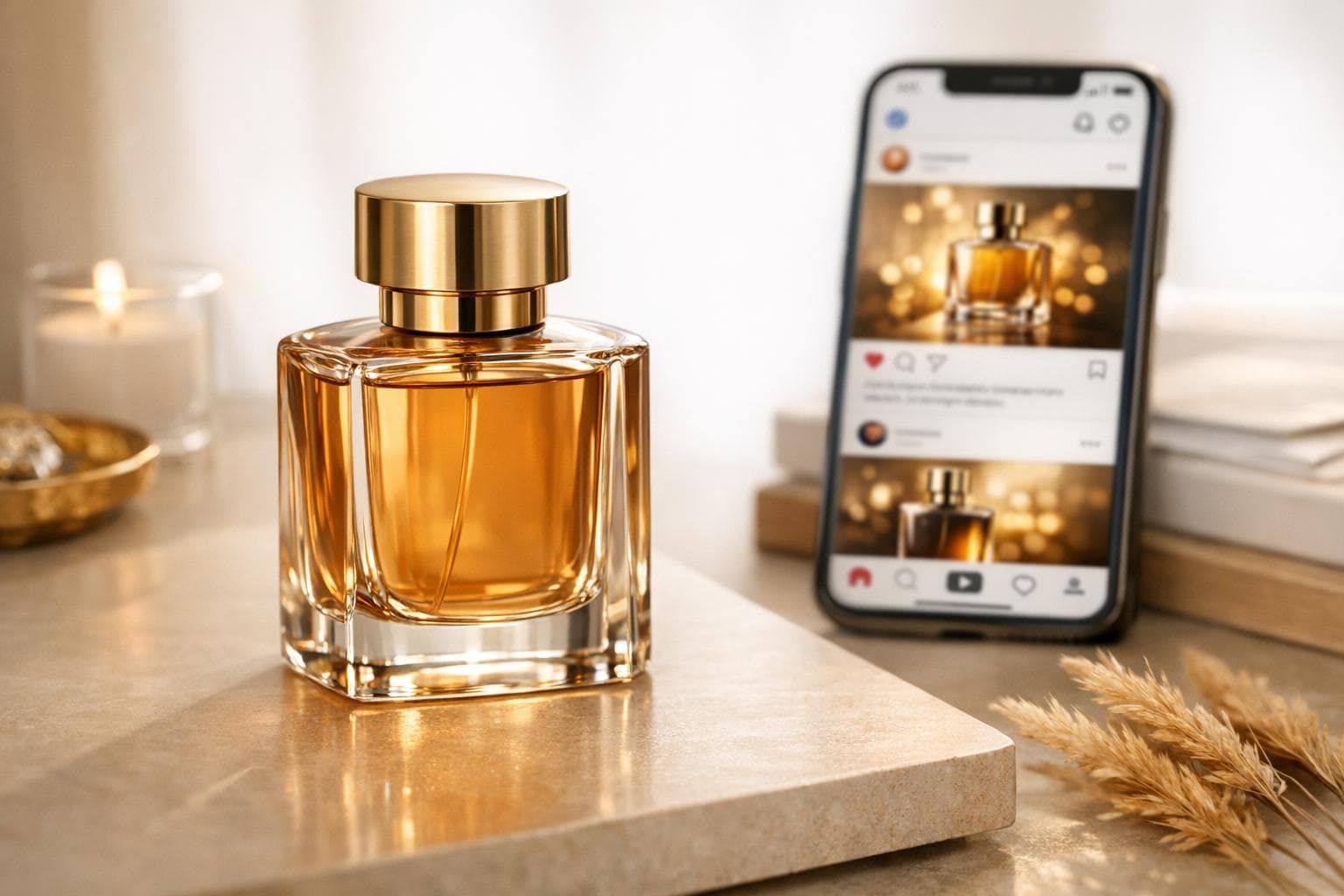
Selling fragrances online is challenging since customers can’t smell the product. Social media platforms like Instagram, TikTok, and Pinterest offer a solution by using visuals and videos to evoke the essence of a scent. Here’s what works:
- Visual storytelling: Showcase ingredients or lifestyle imagery to convey the fragrance’s mood.
- Short-form videos: TikTok and Instagram Reels are ideal for quick, engaging content.
- Targeted ads: Platforms allow precise audience segmentation by age, interests, and location.
- Sampling strategy: Offer low-cost samples to reduce purchase hesitation.
- User-generated content (UGC): Relatable testimonials and everyday usage resonate strongly.
- Influencer partnerships: Collaborate with creators for wider reach and trust-building.
Key metrics like Return on Ad Spend (ROAS), Cost Per Acquisition (CPA), and Click-Through Rate (CTR) help measure success. By combining strong visuals, audience targeting, and constant testing, fragrance brands can effectively grow their presence and sales online.
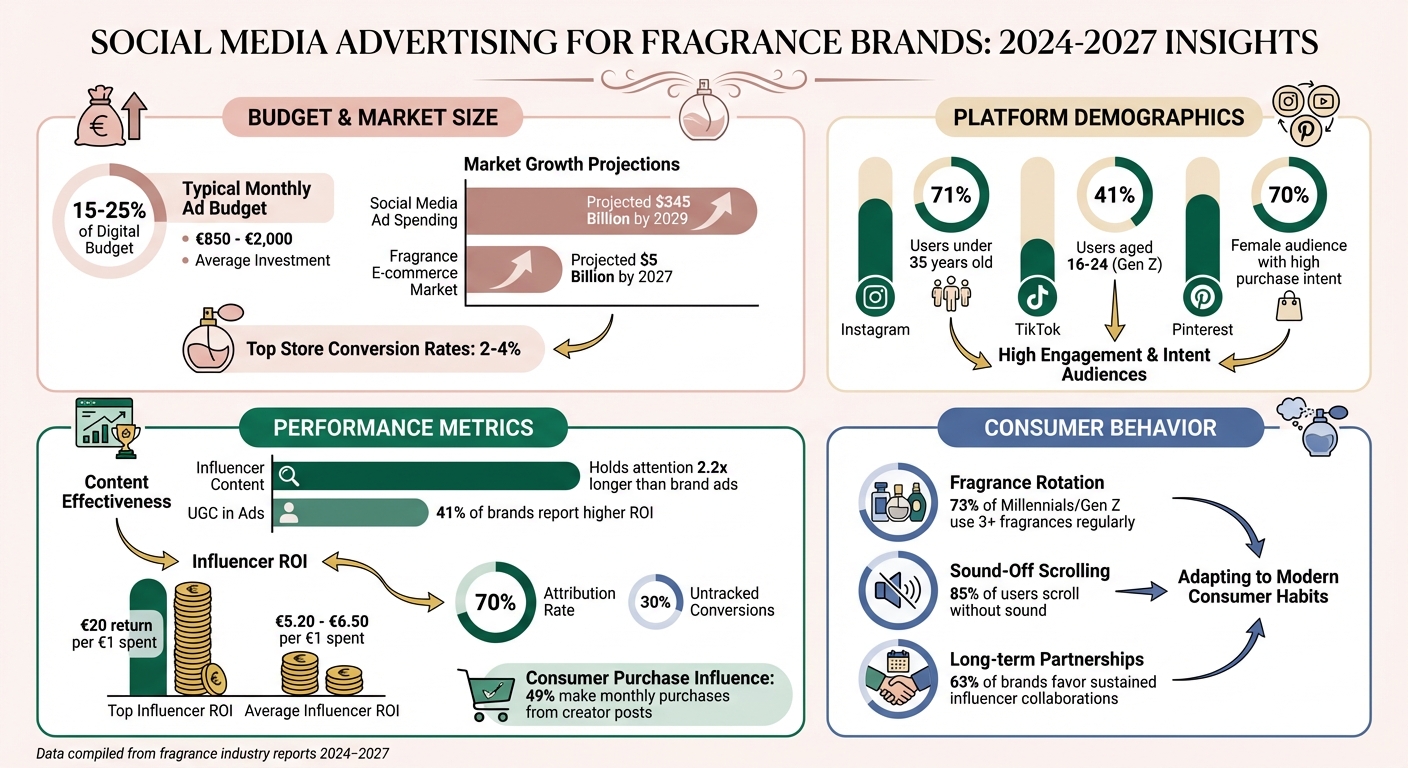
Fragrance Social Media Advertising: Key Statistics and Budget Allocation Guide
Your Personal Fragrance Expert Awaits
Take our quick scent quiz to discover authentic designer and niche fragrances matched to your taste — explore them as 2ml, 5ml, 8ml & 30ml decants and samples, so you can try each one before committing to a full bottle.
Find Your ScentBuilding Your Fragrance Ad Strategy
Creating a successful social media ad campaign starts with a solid strategy: setting clear objectives, understanding your audience, and offering tailored incentives at each stage of the customer journey.
Setting Campaign Goals and Budgets
Your campaign goals should align with the different stages of the customer journey. For brand awareness, focus on introducing your fragrances to a wide audience. Metrics like Cost Per Mille (CPM) are useful for tracking how efficiently your ads generate impressions. At the consideration stage, aim to educate potential buyers about what sets your scents apart, driving engagement and website traffic. For conversions, focus on actions like sample purchases or subscription sign-ups, measured by Cost Per Acquisition (CPA).
Fragrance brands typically allocate 15%–25% of their digital budget - roughly €850 to €2,000 per month - on social media advertising. Start small to test which scent profiles and ad formats perform best, then scale up successful campaigns. Use SMART goals — Specific, Measurable, Achievable, Relevant, and Time-bound - to keep your campaigns focused. For instance, instead of vaguely aiming to "increase sales", set a goal like: "Generate 500 sample purchases at a CPA under €12 within 30 days."
Once your goals and budgets are set, the next step is identifying the right audience for your campaigns.
Finding Your Target Audience
Social media platforms offer highly detailed audience targeting tools. For example, Meta lets you segment by location, age, gender, interests, behaviors, and even language preferences. It’s important to align your audience with the platform. Instagram, for instance, attracts a younger crowd (71% under 35), TikTok appeals to Gen Z (41% aged 16–24), and Pinterest has a predominantly female audience with high purchase intent (70%).
To make your targeting more effective, consider the "See, Think, Do" model:
- Top-of-funnel ads: Reach broad audiences with interests like "luxury goods" or "lifestyle". These ads introduce your brand to new users.
- Middle-of-funnel ads: Retarget users who engaged with your initial ads, providing more detailed content about your scent profiles or brand values.
- Bottom-of-funnel ads: Focus on high-intent users - those who’ve visited your site or added items to their cart. These ads should push for conversions.
Additionally, creating lookalike audiences based on your existing customers can help you identify prospects with similar characteristics, boosting your chances of finding high-value buyers.
Matching Offers to Customer Readiness
Once you’ve defined your audience, tailor your offers to where they are in the buying journey. In the discovery phase, low-commitment options like free samples or small decants can help ease the hesitation of investing in a €300+ full bottle. Founder stories or influencer endorsements can also build credibility and trust.
For the evaluation phase, focus on demonstrating value. Use comparison content or customer testimonials to show how your fragrances stand out. Highlight how your approach minimizes waste by offering alternatives to committing to full bottles. Educational content, like "How to Use" videos or social proof from other buyers, can address concerns and build confidence.
When it’s time to drive conversions, urgency is key. Use limited-time offers, City Exclusives, or seasonal drops to create a sense of urgency and encourage hesitant buyers to act. After the first purchase, retarget your customers with campaigns that introduce complementary scents or suggest sizing up from a 2 ml trial to an 8 ml or a 30 ml bottle decant. By guiding customers from discovery to building a fragrance wardrobe, you can maximize their lifetime value.
Creating Effective Fragrance Ad Visuals and Copy
When selling fragrances online, you face a unique challenge: customers can’t smell your product through a screen. This means your visuals and copy need to work double duty, evoking a sensory experience that captures the imagination. The goal isn’t just to describe a scent - it’s to sell a feeling, an experience, or even a fantasy. Done well, these elements grab attention and guide potential customers toward making a purchase.
Using Visuals to Evoke Scent
Visuals should go beyond simply showcasing the product; they need to suggest the sensations of the fragrance itself. Ingredient close-ups - like slices of bergamot or curling vanilla pods - can hint at specific notes, while lifestyle images set the scene: think a serene beach sunset for fresh citrus scents or a cozy library for warm, woody fragrances. Even color schemes play a role. Soft pastels can evoke delicate florals, while deep jewel tones suggest rich, intense aromas.
Interestingly, authenticity often outshines high-budget polish. Smartphone videos, for example, frequently perform better because they feel more relatable to viewers scrolling through their feeds. In October 2024, the brand MOOD saw a 122% increase in ROAS within just three days by switching from static images to short-form, authentic videos. Similarly, The Shelf Shop boosted ad revenue by 70% in 2024 by adding copy overlays and brand logos to their product images.
"If you want to improve your social media ad campaign performance, improving your creative is the key to making it happen." — Sara Lomax, Inflow
Another effective visual strategy is social proof. Showing nearly empty or fully used bottles can subtly communicate that the product is loved and frequently used by customers. Tailored imagery can also resonate with specific audiences. For example, Henry Rose used visuals of pregnant women to highlight the safety of their fragrances for that demographic.
To complement these visuals, short-form videos are an excellent tool for capturing the essence of scent.
Making Short-Form Video Content
Short-form videos are a powerhouse format for fragrance ads on platforms like TikTok and Instagram Reels. Keep them under 30 seconds and grab attention within the first three seconds. Start with an engaging hook like, "The #1 mistake when buying luxury perfume", to pique curiosity and stop viewers from scrolling.
Unboxings and demonstrations work especially well. Show the product in action - layering techniques, application methods, or even the reaction to a first spray can give viewers a more immersive sense of the experience. Founder-led storytelling is another effective approach. When founders share the inspiration behind a scent or the brand’s mission, it adds a layer of authenticity that builds trust and strengthens the connection with the audience.
"Founders are the best source of knowledge and the story behind the brand creation, the mission of the brand, and the vision it strives toward." — Panoramata
Collaborating with niche influencers is also a smart move. For instance, in 2024, the fragrance brand Snif partnered with TikTok influencer Amelia (Professor Perfume) to create a custom scent for her wedding. This collaboration not only boosted credibility but also expanded their reach by leveraging her expertise and audience. Don’t forget to include accurate closed captions for accessibility and to engage viewers who watch without sound.
Once your visuals and videos draw people in, the right copy can seal the deal.
Writing Ad Copy That Converts
Effective ad copy is concise, emotional, and specific. Highlight the fragrance’s top notes (like bergamot or lemon), heart notes (jasmine, rose), and base notes (sandalwood, musk). Paint a picture of when and where the scent fits - whether it’s “Perfect for date nights” or “Your everyday confidence boost.” Mention wear time to set clear expectations for the product.
Comparison messaging can also be persuasive. Position your product as a smarter choice, offering the chance to explore multiple luxury scents for the price of one designer bottle. Use copy overlays on videos and images to provide context for viewers watching without sound, while reinforcing your call-to-action. Adding simple discount codes (15–25% off) can help nudge hesitant buyers toward making a purchase.
It’s worth noting that relatability often matters more than popularity in advertising - customers connect with what feels genuine and relevant to their lives.
Improving and Growing Your Ad Campaigns
Once your ad campaigns are live, the real work begins - analyzing performance, tweaking what’s not working, and amplifying what is. Focus on metrics that directly influence your profitability: Return on Ad Spend (ROAS), Cost Per Acquisition (CPA), and Click-Through Rate (CTR). These numbers reveal whether your campaigns are driving sustainable results or need adjustments. For fragrance brands, tracking the journey from sampling to subscription is especially important. How many customers who buy a decant end up purchasing a full bottle or subscribing? This data offers valuable insight into long-term customer behavior and the overall success of your strategy.
Tracking the Right Metrics
Start with CTR - it’s your first clue about whether your visuals and copy are hitting the mark. A high CTR shows interest, but if conversions are lagging, it could signal a mismatch between your ad’s message and the landing page experience. CPA gives you a sense of how sustainable your acquisition costs are, while ROAS (calculated as Revenue ÷ Ad Spend) evaluates the financial return of each campaign. For video ads, keep an eye on the "Video Watches at 50%" metric. If people aren’t sticking around, your opening hook might not be grabbing attention.
"The number one mistake that many marketing amateurs make is focusing on chasing after these vanity social media metrics." — Angie Tran, Content Marketing Manager, AdRoll
Before making any changes to underperforming ads, let them gather at least 3,000–5,000 impressions. This ensures that your cost-per-click (CPC) has enough time to stabilize. Break down performance by factors like age, gender, and device type to uncover which groups are most responsive to specific scent profiles. Also, monitor Frequency; if your audience sees the same ad too often, they may start tuning it out.
Once you’ve dissected the data, it’s time to fine-tune your ads for better results.
Testing Different Ad Elements
Testing is your best friend when trying to discover what resonates most with your audience. Use Ad Set Budget Optimization (ABO) to ensure each variation gets an equal share of the budget, avoiding premature algorithmic bias. Focus on testing one element at a time - like the call-to-action or visual style - and let the test run for several days to two weeks to collect meaningful data.
If your "Video Watches at 50%" metric is low, consider adding bold visuals that evoke the scent within the first five seconds. Since 85% of users scroll through their feeds without sound, include captions or on-screen text to ensure your message lands even when muted. Don’t forget to repurpose high-performing organic content into paid ads - this allows you to leverage material that already resonates with your audience.
After refining your ads, shift your focus to reengaging your audience and adapting to seasonal trends.
Using Retargeting and Seasonal Campaigns
Retargeting is a cost-efficient way to convert potential customers into buyers. Create custom audiences, targeting users who purchased samples but haven’t committed to a full bottle yet. Offer them a "complete the set" deal or a limited-time discount to encourage conversions. Similarly, retarget users who abandoned their carts or watched your product videos but didn’t take the next step.
Fragrance preferences often change with the seasons. Think richer, spicier scents for winter and lighter, citrusy notes for summer. Adjust your campaigns accordingly, and prepare for peak periods like Black Friday or Valentine’s Day, when competition - and costs - tend to rise. Keep your creative fresh by updating ads at least every quarter to prevent fatigue and align with current trends. When scaling successful ads, increase your budget gradually - say, from €10/day to €20/day. This gives the platform’s algorithm time to adapt without disrupting performance.
Working with Influencers and User Content
Incorporating influencers and user-generated content (UGC) into your campaigns can add a personal touch that resonates with audiences. People are more likely to trust genuine recommendations, which explains why 49% of consumers make monthly purchases influenced by posts from creators. For fragrance brands, this is especially important since scent is such a personal and subjective experience. A heartfelt review or reaction to a perfume often connects with people far more than a polished advertisement.
Choosing the Right Influencers
To start, consider two types of influencers: "Expert" creators, who provide detailed scent analyses and cater to niche audiences, and "Charismatic" creators, who seamlessly incorporate fragrances into their broader lifestyle content. Expert influencers are ideal for introducing complex or niche scents, while charismatic ones can help generate excitement for seasonal campaigns. When selecting influencers, focus on metrics like Average View Duration (AVD) rather than just follower counts. AVD is a better indicator of genuine engagement and is less likely to be inflated by bots.
It’s also essential to check an influencer’s audience demographics and geographic reach to ensure they align with your target market. As a general guideline, pricing starts at about €10 per 1,000 followers, but avoid offers below €500 per post to maintain quality. Instead of providing rigid scripts, share key talking points and creative guidelines, allowing influencers to express themselves authentically. This approach preserves the trustworthiness of their recommendations. Additionally, secure usage rights upfront so you can repurpose their content for ads, email campaigns, and your website. Once you’ve partnered with the right influencers, amplify their reach by incorporating authentic user-generated content.
Using Customer-Created Content in Ads
User-generated content (UGC) can make your brand feel more relatable and genuine. For younger audiences, particularly Gen Z, authentic reviews and unboxing videos often hold more appeal than traditional advertisements. To find this type of content, monitor branded hashtags, tagged posts, and mentions across social media platforms. When you come across a compelling review or video, reach out to the creator for permission to use it in your campaigns.
Repurposing influencer and customer content can significantly boost your campaign’s performance. In fact, 41% of brands report a higher ROI when using influencer-generated material in paid ads. Additionally, influencer content tends to hold viewers’ attention 2.2 times longer than traditional brand ads. To maximize results, direct traffic from these campaigns to dedicated landing pages that are optimized for conversions and easier to track. This also allows you to identify which creators are driving the most valuable traffic.
Measuring Influencer Campaign Results
To calculate the ROI of an influencer campaign, use this formula: (Total Revenue – Total Costs) / Total Costs × 100. Top-performing brands often see returns of €20 for every euro spent, while typical results range from €5.20 to €6.50 per euro. Track performance using unique UTM parameters, custom promo codes, and affiliate links. Keep in mind, however, that attribution rates average around 70%, meaning about 30% of conversions may go untracked. To estimate the full impact, divide your attributed sales by 0.7 for a more accurate picture.
In addition to direct sales, monitor engagement metrics such as saves (which indicate strong purchase intent), comments, and shares. For fragrance campaigns, Average View Duration is a particularly useful metric for gauging audience interest in your scent story. Interestingly, a small percentage of influencers - typically 5–10% - often generate over 80% of total revenue. Identifying these top performers and moving toward long-term partnerships can be highly effective. In fact, 63% of brands now favor sustained collaborations to build deeper trust and improve customer lifetime value. By analyzing these insights, you can fine-tune your campaigns and create stronger, more impactful influencer relationships.
Conclusion
Creating successful fragrance ads on social media hinges on three main ingredients: compelling visuals, precise targeting, and constant refinement. Since scent can’t be directly experienced online, your visuals and copy need to evoke emotions and hint at the sensory experience of your fragrances. Regularly refreshing your ad creative - ideally every quarter - helps combat viewer fatigue and keeps campaigns engaging. Experimenting with formats, like static images with text overlays or short videos under 30 seconds, can also enhance performance.
The numbers back this up: effective creative and smart targeting lead to measurable results. With social media ad spending projected to climb to $345 billion by 2029, the opportunity is massive. But success isn’t just about running ads - it’s about tracking key metrics like ROAS, CPC, and engagement rates, and continuously testing to find what resonates with your audience. For example, 73% of Millennials and Gen Z users regularly rotate between three or more fragrances, so your campaigns should reflect this craving for variety and personalization.
One way to address this demand is through sample-first strategies, which help overcome the high cost and commitment of full-size bottles. The price tag of a $300+ fragrance can be intimidating, but offering discovery options like 2 ml, 5 ml and 8 ml vials, and a 30 ml bottle decant on most perfumes provides a low-risk way for potential customers to explore your brand. Brands like Scento have nailed this approach, offering individual decants that let customers try over 1,000 perfumes before committing. This not only reduces barriers to purchase but also builds customer loyalty and creates a steady stream of repeat revenue.
With the fragrance e-commerce market projected to hit $5 billion by 2027 and top stores achieving conversion rates of 2–4%, the potential is undeniable. To capture your share of this growing market, combine authentic influencer collaborations, user-generated reviews, and strategic retargeting campaigns. The secret lies in meeting customers at every stage of their journey - whether they’re discovering your brand on TikTok or ready to buy after sampling your scents.
FAQs
How can fragrance brands create compelling social media ads that bring scents to life?
Fragrance brands can create a strong connection on social media by designing ads that stir emotions and engage the senses. Start with sensory-driven language that brings the scent to life - use phrases like "bright bursts of citrus at dawn" or "a warm hug of vanilla on a chilly evening" instead of simply listing fragrance notes. Pair this with striking visuals that highlight the perfume bottle, the raw materials behind the scent, or moments of its use, helping to convey the mood and texture of the fragrance.
Go beyond the technical details and link the scent to a story or lifestyle that resonates emotionally with your audience. For instance, describe it as "the pulse of a vibrant city night" or "the calm of a sunlit meadow in spring." Partnering with influencers who genuinely appreciate the product can also lend credibility and foster deeper engagement.
To elevate the experience further, incorporate interactive elements like AR filters, short video reels, or user-generated content where customers share their personal impressions. Providing samples or decants - like the curated offerings from Scento - can transform online curiosity into a tangible, lasting memory. By combining sensory storytelling, captivating visuals, and interactive tools, you can make fragrances feel real and compelling, even through a digital screen.
How can I effectively target the right audience for fragrance ads on social media?
To effectively reach the right audience for your fragrance ads, start by building a detailed profile of your ideal customer. Focus on individuals who are drawn to luxury or niche fragrances, enjoy exploring new scents, or are shopping for gifts. Narrow your audience using demographic filters like age (25–44), location (U.S.), and income level ($50,000+). Pair these with interests such as designer perfumes, beauty and grooming, or special occasions. Platforms like Facebook, Instagram, and TikTok allow you to refine these parameters further and create lookalike audiences to target users who share traits with your best customers.
Use behavioral data to sharpen your targeting. Scento is a perfume decant and sample retailer, and every product is available for one-time purchase without any subscription. Scento+ is Scento’s optional membership: the monthly fee comes back in full as store credit to spend on any perfume, members get 10% off, a free sample with every order, a free perfume every six months and a birthday gift, and you can pause anytime; to cancel, contact our team. You can also engage with users who interacted with fragrance-related content by showcasing ads for new arrivals or seasonal releases. Create a funnel strategy: start with captivating scent-story videos to spark interest, follow with carousel ads spotlighting authentic designer fragrances, and wrap up with a clear “Shop Now” call-to-action.
Keep a close eye on your ad performance metrics, such as click-through rates (CTR) and return on ad spend (ROAS), to fine-tune your campaigns. Experiment with different audience segments like luxury lifestyle enthusiasts or eco-conscious beauty lovers to see what resonates. Additionally, align your paid ad strategy with insights from your organic social media efforts - popular hashtags, follower demographics, and engagement trends - to ensure your ads connect with the right people.
How can I measure the success of fragrance ads on social media?
To gauge the success of your fragrance ad campaigns, start by setting specific objectives. Once your goals are clear, focus on tracking key performance metrics such as return on ad spend (ROAS), cost per acquisition (CPA), click-through rate (CTR), and conversion rate. These numbers reveal how effectively your ads are turning impressions into actual purchases.
For fragrance brands, keeping an eye on average order value (AOV) and total sales uplift is equally crucial, as these metrics highlight the premium nature of perfume purchases. Engagement stats - likes, comments, and shares - offer a window into how well your storytelling connects with your audience. To fine-tune your campaigns, regularly compare your performance against industry benchmarks and make adjustments to your targeting or creative elements as needed.

