

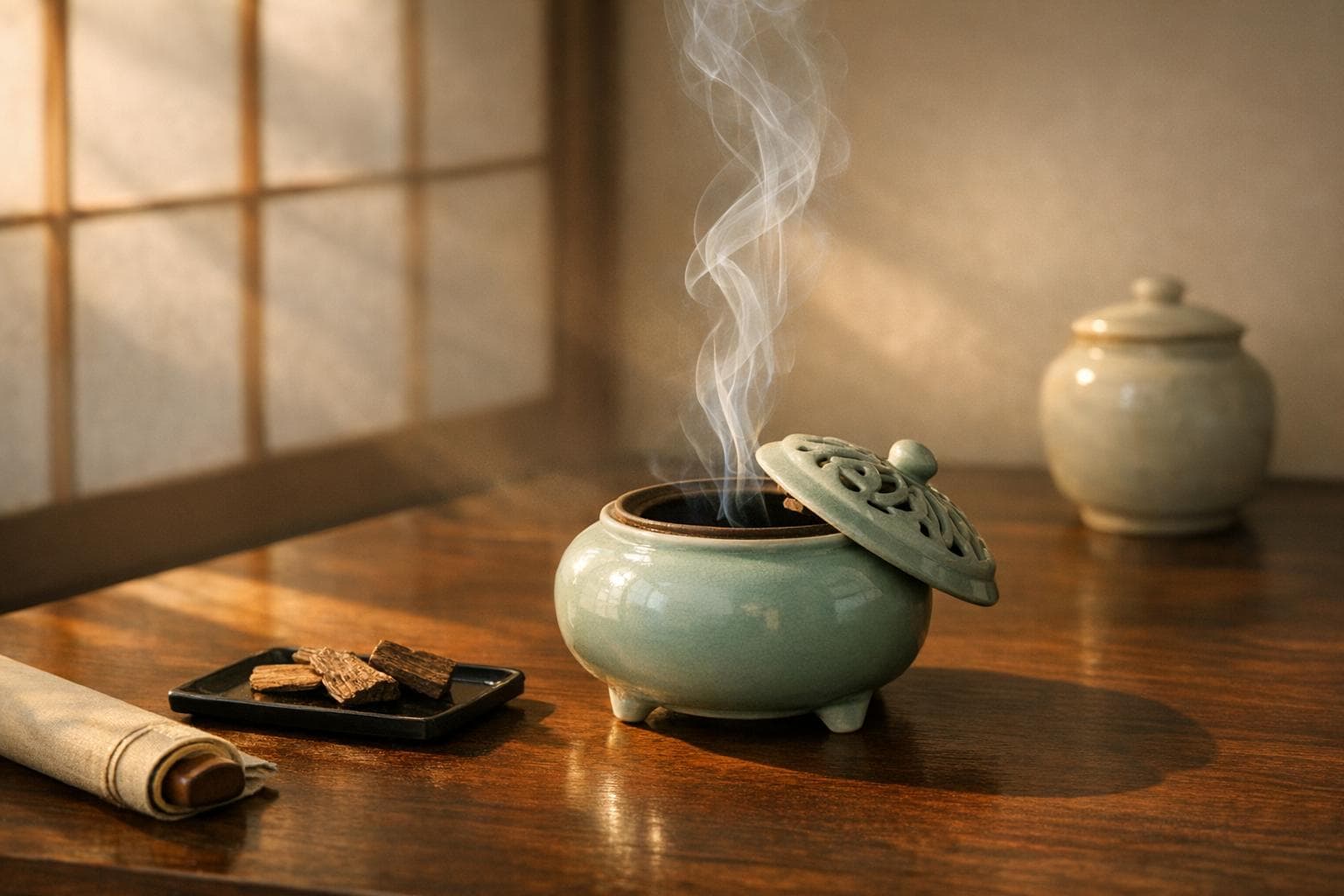
Vůně ve starověké východní Asii byla více než jen smyslovým zážitkem – byla nástrojem duchovního spojení, léčení a společenské identity. Již od roku 2000 př. n. l. se kadidlo a aromatické materiály používaly k propojení pozemského a božského, k očišťování prostor a k symbolizaci bohatství a postavení. Zde je stručný přehled:
- Duchovní role: Kouř z kadidla byl vnímán jako prostředník, který nese modlitby do nebes. Materiály jako agarové dřevo a santalové dřevo byly ústřední součástí buddhistických a taoistických rituálů zaměřených na všímavost a duševní jasnost.
- Léčebné využití: Vůně byla začleněna do starověké čínské medicíny k vyvažování Qi (životní energie) a podpoře emoční pohody. Aromatické sáčky a směsi kadidla se používaly k léčení a ochraně.
- Společenský význam: Mezi elitami byla vůně symbolem vytříbenosti a moci. Praktiky jako provonění oděvů a „naslouchání“ kadidlu se staly kulturními znaky sofistikovanosti.
Vůně nebyla jen o aromatu – byla hluboce spjata s každodenními rituály, zdravím a duchovními praktikami. Tyto tradice i dnes ovlivňují to, jak se spojujeme s vůněmi, a propojují starobylou moudrost s moderní všímavostí.
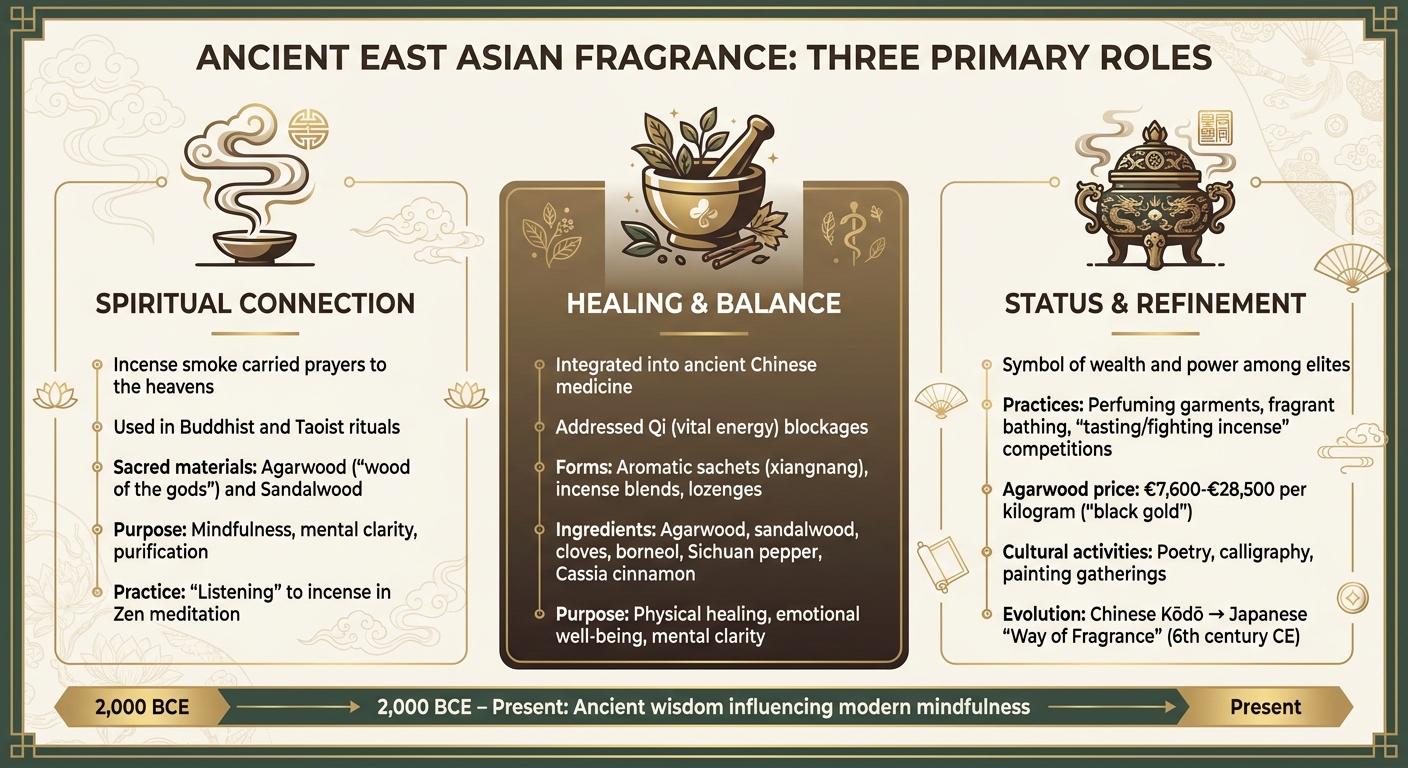
Tři posvátné role vůně ve starověké východní Asii: duchovní, léčebné a společenské využití
Kompletní představení starověkého obřadu kadidla z dynastie Song (plná verze)
Duchovní význam vůně
Vůně byla odedávna hluboce spojena s duchovními praktikami, zejména v buddhistických a taoistických tradicích, kde sloužila jako most mezi pozemským a božským.
Vůně v buddhistických a taoistických praktikách
V obou tradicích bylo kadidlo více než jen příjemnou vůní – neslo hluboký duchovní význam. Věřilo se, že působí jako médium modliteb a přenáší lidské záměry do božské sféry. Akt pálení kadidla vytvářel prostředí popisované jako klidné a duchovně zářivé, které povzbuzovalo praktikující ke vstupu do hlubších stavů všímavosti.
Pro buddhistické mnichy symbolizovalo kadidlo očistu mysli. V japonských zenových praktikách zapálení kadidla označovalo začátek cvičení všímavosti, při nichž praktikující „naslouchali“ jeho vůni a proměňovali tento zážitek v meditativní akt. V taoismu bylo pálení kadidla chápáno jako výživa pro božstva, přičemž uvolňované jemné esence byly považovány za duchovně posilující.
Posvátné materiály: agarové a santalové dřevo
Některé materiály, jako agarové dřevo a santalové dřevo, měly v těchto duchovních praktikách zvláštní význam. Agarové dřevo, známé také jako aloesové dřevo, vzniká tehdy, když strom v reakci na poranění vytvoří pryskyřici. Tento vzácný a drahocenný materiál se stal symbolem proměny a přinášel pocit hlubokého ztišení, díky čemuž byl ideální pro večerní meditace a rituály zaměřené dovnitř.
"Agarové dřevo... se stalo symbolem proměny, vzácnosti a duchovní hloubky. Zvláště ceněno bylo v buddhistickém a taoistickém kontextu pro ztišení a úctu, které zřejmě vyvolávalo."
- Toukson
Santalové dřevo se svým jemným a krémovým aroma přinášelo uzemňující energii, která doplňovala každodenní meditační praxi, dechová cvičení a chvíle rozjímání. Zatímco agarové dřevo podporovalo hlubokou introspekci, santalové dřevo představovalo rovnováhu a vytrvalost, což z něj činilo základ chrámových rituálů a delších meditačních sezení. Zajímavostí je, že slovo "Agarbatti" (vonná tyčinka) pochází od agarového dřeva, což podtrhuje jeho ústřední roli ve starověkých aromatických tradicích.
Léčebné využití vůně
V čínské kultuře měl pojem xiang (香) mnohovrstevnatý význam zahrnující parfém, kadidlo i lék. To zdůrazňuje hluboké propojení aromatických látek s jejich úlohou v duchovních i léčebných praktikách. Zatímco v posvátných rituálech byly vůně uctívány pro svou schopnost spojovat pozemské a božské, jejich využití v léčení ukazovalo jejich význam pro každodenní zdraví.
Aromaterapie ve starověké čínské medicíně
Starověcí čínští léčitelé využívali sílu aromatických materiálů, jako bylo agarové a santalové dřevo, k řešení blokád Qi, které byly při narušení považovány za kořen nemocí. Lékařské texty z té doby obsahují podrobné recepty na směsi kadidla, v nichž se pro cílené terapeutické účinky kombinovaly složky jako agarové dřevo, santalové dřevo a hřebíček.
Vůně hrála zásadní roli v různých léčebných praktikách. Bylinné váčky naplněné drcenými pryskyřicemi, známé jako xiangnang, se používaly k odvrácení nemocí. Kouř z kadidla sloužil k očišťování léčebných prostor a vonné materiály se dokonce přidávaly do pastilek pro svěží dech. Tyto praktiky plynule propojovaly fyzické přínosy vůně s emoční a duchovní pohodou.
Vůně a emoční pohoda
Kromě fyzického zdraví byly konkrétní vůně pečlivě vybírány také k vyrovnávání emočních stavů. Svěží, pryskyřičné aroma borneolu bylo známé tím, že během dne posilovalo duševní jasnost a soustředění, zatímco jeho hlubší tóny pomáhaly zmírňovat úzkost při večerních rituálech. Léčitelé také používali ostré, povzbuzující vůně, jako je sečuánský pepř, jako symbol vitality, zatímco hřejivé a útěšné tóny, například skořice cassia, podporovaly pocit sezónní harmonie. Toto promyšlené využití vůně umožňovalo praktikujícím pečovat o tělo i mysl a vytvářet holistický přístup ke zdraví.
Váš osobní odborník na parfémy už čeká
Vyplňte náš rychlý vonný kvíz a objevte autentické designové a nišové parfémy vybrané podle vašeho vkusu – prozkoumejte je jako 2–8ml dekanty a vzorky, abyste si každý mohli vyzkoušet, než se rozhodnete pro celou lahvičku.
Najděte svou vůniVůně ve společenském a kulturním životě
Ve starověké východní Asii nebyla vůně jen o příjemných arómatách – symbolizovala společenské postavení a vytříbenost. Od dynastie Han se vzácné a exotické aromatické látky staly zřetelným ukazatelem moci a výsadního postavení.
Vůně mezi aristokracií
Během dynastie Han bylo užívání kadidla z velké části omezeno na elitu. Šlechtici se obklopovali vůněmi ve všech aspektech života: provoněli si oděvy, koupali se ve voňavých vodách a plnili své hodovní síně aromatickým kouřem. Archeologické nálezy z hrobek Han v Mawangdui odhalují předměty jako kadidelnice a vonné váčky, které ukazují, jak zásadní byly pro aristokratický život.
Za dynastií Tang a Song se oceňování vůní vyvinulo v uměleckou formu. Vzdělané elity se účastnily aktivit, jako bylo „ochutnávání kadidla“ nebo „souboj kadidla“, při nichž rozpoznávaly různé vůně v soutěživém, avšak vytříbeném prostředí. Tato setkání často zahrnovala poezii, kaligrafii a malbu a propojovala více uměleckých forem. Básník dynastie Tang Bai Juyi zachytil tento životní styl větou: "Pálit kadidlo a sedět večer v tichu." Dynastie Qing povznesla toto ocenění na institucionální úroveň vytvořením oficiální knihovny kadidla, která spravovala získávání a distribuci vzácných aromatických látek, což odráželo jejich význam v dvorském životě.
Používané materiály byly stejně luxusní jako samotné praktiky. Agarové dřevo, často označované jako „černé zlato“ nebo „dřevo bohů“, dosahovalo ohromujících cen – od 7 600 do 28 500 € za kilogram. Podobně i dovoz drahocenných materiálů, jako bylo kadidlo, myrha a santalové dřevo, po Hedvábné stezce byl nákladným a náročným podnikem. Tyto faktory zajistily, že vůně zůstala luxusem vyhrazeným bohatým. Čínské praktiky navíc ovlivnily i Japonsko, kde vůně získala více meditativní a rituální roli.
Umění Kōdō: japonský obřad kadidla
Zatímco čínské elity používaly vůni k vyjádření moci a postavení, Japonsko ji proměnilo v duchovní a meditativní praxi známou jako Kōdō neboli „Cesta vůně“. Kōdō, které do země přinesli buddhističtí mniši v 6. století n. l., přesahovalo pouhé pálení kadidla – vedlo účastníky k tomu, aby vůni „naslouchali“, a rozvíjelo tak všímavost a záměr.
"Kōdō zve lidi, aby vůni ‚naslouchali‘. Účastníci se tiše shromažďují, vdechují jemná aromata a obracejí se do svého nitra."
Tento obřad se stal oblíbenou kratochvílí aristokratů, mnichů i samurajů a nabízel způsob, jak zklidnit mysl a zároveň uctít tradici. Účastníci seděli v tichu a s hlubokou úctou vdechovali jemné tóny agarového či santalového dřeva. Zážitek umocňovalo použití složitě zdobených kadidelnic, často ve tvaru draků nebo lotosů, které proměňovaly prostý úkon v smysluplný rituál podporující osobní reflexi i společenské pouto.
Moderní zamyšlení: vůně jako nadčasové spojení
Posvátné vonné rituály starověké východní Asie nezmizely – pouze se proměnily. Tyto prastaré praktiky dnes žijí dál v našem vědomém přístupu k vůním. Podstata zůstává stejná: vůně jako záměr, jako zastavení a jako most mezi vnějším světem a vnitřním klidem. Tento vývoj formoval současné praktiky, které odrážejí dávnou všímavost.
Jak Scento oživuje starobylé ocenění vůní

Japonské umění Kōdō vedlo účastníky k tomu, aby vůni „naslouchali“ a vnímali každý její tón se záměrem a vědomou pozorností, nikoli ji pouze cítili. Tato filozofie nadále inspiruje moderní objevování vůní. Místo impulzivního nákupu flakonu za více než 300 € umožňuje vědomé zkoumání hlubší porozumění vyvíjejícímu se charakteru parfému.
Scento přináší ducha Kōdō do současnosti a nabízí milovníkům vůní možnost objevovat více než 1 000 parfémů se záměrem. Díky odstřikům v objemech 2 ml, 5 ml a 8 ml poskytuje varianta 8 ml přibližně 120 střiků – dostatek k prožití celé cesty vůně v průběhu dne. Jejich volitelné měsíční předplatné (od 12,90 € za parfém) proměňuje vůni z uspěchaného nákupu v nepřetržitý rituál objevování. Tento promyšlený přístup nejen ctí tradiční metody, ale také zdůrazňuje trvalou terapeutickou povahu vůně.
"Když dnes zapalujeme kadidlo, neprovoníme jen prostor – vzdáváme hold historii, zveme klid a znovu se spojujeme sami se sebou."
- TwoHands
Trvalá přitažlivost vůně dnes
Ve starověku se kadidlo používalo k vytvoření uklidňující atmosféry pro meditaci a k harmonizaci Qi, životní energie. Moderní aromaterapie a osobní vonné rituály na tuto tradici navazují a zacházejí s vůní jako s jemnou formou terapie pro emoční rovnováhu. Drahocenné materiály, jako je santalové a agarové dřevo, ceněné pro své uzemňující a meditativní vlastnosti, zůstávají stálicemi špičkové parfumerie.
Jednoduchý akt aplikace vůně dnes připomíná používání aromatických past (xiang gao) během dynastie Tang. Jeden historický záznam popisuje tento rituál takto: „Akt nanášení aromatické pasty připomínal tichý rituál, hmatovou výzvu zpomalit, nadechnout se a znovu se spojit se svým středem uprostřed hluku dne.“ Ať už zapalujeme kadidlo, abychom označili přechod od práce k odpočinku, nebo volíme vůni, která ukotví ranní rutinu, tyto drobné rituály ctí staletí moudrosti. Vůně nadále zůstává tím, čím byla vždy: nositelem paměti, léčení, rituálu a přítomnosti.
Závěr: vůně jako most mezi minulostí a přítomností
Starověké východoasijské praktiky spojené s vůněmi, zakořeněné ve staletích tradice, nadále ovlivňují to, jak k vůním přistupujeme dnes. Od raných kadidlových obětí v Číně kolem roku 2000 př. n. l. až po propracované umění Kōdō v Japonsku byla vůně po dlouhá staletí prostředkem ke spojení s božským, k podpoře léčení a k vyjádření identity. Tyto rituály byly hluboce propleteny s každodenním životem a formovaly způsob, jakým lidé hledali duchovní spojení, emoční rovnováhu a společenskou sounáležitost.
Starověká čínská víra v používání aromatického kouře k harmonizaci Qi rezonuje s naším moderním chápáním vůně jako formy jemné terapie. Složky jako santalové a agarové dřevo, ceněné pro své uzemňující a zklidňující vlastnosti, zůstávají základem současné parfumerie a propojují historické tradice s dnešní praxí.
Jak výstižně uvádí TwoHands:
"Vůně není jen aroma – je to paměť, léčení, rituál a přítomnost."
To, co kdysi bývalo praxí vyhrazenou posvátným prostorům a elitám, se proměnilo v osobní rituály dostupné všem. Ať už zapalujeme kadidlo na závěr rušného dne nebo volíme vůni, která udá tón ránu, tyto akty ctí starobylou moudrost a zároveň podporují všímavost v přítomnosti. Vůně nadále slouží jako nadčasový jazyk klidu, který napříč kulturami i epochami propojuje tělo, mysl a ducha. Její posvátná podstata přetrvává v tom, jak vůni začleňujeme do svého každodenního života.
Často kladené otázky
Proč bylo kadidlo vnímáno jako most k božskému?
Kadidlo bylo odedávna považováno za spojení s božským, ceněné pro svou schopnost očišťovat prostory, odhánět negativní energie a navozovat pocit posvátna. Během rituálů a obřadů bylo nepostradatelné při vytváření atmosféry spirituality a úcty.
Jak zapadala vůně do starověké čínské medicíny a Qi?
Ve starověké čínské medicíně sloužila vůně jako mocný nástroj k uklidnění mysli, podpoře léčení a harmonizaci Qi – životní síly, o níž se věřilo, že proudí tělem. Zejména kadidlo bylo hluboce vetkáno do každodenních návyků, duchovních obřadů a terapeutických praktik a pečovalo jak o fyzické zdraví, tak o vnitřní rovnováhu.
Co znamená v Kōdō „naslouchat“ kadidlu?
Prožívat kadidlo v kōdō znamená hluboce se ponořit do jeho jemné, vrstevnaté vůně a s plně soustředěnou pozorností vychutnávat každou subtilní vrstvu. Tato praxe podporuje meditativní propojení a ztělesňuje pečlivou pozornost a úctu vlastní tradičním japonským uměním.