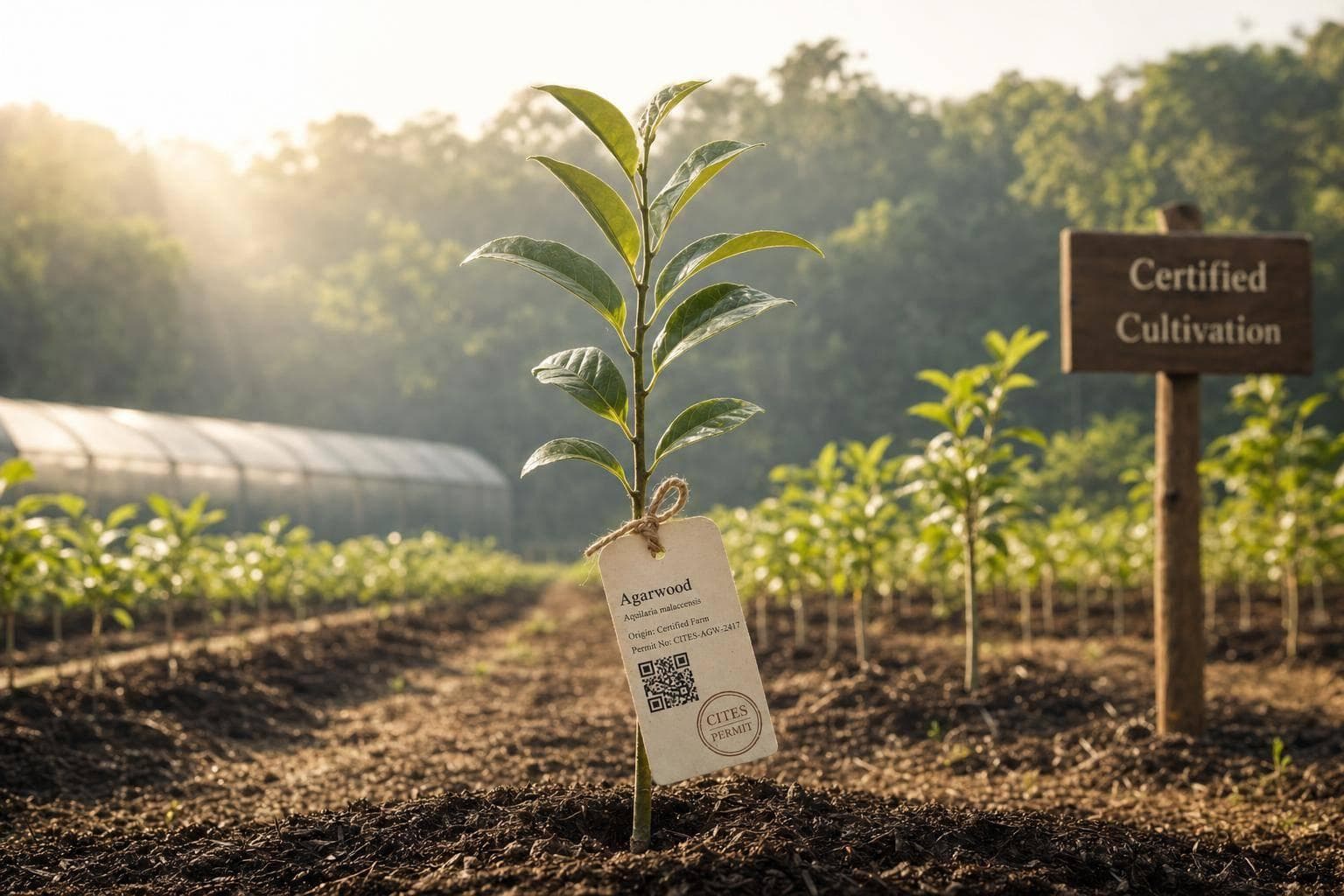
Některé z nejvzácnějších materiálů parfumérství už nejsou vázány pouze na sběr ve volné přírodě. Shrnul bych to takto: dodávky se v mnoha případech přesunuly z tlaku na lesy k farmám, plantážím a laboratorně pěstovanému sadbovému materiálu - ale etiketa na flakonu sama o sobě stále mnoho nedokazuje.
Zde je stručná verze:
- Vzácné neznamená ohrožené
- Ohrožené neznamená vždy zákaz obchodu
- Pěstované neznamená vždy nízký dopad nebo dobrou dohledatelnost
- CITES povolení, farmářské záznamy a sledování na úrovni parcel mají větší váhu než vágní tvrzení o původu
- Klíčové materiály jako agarové dřevo, santalové dřevo, vanilka a Rosa damascena dnes mnohem více než dříve spoléhají na kontrolovanou produkci
Několik faktů vyniká:
- Agarové dřevo nejvyšší jakosti bylo uváděno až za 92 0 € za kg
- Ve volné přírodě si ceněnou pryskyřici přirozeně vytvoří jen asi 2 % stromů agarového dřeva, zatímco plantážní metody dokážou tvorbu pryskyřice vyvolat téměř u každého stromu
- Ceny vanilky kolísaly přibližně od 46 € až po více než 553 € za kg
- Přibližně 75 % pěstitelů vanilky stále žije z hlediska příjmů pod hranicí zhruba 1,75 € denně
- Dodavatelský řetězec santalového dřeva stále čelí nelegálnímu získávání, i přes zavedené obchodní kontroly
Kdybych ověřoval vůni se vzácnými botanickými surovinami, nejprve bych hledal tři věci: odkud pochází, jak byla vypěstována a jaký důkaz dané tvrzení podporuje. To je nejjednodušší způsob, jak rozlišit uhlazený příběh od systému získávání surovin, za nímž skutečně stojí záznamy.
Pravidla a systémy, které vedly ke změně
CITES, kategorie ochrany a obchodní kontroly
CITES je hlavním globálním systémem, který posouvá vzácné parfémové botanické suroviny od sběru ve volné přírodě k pěstovaným zdrojům.
Aquilaria malaccensis byla v roce 1995 zařazena do přílohy II CITES, což znamenalo jeden z prvních zlomů v obchodu s agarovým dřevem. Později byly tyto kontroly rozšířeny na všechny druhy Aquilaria a Gyrinops a zahrnuly dřevo, olej, prášek, parfémy i vykuřovadla. Pro komerční obchod musejí vyvážející země vydávat povolení a provádět posouzení neohrožující přežití druhu.
Jednoduše řečeno, divokou, neregulovanou těžbu tak bylo mnohem obtížnější legálně prodávat a jako obchodní model se stala podstatně méně spolehlivou. Producenti byli tlačeni k plantážím, řízenému agrolesnictví a zdokumentovanému umělému množení.
Některé druhy santalového dřeva podléhají ještě přísnějším kontrolám. Zařazení do přílohy I zakazuje komerční obchod s exempláři získanými z volné přírody a posouvá dodávky směrem k materiálu vypěstovanému na plantážích. Národní zákony v zemích, jako je Austrálie, tyto povinnosti převádějí do praxe prostřednictvím povolení, limitů sklizně a jasných pravidel pro materiál vypěstovaný na plantážích nebo vědecky množený.
Společně tyto systémy změnily cestu dodávek agarového dřeva, santalového dřeva, vanilky a růže. Obchod se přesunul od tlaku na volnou přírodu k řízené produkci.
Standardy získávání surovin a požadavky na dohledatelnost
Regulace je základ. Standardy získávání surovin jdou ještě o krok dál.
Pro parfumérské domy dnes compliance znamená doložit, odkud materiál pochází, ne jen se vyhnout nelegální těžbě. Programy jako Rainforest Alliance a FairWild přidávají auditovaný řetězec dohledu, dohledatelnost na úrovni farmy a kontroly pracovních podmínek.
Vanilka je dobrým příkladem toho, jak detailní se tento přístup stal. Jedno vanilkové sdružení se sídlem na Madagaskaru zaregistrovalo 1 720 farmářů ze 14 vesnic a využívá GPS mapování na úrovni parcel a digitální systémy, které propojují každou šarži lusků s konkrétní farmářskou parcelou. Díky mapování parcel a každoročním auditům mohou kupující v Německu v zásadě sledovat šarži od pole družstva až do továrny.
Pro parfémové společnosti oborová doporučení stanovují, co by tato dokumentace měla obsahovat:
- auditované záznamy o původu
- kopie povolení CITES
- registrační čísla plantáží nebo farem
- plány dosadby
- případné komunitní dohody nebo dohody o sdílení přínosů
Takový typ evidence vylučuje nedohledatelný materiál a dává pěstovaným dodávkám jasnou výhodu.
Následující případové studie ukazují, jak to funguje v praxi napříč různými botanickými surovinami a produkčními modely.
4 případové studie: od tlaku na volnou přírodu k farmářským dodávkám
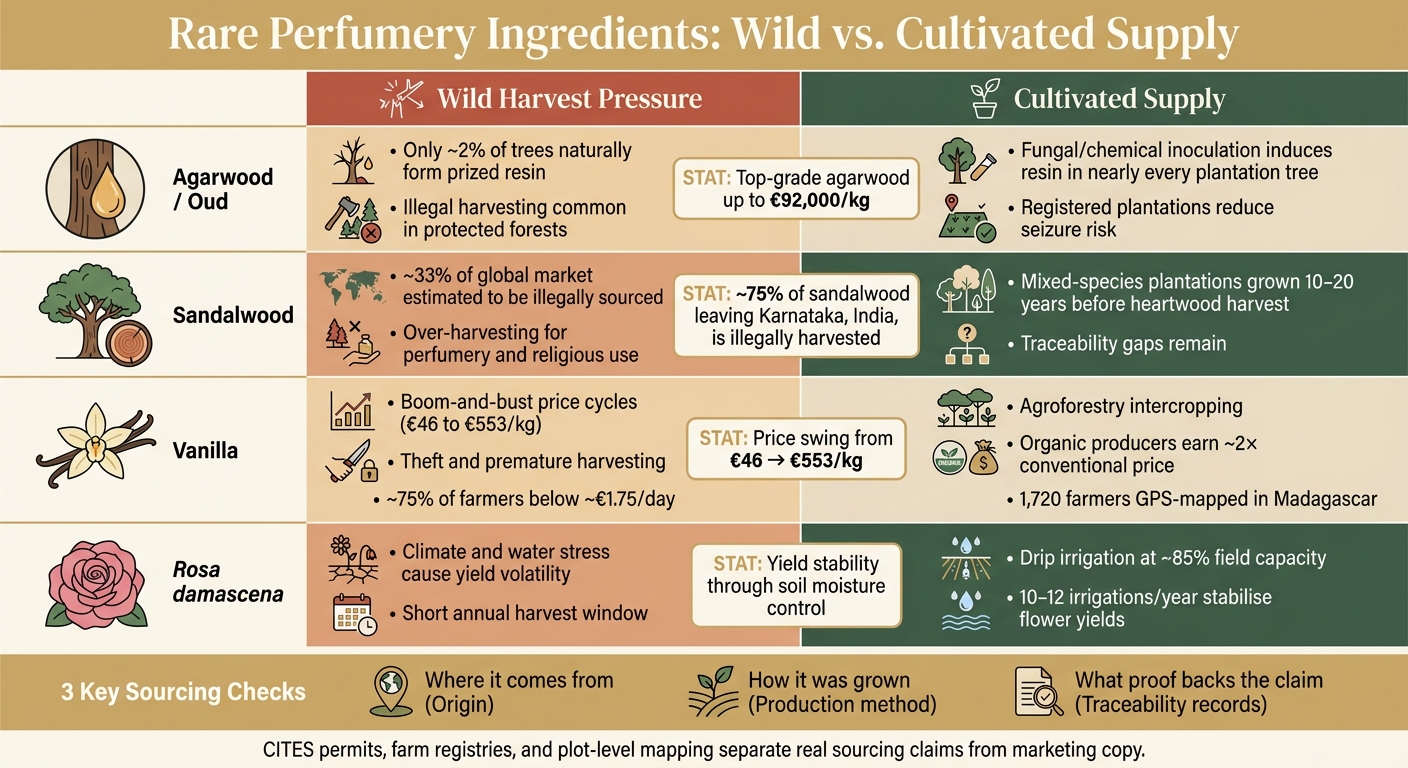
Vzácné parfémové ingredience: divoké vs. pěstované zdroje v kostce
Tyto příklady ukazují, co se děje, když regulace, pěstování a lepší farmářské systémy začnou měnit dodávky. Vzorec je jasný: tlak na divoké zdroje klesá, když mohou pěstitelé přesunout produkci na farmy, plantáže a do kontrolovaného množení.
| Ingredience | Původní tlak | Model pěstování | Hlavní poznatek |
|---|---|---|---|
| Agarové dřevo/Oud | Divoké stromy kácené kvůli pryskyřici; nelegální těžba běžná v chráněných lesích | Registrované plantáže s houbovou nebo chemickou inokulací; postupná sklizeň - tvorbu pryskyřice lze dnes vyvolat téměř u každého plantážního stromu, oproti zhruba 2 % ve volné přírodě | Dodávky se přesunuly na registrované plantáže; nižší riziko zabavení |
| Santalové dřevo | Nadměrná těžba pro parfumérství a náboženské využití; odhaduje se, že asi 33 % globálního trhu pochází z nelegálních zdrojů | Smíšené plantáže pěstované 10–20 let před sklizní jádrového dřeva; vznik pracovních míst na plantážích a ve zpracování | Dodávky se přesunuly na řízené plantáže; mezery v dohledatelnosti přetrvávají |
| Vanilka | Cenové cykly prudkého růstu a propadu; krádeže; předčasná sklizeň; slabé řízení | Agrolesnické meziplodiny se stínícími stromy; více než 1 400 ha certifikováno jako Organic a/nebo Rainforest Alliance - ekologičtí producenti dostávali zhruba dvojnásobnou cenu oproti konvenčním farmářům | Certifikace a strukturované ceny stabilizovaly příjmy farmářů |
| Rosa damascena | Riziko výnosů spojené s klimatem; krátké sklizňové okno; kolísavé ceny oleje | Zavlažovaná pole s kapkovou závlahou a optimalizovaným hospodařením s vodou; vyšší stabilita výnosů díky kontrole půdní vlhkosti | Udržitelné pěstování znamená stabilní výnos, nikoli sběr ve volné přírodě |
Agarové a santalové dřevo
Divoké agarové dřevo kdysi záviselo na vzácné náhodě přírody. Jen asi 2 % divokých stromů přirozeně vytvořila pryskyřičné jádrové dřevo, které dává oudu jeho hodnotu. Plantážní produkce tento model změnila. Pěstitelé dnes vpravují do pěstovaných stromů cílené houby nebo chemické stimulátory, jako je ethylen a methyljasmonát, což umožňuje vyvolat tvorbu pryskyřice téměř u každého plantážního stromu.
Santalové dřevo vypráví podobný příběh, ale s neuspořádanějším dodavatelským řetězcem. Navzdory kontrolám CITES se odhaduje, že 75 % santalového dřeva opouštějícího Karnátaku v Indii je vytěženo nelegálně a zhruba třetina globálního trhu je pravděpodobně zásobována nelegálně. Plantážní systémy v Indii a Austrálii, kde se Santalum album pěstuje vedle hostitelských druhů po dobu 10–20 let, jsou dnes hlavní alternativou. Tento posun pomáhá přesunout dodávky do řízených plantáží, ale mezery v dohledatelnosti stále existují.
Vanilka ukazuje stejný odklon od tlaku, i když hnací silou je zde spíše ekonomika farmářů než vymáhání ochrany lesů.
Vanilka a Rosa damascena
Vanilku dlouho formovaly prudké cenové výkyvy. Ceny se historicky pohybovaly přibližně od 46 € až po více než 553 € za kilogram, což destabilizovalo farmářské komunity a podporovalo krádeže i spekulativní obchodování. Strukturované programy přinesly měřitelné výsledky. V Ugandě dostávali ekologičtí producenti přibližně 25 000 ugandských šilinků za kilogram čerstvé vanilky, tedy zhruba dvojnásobek toho, co získali konvenční farmáři.
Rosa damascena čelí jinému problému. Její každoroční období sběru je krátké a klima i tlak na vodní zdroje mohou výnosy tvrdě zasáhnout. Výzkum ukazuje, že udržování půdní vlhkosti kolem 85 % polní kapacity a použití zhruba 10–12 závlah ročně může výrazně zvýšit výnos květů. V tomto případě udržitelnost nespočívá v nahrazení sběru ve volné přírodě. Jde o udržení stabilní produkce přímo na poli.
Pěstování ex situ a tkáňové kultury
U nejvíce vyčerpaných druhů začínají dodávky dnes v laboratoři. Když jsou divoké populace velmi malé nebo je přirozená obnova slabá, stává se tkáňová kultura důležitým nástrojem ochrany i budoucích dodávek. U Gyrinops walla na Srí Lance je mikropropagace jedinou životaschopnou cestou k udržitelnému využití a ochraně. Proces množí vybrané genotypy - rostliny zvolené pro vlastnosti, jako je vysoký obsah pryskyřice nebo odolnost vůči chorobám - v kontrolovaných laboratorních podmínkách, než jsou rostlinky přesunuty do školek a později na plantáže, které dodávají zákonný sadbový materiál pro parfumérství.
Má to však jeden háček, a ten je podstatný. Genetická rozmanitost se může rychle zúžit, pokud pěstitelé stále klonují úzký soubor vysoce výnosných linií. Druh potřebuje variabilitu, aby se dokázal vyrovnat se škůdci, chorobami a klimatickými změnami. Proto programy obnovy kombinují materiál z tkáňových kultur se širšími kolekcemi germplazmy z divokých nebo polodivokých populací a směrnice pro dosadbu agarového dřeva z tohoto důvodu výslovně nedoporučují přesouvat semena mezi lokalitami. Klonální škála bez rozmanitosti je křehká.
Váš osobní odborník na parfémy už čeká
Vyplňte náš rychlý vonný kvíz a objevte autentické designové a nišové parfémy vybrané podle vašeho vkusu – prozkoumejte je jako 2, 5, 8 a 30 ml dekanty a vzorky, abyste si každý mohli vyzkoušet, než se rozhodnete pro celou lahvičku.
Najděte svou vůniCo ukazuje výzkum: dosažené přínosy a limity, které přetrvávají
Výzkum poukazuje na jasné přínosy, ale zároveň ukazuje, kde obraz stále není úplný.
Měřitelné přínosy pro lesy, farmy a dodavatelské řetězce
Některé z nejsilnějších výsledků se objevují tam, kde pěstování nahrazuje sběr ve volné přírodě. V Indonésii dynamická modelová studie systému agarového dřeva zjistila, že plantážní pěstování s inokulačními technikami může být ekologicky smysluplné, finančně proveditelné a sociálně přijatelné, pokud tržní podmínky zůstávají stabilní.
Vanilka vykazuje podobný vzorec, s jednou zásadní podmínkou: záleží na tom, kde je vysazena. Na Madagaskaru si vanilkové agrolesy založené na úhorech, nikoli ve vykáceném lese, udržely stabilní výnosy a zároveň se vyhnuly ztrátě biodiverzity spojené s výsadbou vanilky přímo do lesa.
Údaje o příjmech drobných pěstitelů rovněž naznačují pokrok, i když ne rovnoměrně sdílený. Ve venkovském okrese Bukoba v Tanzanii vydělávalo 62 % drobných pěstitelů vanilky mezi 1 500 001 a 2 500 000 TZS, oproti 28 % drobných pěstitelů mimo vanilku ve stejné příjmové kategorii. Programy, které kombinují spravedlivé ceny, posklizňové školení a diverzifikaci plodin, uvádějí nárůst příjmů domácností asi o 15 %–30 %.
Na straně dodavatelského řetězce kladou lépe řízené programy větší důraz na mapování parcel, kontroly chráněných oblastí a registry farem. Tento posun vypovídá o mnohém: samotné údaje o výnosech nevyprávějí celý příběh.
Kde tvrzení o původu stále vyžadují pečlivé prověření
Zde se věci komplikují.
Vypěstovat materiál na farmě z něj automaticky nedělá udržitelný produkt. Vanilka je dobrým příkladem. Přibližně 75 % pěstitelů vanilky, včetně odhadovaných 60 000 drobných zemědělců, stále žije pod hranicí chudoby 1,90 USD na den.
Agarové dřevo má v datech vlastní mezeru. Technická hodnocení CITES poznamenávají, že údaje z průzkumů divokých populací jsou stále omezené, takže je obtížné prokázat, zda plantážní produkce nahrazuje těžbu ve volné přírodě, nebo pouze existuje vedle ní.
Stejná opatrnost se objevuje i v Tanzanii. Jedna analýza udržitelnosti vanilkového sektoru udělila odvětví skóre pouhých 55,22 % napříč hodnocenými dimenzemi, což jej zařadilo do kategorie pouze částečně udržitelného.
Pro nákupčí vůní se otázka redukuje na důkaz. Etikety samy o sobě mnoho neříkají. Mapování na úrovni parcel a kontroly řetězce dohledu odlišují tvrzení o původu s obsahem od pouhého marketingového textu.
Závěr: co odpovědně získané vzácné ingredience znamenají pro objevování vůní
Vzácné ingredience se stávají udržitelnými teprve tehdy, když spolu fungují obchodní kontroly, pěstování a dohledatelnost. Každý prvek řeší jiný problém: obchodní kontroly pomáhají snižovat tlak na divoké zdroje, pěstování pomáhá obnovit dostupnost a dohledatelnost ukazuje, odkud ingredience pochází.
Když se regulace, pěstování a provenience propojily, dodávky se staly stabilnějšími a snáze ověřitelnými. Tato kombinace dala značkám pevný základ, za kterým mohou stát - a zákazníkům jasnější pohled na to, co se skrývá za vůní.
Výzkum také velmi zřetelně ukazuje jednu věc: ekologický pokrok a příjem farmářů spolu souvisejí. Pěstování přestává fungovat jako nástroj ochrany, pokud si z něj farmáři nedokážou zajistit stabilní živobytí. Nejlépe obstojí systémy, které spojují dosadbu, spravedlivé ceny a dlouhodobé nákupní vztahy.
Klíčové poznatky pro čtenáře v Německu a Evropě
Pro čtenáře v Německu a Evropě je kontrola původu poměrně jednoduchá: vzácné, ohrožené a udržitelně získané neznamená totéž. Solidní tvrzení o původu by mělo uvádět místo původu, vysvětlit, jak se ingredience produkuje, a jasně popsat, jaké kroky na podporu ochrany přírody nebo farmářů jsou zavedeny. Pokud formulace zůstává vágní a nenabízí žádný dohledatelný detail, je to dobrý důvod položit další otázky.
To také ovlivňuje způsob, jak lidé objevují vůně. Vyzkoušet vůni v menším formátu - například v lahvičkách 2 ml, 5 ml a 8 ml a u většiny parfémů i v dekantu o objemu 30 ml, dostupných prostřednictvím Scento - je praktický způsob, jak opatrněji objevovat vůně se vzácnými botanickými surovinami, aniž by bylo nutné se hned zavázat k celému flakonu.
Časté dotazy
Jak mohu ověřit tvrzení o vzácné ingredienci?
Dívejte se za obecná marketingová tvrzení. Ověřte, zda značka drží certifikace třetích stran, jako jsou UEBT, COSMOS Organic, NATRUE nebo Fair Trade, a poté je zkontrolujte ve veřejné databázi certifikačního orgánu. Pokud vůně používá materiály z chráněných druhů, například oud, ověřte také certifikaci CITES.
Pomůže také hledat jasné zprávy o původu, dohledatelnost od místa sklizně až po flakon a dokumentaci, jako jsou IFRA certifikáty shody nebo souhrny auditů třetích stran. Poté jděte ještě o krok dál: prozkoumejte botanický druh a oblast původu, kterou značka uvádí. Tato dodatečná práce vám může hodně napovědět o tom, zda příběh obstojí.
Znamená pěstované vždy udržitelné?
Ne. Pěstované automaticky neznamená udržitelné. Vše závisí na tom, jak je ingredience pěstována.
Intenzivní monokultury a konvenční zemědělství mohou stále vyčerpávat půdu, spotřebovávat velké množství vody a snižovat biodiverzitu. Skutečná dlouhodobá péče vyžaduje pěstitelské metody, které obnovují zdraví půdy, podporují místní komunity a chrání biodiverzitu, s jasným důkazem na podporu těchto tvrzení, například v podobě certifikací třetích stran.
Které vzácné parfémové ingredience stále představují rizika při získávání?
Několik vzácných parfémových ingrediencí stále čelí rizikům v oblasti získávání. Tlak obvykle vychází ze tří míst zároveň: nadměrné sklizně, změny klimatu a špatných pracovních podmínek.
- Santalové dřevo (indické Santalum album): ohrožené pytláctvím a nelegálním obchodem
- Oud: ohrožený ztrátou přirozeného prostředí, přičemž mnoho druhů Aquilaria je chráněno podle CITES
- Kadidlo, jasmín, růže a kořen kosatce: vystavené nestabilním dodavatelským řetězcům, vyčerpávání půdy a nespravedlivým pracovním podmínkám

