Kdybych to měl shrnout jednou větou: extrakce pomocí enzymů dokáže získat více vůně ze stejného rostlinného materiálu při použití mírnějšího tepla a menšího množství rozpouštědla, výsledek však výrazně závisí na rostlině, enzymové směsi a nastavení procesu.
Stručně řečeno:
- Výtěžnost může v některých případech výrazně vzrůst, zejména u citrusové kůry: studie uvádějí 2× až 6× více oleje v testech s pomerančovou a grapefruitovou kůrou.
- Proměnit se může i vonný profil, nejen objem. U levandule se klíčové aromatické sloučeniny po enzymatické předúpravě zvýšily z 67 % na 73 % celkových těkavých látek.
- Na mírných podmínkách záleží: mnoho studií pracuje přibližně při 40–60 °C, pH 4,5–6,5 a po dobu 1–4 hodin.
- Hybridní uspořádání často dokážou více než samotné enzymy, například kombinace enzymů s ultrazvukem, mikrovlnami nebo superkritickým CO₂.
- Ekologický přínos není automatický. Náklady, pufry, čas, spotřebu energie i výrobu enzymů je stále nutné poctivě posoudit.
Z výzkumu si odnáším jednoduchý závěr: nejde tolik o nahrazení všech starších extrakčních metod, ale spíše o využití enzymů tam, kde dávají největší smysl - zejména u citrusové kůry, bylinných zbytků a dalších vedlejších toků, které by jinak mohly přijít vniveč.
Pro luxusní parfumerii v Evropě je to důležité, protože zákazníci často sledují jak je surovina získávána, nejen jak voní. Takové tvrzení však musí stát na faktech: výtěžnosti, složení, spotřebě energie, použití rozpouštědel a původu vstupní suroviny.
Pokud tedy chcete přímou odpověď, zní takto: enzymatická extrakce vypadá slibně pro výrobu vonných látek s nižší zátěží, nejlépe však funguje jako cílený nástroj, nikoli jako zázračné řešení.
Jak enzymatická extrakce funguje při výrobě vonných látek
Enzymatická extrakce funguje tak, že narušuje rostlinné buněčné stěny obklopující olejové žlázy a sekreční kanálky. Jakmile se tyto stěny začnou uvolňovat, aromatické sloučeniny mohou snáze přecházet do extrakčního média. Rostlinné buněčné stěny jsou tvořeny především celulózou, hemicelulózou a pektinem a při standardních extrakčních metodách velmi účinně udržují vonné molekuly uzamčené na místě. Enzymy to mění tím, že ve stěně otevírají drobné kanálky, které umožňují těkavým sloučeninám přecházet do okolní vody nebo jiného extrakčního média s menším odporem.
Tento zdánlivě jednoduchý posun má v praxi velký význam. Pokud se použije nesprávný enzym nebo se proces vede za nevhodných podmínek, získání vůně může za očekáváním zaostat.
Hlavní skupiny enzymů používané u aromatických rostlin
Aromatické rostliny nemají všechny stejnou strukturu buněčné stěny, proto studie často používají směs hydroláz spíše než jediný enzym.
Celulázy rozkládají celulózu a uvolňují hlavní kostru buněčné stěny. Hemicelulázy působí na rozvětvené polysacharidy, které propojují celulózová vlákna, čímž činí stěnu poréznější. Pektinázy cílí na pektin ve střední lamele, vrstvě, která drží sousední buňky pohromadě, a mohou tak uvolňovat jak olejové kapénky, tak vázané prekurzory vůní. Xylanázy štěpí xylan, jednu z hlavních hemicelulóz v mnoha aromatických rostlinách, čímž strukturu dále oslabují.
Protože rostlinné stěny jsou vystavěny jako vrstvené kompozitní materiály, směsi enzymů často fungují lépe než ošetření jediným enzymem. Jeden enzym připraví cestu dalšímu. Například u černého pepře a kardamomu předúprava celulázou, β-glukanázou, pektinázou a xylanázou před destilací zvýšila výtěžnost oleje a zároveň užitečně posunula aromatický profil. U černého pepře zvýraznila karyofylen a u kardamomu α-terpenyl-acetát.
Typické procesní podmínky uváděné ve studiích
Enzymatická extrakce se obvykle provádí za mírných podmínek. Cílem je udržet dobrou rovnováhu mezi výtěžností, zachováním aroma a aktivitou enzymů.
| Procesní parametr | Typicky uváděný rozsah |
|---|---|
| Teplota | 40–60 °C |
| pH | 4,5–6,5 |
| Doba ošetření | 1–4 h |
| Dávkování enzymu | 0,5–2 % w/w |
Teploty kolem 40–60 °C jsou běžné, protože pomáhají chránit tepelně citlivé terpeny a zároveň odpovídají rozmezí aktivity komerčních hydroláz. Rozmezí pH 4,5–6,5, často udržované citrátovými či podobnými pufry, odpovídá mírně kyselému optimu celuláz, pektináz a xylanáz.
Doba ošetření se obvykle pohybuje mezi 1 a 4 hodinami. To enzymům poskytuje dost času k působení, aniž by proces zašel tak daleko, že by nadměrná hydrolýza začala měnit další extrahované složky. Jedna studie použila 2 % celulázy T a 2 % hemicelulázy 90 po dobu 3 h a zvýšila výtěžnost esenciálního oleje z 2,2 mL na 3,0 mL, což představuje přibližně 36 %.
Výsledky závisí také na fyzickém uspořádání, nejen na chemii. Jemnější mletí poskytuje enzymům větší kontaktní plochu, ale pokud je rostlinný materiál rozemlet příliš jemně, suspenze může zhoustnout a hůře se míchat. Studie často uvádějí poměr pevné látky ku kapalině přibližně 1:10 až 1:25 (w/v) jako praktický výchozí bod.
Tyto procesní volby ovlivňují jak celkovou výtěžnost, tak výsledný profil těkavých látek, který další část porovnává napříč nedávnými studiemi.
Co nedávné studie uvádějí o výtěžnosti a vonných profilech
Jakmile je proces vyladěn, záleží na prosté otázce: kolik oleje získáte a voní stále správně? Nedávné studie nabízejí poměrně jasný obraz. Enzymatická extrakce může u některých rostlinných materiálů zvýšit výtěžnost, rozsah tohoto zvýšení však silně závisí na samotné surovině a na nastavení předúpravy.
Zvýšení výtěžnosti u citrusů, bylin a květinových materiálů
U citrusových slupek mohou být přínosy výrazné. Enzymaticky asistovaná hydrodestilace pomerančové a grapefruitové kůry zvýšila výtěžnost esenciálního oleje 2- až 6násobně oproti neenzymatickým kontrolám, pokud byla ošetření celulázou a hemicelulázou pečlivě nastavena. Nejde však o univerzální výsledek. Pomeranč a mandarinka vykázaly jasný nárůst, zatímco u kůry klementinek nebyla pozorována statisticky významná změna.
Podobný vzorec se objevuje u bylin a květin. Rozmarýn (Rosmarinus officinalis) dobře reagoval na směs celulázy a hemicelulázy, s relativním zvýšením výtěžnosti až přibližně o 50 %. Levandule (Lavandula angustifolia) dosáhla po enzymatické předúpravě následované mikrovlnně asistovanou extrakcí 24 mg/g substrátu, což je zhruba o 25 % více než u konvenční hydrodestilace.
Tento vyšší výstup má význam pouze tehdy, pokud se vonný profil zachová - nebo zlepší.
Změny těkavých sloučenin a charakteru vůně
V citrusových olejích zůstává limonen hlavní složkou s enzymy i bez nich. Napříč ošetřeními se držel přibližně na 81,16 % u pomeranče, 77,50 % u mandarinky a 75,29 % u klementinky. Enzymy obvykle mění spíše doprovodné složky. V mandarinkových olejích vzrostly seskviterpeny za některých podmínek enzymového pufru až na 60,52 %, zatímco aldehydy dosáhly až 4,86 %. Olej tedy stále voní jako citrus, ale okraje tohoto profilu se mohou mírně posunout.
Záleží také na kapalném médiu. Enzymatická předúprava v citrátovém pufru, namísto čisté vody, zdvojnásobila obsah α-terpineolu v mandarinkových hydrolátech, zatímco ošetření na bázi vody nemělo téměř žádný účinek. V hydrolátech z pomerančové kůry dosáhl linalool po předúpravě směsí enzymů v pufru až 11,15 %, oproti mnohem nižším hodnotám u neošetřených kontrol. To je důležité, protože tyto sloučeniny přinášejí květinové a svěže citrusové nuance. Jinými slovy, hydrolát neposkytuje jen více materiálu; může nabídnout čistší či uhlazenější vonný profil.
U levandule je to patrné ještě zřetelněji. Enzymatická předúprava před mikrovlnně asistovanou extrakcí zvýšila podíl linaloolu a linalyl-acetátu z 67 % na 73 % celkových těkavých látek. Protože právě tyto dvě molekuly formují květinový a lehce ovocný charakter levandule, tento posun ukazuje na sevřenější a cílenější olfaktorický profil.
Hybridní metody kombinující enzymy s dalšími extrakčními technikami
Některé z nejsilnějších výsledků se objevují tehdy, když jsou enzymy použity jako první krok, nikoli jako celá metoda. Právě zde se příběh posouvá od pouhého „více oleje“ k lepší selekci a kratší době získávání.
U Lavandula angustifolia enzymatická předúprava kombinovaná s ultrazvukově-mikrovlnným (US-MW) uspořádáním - výkon ultrazvuku 150 W, výkon mikrovln 800 W, 70 °C, 40 min - poskytla výtěžnost esenciálního oleje 1,15 %. To představuje 82 % nárůst oproti referenčním podmínkám. Pro srovnání, samotná enzymatická předúprava před mikrovlnnou extrakcí přinesla přibližně 25 % nárůst, což znamená, že ultrazvukový krok dodal jasný dodatečný impuls.
Když se enzymy kombinují se superkritickou extrakcí CO₂, přínos spočívá méně v celkovém výstupu a více v tom, co se nakonec dostane do finálního extraktu. Enzymatická předúprava zvýšila obsah okysličených sloučenin na 92,69–94,67 % celkových těkavých látek, oproti 88,06 % u neošetřené kontroly. Protože okysličené sloučeniny často nesou velkou část aromatického účinku, takový posun je pro kvalitu vůně stejně důležitý jako pro samotný extrakční výkon.
| Rostlinný materiál | Použité enzymy | Následná technika | Změna výtěžnosti | Klíčová změna složení |
|---|---|---|---|---|
| Pomerančová & grapefruitová kůra | Celuláza + hemiceluláza | Hydrodestilace | 2–6× oproti neenzymatické kontrole | Zachován profil s dominancí limonenu; určitý nárůst okysličených látek |
| Levandule (L. angustifolia) | Enzymatická předúprava | Ultrazvuk + mikrovlny (US-MW) | 82 % nárůst (1,15% výtěžnost) | - |
| Materiál nespecifikován | Enzymatická předúprava | Superkritický CO₂ | Okysličené sloučeniny: 88,06 % → 92,69–94,67 % | Lepší selektivita vůči okysličeným těkavým látkám |
Výtěžnost je pouze jednou částí celého obrazu. Dalším krokem je posoudit, zda tyto metody zároveň snižují nároky na energii, vodu a rozpouštědla.
Váš osobní odborník na parfémy už čeká
Vyplňte náš rychlý vonný kvíz a objevte autentické designové a nišové parfémy vybrané podle vašeho vkusu – prozkoumejte je jako 2, 5, 8 a 30 ml dekanty a vzorky, abyste si každý mohli vyzkoušet, než se rozhodnete pro celou lahvičku.
Najděte svou vůniPřínosy a limity enzymatické extrakce z hlediska udržitelnosti
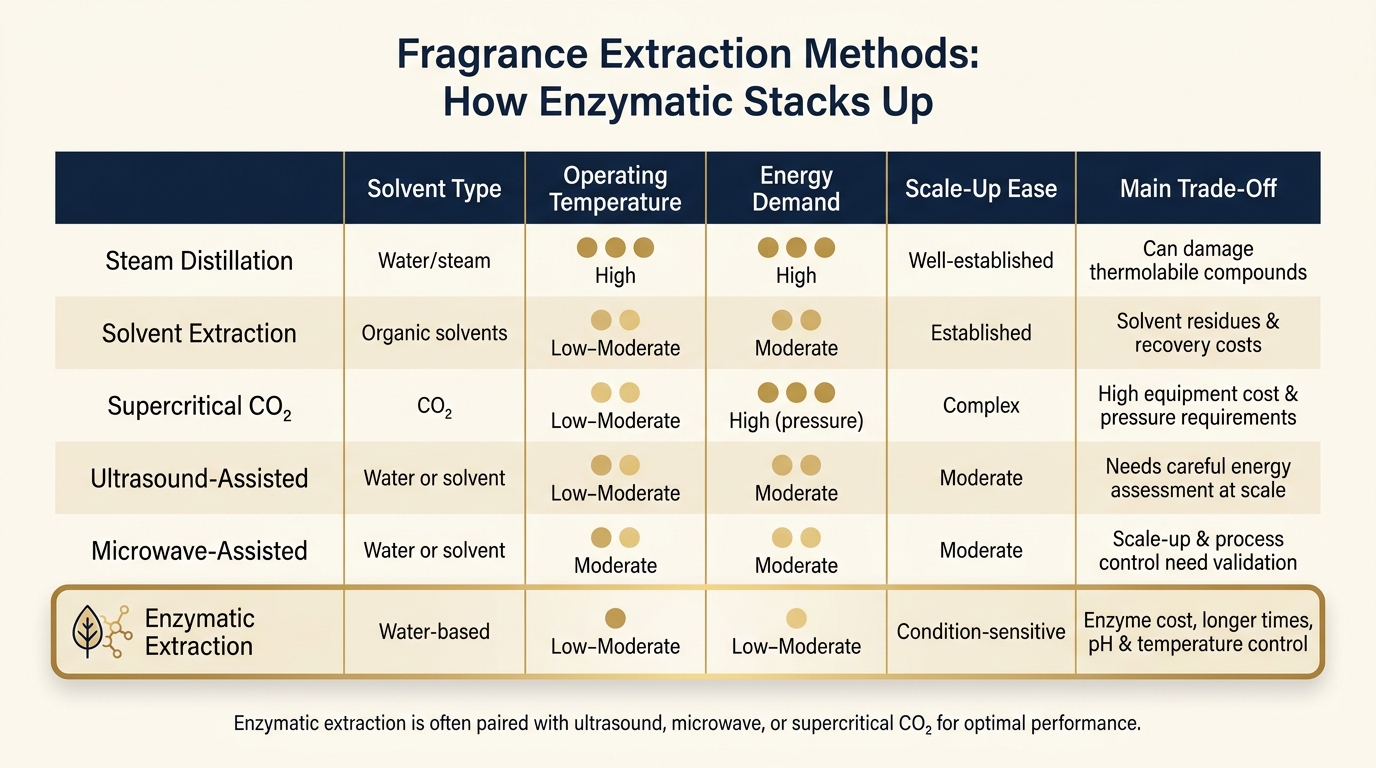
Enzymatická vs. konvenční extrakce vonných látek: srovnání metod
Kde enzymatická extrakce podporuje ekologičtější výrobu vonných látek
Po výtěžnosti a aromatickém výkonu je dalším krokem celkové využití zdrojů. Zde má enzymatická extrakce jasnou výhodu: může snížit nároky na teplo a rozpouštědla a zároveň pomáhat uchovat jemné těkavé látky.
Stojí za ní také silný argument cirkulární ekonomiky. Citrusová kůra, jeden z největších odpadních toků v odvětví výroby šťáv, na tento přístup reaguje obzvlášť dobře. Biologická předúprava pomerančové kůry pomocí Aspergillus niger, který produkuje celulázy a pektinázy, zároveň uvolňuje fermentovatelné cukry - přibližně 22 g/L - které mohou podpořit následnou fermentaci. To je jádro argumentu pro zelenější výrobu: odpadní toky se místo vyhození proměňují ve vstupy pro vůně a v doprovodné produkty.
Praktická omezení, na která výzkumníci stále upozorňují
Přesto enzymatická extrakce není zelená automaticky. Výsledek závisí na návrhu celého procesu, nikoli pouze na použití enzymů.
Výzkumníci opakovaně poukazují na stejné citlivé body: cenu enzymů, přísnou kontrolu pH a teploty a omezenou opakovanou použitelnost v mnoha uspořádáních. Doby zpracování mohou být také delší než u některých fyzikálně asistovaných metod. Pokud systém není dobře vyladěn, může to zvýšit spotřebu energie a vody. Navíc i samotné enzymy mají svou stopu, takže výrobu, dopravu a likvidaci je třeba zahrnout do řádného hodnocení životního cyklu.
Proces může používat enzymy, a přesto zaostávat, pokud spoléhá na intenzivní pufrování, dodatečnou předúpravu a obtížnou následnou separaci. V takovém případě může být čistý přínos oproti dobře řízené konvenční metodě malý, nebo se nemusí projevit vůbec.
Správné rámování je tedy jednoduché: enzymatická extrakce je umožňující technologie. Její ekologický argument stojí na celém procesním řetězci, nikoli pouze na použití enzymů.
Jak si enzymatická extrakce stojí ve srovnání s jinými metodami
Tyto přínosy jsou stále otázkou kompromisů.
| Metoda | Typ rozpouštědla | Provozní teplota | Energetická náročnost | Škálování | Hlavní kompromis |
|---|---|---|---|---|---|
| Parní destilace | Voda/pára | Vysoká | Vysoká | Dobře zavedené | Může poškodit termolabilní sloučeniny |
| Extrakce rozpouštědlem | Organická rozpouštědla | Nízká až střední | Střední | Zavedené | Zbytky rozpouštědel a náklady na jejich regeneraci |
| Superkritický CO₂ | CO₂ | Nízká až střední | Vysoká (tlak) | Složitější | Vysoké náklady na vybavení a požadavky na tlak |
| Ultrazvukem asistovaná | Voda nebo rozpouštědlo | Nízká až střední | Střední | Střední | Vyžaduje pečlivé posouzení energie při škálování |
| Mikrovlnně asistovaná | Voda nebo rozpouštědlo | Střední | Střední | Střední | Škálování a řízení procesu vyžadují validaci |
| Enzymatická extrakce | Na vodní bázi | Nízká až střední | Nízká až střední | Citlivé na podmínky | Cena enzymů, delší časy, kontrola pH a teploty |
Enzymatická extrakce zaujímá užitečnou střední pozici. Nese nižší rozpouštědlovou zátěž než standardní extrakce rozpouštědly, zachází s jemnými materiály šetrněji než parní destilace a vyhýbá se vysokým nárokům na vybavení u superkritického CO₂. Kompromisem je, že bývá pomalejší a citlivější na provozní podmínky než ultrazvukem či mikrovlnami asistované metody. To pomáhá vysvětlit, proč nedávné práce často kombinují enzymy s ultrazvukem, mikrovlnami nebo superkritickým CO₂, aby vyvážily environmentální cíle s procesním výkonem.
Její hlavní silou je selektivní získávání z vedlejších produktových toků za mírných podmínek. Ve vývoji luxusních vůní může být tato rovnováha stejně důležitá jako samotná výtěžnost.
Co to znamená pro vývoj luxusních vůní v Evropě
Proč jsou pro spotřebitele důležité cirkulární získávání surovin a tvrzení o přírodním původu
Tato zjištění přesahují samotnou výtěžnost. V Evropě je původ ingrediencí dnes součástí toho, jak zákazníci posuzují hodnotu vůně. Zejména němečtí zákazníci často spojují přirozenost vůně s ingrediencemi přírodního původu a nižším dopadem na životní prostředí. Na síle získávají také tvrzení týkající se přírodních, veganských a recyklovaných ingrediencí.
Právě zde začíná enzymatická extrakce dávat smysl z hlediska trhu, nejen laboratoře. Když značky získávají esenciální oleje z citrusové kůry, bylinných odřezků a dalších vedlejších toků zpracování, mění vyřazený materiál ve vstup pro tvorbu vůní. Citrusová kůra a podobné vedlejší toky tak získávají pevnější místo ve vývoji fine fragrance.
Na sdělení však záleží. Silnější cestou je propojit upcyklované vstupní suroviny a transparentnost ingrediencí s tím, jak evropští zákazníci tyto signály vnímají, místo aby se komunikace opírala o procesní žargon. Samotný štítek těžkou práci neodvede. Když se lidé rozhodují, co se jim líbí, více záleží na kvalitě vůně a zasazení značky.
Pro zákazníky je nejsnazším způsobem, jak tuto změnu posoudit, objevování v menších formátech.
Jak Scento převádí výzkum ingrediencí do objevování vůní
Scento je prodejce parfémových dekantů a vzorků a každý produkt si můžete koupit jednorázově, bez jakéhokoli předplatného. Scento+ je volitelné členství Scento: měsíční poplatek se vám v plné výši vrací jako kredit do obchodu, který utratíte za jakýkoli parfém, členové mají 10 % slevu, vzorek zdarma ke každé objednávce, parfém zdarma každých šest měsíců a dárek k narozeninám a členství můžete kdykoli pozastavit nebo zrušit.
Závěr: klíčové poznatky ze současného výzkumu
Dohromady výzkum ukazuje na tři praktické poznatky.
- Enzymatická extrakce je slibná pro získávání hodnoty z botanických vedlejších toků za mírných podmínek s nízkou spotřebou rozpouštědel. Studie uvádějí zvýšení výtěžnosti i změny složení u některých citrusových, bylinných a květinových materiálů, výsledky však stále závisejí na rostlinné matrici, volbě enzymů a nastavení procesu.
- Hybridní metody kombinující enzymy s ultrazvukem, mikrovlnami nebo superkritickým CO₂ mohou nabídnout lepší rovnováhu mezi efektivitou a kvalitou aroma.
- Každé tvrzení o udržitelnosti potřebuje pevné důkazy: údaje o výtěžnosti, energetické metriky, použití rozpouštědel a původ vstupní suroviny. To je nyní o to důležitější, protože ekologická tvrzení čelí v Evropě rostoucí kontrole.
Časté dotazy
Jak enzymy skutečně uvolňují z rostlin více vůně?
Enzymatická extrakce využívá enzymy jako biologické katalyzátory k přeměně obnovitelných rostlinných materiálů na vonné sloučeniny. V praxi působí na rostlinné vstupní suroviny, jako jsou cukry nebo terpeny, a vytvářejí specifické, přírodně identické aromatické molekuly.
Protože pracují za mírných podmínek, mohou enzymy řídit přesné reakce bez vysokého tepla nebo agresivních rozpouštědel, která se často používala ve starších metodách. To znamená, že extrakce vůní se stává efektivnější, konzistentnější a udržitelnější.
Které vonné materiály z enzymatické extrakce těží nejvíce?
Enzymatická extrakce funguje obzvlášť dobře u přírodně identických molekul, jako jsou patchoulol, santalol a valencen.
Pomocí upravených mikroorganismů a enzymů produkujících vůně mohou výrobci znovu vytvářet aromatické sloučeniny, které by jinak mohly záviset na zdrojově náročném pěstování. To může pomoci chránit druhy, jako je santalové dřevo, a zároveň zlepšit konzistenci a čistotu.
Je enzymatická extrakce vždy udržitelnější volbou?
Ne vždy. Enzymatická extrakce může v moderní parfumerii sehrát chytrou roli, ale automaticky není pokaždé lepší volbou.
Její dopad závisí na celém procesu: záleží na spotřebě energie, účinnosti vybavení i zátěži dodavatelského řetězce. Ano, může probíhat při pokojové teplotě a produkovat velmi málo odpadu. Celková stopa však stále závisí na tom, jak je proces veden.

