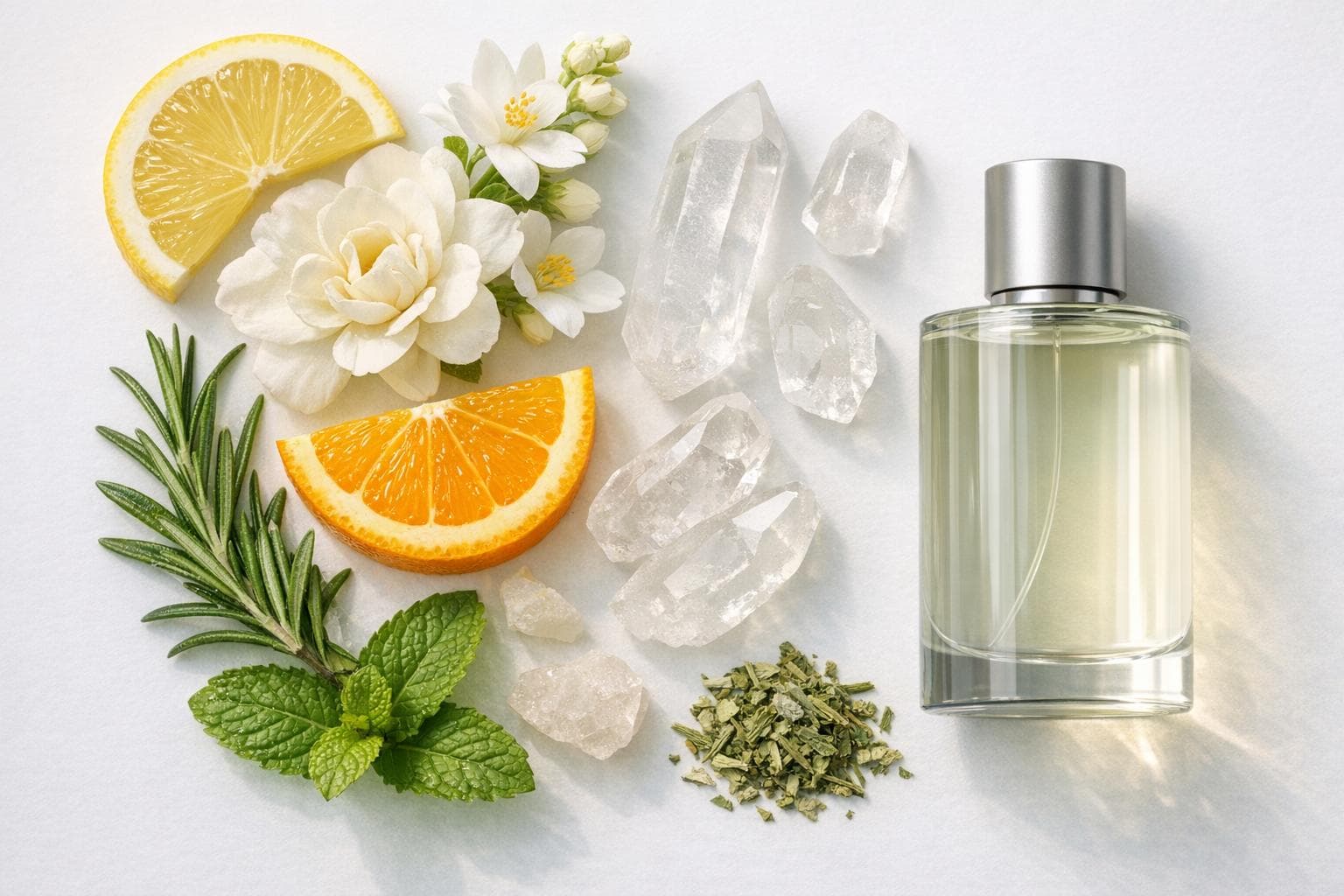
Les parfums clean redéfinissent le marché de la parfumerie de luxe en privilégiant la transparence des ingrédients, l’approvisionnement éthique et les bienfaits liés au bien-être. Les consommateurs d’aujourd’hui exigent des produits en accord avec leurs valeurs, telles que la sécurité, la durabilité et l’authenticité. Cette évolution a favorisé l’essor des parfums clean, qui évitent les substances chimiques nocives, utilisent des ingrédients innovants comme les molécules cultivées en laboratoire et mettent l’accent sur des emballages écoresponsables.
À retenir :
- La transparence est essentielle : les marques clean divulguent tous leurs ingrédients, contrairement aux parfums traditionnels qui dissimulent des substances chimiques sous la mention « parfum ».
- Innovation des ingrédients : des alternatives comme l’alcool de canne à sucre bio et les matériaux upcyclés remplacent les synthétiques nocifs.
- Accent sur le bien-être : les parfums fonctionnels ciblent le bien-être mental, 79 % des utilisateurs allemands associant le parfum à une amélioration de l’humeur.
- Tendances générationnelles : la génération Z privilégie les senteurs non genrées et expérimentales ; les Millennials donnent la priorité au bien-être et à la provenance ; la génération X préfère des options simples et fiables.
- Efforts de durabilité : emballages rechargeables, ingrédients cultivés en laboratoire et agriculture régénératrice réduisent l’impact environnemental.
Le marché mondial du parfum, qui devrait atteindre 110,71 milliards d’euros d’ici 2025, est façonné par ces évolutions portées par les consommateurs, les parfums clean de luxe ouvrant la voie.
Votre expert parfum personnel vous attend
Faites notre quiz olfactif express pour découvrir des parfums de créateurs et de niche authentiques, choisis selon vos goûts – explorez-les en décants et échantillons de 2, 5, 8 et 30 ml, pour essayer chaque fragrance avant de vous engager sur un flacon entier.
Trouvez votre parfumQu’est-ce qui définit un parfum clean ?
Les parfums clean se distinguent par l’importance qu’ils accordent à la transparence des ingrédients et par leur volonté d’éviter les substances chimiques nocives. Contrairement aux parfums conventionnels – qui peuvent légalement dissimuler jusqu’à 3 600 substances chimiques différentes sous l’appellation générique « fragrance » ou « parfum », grâce à une faille de la Fair Packaging and Labeling Act de 1966 – les marques clean adoptent une approche différente. Elles révèlent chaque ingrédient, permettant aux consommateurs de savoir exactement ce qu’ils appliquent sur leur peau. Cet engagement en faveur de la transparence va bien au-delà de l’étiquetage et influence chaque étape du processus de formulation.
Les parfums traditionnels s’appuient souvent sur de l’alcool dénaturé et des composés synthétiques issus du pétrole pour assurer leur tenue. À l’inverse, les parfums clean utilisent des alternatives telles que l’alcool de canne à sucre biologique, l’huile de coco et des ingrédients d’origine botanique. Certains intègrent également des molécules synthétiques sûres, identiques à celles de la nature, tout en assurant une divulgation complète de leurs composants.
Les formulations clean excluent délibérément des substances nocives comme les phtalates, les parabènes, les muscs synthétiques et des ingrédients interdits tels que le Lilial. La différence de réglementation est frappante : alors que les États-Unis n’interdisent que 30 substances dans les cosmétiques, l’UE en prohibe plus de 1 500. Une étude d’Eco Test a révélé la présence d’ingrédients nocifs dans 23 des 25 parfums conventionnels testés.
Ingrédients transparents et formules non toxiques
Un étiquetage transparent est l’une des pierres angulaires des parfums clean, permettant aux consommateurs d’éviter les perturbateurs endocriniens, les substances cancérogènes et les irritants respiratoires signalés par l’Environmental Working Group (EWG). Fait alarmant, les recherches indiquent que des substances chimiques toxiques ou des allergènes puissants sont présents dans environ 47 % des parfums pour femmes et 37 % des parfums pour hommes actuellement sur le marché.
« Le terme “fragrance” est une immense appellation fourre-tout. Il peut désigner une combinaison d’environ 3 600 substances chimiques différentes qui peuvent être néfastes pour notre santé. » – Becca, blogueuse et défenseuse du bien-être holistique
Des certifications comme EWG Verified, Cradle to Cradle Certified et MADE SAFE rassurent sur le fait qu’un produit respecte des normes rigoureuses de non-toxicité. Pour les peaux sensibles, il est essentiel de vérifier les ingrédients de base. L’alcool de canne à sucre biologique ou l’huile de coco constituent un choix plus sûr que « alcohol denat », souvent mélangé à des additifs nocifs pour le rendre impropre à la consommation. Lorsque des marques affirment utiliser des « synthétiques sûrs », il est important de vérifier qu’elles proposent une liste complète des ingrédients sur leur site web, plutôt que d’employer cette expression comme simple argument marketing.
Les parfums clean cherchent également à redéfinir l’expérience olfactive grâce à des compositions soigneusement élaborées.
Compositions olfactives épurées
Les parfums clean modernes sont conçus pour être subtils et personnels, mettant souvent en scène des fleurs délicates, des agrumes doux et des muscs tendres. L’époque des senteurs excessivement synthétiques « citronnées » ou « savonneuses » est révolue. Les parfums clean d’aujourd’hui atteignent une complexité naturelle grâce à des ingrédients botaniques comme la mousse, la cardamome et l’anis étoilé.
Cette approche s’inscrit dans les tendances bien-être, le parfum étant de plus en plus perçu comme un outil au service de l’équilibre mental. Par exemple, 79 % des utilisateurs de parfum en Allemagne estiment que les senteurs peuvent avoir une influence positive sur la santé mentale. De nombreux parfums clean incorporent des huiles essentielles pour créer des senteurs « fonctionnelles », conçues pour favoriser la détente, la concentration ou d’autres réponses cognitives. Le Dr Mark Moss, responsable du département de psychologie à l’Université de Northumbria, explique :
« Les parfums synthétiques suscitent des émotions mais n’ont pas l’activité biologique des huiles essentielles »
Cependant, les formulations naturelles présentent un compromis : leur tenue est plus légère. Bien que les promesses de longue tenue pour les parfums clean soient passées de 11 % à 35 % entre 2019 et 2023, ils ont encore tendance à s’estomper plus rapidement. Pour y remédier, tester de plus petits décants (proposés entre 25 € et 45 €) est une manière pratique d’évaluer les performances d’un parfum avant d’investir dans un flacon grand format.
Comment la durabilité stimule la parfumerie clean de luxe
La durabilité transforme l’univers du parfum clean de luxe, influençant aussi bien l’approvisionnement en ingrédients que le packaging. Au-delà d’un impératif moral, les pratiques durables peuvent avoir un impact significatif sur les performances de l’entreprise, avec une hausse potentielle du bénéfice opérationnel pouvant atteindre 60 %. Ces efforts permettent aussi d’atténuer les difficultés de la chaîne d’approvisionnement, comme les sécheresses à Grasse qui ont réduit de 40 % les récoltes de tubéreuse et fait tripler le prix de l’iris. Le luxe clean ne se limite plus aux labels bio : il s’agit désormais d’adopter l’agriculture régénératrice, les ingrédients cultivés en laboratoire et les modèles d’économie circulaire qui transforment l’ensemble du processus de production.
Approvisionnement éthique et ingrédients cultivés en laboratoire
L’essor des ingrédients cultivés en laboratoire redéfinit les senteurs de luxe en offrant des alternatives de haute qualité qui préservent les écosystèmes naturels. Par exemple, le musc biosourcé et le santal cultivé en laboratoire offrent des arômes riches et somptueux sans le coût environnemental des méthodes traditionnelles, qui impliquaient souvent la chasse d’espèces menacées ou une surexploitation des ressources.
L’agriculture régénératrice est devenue un pilier de l’approvisionnement en ingrédients naturels. Contrairement à l’agriculture conventionnelle, ces pratiques restaurent activement la santé des sols et favorisent la biodiversité. Cette approche est particulièrement cruciale pour des ressources comme le santal, dont la récolte traditionnelle a fragilisé les populations naturelles.
En complément des méthodes régénératrices, l’upcycling gagne du terrain. Les parfumeurs extraient désormais des notes olfactives de sources inattendues, telles que les sous-produits du chou-fleur et les chutes de bois issues de la fabrication de meubles. Ces techniques réduisent non seulement la dépendance aux matières premières vierges, mais donnent aussi naissance à des fragrances distinctives et surprenantes.
Pour quantifier leurs efforts en matière de durabilité, les marques s’appuient sur des outils comme GREEN MOTION™ et EcoScent Compass. Par exemple, Mane utilise GREEN MOTION™ pour évaluer les ingrédients sur une échelle de 0 à 100 selon des critères tels que la santé et l’impact environnemental, tandis qu’EcoScent Compass de dsm-firmenich analyse des aspects comme le carbone renouvelable et la biodégradabilité. Ces systèmes de notation offrent aux consommateurs une vision claire et mesurable de l’empreinte environnementale d’un produit.
Parmi les initiatives remarquables figure le Orange Blossom Project de Sana Jardin au Maroc. Ce programme donne du pouvoir aux femmes amazighes locales en leur apprenant à revaloriser les déchets floraux en produits dérivés comme des bougies et de l’eau de fleur d’oranger. Chaque partie de la récolte est ainsi utilisée, générant à la fois un impact social et une réduction des déchets.
La recherche améliore également l’efficacité en parfumerie. Les scientifiques développent des molécules olfactives plus puissantes qui nécessitent des concentrations plus faibles pour obtenir le même impact olfactif. Cela est d’autant plus important que 60 % des 4 000 ingrédients utilisés dans la parfumerie moderne sont produits en quantités inférieures à une tonne métrique par an.
Solutions de packaging écoresponsables
La durabilité s’étend aussi au packaging, les maisons de luxe misant sur des designs rechargeables et modulaires. Louis Vuitton et Mugler, par exemple, proposent désormais des stations de recharge en boutique, réduisant les déchets tout en renforçant la fidélité des clients. Cette évolution correspond aux préférences des consommateurs, puisque 37 % des 13–39 ans privilégient désormais les produits parfumés respectueux de l’environnement.
Les innovations en matière de design prouvent que durabilité et élégance peuvent coexister. La collection « Les Eaux de Chanel » de Chanel présente des flacons minimalistes conçus en verre recyclé, alliant sophistication et conscience écologique. De même, Lush propose des emballages biodégradables en fibre de champignon et des parfums solides dans des boîtes réutilisables en aluminium, éliminant totalement les déchets plastiques.
Les systèmes de packaging modulaires constituent une autre avancée majeure, réduisant l’usage du plastique jusqu’à 80 %. Ces designs permettent aux consommateurs de séparer les composants pour faciliter le recyclage, répondant ainsi au problème fréquent des déchets composites. Le marché du parfum biologique, estimé à environ 7,5 milliards d’euros d’ici 2025, souligne la demande croissante pour des solutions d’emballage durables.
Les formats alternatifs gagnent également en popularité. Jo Loves a lancé un pinceau parfumé à 58 € doté d’une formule gel à appliquer d’un geste, supprimant la nécessité des mécanismes de vaporisation traditionnels. Les parfums solides et huiles parfumées s’imposent comme des options de choix grâce à leur emballage écoresponsable, leur praticité en voyage et leurs formulations concentrées.
Enfin, la transparence numérique renforce la confiance des consommateurs. Bastille Parfums, par exemple, intègre des QR codes sur ses emballages, permettant aux clients de retracer le parcours de chaque ingrédient — de l’approvisionnement à la production. Cette approche séduit 85 % des acheteurs écoresponsables qui examinent attentivement les étiquettes, transformant l’emballage en outil de responsabilité et de confiance.
Comment les différentes générations abordent les parfums clean

Comment la génération Z, les Millennials et la génération X choisissent les parfums clean
Chaque génération apporte ses préférences distinctes au marché des parfums clean, façonnant les tendances et renforçant l’attention croissante de l’industrie portée à la transparence et à l’écoresponsabilité. La génération Z mise sur l’expression de soi à travers des collections de senteurs personnalisées, les Millennials recherchent des parfums en harmonie avec leurs rituels bien-être, et la génération X s’oriente vers la simplicité et la praticité pour s’adapter à des vies bien remplies. Pour les marques qui évoluent sur un marché du parfum estimé à 36,55 milliards de dollars en 2025, comprendre ces nuances générationnelles est essentiel.
Génération Z : parfums non genrés et expérimentation au quotidien
La génération Z réécrit les codes du parfum, s’éloignant de l’idée d’une seule senteur signature au profit d’une véritable garde-robe olfactive qui s’adapte à son humeur et invite à expérimenter chaque jour. Un impressionnant 73 % de la génération Z porte du parfum au moins trois fois par semaine, et les réseaux sociaux — en particulier TikTok — jouent un rôle majeur dans ses choix, 66 % de ses achats étant influencés par des tendances virales. Des plateformes comme « PerfumeTok » ont transformé le parfum en phénomène culturel, où partager ses combinaisons de senteurs personnelles est devenu une forme d’expression de soi.
« Les gens sont ravis de partager leur cocktail personnel, celui qui correspond à ce qu’ils ressentent ce jour-là et, par conséquent, à ce qu’ils veulent évoquer, exprimer et sentir. »
– Malena Higuera, CEO, Noyz
La génération Z se tourne également vers des formulations non genrées, privilégiant des notes équilibrées de bois, d’épices et de musc plutôt que les catégories traditionnellement genrées. L’essor de la « skinification » — une préférence pour des formules sans alcool, à base d’eau, perçues comme plus douces pour la peau — a encore davantage influencé ses choix. Les marques patrimoniales perdent du terrain face aux marques de niche et indépendantes, ces dernières ayant gagné 10 % de part du mix produit entre janvier 2024 et janvier 2025. L’amour de cette génération pour l’échantillonnage avant achat a également entraîné une hausse annuelle de 85 % des recherches pour les discovery sets.
Millennials : bien-être et transparence des ingrédients
Pour les Millennials, le parfum est bien plus qu’une simple senteur agréable : il fait pleinement partie de leur rituel de bien-être. Cette génération considère le parfum comme un outil favorisant l’équilibre mental, 79 % des utilisateurs allemands déclarant qu’il a un impact positif sur leur humeur. Les Millennials sont particulièrement attirés par les « neuro-parfums » conçus pour réduire le stress ou améliorer la concentration, et ils exigent des informations claires sur les ingrédients et leur provenance.
La durabilité est une priorité majeure pour les Millennials. Ils adoptent volontiers les ingrédients upcyclés, les molécules cultivées en laboratoire et l’agriculture régénératrice, en conciliant ces innovations avec des composants naturels. Les synthétiques produits de manière responsable, comme le musc créé en laboratoire qui évite de nuire aux espèces menacées, sont largement acceptés. Les Millennials alimentent également la tendance de la « garde-robe olfactive », délaissant le parfum unique de tous les jours au profit de collections adaptées à différentes humeurs et occasions.
« La croissance future sera soutenue par l’influence toujours croissante des Millennials et de la génération Z, qui accordent davantage de valeur à l’authenticité, à l’éthique et aux produits cruelty-free que leurs aînés. »
– Kristina Plevova et al., chercheurs
Génération X : des choix simples et fiables
Contrairement aux générations plus jeunes, tournées vers les tendances, la génération X privilégie la simplicité et le sens pratique dans ses choix parfumés. Partagée entre les responsabilités liées aux enfants et aux parents vieillissants, elle recherche des produits qui font gagner du temps et s’intègrent naturellement à son quotidien. Ses préférences olfactives vont vers des senteurs polyvalentes, aussi appropriées dans un cadre professionnel que social.
Représentant 25 % des dépenses totales en beauté, la génération X consacre environ 69 milliards de dollars par an aux parfums, avec une nette préférence pour l’achat en boutique : 73 % de ce groupe préfère découvrir physiquement les produits avant de les acheter. Les innovations fonctionnelles, comme les senteurs de luxe intégrées dans des produits du quotidien tels que les lessives ou les sprays nettoyants, trouvent un écho particulier auprès de cette génération.
« Les clients de la génération X recherchent des produits offrant des résultats sur lesquels ils peuvent compter… conçus pour s’intégrer harmonieusement à la vie quotidienne des consommateurs de la génération X. »
– Cynthia Sakai, fondatrice, Evolvetogether
La génération X apprécie également les échantillons gratuits et les recommandations de confiance, privilégiant l’aspect pratique au marketing tapageur. Si elle se montre plus ouverte que les Boomers à l’idée d’essayer de nouvelles marques, cela ne se produit que si ses produits actuels ne garantissent plus des résultats constants. Son approche équilibre luxe et accessibilité, avec une préférence pour des options sobres et fiables.
Ces différences générationnelles soulignent la nécessité, pour les marques, d’adapter leurs stratégies afin d’entrer en résonance avec les valeurs et priorités propres à chaque groupe.
Le rôle de la technologie dans le développement des parfums clean
La technologie transforme la manière dont les parfums clean sont créés, en offrant un niveau inédit de personnalisation et de durabilité. L’IA et la biotechnologie sont devenues des outils essentiels dans cet univers, permettant aux marques d’explorer d’immenses bases de données d’ingrédients et de prédire des associations gagnantes adaptées aux goûts des consommateurs et aux préférences régionales. Ces avancées permettent aux parfumeurs de concevoir des formules conformes aux standards clean label tout en conservant la complexité et la tenue recherchées par les amateurs de luxe. Cette approche guidée par la technologie ouvre la voie à de futures innovations, notamment les formulations basées sur l’IA et les senteurs qui agissent sur l’humeur.
Formules pilotées par l’IA et adaptées à la peau
Alors que transparence et durabilité occupent le devant de la scène, la technologie rend l’expérience parfumée plus personnelle que jamais. L’intelligence artificielle mène cette révolution en analysant le comportement des consommateurs et la chimie de leur peau afin de créer des profils olfactifs sur mesure. Par exemple, en avril 2023, l’entreprise suisse Firmenich a présenté « Focus by Emoticode », un outil d’IA ayant analysé 1,9 million de réponses issues de 34 000 parfums afin d’identifier les combinaisons déclenchant des émotions. De même, en 2024, Givaudan a acquis Myrissi, une société spécialisée dans la technologie d’IA cartographiant les parfums selon les réponses émotionnelles, grâce à une base de données de 25 000 réactions consommateurs permettant de prédire ce qu’un parfum fera ressentir aux utilisateurs.
Le machine learning aide également les marques à répondre à la préférence de la génération Z pour les senteurs guidées par l’humeur et à l’exigence des Millennials en matière de transparence clean label. Des outils alimentés par l’IA, tels que des quiz et des diagnostics en boutique, orientent les consommateurs vers des parfums correspondant à leur personnalité et à leur style de vie, réduisant ainsi le risque de déception lié aux achats à l’aveugle. L’essor des formules adaptées à la peau reflète cette évolution, avec des innovations comme les parfums sans alcool à base d’eau qui gagnent en popularité. En 2024, la marque Orebella de Bella Hadid a lancé une formule biphasée qui diffuse le parfum sans les effets desséchants des options traditionnelles à base d’alcool.
Senteurs adaptées au climat et rehaussant l’humeur
Les parfums conçus pour favoriser le bien-être deviennent un axe majeur de la parfumerie de luxe, les marques s’appuyant sur les neurosciences pour développer des senteurs qui réduisent le stress et améliorent la concentration. En mai 2024, Charlotte Tilbury a lancé la « Collection of Emotions », une gamme de six parfums — comprenant des noms comme « More Sex » et « Calm Bliss » — créés pour susciter des émotions précises, telles que l’empowerment ou la relaxation, pendant jusqu’à 18 heures. Cette tendance trouve un fort écho auprès des consommateurs : 79 % des utilisateurs de parfum en Allemagne estiment que les senteurs peuvent avoir une influence positive sur le bien-être mental, et 24 % des consommateurs explorent activement l’aromathérapie dans le cadre du mouvement santé et bien-être pour 2025.
« Les consommateurs d’aujourd’hui recherchent plus que la parfumerie : ils aspirent à un soutien émotionnel, à une clarté mentale et à un confort sensoriel. »
– Michael Nolte, SVP et directeur créatif, Beautystreams
L’innovation basée sur le climat répond également au besoin de tenue dans des conditions plus chaudes. Entre 2019 et 2023, les allégations de longue tenue dans les lancements mondiaux de parfums ont triplé, passant de 11 % à 35 %, les marques répondant ainsi à la demande croissante de senteurs haute performance. La biotechnologie joue ici un rôle crucial, la « biotechnologie blanche » utilisant levures et bactéries pour créer des molécules synthétiques biodégradables. Ces méthodes réduisent la dépendance aux ressources naturelles tout en garantissant que les parfums clean offrent à la fois un approvisionnement éthique et la tenue que les consommateurs de luxe attendent.
Modèles économiques des parfums clean de luxe
À mesure que les attentes des consommateurs évoluent et que de nouvelles technologies émergent, les marques de parfum repensent leur manière de vendre. Les flacons traditionnels grand format peuvent freiner les acheteurs, en particulier ceux qui souhaitent découvrir des senteurs de niche ou clean. Pour combler cet écart, les marques se tournent vers des modèles centrés sur la découverte et portés par le storytelling, permettant aux clients d’explorer les fragrances avec un engagement financier minimal.
Découverte grâce aux décants et aux abonnements
Les services d’abonnement transforment l’expérience d’achat du parfum, remplaçant le risqué « blind-buy » par des formats d’essai. Cette approche trouve un écho particulier auprès des 79 % d’utilisateurs de parfum qui estiment que les senteurs peuvent influencer positivement le bien-être mental.
L’incertitude économique fait également évoluer les habitudes d’achat. Au lieu de se laisser tenter par des flacons de luxe grand format, les consommateurs optent pour des essais plus petits et plus accessibles. Au premier trimestre 2025, les parfums à moins de 50 € ont vu leurs ventes progresser de 11 %, tandis que ceux au-dessus de 150 € ont augmenté de 14 %. Pendant ce temps, les options de milieu de gamme (50 € à 150 €) ont reculé de 3 %, les acheteurs se tournant vers des décants d’ultra-luxe ou des points d’entrée abordables. Scento est un détaillant de décants et d’échantillons de parfum, et chaque produit peut être acheté à l’unité, sans aucun abonnement. Scento+ est l’adhésion optionnelle de Scento : la cotisation mensuelle vous revient intégralement sous forme de crédit en magasin, à dépenser sur n’importe quel parfum ; les membres bénéficient de 10 % de réduction, d’un échantillon offert avec chaque commande, d’un parfum offert tous les six mois et d’un cadeau d’anniversaire, et vous pouvez mettre en pause à tout moment ; pour résilier, contactez notre équipe. Cette approche limite le gaspillage et s’aligne sur les usages des consommateurs — d’autant plus que les parfums clean, dépourvus de fixateurs synthétiques, nécessitent souvent des applications plus fréquentes.
Pour enrichir encore l’expérience, de nombreux services utilisent des quiz olfactifs et des outils d’IA pour associer les utilisateurs à des parfums correspondant à leurs préférences. Certains abonnements regroupent même des parfums clean soigneusement sélectionnés avec des articles lifestyle écoresponsables, comme des bougies véganes, à des tarifs mensuels compris entre 34,99 € et 45 €. Cette stratégie séduit les Millennials, attentifs à la transparence des ingrédients, ainsi que la génération Z, qui privilégie les senteurs non genrées et porteuses d’identité. Ces attentions personnalisées et écoresponsables permettent aux marques de se distinguer grâce au storytelling.
Collections curatées et récits de marque
Au-delà des abonnements, les collections curatées et les récits de marque captivants contribuent à créer des liens plus profonds avec les consommateurs. En 2025, près de 45 % des moins de 45 ans utilisaient le parfum comme un moyen d’expression personnelle, attendant des marques qu’elles offrent plus qu’un simple symbole de statut. Les marques de parfum indépendantes, en particulier, ont enregistré une croissance annuelle de 34 % en misant sur le savoir-faire, l’approvisionnement éthique et un storytelling singulier.
« La niche ne repose ni sur le marketing, ni sur l’imagerie, ni sur un grand nom ou un visage célèbre. Il s’agit de créer un produit qui enchante, surprend et suscite chez les gens d’importantes réactions émotionnelles. »
– Veronique Gabai, fondatrice et CEO, Veronique Gabai
Certaines marques de niche puisent leur inspiration dans le patrimoine régional, créant des senteurs qui éveillent les souvenirs à travers des notes comme la cire fondue ou le vin de communion. D’autres intègrent des ingrédients traditionnels tels que le riz blanc ou le matcha, tissant des récits culturels dans leurs collections. Ces thèmes ancrés dans l’héritage créent un sentiment d’appartenance et distinguent les parfums clean de luxe des offres grand public. En outre, certaines maisons de luxe mettent en avant les valeurs du « slow perfume », laissant les fragrances mûrir et développer leur complexité. Cette approche transparente justifie non seulement un positionnement premium, mais souligne également l’artisanat à l’œuvre derrière le produit.
Les discovery sets constituent un autre élément clé. En mai 2025, une marque a adopté une stratégie « high-low », proposant des body sprays à 39 € chez un distributeur grand public pour attirer de nouveaux clients tout en lançant simultanément une collection ultra-luxe à 250 €. D’autres plateformes offrent des échantillons reconditionnés entre 3,99 € et 12,99 €, donnant aux consommateurs la possibilité d’explorer des parfums clean de niche sans s’engager sur un flacon entier. En associant une provenance des ingrédients claire à un storytelling riche de sens, les marques clean de luxe démontrent que les acheteurs d’aujourd’hui sont prêts à payer davantage — non pour le mystère, mais pour l’authenticité.
Conclusion
Les parfums clean redessinent le paysage de la parfumerie de luxe en mêlant transparence, responsabilité et innovation. Les consommateurs d’aujourd’hui attendent plus qu’une belle senteur : ils veulent connaître l’histoire derrière chaque ingrédient. Des QR codes permettant de retracer les matières de la source au flacon jusqu’à la divulgation complète des listes d’ingrédients, la transparence est devenue une pierre angulaire de l’industrie moderne du parfum. La durabilité suit de près, avec des marques qui adoptent des pratiques comme l’upcycling (pensez aux écorces d’orange revalorisées), les flacons rechargeables et les emballages biodégradables. Quand on sait que l’industrie de la beauté génère environ 120 milliards d’unités d’emballage chaque année, il n’est pas surprenant que 65 % des consommateurs attendent des marques qu’elles prennent les devants pour impulser le changement environnemental.
Les avancées en chimie verte ouvrent également la voie à une innovation responsable. Les molécules cultivées en laboratoire reproduisent désormais des senteurs menacées, tandis que des technologies comme EcoBoost réduisent considérablement l’usage de matières premières et les émissions de carbone — jusqu’à 90 %. Pourtant, des défis subsistent, comme la surexploitation du santal naturel, qui a gravement épuisé les réserves. Ces efforts reflètent une évolution plus large de l’industrie, incluant de nouveaux formats de découverte et des modèles d’abonnement en phase avec la demande croissante de luxe responsable.
« Aujourd’hui, créer un parfum ne se résume plus à l’odeur — c’est aussi une question de responsabilité. » — Wikiparfum
L’accent mis sur le bien-être constitue un autre moteur essentiel du changement. Les parfums fonctionnels, conçus pour améliorer l’humeur et le bien-être cognitif, gagnent du terrain. Dans le même temps, des offres d’entrée de gamme comme les brumes pour le corps et les discovery sets rendent les parfums de luxe plus accessibles, répondant aux attentes de consommateurs plus jeunes qui ne sont pas encore prêts à s’engager dans un achat à plus de 300 $. Cette tendance reflète un marché qui se divise entre options abordables et choix ultra-premium.
La parfumerie de luxe contemporaine privilégie désormais l’authenticité et les pratiques porteuses de sens plutôt que le mystère traditionnel. Transparence, solutions innovantes et formats accessibles ouvrent la voie sur un marché qui devrait atteindre 110,71 milliards d’euros d’ici 2025. Les marques qui embrassent ces valeurs sont idéalement positionnées pour réussir durablement.
FAQ
En quoi les parfums clean diffèrent-ils des parfums traditionnels ?
Les parfums clean se distinguent des parfums conventionnels par leur attention portée à des ingrédients plus sûrs et plus transparents. Les parfums traditionnels reposent souvent sur des substances synthétiques, dont certaines peuvent irriter la peau ou susciter des préoccupations sanitaires. À l’inverse, les parfums clean évitent les additifs agressifs comme les phtalates et les parabènes, en privilégiant des ingrédients naturels et non toxiques, plus doux et plus respectueux de la peau.
Au-delà de leurs formulations soignées, les parfums clean s’inscrivent également dans des valeurs telles que la durabilité et le bien-être personnel. Pensés pour être légers, frais et raffinés, ils séduisent les consommateurs qui associent l’art de vivre conscient au luxe. Ce mouvement reflète une évolution plus large, où les parfums ne sont plus de simples accessoires, mais le prolongement d’un mode de vie plus sain et plus réfléchi.
Comment les parfums clean rendent-ils l’industrie du parfum plus durable ?
Les parfums clean transforment l’industrie du parfum en mettant l’accent sur des pratiques écoresponsables et en réduisant les déchets. Ces créations privilégient des ingrédients naturels et la chimie verte, en s’éloignant des synthétiques issus du pétrole. Cette évolution réduit non seulement l’impact environnemental de la production, mais favorise également l’utilisation d’extraits végétaux renouvelables, contribuant à la protection des écosystèmes et à des objectifs environnementaux plus larges.
De nombreuses marques de parfums clean repensent aussi l’emballage et la distribution. En proposant de plus petits formats d’essai comme 2 ml, 5 ml et 8 ml, ainsi qu’un décant en flacon de 30 ml sur la plupart des parfums, elles permettent aux clients de découvrir les fragrances sans s’engager sur des flacons grand format. Cette approche limite le gaspillage lié aux parfums inutilisés et réduit les émissions carbone associées à l’expédition de flacons en verre plus lourds. Dans l’ensemble, ces efforts rendent les parfums de luxe plus respectueux de l’environnement et plus conscients de leur impact.
Pourquoi les jeunes générations sont-elles attirées par les parfums clean ?
Les jeunes générations, en particulier la génération Z et les Millennials, se tournent vers les parfums clean comme prolongement naturel de leurs modes de vie axés sur le bien-être. Elles privilégient la transparence, recherchant des senteurs formulées sans irritants synthétiques et élaborées à partir d’ingrédients issus d’un approvisionnement responsable. Elles peuvent ainsi se sentir en accord — physiquement comme éthiquement — avec ce qu’elles appliquent sur leur peau.
Cette tendance s’inscrit dans un mouvement plus large vers des produits qui soutiennent le bien-être émotionnel, en offrant des bénéfices tels qu’une élévation de l’humeur et une sensation d’apaisement. Les jeunes acheteurs montrent également une réelle disposition à investir dans des parfums haut de gamme en accord avec leurs valeurs éthiques et leurs priorités de bien-être, faisant des senteurs clean une tendance phare de l’univers du parfum de luxe.

