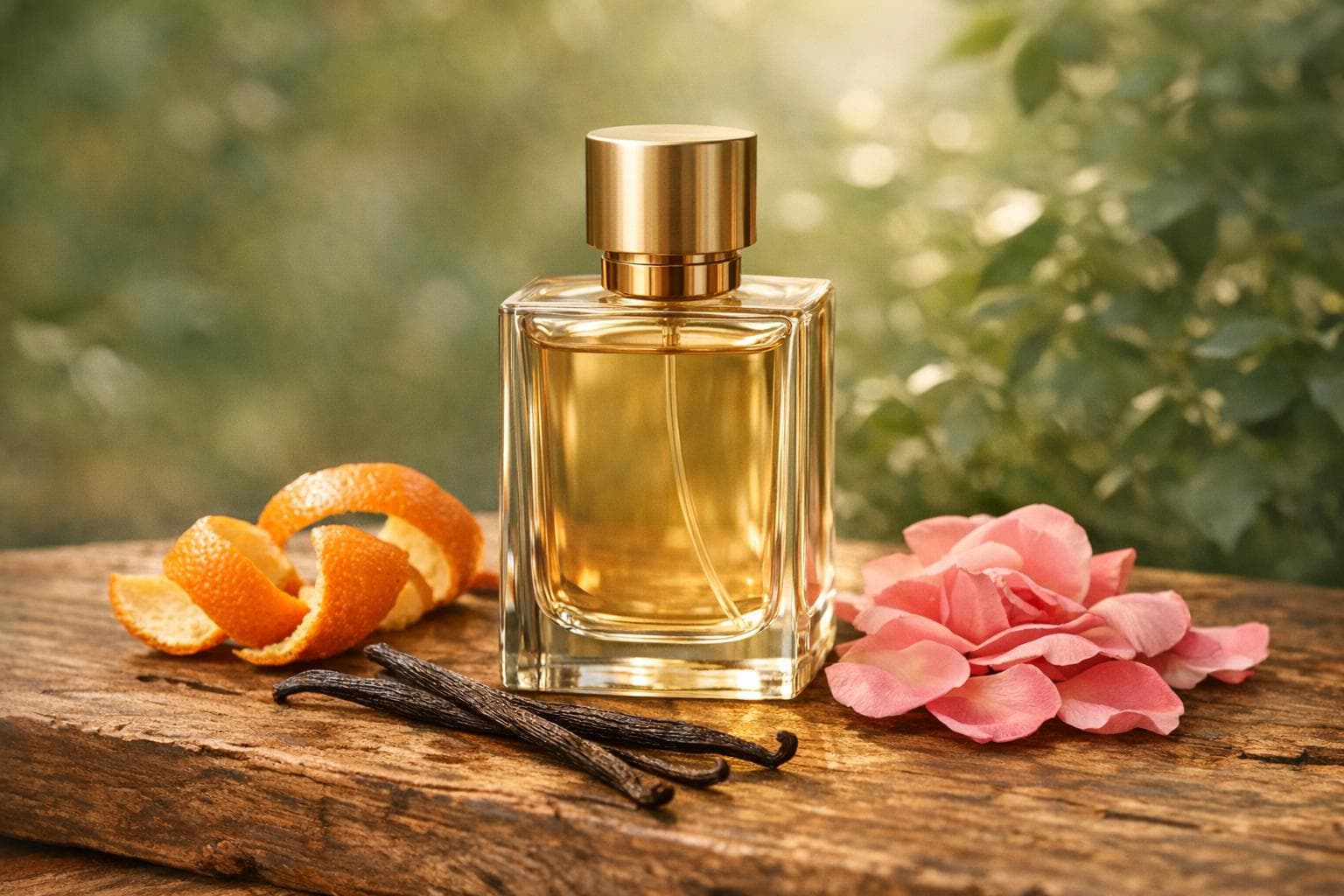
Les parfums upcyclés redessinent l’industrie de la fragrance en transformant des déchets — tels que des écorces d’agrumes, des pétales de rose et de la sciure — en parfums luxueux. Cette approche réduit les 92 millions de tonnes de déchets annuels associés à la production de parfums, tout en répondant à des enjeux tels que la surexploitation des ressources et les fortes émissions de carbone. Les jeunes consommateurs, en particulier les Millennials et la génération Z, stimulent la demande pour des choix écoresponsables, plus d’un tiers d’entre eux privilégiant les pratiques environnementales lors de l’achat de produits de beauté.
Points clés à retenir :
- Que sont les parfums upcyclés ? Des parfums élaborés à partir de coproduits tels que des fleurs déjà utilisées, de la pulpe de fruits et des copeaux de bois.
- Pourquoi ce changement ? Les parfums traditionnels reposent sur des méthodes gourmandes en ressources, contribuant à la déforestation, à la consommation d’eau et aux émissions de COV.
- Tendances consommateurs : 65 % des acheteurs recherchent désormais des fragrances écoresponsables, en phase avec une volonté plus large de transparence des ingrédients et de constitution d’une collection de parfums axée sur la réduction des déchets.
- Exemples : Des marques comme Etat Libre d’Orange et Givaudan ouvrent la voie avec des ingrédients upcyclés tels que les lies de vin et les pétales de rose doublement distillés.
Les fragrances upcyclées conjuguent réduction des déchets et arômes riches, nuancés, offrant une alternative contemporaine à celles et ceux qui recherchent luxe et responsabilité dans un même flacon. Pour explorer ces nouveautés, les décants de parfum offrent une manière accessible de découvrir le luxe durable.
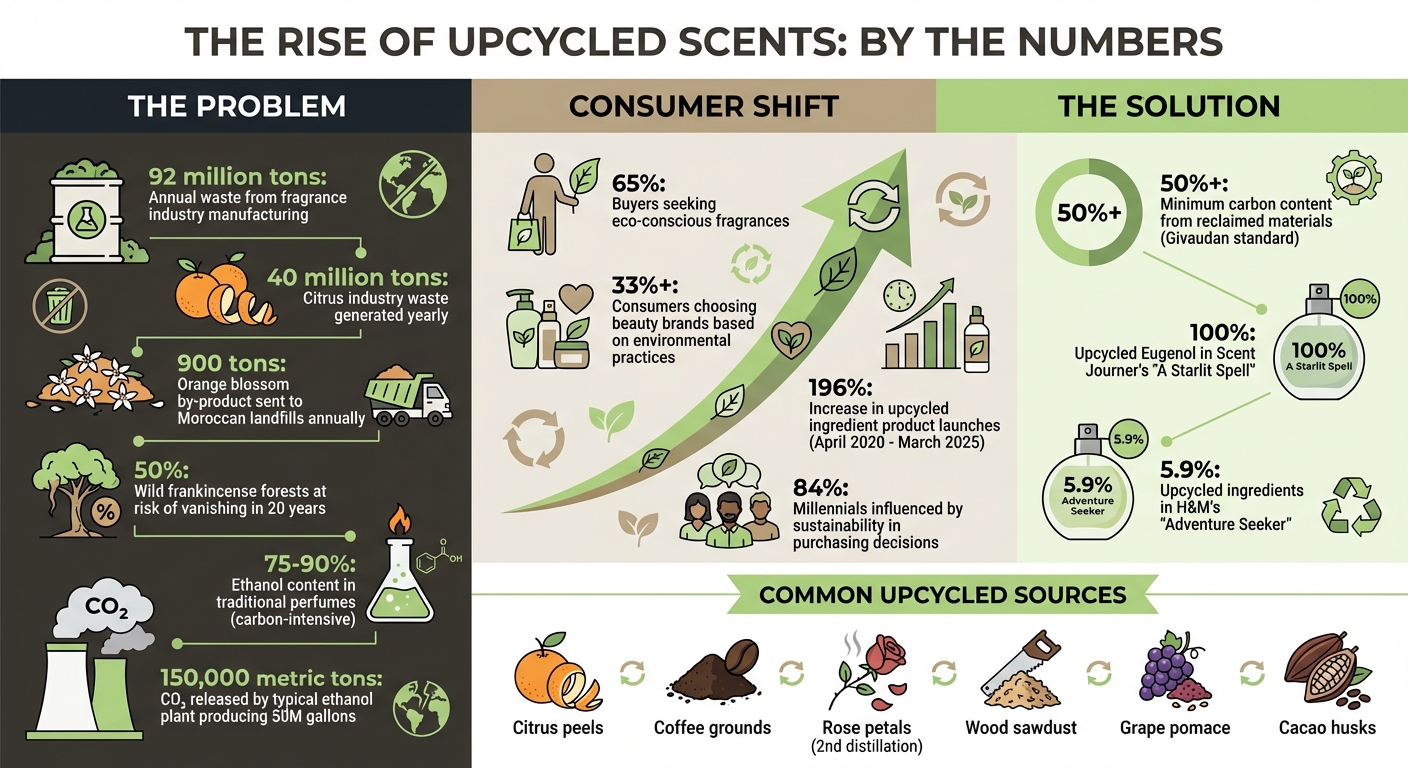
Impact environnemental des parfums traditionnels et upcyclés : statistiques clés
Le coût environnemental de la production traditionnelle de parfums
L’industrie traditionnelle du parfum laisse une empreinte environnementale considérable à presque chaque étape de son processus. De l’approvisionnement en matières premières aux méthodes d’extraction énergivores, en passant par des emballages générateurs de déchets, l’impact est significatif.
Les déchets liés à l’approvisionnement en ingrédients
La demande en ingrédients naturels pour la parfumerie a conduit à une surexploitation, menaçant la survie de plusieurs espèces végétales. Le bois de santal et le bois d’agar, prisés pour leurs senteurs profondes et boisées, ont été récoltés jusqu’à des niveaux critiques. De manière alarmante, les spécialistes de la conservation avertissent que jusqu’à 50 % des forêts sauvages de Boswellia (encens) pourraient disparaître au cours des deux prochaines décennies en raison de pratiques de récolte non durables.
La production d’huiles essentielles exige des quantités vertigineuses de matière végétale. Par exemple, il faut des milliers de fleurs pour créer une seule livre d’huile essentielle. Pourtant, sur 250 000 espèces connues de plantes à fleurs, seules environ 2 000 produisent des huiles adaptées à la fabrication de parfums. À elle seule, l’industrie des agrumes génère plus de 40 millions de tonnes de déchets chaque année, les écorces jetées représentant près de la moitié de cette masse. Au Maroc, environ 900 tonnes de coproduits de fleur d’oranger finissent chaque année en décharge.
Au-delà des plantes elles-mêmes, l’approvisionnement traditionnel consomme de vastes surfaces de terre et d’importantes quantités d’eau pour la culture et l’irrigation. Les procédés d’extraction s’appuient souvent sur des solvants dérivés du pétrole comme le benzène, à la fois énergivores et nocifs pour l’environnement. À cela s’ajoutent le transport et la distribution mondiaux de ces matières premières, qui contribuent fortement aux émissions de carbone.
Le tribut environnemental ne s’arrête pas à l’extraction des ingrédients — il s’étend à l’emballage et au produit final.
Les problèmes d’emballage et d’élimination
L’emballage est un autre contributeur majeur aux déchets dans l’industrie du parfum. La plupart des parfums traditionnels sont présentés dans des flacons en verre à usage unique associés à des composants plastiques, qui finissent fréquemment en décharge. Ces conceptions d’emballage sont rarement pensées pour être réutilisées, aggravant encore la pression environnementale.
L’éthanol, ingrédient clé représentant 75 % à 90 % de la plupart des parfums, porte également une empreinte carbone importante. Sa production est fortement intensive en carbone. Selon Gregory Constantine, PDG d’Air Company, une usine d’éthanol typique produisant 50 millions de gallons rejette environ 150 000 tonnes métriques de CO₂ dans l’atmosphère.
Des champs au produit final, la production traditionnelle de parfums laisse derrière elle une traînée de déchets et d’émissions, soulignant la nécessité de pratiques plus durables.
Que sont les parfums upcyclés ?
Les fragrances upcyclées prennent des coproduits issus d’industries comme l’alimentaire, l’agriculture ou la fabrication de meubles — pensez aux écorces d’agrumes, à la sciure ou aux pétales de rose déjà utilisés — et les transforment en ingrédients olfactifs captivants.
Contrairement aux parfums traditionnels qui reposent sur des cultures fraîchement récoltées et une production gourmande en ressources, les parfums upcyclés valorisent des matières existantes, contribuant à une économie circulaire. Ainsi, Givaudan, fournisseur majeur de l’industrie de la fragrance, définit un ingrédient comme upcyclé lorsque au moins 50 % de son contenu carbone provient de matières récupérées. Cela garantit que les marques ne peuvent pas simplement ajouter une quantité symbolique d’intrants issus de déchets pour revendiquer la durabilité.
Fait intéressant, les ingrédients upcyclés peuvent apporter profondeur et complexité aux fragrances. Belinda Smith, fondatrice de St. Rose, a partagé son scepticisme initial quant à leur puissance, avant d’être agréablement surprise :
"C’est exactement l’inverse. Au contraire, la qualité olfactive est unique et rend certaines facettes plus intenses".
Ingrédients upcyclés couramment utilisés
La diversité des matières réinventées en fragrances est impressionnante. Depuis l’industrie agroalimentaire et des boissons, les parfumeurs utilisent des coproduits tels que les écorces d’agrumes, la pulpe de pomme, le marc de café, les coques de cacao et le marc de raisin issu de la vinification. Pour mettre cela en perspective, l’industrie des agrumes génère à elle seule plus de 40 millions de tonnes de déchets dans le monde chaque année.
Les coproduits du bois et de la sylviculture constituent une autre source précieuse. La sciure de cèdre issue de la fabrication de meubles, les copeaux de pin provenant des scieries et les éclats de fûts de chêne utilisés dans l’élaboration du cognac trouvent une nouvelle vie en parfumerie. Aftelier Perfumes, par exemple, distille une huile essentielle à partir des racines et des souches de sugi japonais qui seraient autrement jetées.
Les résidus floraux et agricoles offrent eux aussi des possibilités fascinantes. Les pétales de rose déjà extraits une première fois peuvent subir une seconde distillation, révélant de nouvelles dimensions aromatiques, comme des notes plus épicées ou fumées. Vous pouvez explorer davantage ces caractéristiques grâce à un outil de recherche de notes de parfum. La fragrance "A Starlit Spell" de Scent Journer utilise de l’Eugénol 100 % upcyclé, dérivé de feuilles tombées de girofliers qui seraient généralement rejetées au profit de boutons de girofle frais.
Ces matières récupérées enrichissent non seulement le caractère des fragrances, mais encouragent aussi les consommateurs à adopter des options olfactives plus durables.
Comment l’upcycling réduit les déchets
L’upcycling commence par s’attaquer directement aux déchets. À elle seule, l’industrie de la fragrance génère environ 92 millions de tonnes de déchets par an au cours de la fabrication. En réemployant des coproduits, l’upcycling empêche ces matières de finir en décharge ou d’être incinérées.
Il évite également le besoin de cultures supplémentaires. L’utilisation d’écorces d’orange issues de la production de jus ou de sciure provenant d’ateliers de meubles supprime la nécessité de défricher des terres, d’irriguer et d’utiliser des pesticides. Cette approche contribue à préserver des ressources menacées comme le bois de santal et le bois d’agar, les bois de récupération pouvant remplacer les matières vierges.
En outre, l’upcycling favorise la collaboration entre industries, au bénéfice de plusieurs secteurs. Par exemple, Sana Jardin travaille avec une coopérative au Maroc où les cueilleuses de fleur d’oranger transforment l’excédent de cire en bougies et produisent de l’eau de fleur d’oranger destinée à la vente, générant un revenu supplémentaire tout en valorisant les déchets. Bee Shapiro, fondatrice d’Ellis Brooklyn, souligne la beauté de cette démarche :
"J’aime l’idée qu’avec les ingrédients upcyclés, nous utilisions des déchets, ou quelque chose qui allait de toute façon être jeté, pour le transformer en un magnifique ingrédient parfumé".
Les matières upcyclées réduisent également les émissions de carbone, puisqu’elles ne nécessitent pas les cultures énergivores, l’irrigation ou le transport mondial associés aux matières premières fraîches. Des procédés comme la double distillation, la distillation moléculaire et la fermentation biotechnologique travaillent avec des flux de déchets plutôt que de créer de nouveaux défis environnementaux.
Ces méthodes réduisent non seulement les déchets, mais répondent aussi à la demande croissante des consommateurs pour des solutions parfumées durables.
Pourquoi les consommateurs choisissent les parfums upcyclés
L’essor des achats écoresponsables
Aujourd’hui, plus d’un tiers des consommateurs choisissent des marques de beauté en fonction de leur engagement envers des valeurs et des pratiques environnementales. Cette prise de conscience croissante, largement portée par la génération Z et les Millennials, redéfinit le luxe moderne en plaçant la durabilité en son cœur.
La transparence autour des ingrédients est devenue un facteur clé pour bâtir la confiance des consommateurs. Prenons H&M, par exemple : la marque indique clairement le pourcentage de matières upcyclées dans ses fragrances. Son eau de toilette "Adventure Seeker", par exemple, est composée de 5,9 % d’ingrédients upcyclés. Une telle ouverture permet aux acheteurs de prendre des décisions éclairées et renforce leur confiance envers la marque.
Les niveaux vertigineux de déchets dans l’industrie de la beauté soulignent l’importance d’alternatives durables. Les fragrances upcyclées offrent la possibilité de profiter de senteurs luxueuses sans contribuer à l’épuisement des ressources. Cette demande croissante de transparence et de pratiques respectueuses de l’environnement inspire de nouvelles approches créatives dans l’univers du parfum.
De nouvelles approches de la création parfumée
Les ingrédients upcyclés ne soutiennent pas seulement la durabilité : ils apportent aussi des arômes distinctifs et opulents. Les parfumeurs découvrent que les matières issues de déchets possèdent souvent des qualités plus complexes et intrigantes que les ingrédients traditionnels. Comme l’explique Gaël Montero, parfumeur chez Givaudan :
"Au-delà de l’impact RSE indéniable, les ingrédients upcyclés enrichissent également la palette du parfumeur avec de nouvelles notes".
La disponibilité limitée de ces matières ajoute une dimension d’exclusivité qui séduit particulièrement les amateurs de parfums de niche. Imaginez un parfumeur travaillant avec de la sciure issue de la fabrication de meubles ou des pétales de rose déjà distillés une première fois : ce sont des matières qui ne peuvent pas être simplement reproduites à la demande.
Nombre d’ingrédients upcyclés portent aussi une histoire, ce qui les rend encore plus fascinants. Pensez aux copeaux de chêne provenant de fûts de cognac ou aux fleurs de jasmin réutilisées après des cérémonies religieuses. Ces récits transforment un simple achat en expérience plus significative. De telles techniques inventives mettent en lumière une tendance plus large vers des modèles circulaires dans l’industrie de la fragrance.
Vers des pratiques circulaires
L’industrie de la fragrance s’éloigne progressivement de l’approche traditionnelle "prendre-fabriquer-jeter", adoptant les principes de l’économie circulaire qui considèrent les déchets comme une ressource précieuse. Ce changement ne consiste pas seulement à réduire les dommages environnementaux : il devient une attente fondamentale pour les marques du marché. Kristal Goodman, responsable de l’innovation produit chez THG LABS, le formule ainsi :
"La durabilité passe d’un argument de vente unique à une attente fondamentale au sein du marché de la fragrance, au cœur même de l’identité d’une marque".
Les entreprises leaders s’appuient désormais sur la chimie verte et la biotechnologie pour intensifier leurs efforts d’upcycling. Par exemple, Coty a commencé à utiliser une technologie de capture du carbone pour transformer les émissions industrielles de CO₂ en alcool servant de base aux parfums — un élément qui représente généralement 75 % à 90 % de la composition d’une fragrance.
Guillaume Audy, directeur du développement durable chez Iberchem, souligne le potentiel plus vaste de ce mouvement :
"L’upcycling est une perspective passionnante pour l’innovation durable en parfumerie... en réutilisant les ressources naturelles, nous pouvons contribuer à réduire davantage notre impact environnemental et soutenir notre progression vers une économie plus circulaire".
Les avantages des parfums upcyclés
Avantages environnementaux
L’upcycling transforme des déchets — comme les écorces d’agrumes et la sciure — en ressources précieuses, les détournant des décharges. Comme ces ingrédients proviennent de processus industriels existants, ils ne nécessitent ni terres supplémentaires, ni eau, ni irrigation. Cette approche contribue également à protéger les populations de plantes sauvages contre la surexploitation. Par exemple, les notes boisées comme le bois de santal et le cèdre de l’Atlas peuvent être obtenues à partir de coproduits de l’industrie du meuble plutôt qu’en abattant des arbres. De plus, le traitement de ces matières implique souvent des méthodes plus simples que la culture et l’extraction de ressources fraîches. Kristal Goodman, responsable de l’innovation produit chez THG LABS, souligne cette efficacité :
"De nombreuses matières parfumées upcyclées nécessitent un traitement plus simple que les techniques d’extraction traditionnelles, ce qui entraîne une consommation d’énergie plus faible".
En s’approvisionnant localement auprès d’industries connexes, les marques peuvent aussi réduire les émissions liées au transport. Ensemble, ces pratiques diminuent non seulement la pression environnementale, mais ouvrent également la voie à la création de parfums au caractère singulier.
Des senteurs distinctives et de haute qualité
Les ingrédients upcyclés apportent des profils aromatiques uniques que les méthodes traditionnelles ne permettent souvent pas d’atteindre. La distillation secondaire, par exemple, peut intensifier et affiner les senteurs, révélant des notes plus profondes et plus complexes. Des pétales de rose distillés deux fois peuvent ainsi développer des tonalités plus épicées ou miellées que lors de leur première extraction.
Belinda Smith, fondatrice de St. Rose, souligne ce potentiel créatif :
"La qualité olfactive est unique et rend certaines facettes de l’ingrédient plus intenses, ce qui constitue une manière remarquable d’orienter intentionnellement une composition dans une direction donnée".
Parmi les autres exemples, on trouve les éclats de chêne issus de fûts de cognac, qui apportent des notes douces, fumées et vanillées, ainsi que le marc de café provenant de l’industrie des boissons, qui confère un riche arôme torréfié.
Des coûts de production plus faibles
L’upcycling ne relève pas seulement de la durabilité : il a aussi un véritable sens économique. En réemployant des coproduits, les marques peuvent contourner les coûts élevés liés à l’approvisionnement en matières premières vierges coûteuses. L’abondance de ces coproduits facilement disponibles réduit considérablement les dépenses. À leur tour, ces économies peuvent contribuer à faire baisser les prix pour les consommateurs. Grâce à des méthodes de traitement plus simples, un approvisionnement local et des coûts de gestion des déchets réduits, l’upcycling crée un processus de production à la fois efficace et rentable.
sbb-itb-fb213bc
Comment les marques utilisent les méthodes d’upcycling
Fermentation de précision et molécules cultivées en laboratoire
La biotechnologie transforme la manière dont les fragrances sont créées, offrant une voie pour convertir les déchets en ingrédients parfumés de haute qualité. Grâce à la fermentation de précision, des micro-organismes sont utilisés dans des conditions contrôlées pour transformer des résidus agricoles — comme des pétales de rose déjà utilisés ou des gousses de vanille — en molécules premium destinées aux fragrances.
Prenons l’Akigalawood de Givaudan, par exemple. Cette molécule parfumée exclusive est élaborée à partir de fractions rejetées d’huile de patchouli, transformant ce qui aurait été un déchet en une matière très recherchée.
Une autre approche fait appel à la chimie verte, où des molécules biodégradables sont synthétisées à partir de coproduits industriels. Lilybelle en est un exemple marquant : issue de déchets d’écorces d’orange, elle offre une alternative durable aux synthétiques dérivés du pétrole.
En 2023, Coty s’est associé à LanzaTech pour intégrer à sa ligne "Infiniment Coty" de l’éthanol produit à partir d’émissions industrielles de carbone capturées. Cela montre comment un alcool d’origine biologique peut remplacer des composants dérivés du pétrole, qui représentent généralement 75 % à 90 % de la composition d’un parfum.
Mais l’innovation ne s’arrête pas aux ingrédients : les marques réinventent également la manière dont les produits sont emballés afin de soutenir une économie circulaire.
Systèmes de recharge et emballages écoresponsables
La durabilité dans la fragrance ne concerne pas seulement les ingrédients ; elle consiste aussi à minimiser les déchets grâce à des emballages plus intelligents. L’industrie génère d’importants déchets lors de la production, mais des solutions comme les contenants rechargeables et les matériaux biodégradables aident à passer du modèle traditionnel "prendre-fabriquer-jeter" à un système qui maintient les ressources en usage plus longtemps.
Iberchem a pleinement intégré cette logique avec une initiative zéro déchet menée par son directeur du développement durable, Guillaume Audy, garantissant que tous les déchets de l’entreprise sont soit recyclés, soit valorisés. De son côté, Sana Jardin s’est attaquée au problème des 900 tonnes de coproduits de fleur d’oranger envoyées chaque année dans les décharges marocaines. La marque a créé une coopérative pour upcycler l’excédent de cire florale en bougies, réduisant les déchets tout en créant des opportunités économiques.
Comment Scento accompagne la découverte olfactive et la réduction des déchets

Des parfums de créateurs en formats plus petits et pratiques
L’achat de flacons de parfum grand format entraîne souvent du gaspillage, beaucoup finissant inachevés et oubliés. Scento répond à ce problème en proposant des décants de parfums de créateurs authentiques en fioles de 2 ml, 5 ml et 8 ml, ainsi qu’en décant en flacon de 30 ml sur la plupart des parfums. Ces formats plus petits vous permettent d’explorer des senteurs de luxe sans l’engagement coûteux d’un flacon à plus de 300 $.
Le décantage consiste à transférer une fragrance authentique depuis le flacon original vers de petits vaporisateurs pratiques. À titre indicatif, un flacon de 8 ml offre environ 120 pulvérisations — suffisamment pour porter le parfum pendant plusieurs semaines. Cela vous laisse le temps de découvrir comment la fragrance évolue dans différents contextes avant de décider d’un achat en grand format. En privilégiant un échantillonnage réfléchi, cette approche limite le gaspillage lié aux achats à l’aveugle qui ne conviennent pas.
Ce modèle préserve non seulement les ressources, mais s’inscrit aussi naturellement dans un effort plus large visant à freiner les déchets inutiles.
Réduire les déchets grâce à une consommation réfléchie
L’accent mis par Scento sur les petites quantités va de pair avec des pratiques attentives au gaspillage. Proposer des fragrances en formats décant s’aligne sur les principes du mouvement "slow scent" et des idéaux de beauté circulaire, encourageant des achats plus conscients et moins de déchets. Lorsque vous n’achetez que ce que vous utiliserez, vous contribuez à éviter que des flacons à moitié vides n’encombrent les placards ou ne finissent en décharge.
Fait intéressant, plus d’un tiers des consommateurs font désormais leurs choix beauté en fonction de l’impact environnemental. Le modèle de Scento fondé sur les décants accompagne cette évolution en permettant aux clients d’explorer et de composer une garde-robe olfactive variée sans accumulation excessive. De plus, leurs atomiseurs en verre adaptés au voyage sont anti-fuite et réutilisables, réduisant le besoin de contenants de voyage jetables ou à usage unique.
Mettre en lumière des choix parfumés durables
Scento sélectionne également des fragrances élaborées avec des ingrédients upcyclés, tels que le marc de café, les écorces d’agrumes et les copeaux de bois — des matières qui seraient autrement gaspillées. Cette démarche soutient une économie circulaire de la beauté en réduisant la dépendance aux matières premières vierges. Ces options durables résonnent particulièrement auprès de la génération Z et des Millennials, qui valorisent les choix respectueux de l’environnement. Proposer ces senteurs écoresponsables en petits formats découverte permet aux clients d’explorer l’harmonie entre durabilité et luxe sans sacrifier la qualité.
Conclusion
Les fragrances upcyclées changent la donne dans l’industrie du parfum de luxe, offrant une approche renouvelée de la durabilité. En réemployant des matières comme le marc de café, les écorces d’agrumes et la sciure de bois pour en faire des ingrédients parfumés premium, ces parfums s’attaquent aux 92 millions de tonnes de déchets générés chaque année par le secteur de la fragrance. Dans le même temps, ils délivrent des arômes distinctifs et superposés que les méthodes traditionnelles ne parviennent souvent pas à reproduire. Cette évolution marque une transformation significative dans la manière dont le parfum de luxe est créé.
Les chiffres parlent d’eux-mêmes : 65 % des consommateurs recherchent désormais activement des senteurs respectueuses de l’environnement, et 84 % des Millennials affirment que la durabilité influence leurs décisions d’achat. Entre avril 2020 et mars 2025, les lancements de produits intégrant des ingrédients upcyclés ont bondi de 196 %. Cet intérêt croissant pour la beauté circulaire redéfinit à la fois les attentes des consommateurs et les standards de l’industrie.
Ce qui rend les fragrances upcyclées particulièrement séduisantes, c’est leur capacité à concilier luxe et responsabilité. Les techniques de seconde distillation révèlent des arômes plus riches et plus nuancés, prouvant que la durabilité n’implique aucun compromis sur la qualité. Des marques comme Scento facilitent la découverte de ces créations innovantes grâce à des formats décant de parfum (fioles de 2 ml, 5 ml et 8 ml, ainsi qu’un décant en flacon de 30 ml sur la plupart des parfums), vous permettant d’expérimenter sans vous engager dans un flacon entier — idéal pour réduire les déchets tout en découvrant de nouveaux coups de cœur.
Si vous êtes prêt à faire des choix parfumés plus réfléchis, commencez par des formats d’essai de parfums upcyclés. Recherchez des certifications comme EcoCert ou COSMOS Organic afin de vous assurer que les marques sont réellement engagées dans la durabilité, et privilégiez celles qui font preuve de transparence dans l’approvisionnement de leurs ingrédients. Chaque choix que vous faites contribue à ouvrir la voie vers une expérience de parfum de luxe plus responsable et plus agréable.
FAQ
Qu’est-ce qui rend les fragrances upcyclées plus respectueuses de l’environnement que les parfums traditionnels ?
Les fragrances upcyclées sont créées en transformant des coproduits comme le marc de café, les écorces d’agrumes ou les coques de cacao en quelque chose de nouveau et de raffiné. Plutôt que d’être jetées, ces matières reçoivent une seconde vie, contribuant à réduire les déchets en décharge, à préserver les ressources et à soutenir une économie circulaire. De plus, nombre de ces senteurs sont produites au moyen de méthodes économes en énergie, ce qui limite leur empreinte carbone.
À l’inverse, les parfums traditionnels dépendent souvent de matières premières fraîchement récoltées et de procédés très gourmands en ressources. Par exemple, l’extraction d’aromatiques naturels ou la production d’éthanol à partir de sources agricoles vierges peut entraîner déforestation, forte consommation d’eau et émissions importantes de gaz à effet de serre. En réinventant les déchets et en réduisant le besoin de nouvelles ressources, les fragrances upcyclées offrent une option plus respectueuse de l’environnement — sans sacrifier la créativité ni la qualité.
Quelles matières sont couramment utilisées dans les fragrances upcyclées ?
Les fragrances upcyclées prennent des matières qui seraient autrement gaspillées et les transforment en quelque chose d’extraordinaire. Pensez aux pétales de rose déjà utilisés, aux écorces ou pulpes de fruits (comme les écorces d’orange ou d’agrumes), et aux coproduits du bois tels que la sciure ou les copeaux. Au lieu d’être jetées, ces matières sont ingénieusement réinterprétées en notes aromatiques, réduisant la demande en ingrédients frais.
En transformant des éléments comme les copeaux de bois restants ou les écorces de fruits récupérées, les créateurs de parfums façonnent des options écoresponsables qui préservent la beauté naturelle des matières d’origine. Cette approche réduit non seulement les déchets, mais minimise aussi la pression sur les ressources, en faisant un choix attentif pour celles et ceux qui se soucient de la planète. L’essor des fragrances upcyclées consiste à proposer des options durables sans renoncer à la richesse ni à la profondeur du sillage.
Pourquoi les jeunes consommateurs sont-ils attirés par les fragrances upcyclées ?
Les jeunes consommateurs se tournent vers les fragrances upcyclées, car la durabilité résonne profondément avec leurs valeurs. Pour les 15 à 30 ans, soutenir des marques qui minimisent les déchets avec créativité — en réutilisant des matières comme le marc de café, les écorces d’agrumes ou les lies de vin — apparaît comme une extension naturelle de leur engagement envers des choix plus écoresponsables.
Ces fragrances upcyclées offrent également l’occasion de découvrir des senteurs distinctives et de haute qualité sans l’investissement financier que représente l’achat de flacons grand format. Des plateformes comme Scento répondent à cette préférence en proposant des parfums de créateurs en petits décants, du 2 ml jusqu’au décant en flacon de 30 ml. Ce dispositif réduit non seulement le gaspillage, mais correspond aussi à leur attrait pour des manières abordables et peu risquées de découvrir et d’expérimenter de nouvelles fragrances.

