L’industria del profumo dipende fortemente dai prodotti petrolchimici, con il 76% dei suoi ingredienti derivato da combustibili fossili, contribuendo in modo significativo alle emissioni di CO₂. Tuttavia, l’energia rinnovabile e i metodi innovativi stanno ridefinendo il settore. Tra i principali progressi figurano:
- Energia solare: l’energia solare alimenta gli stabilimenti e consente la produzione di idrogeno verde, riducendo le emissioni e abbattendo i costi nel tempo.
- Idrogeno verde: un’alternativa più pulita all’idrogeno basato sui combustibili fossili, che riduce le emissioni di CO₂ di migliaia di tonnellate all’anno nella produzione di fragranze.
- Strategie sui co-prodotti: trasformare gli scarti in sottoprodotti di valore, come l’acetale, compensa i costi degli input rinnovabili.
- Biotecnologia: l’utilizzo di microrganismi per creare molecole olfattive in condizioni delicate, preservando energia e risorse.
Questi metodi affrontano l’approvvigionamento delle materie prime, le emissioni della produzione e l’uso dell’energia, preparando il terreno a un passaggio verso pratiche rinnovabili. Sebbene restino sfide come i costi e la scalabilità, iniziative come l’impianto di idrogeno alimentato a energia solare di IFF e le innovazioni biotecnologiche mostrano risultati promettenti nella riduzione dell’impatto ambientale del settore.
IFF presenta un impianto di idrogeno verde in Spagna
1. Energia solare
L’energia solare sta diventando un pilastro nella trasformazione della produzione di profumi in un processo più pulito e a basse emissioni. Grazie a sistemi fotovoltaici in loco e ai Power Purchase Agreement (PPA), l’energia solare non solo alimenta gli stabilimenti, ma rende possibile anche la produzione di idrogeno verde. Questo cambiamento sostituisce il tradizionale idrogeno grigio, dipendente dai combustibili fossili, con un’alternativa rinnovabile, segnando un passo decisivo verso una produzione sostenibile.
Riduzione della CO₂
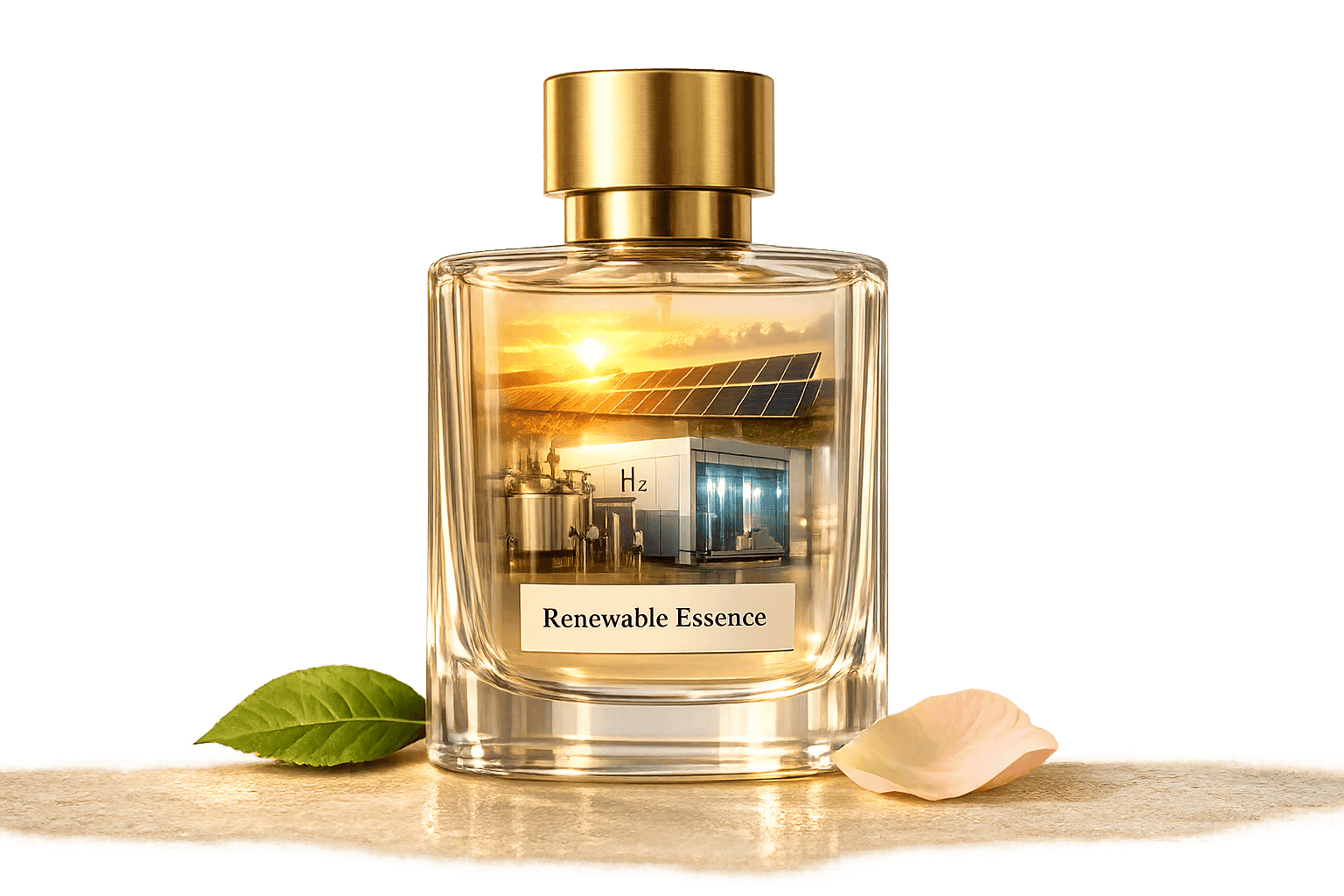
Nel novembre 2025, IFF (International Flavors & Fragrances) ha collaborato con Iberdrola per creare un impianto di idrogeno verde alimentato a energia solare presso il suo sito di Benicarló, in Spagna. Questa struttura è progettata per produrre 100 tonnellate di idrogeno pulito all’anno, utilizzato nelle reazioni di idrogenazione per creare oltre 50 ingredienti chiave per fragranze come Cashmeran e Kharismal. Il progetto elimina 2.000 tonnellate di emissioni di CO₂ ogni anno e funge da modello per gli altri siti globali di IFF. Jaime Gomezflores, Senior Vice President of Global Operations Manufacturing di IFF, ha spiegato:
"La nuova capacità di produzione di idrogeno del sito di Benicarló rappresenta un cambiamento importante rispetto ai tradizionali metodi di produzione dell’‘idrogeno grigio’, come il reforming del metano a vapore, che si basa sui combustibili fossili e sulla produzione fuori sede."
Anche la ricerca sostiene questa evoluzione. Nel novembre 2024, gli scienziati del Max Planck Institute of Colloids and Interfaces hanno presentato un metodo per produrre simultaneamente idrogeno verde e acetale - un ingrediente chiave in profumeria - a partire dall’etanolo utilizzando energia solare. Il Dr. Vitaliy Shvalagin ha evidenziato che 87 litri di etanolo potrebbero generare 72 litri di acetale e un chilogrammo di idrogeno verde. Questo approccio a doppia resa non solo riduce l’impatto ambientale, ma crea anche ulteriori flussi di ricavi per compensare i costi dell’energia rinnovabile.
Efficienza dei costi
L’energia solare è oggi una delle fonti di elettricità più convenienti al mondo. Tra dicembre 2022 e dicembre 2023, i prezzi globali dei moduli fotovoltaici (PV) sono diminuiti del 50%, rendendo le installazioni solari sempre più accessibili. Nel Regno Unito, ad esempio, si prevede che il tempo medio di rientro per un impianto solare scenda da 8 anni nel 2024 a soli 6 anni entro il 2026, con risparmi annui stimati in 995 dollari. Nel 2024, inoltre, il solare ha dominato il settore delle energie rinnovabili, rappresentando l’81% di tutta la nuova capacità installata a livello mondiale.
Per i produttori, l’energia solare offre una protezione contro la volatilità dei prezzi dei combustibili fossili, che in alcune regioni sono aumentati fino al 65% dal 2021. Walburga Hemetsberger, CEO di SolarPower Europe, ne ha sottolineato l’importanza:
"In questi tempi di incertezza politica, l’energia solare a basso costo garantisce sicurezza energetica e competitività alle nazioni di tutto il mondo."
Si prevede un’ulteriore riduzione dei costi, con i prezzi dei pannelli destinati a calare del 10–15% entro il 2026 grazie alle sovracapacità produttive globali.
Scalabilità
I sistemi di energia solare sono altamente scalabili, il che li rende ideali per la produzione di profumi su larga scala. Il sito IFF di Benicarló ne è un esempio emblematico, utilizzando l’energia solare per alimentare reazioni chimiche ad alta intensità energetica in tutte le sue operazioni di R&S e produzione. Questo approccio sostiene la creazione di oltre 50 ingredienti chiave per fragranze, contribuendo al contempo all’obiettivo dell’azienda di raggiungere emissioni nette zero entro il 2040.
Se abbinate a strategie sui co-prodotti, come la produzione simultanea di idrogeno e acetale, le installazioni solari diventano ancora più sostenibili sul piano economico. Questi modelli a doppio ricavo non solo migliorano la fattibilità finanziaria, ma si allineano anche al più ampio movimento verso l’energia rinnovabile nella produzione.
2. Idrogeno verde
L’idrogeno verde sta cambiando il modo in cui i produttori di fragranze realizzano le sostanze chimiche, offrendo un’alternativa rinnovabile all’idrogeno grigio ad alta intensità di combustibili fossili. L’idrogeno grigio, generalmente prodotto tramite reforming del metano a vapore dal gas naturale, è responsabile di emissioni significative di CO₂ - circa 830 milioni di tonnellate all’anno nell’industria globale dell’idrogeno. Al contrario, l’idrogeno verde, creato tramite elettrolisi alimentata da fonti rinnovabili come il vento o l’energia solare, offre un’opzione a basse emissioni per le reazioni di idrogenazione necessarie alla sintesi delle molecole olfattive.
Riduzione della CO₂
Produrre idrogeno verde in loco elimina le emissioni legate alla lavorazione dei combustibili fossili e al trasporto dell’idrogeno da fornitori esterni. Nel novembre 2025, International Flavors & Fragrances (IFF) ha inaugurato a Benicarló, in Spagna, il primo impianto in loco di idrogeno verde del settore delle fragranze. Si prevede che questo passo ridurrà di circa 2.000 tonnellate all’anno le emissioni di CO₂, sostenendo al contempo la produzione di oltre 50 ingredienti essenziali per fragranze, come Cashmeran e Kharismal. Jose Antonio Rojas, Vice President of Operations for Global Fragrance Ingredients di IFF Scent, ha sottolineato l’importanza di questa transizione e delineato gli obiettivi futuri:
"Abbiamo sostituito l’idrogeno ‘grigio’ - prodotto utilizzando gas naturale - tipicamente impiegato nei processi di produzione delle fragranze con idrogeno verde, prodotto in loco tramite energia solare e idroelettrica rinnovabile. Prossimamente, prevediamo di ridurre direttamente le emissioni di CO₂ sostituendo il gas naturale utilizzato nelle caldaie a vapore del sito con il nostro idrogeno verde."
Questa transizione dimostra come l’idrogeno verde possa andare oltre il suo ruolo di materia prima chimica per servire anche come fonte di calore rinnovabile, trasformando molteplici aspetti della produzione di fragranze.
Efficienza dei costi
Il costo resta una sfida centrale. Attualmente, l’idrogeno verde costa tra 4,50 e 12,00 dollari al chilogrammo, contro gli 0,98–2,93 dollari al chilogrammo dell’idrogeno grigio. Tuttavia, i ricercatori stanno esplorando modi per renderlo più accessibile. Ad esempio, il Max Planck Institute of Colloids and Interfaces ha dimostrato che la produzione di 87 litri di etanolo può generare 72 litri di acetale - un prezioso ingrediente per profumi - insieme a un chilogrammo di idrogeno verde in un unico processo. Vendendo l’acetale, i produttori possono compensare il costo della produzione di idrogeno verde. Il Dr. Vitaliy Shvalagin ha spiegato:
"Per superare questo ostacolo, il progetto GH2 punta a ridurre il costo della produzione di idrogeno verde fabbricandolo insieme a sostanze chimiche di valore come l’acetale, che possono essere vendute per compensare i costi di produzione."
Inoltre, la produzione in loco riduce i costi della supply chain e i rischi di trasporto, offrendo maggiore prevedibilità dei costi e sicurezza operativa.
Scalabilità
La possibilità di scalare l’idrogeno verde per la produzione su larga scala è già una realtà dimostrata. Presso il sito IFF di Benicarló, un accordo decennale con Iberdrola sostiene un elettrolizzatore da 1,25 MW che produce 100 tonnellate metriche di idrogeno pulito all’anno. Questa configurazione mostra che l’idrogeno rinnovabile può essere integrato nei sistemi produttivi esistenti senza interrompere le operazioni. Supporta sia la ricerca e sviluppo sia la produzione su scala completa, aiutando al contempo le aziende a raggiungere i propri obiettivi di sostenibilità. Questa integrazione fluida dell’idrogeno verde nelle varie fasi produttive prepara il terreno a più ampi sforzi di decarbonizzazione.
Impatto sui processi produttivi
L’idrogeno verde sta anche affinando i processi produttivi. Sostituendo i combustibili fossili nelle reazioni chimiche chiave, migliora il controllo operativo e riduce le emissioni. L’elettrolisi in loco garantisce una fornitura di idrogeno costante e affidabile, riducendo la dipendenza da fornitori esterni. Inoltre, l’uso dell’idrogeno verde al posto del gas naturale per le caldaie a vapore aggiunge un ulteriore livello di riduzione della CO₂, avvicinando il settore a sistemi produttivi completamente rinnovabili.
3. Strategie sui co-prodotti
Sfruttando i progressi nelle energie rinnovabili, come l’energia solare e l’idrogeno verde, le strategie sui co-prodotti mirano ad affrontare gli elevati costi degli input verdi producendo simultaneamente più output di valore. Questo metodo trasforma scarti costosi in sottoprodotti generatori di ricavi, contribuendo a compensare le spese di produzione e a promuovere la decarbonizzazione e la modernizzazione della manifattura delle fragranze.
Efficienza dei costi
La logica economica delle strategie sui co-prodotti è semplice. Esempi del passato mostrano come generare sia combustibile sia sostanze chimiche ad alto valore possa rendere la produzione verde più sostenibile dal punto di vista finanziario. Ad esempio, la vendita di co-prodotti come l’acetale alle aziende di fragranze e farmaceutiche aiuta a compensare il divario di prezzo tra l’idrogeno verde, che costa tra 4,50 e 12,00 euro al chilogrammo, e il tradizionale idrogeno grigio, il cui prezzo varia da 0,98 a 2,93 euro al chilogrammo.
L’industria delle fragranze beneficia già di strategie sui co-prodotti in altri settori. Si consideri il settore dei succhi, che produce ogni anno oltre 100.000 tonnellate di olio d’arancia e limonene come sottoprodotti. Allo stesso modo, l’industria della pasta di cellulosa genera trementina, che rappresenta circa il 15% di tutte le materie prime per fragranze. Questi esempi dimostrano come i co-prodotti possano ridurre i costi delle materie prime, allineandosi al contempo ai principi dell’economia circolare. Questo approccio si integra perfettamente con i modelli produttivi rinnovabili su larga scala.
Scalabilità
Riducendo i costi degli input, le strategie sui co-prodotti rendono anche più realizzabili le applicazioni su larga scala. Un esempio notevole è il lancio, nell’aprile 2023, di "Where My Heart Beats" di Gucci, la prima fragranza disponibile a livello globale realizzata con alcol al 100% derivato da emissioni di carbonio riciclate. Questo progetto ha utilizzato la tecnologia CarbonSmart di LanzaTech, che cattura e fermenta i gas di scarto delle acciaierie per produrre etanolo ad alta purezza. La Dr.ssa Shimei Fan, Chief Scientific and Sustainability Officer di Coty, ha guidato questa iniziativa nell’ambito dell’impegno di Coty a ridurre del 30% le emissioni assolute di CO₂ entro il 2030. Questo esempio mostra come le strategie sui co-prodotti possano sostenere una produzione su scala luxury rispondendo al contempo ad ambiziosi obiettivi ambientali.
Impatto sui processi produttivi
L’adozione di strategie sui co-prodotti richiede un cambiamento fondamentale nei flussi di lavoro produttivi. Gli impianti devono gestire una varietà di materiali con precisione eccezionale. Ad esempio, le linee di imbottigliamento automatizzate richiedono una precisione di dosaggio entro l’1%, e sistemi CIP (Clean-in — Place) robusti sono essenziali per prevenire la contaminazione incrociata. Produrre input come l’idrogeno verde in loco non solo riduce la dipendenza da catene di fornitura esterne instabili, ma migliora anche la prevedibilità dei costi e i punteggi di Life Cycle Assessment degli ingredienti finali. Questo approccio trasforma la produzione di fragranze da un processo lineare in un sistema circolare in cui ogni output ha uno scopo e un valore.
Il tuo esperto di profumi personale ti aspetta
Fai il nostro veloce quiz olfattivo per scoprire autentici profumi di design e di nicchia scelti in base ai tuoi gusti: esplorali in decant e campioni da 2–8ml, così puoi provarne ognuno prima di scegliere il flacone intero.
Trova il tuo profumo4. Biotecnologia e miglioramenti dell’efficienza
La biotecnologia si avvale di organismi viventi per produrre molecole olfattive, offrendo un’alternativa a basso consumo energetico ai metodi tradizionali. A differenza della sintesi chimica, che richiede alte temperature e pressioni attraverso molteplici fasi, la biotecnologia opera in modo efficiente in condizioni miti. Questo approccio non solo preserva energia, ma si allinea anche alla spinta verso pratiche rinnovabili riducendo sensibilmente emissioni e consumo energetico.
Riduzione della CO₂
I benefici ambientali della biotecnologia sono evidenti. Ogni anno, circa 1.650 tonnellate di materiali per fragranze vengono prodotte a livello globale con metodi biotecnologici, contribuendo a un notevole risparmio di carbonio.
Efficienza dei costi
La biotecnologia non riguarda soltanto la sostenibilità - riguarda anche la stabilità economica. La biosintesi microbica consente la produzione di composti olfattivi puri su scala industriale, aggirando le difficoltà legate all’estrazione vegetale, come fallimenti dei raccolti, fluttuazioni climatiche e questioni geopolitiche. A differenza delle piante aromatiche a crescita lenta, batteri e lieviti crescono rapidamente e offrono rese più elevate con processi di recupero più semplici. Un esempio emblematico è il lancio di "Clearwood" da parte di Firmenich nel 2014, sviluppato in partnership con Amyris. È stato il primo ingrediente per profumeria derivato da biotecnologia su larga scala, offrendo un’alternativa stabile all’olio di patchouli, spesso soggetto a instabilità della supply chain. Inoltre, i metodi biotech utilizzano molta meno terra e acqua rispetto alla coltivazione tradizionale di colture aromatiche.
Scalabilità
La scalabilità delle soluzioni biotecnologiche è essenziale per le ambizioni rinnovabili del settore. Si prevede che il mercato della microincapsulazione biodegradabile crescerà da 283 milioni di dollari nel 2025 a 601 milioni di dollari entro il 2034, con miglioramenti dell’efficienza passati dal 65% all’88% negli ultimi cinque anni. Tuttavia, permangono sfide attuali. Le opzioni biotech sono ancora del 25–35% più costose rispetto alle alternative sintetiche, hanno una durata di conservazione più breve, pari a 12–18 mesi rispetto ai 24–36 mesi dei prodotti sintetici, e richiedono circa il 15% di costi di distribuzione in più a causa della logistica della catena del freddo. Inoltre, alcune capsule biodegradabili possono degradarsi prematuramente nei climi tropicali, ponendo ulteriori criticità.
Impatto sui processi produttivi
L’integrazione della biotecnologia nei flussi produttivi sostiene la transizione rinnovabile del settore. Passare ai processi biotech richiede spesso di ripensare i flussi di lavoro tradizionali. Ad esempio, decarbonizzare l’elettricità per le operazioni biotech è più semplice e meno costoso che decarbonizzare il vapore ad alta temperatura necessario per la sintesi chimica. Inoltre, l’approccio del bilancio di massa consente alle aziende di integrare materie prime rinnovabili nei sistemi attuali senza richiedere nuove infrastrutture, permettendo di attribuire emissioni ridotte a prodotti specifici. Con qualità e prestazioni identiche alle loro controparti convenzionali, gli ingredienti biotech possono essere adottati senza soluzione di continuità dalle maison di fragranze.
Vantaggi e svantaggi
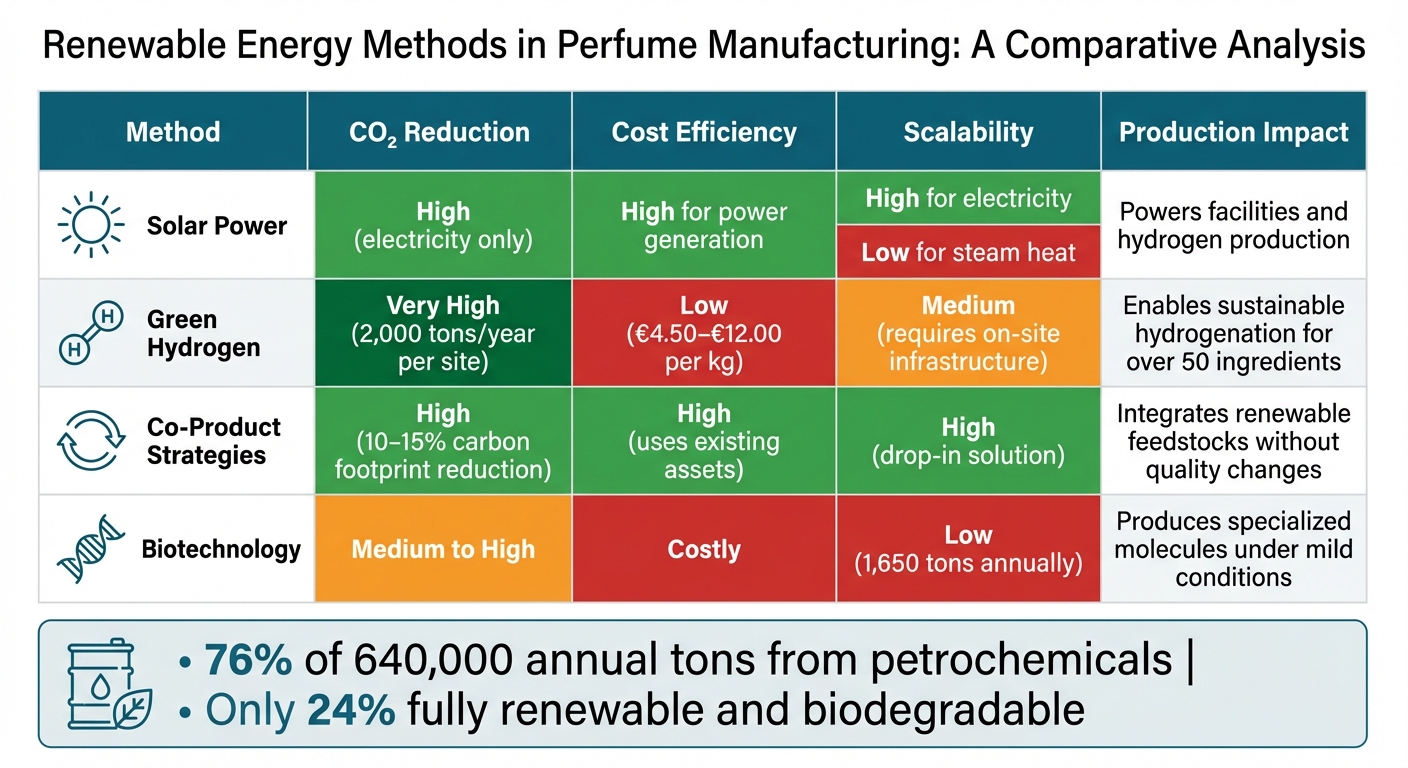
Confronto tra i metodi di energia rinnovabile nella produzione di profumi
I metodi rinnovabili nella produzione di fragranze presentano una combinazione di vantaggi e sfide. Analizziamo alcuni approcci chiave e i relativi compromessi.
Energia solare è altamente efficace per ridurre le emissioni di carbonio attraverso i Power Purchase Agreement, rendendola una soluzione scalabile per le operazioni degli stabilimenti. Tuttavia, adattare i processi chimici basati sul vapore all’uso di calore rinnovabile resta proibitivamente costoso.
Idrogeno verde offre una riduzione significativa delle emissioni di CO₂, come dimostrato dal sito IFF di Benicarló. Nonostante il suo potenziale, il costo resta un ostacolo importante - produrre idrogeno verde costa tra 4,50 e 12,00 euro al kg, mentre l’idrogeno grigio basato su combustibili fossili varia da 0,98 a 2,93 euro al kg. Il Dr. Vitaliy Shvalagin osserva che, sebbene l’idrogeno verde presenti un processo di produzione più semplice, è molto più costoso della sua controparte basata sui combustibili fossili.
Strategie sui co-prodotti, utilizzando un approccio di bilancio di massa, offrono un modo pratico ed efficiente dal punto di vista dei costi per ridurre le emissioni. Un esempio rilevante è l’iniziativa di BASF e Givaudan del settembre 2025, che ha ridotto l’impronta di carbonio del 10–15% incorporando materie prime rinnovabili nelle linee di produzione esistenti. Questo metodo "drop-in" evita la necessità di nuove infrastrutture, affrontando il fatto che oltre il 95% delle emissioni delle fragranze proviene dalle materie prime e dalla produzione a monte.
Biotecnologia offre un modo efficiente dal punto di vista energetico per creare molecole ad alto valore in condizioni miti. Tuttavia, la scalabilità di questo metodo resta una sfida. Con una capacità annua di appena 1.650 tonnellate, la biotecnologia è ben lontana dalla domanda del settore pari a 640.000 tonnellate. Inoltre, i costi di produzione più elevati la rendono meno conveniente per un impiego diffuso.
Ecco una panoramica di come questi approcci si confrontano in termini di riduzione della CO₂, efficienza dei costi, scalabilità e impatto produttivo:
| Metodo | Riduzione della CO₂ | Efficienza dei costi | Scalabilità | Impatto produttivo |
|---|---|---|---|---|
| Energia solare | Alta (solo elettricità) | Alta per la generazione di energia | Alta per l’elettricità / Bassa per il calore da vapore | Alimenta gli stabilimenti e la produzione di idrogeno |
| Idrogeno verde | Molto alta (2.000 tonnellate/anno per sito) | Bassa (4,50–12,00 euro per kg) | Media (richiede infrastrutture in loco) | Rende possibile un’idrogenazione sostenibile per oltre 50 ingredienti |
| Strategie sui co-prodotti | Alta (riduzione dell’impronta di carbonio del 10–15%) | Alta (utilizza asset esistenti) | Alta (soluzione drop-in) | Integra materie prime rinnovabili senza modifiche qualitative |
| Biotecnologia | Da media ad alta | Costosa | Bassa (1.650 tonnellate annue) | Produce molecole specializzate in condizioni miti |
Attualmente, il 76% delle 640.000 tonnellate annue del settore delle fragranze proviene da prodotti petrolchimici, mentre solo il 24% dei materiali è al tempo stesso completamente rinnovabile e biodegradabile. Combinando questi metodi, il settore può compiere passi significativi verso la riduzione della dipendenza da input basati sui combustibili fossili e il raggiungimento di obiettivi più ampi di decarbonizzazione.
La transizione verso la sostenibilità nella produzione di fragranze
L’industria delle fragranze si trova in un momento cruciale. Con circa il 76% delle 640.000 tonnellate di ingredienti per profumeria prodotti ogni anno ancora derivato da fonti petrolchimiche, il passaggio alle energie rinnovabili non è più facoltativo - è essenziale sia per il pianeta sia per il futuro del settore.
Diverse strategie legate alle energie rinnovabili stanno già tracciando la via. Ad esempio, il sito IFF di Benicarló dimostra il potenziale dell’idrogeno verde. Producendo 100 tonnellate di idrogeno verde all’anno, questa iniziativa ha ridotto di 2.000 tonnellate le emissioni di CO₂ sostenendo oltre 50 reazioni essenziali per le fragranze. Questo impianto evidenzia come l’energia rinnovabile possa rivoluzionare la produzione. Il Dr. Vitaliy Shvalagin ha sottolineato che valorizzare i co-prodotti dei processi chimici potrebbe contribuire a controbilanciare i costi più elevati associati all’idrogeno verde.
Un altro approccio promettente è il metodo del bilancio di massa. Integrando senza soluzione di continuità materie prime rinnovabili nelle linee produttive esistenti, questa strategia affronta oltre il 95% delle emissioni legate alle fragranze, rendendola una svolta per il settore.
Oltre all’energia, anche l’approvvigionamento degli ingredienti sta vivendo una trasformazione. L’agricoltura rigenerativa e i metodi di estrazione innovativi stanno ridefinendo il modo in cui gli ingredienti vengono reperiti. Un esempio di rilievo è lo stabilimento di Intact Regenerative vicino a Orléans, in Francia, che produce alcol per profumi a partire da legumi. Questo processo utilizza il 75% in meno di acqua e riduce le emissioni di oltre l’80%. Allo stesso modo, la fragranza "Private Talk" di Valentino, lanciata nel febbraio 2025, impiega la tecnologia Osmobloom. Questo metodo all’avanguardia estrae gli ingredienti utilizzando soltanto aria - eliminando la necessità di acqua o solventi - per creare un processo produttivo più sostenibile.
Questi progressi stanno preparando il terreno affinché l’industria delle fragranze raggiunga il suo ambizioso obiettivo 100/100: materiali 100% rinnovabili e biodegradabili entro il 2030. Combinando energia rinnovabile prodotta in loco, intelligenti strategie sui co-prodotti e metodi di estrazione innovativi, il settore sta ridefinendo la propria impronta ambientale e avanzando verso un futuro più sostenibile.
FAQ
La produzione rinnovabile renderà i profumi più costosi?
La produzione rinnovabile potrebbe inizialmente portare a prezzi più elevati per i profumi, soprattutto a causa dei costi iniziali legati all’adozione di tecnologie sostenibili e alla costruzione delle infrastrutture necessarie. Detto questo, man mano che queste pratiche diventeranno più raffinate e diffuse, i costi di produzione potrebbero stabilizzarsi - o persino diminuire. Nel tempo, affidarsi alle energie rinnovabili potrebbe ridurre la dipendenza dai combustibili fossili, con una possibile diminuzione delle spese energetiche. Questa spinta verso la sostenibilità riflette l’impegno del settore nel bilanciare responsabilità ambientale ed efficienza dei costi nel lungo periodo, fattore che potrebbe in ultima analisi influenzare il prezzo dei profumi.
Quanto presto l’idrogeno verde potrà sostituire su larga scala gli input basati sui combustibili fossili?
L’idrogeno verde ha il potenziale di sostituire su larga scala gli input basati sui combustibili fossili entro il prossimo decennio, con progressi significativi attesi entro il 2030. Detto questo, i suoi costi elevati e gli ostacoli a un’adozione diffusa dipendono dai progressi tecnologici e dalla sua sostenibilità economica. Per settori come la produzione di fragranze, il successo dipenderà dalla capacità di affrontare queste sfide per rendere l’idrogeno verde una scelta davvero praticabile.
Gli ingredienti biotech per fragranze sono sicuri e duraturi quanto quelli tradizionali?
Gli ingredienti biotech per fragranze sono considerati sicuri quanto le loro controparti tradizionali. Gli sviluppi più recenti pongono l’accento sulla creazione di alternative sostenibili e non tossiche. Ad esempio, le versioni prodotte in laboratorio di materiali rari come oud e ambra grigia replicano l’essenza delle loro forme naturali preservando al contempo gli ecosistemi. Inoltre, questi ingredienti possono essere progettati per offrire una maggiore persistenza, spesso eguagliando o persino superando la durata dei componenti tradizionali. Test approfonditi ne garantiscono la sicurezza, sostenendo il crescente impegno del settore verso pratiche rispettose dell’ambiente ed etiche.