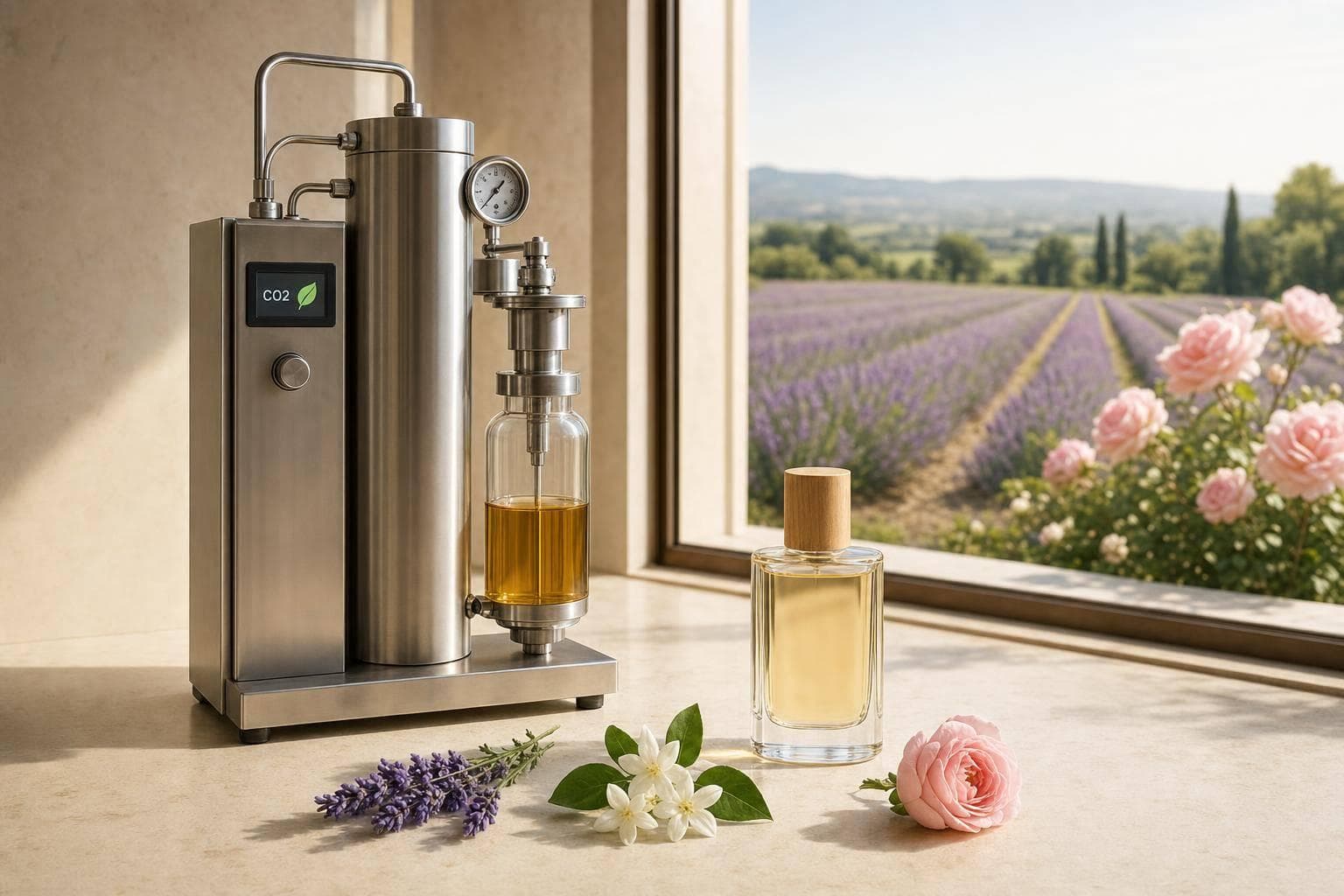
Francuska ekstrakcja perfum odchodzi od gorącej pary wodnej i heksanu na rzecz metod wymagających niższych temperatur i mniejszej ilości rozpuszczalników. W latach 2018–2026 najważniejszym kierunkiem stała się ekstrakcja nadkrytycznym CO₂, a dane wskazują na niższe zużycie energii, mniejszą emisję i zredukowane ryzyko obecności pozostałości w porównaniu ze starszymi metodami.
Podsumowując artykuł w pigułce, oto najważniejsze kwestie:
- Destylacja z parą wodną nadal ma znaczenie, lecz przebiega w temperaturze bliskiej 100 °C i pochłania więcej energii.
- Ekstrakcja heksanem wciąż pozwala uzyskać bogate ekstrakty kwiatowe, lecz wiąże się z koniecznością operowania rozpuszczalnikiem, emisjami LZO oraz ryzykiem pozostałości.
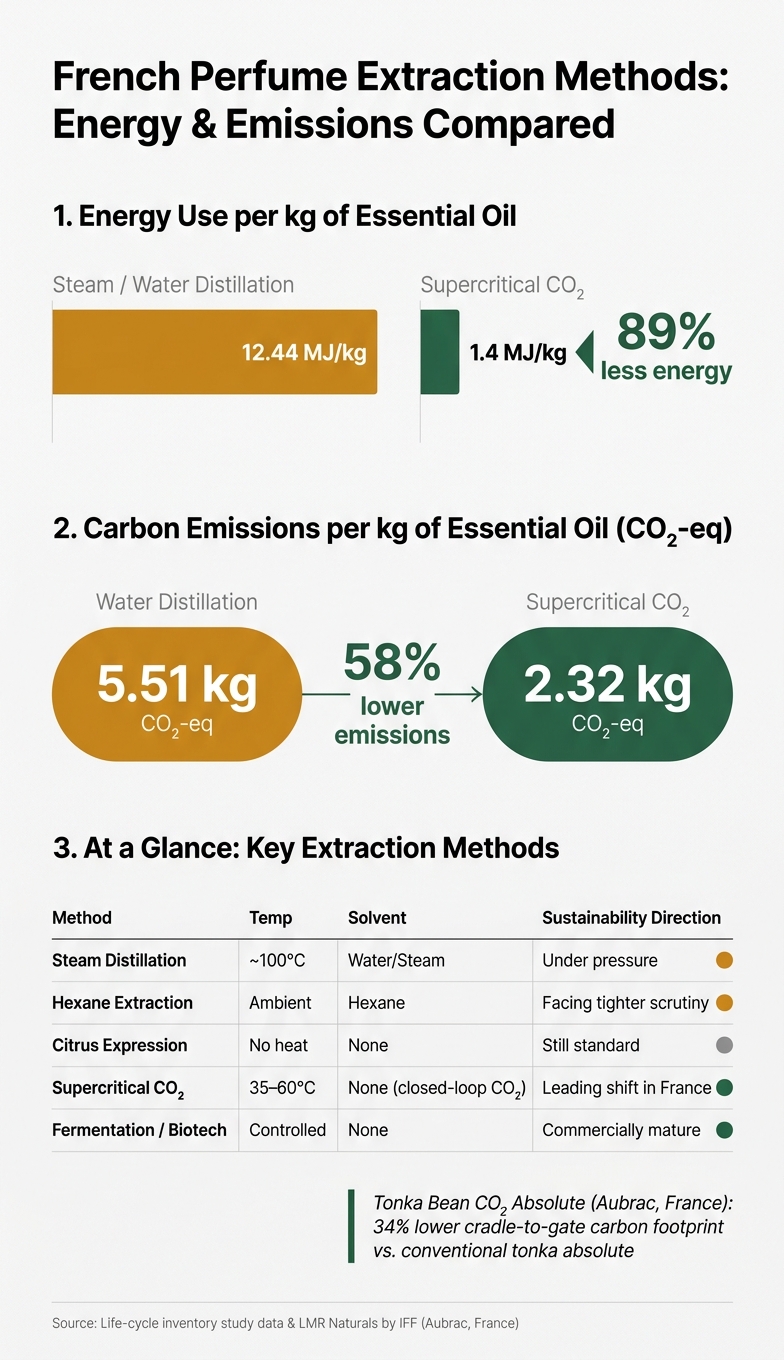
- Ekstrakcja CO₂ odbywa się w temperaturze około 35–60 °C i, według jednego z cytowanych badań, zużywa 1,4 MJ na kg olejku w porównaniu do 12,44 MJ w przypadku hydrodestylacji.
- To samo badanie wykazało emisję 2,32 kg ekwiwalentu CO₂ na kg dla nadkrytycznego CO₂ wobec 5,51 kg ekwiwalentu CO₂ dla hydrodestylacji.
- We Francji firma LMR Naturals by IFF deklaruje, że jej Tonka Bean CO₂ Absolute redukuje ślad węglowy cradle-to-gate o 34 % w porównaniu ze standardowym absolutem z bobu tonka.
- Inne francuskie inicjatywy obejmują frakcjonowanie NaDES, ekstrakcję mikrofalową i ultradźwiękową, fermentację oraz surowce z upcyklingu.
- Dla odbiorców w Niemczech i całej Europie najlepszy test jest prosty: nazwany proces, określone pochodzenie, mierzalny wpływ.
Oto najważniejszy wniosek: same ekologiczne deklaracje nie wystarczą. Analizując obietnice marki perfumeryjnej, warto zwrócić uwagę na to, jak pozyskano dany składnik, gdzie powstał i jakie liczby potwierdzają te zapewnienia.
Szybkie porównanie
| Metoda | Typowe warunki | Główny problem | Główna zaleta | Obecny kierunek |
|---|---|---|---|---|
| Destylacja z parą wodną | Około 100 °C; często ponad 1 godzinę | Wysokie zużycie energii i obciążenie termiczne | Uznana metoda dla nut drzewnych i lawendy | Wciąż stosowana, lecz pod presją zmian |
| Ekstrakcja heksanem | Ekstrakcja rozpuszczalnikiem i jego odparowanie | Operowanie rozpuszczalnikiem, LZO, ryzyko pozostałości | Profil zapachowy niezwykle wierny kwiatom | Poddawana coraz ściślejszej kontroli |
| Wytłaczanie cytrusów | Tłoczenie mechaniczne, bez użycia ciepła | Odpady ze skórek i zużycie energii | Zachowuje świetliste nuty cytrusowe | Nadal standard dla cytrusów |
| Nadkrytyczny CO₂ | Powyżej ok. 31,0 °C i 73 barów; w praktyce często 35–60 °C | Wyższy koszt aparatury i systemów ciśnieniowych | Niższa temperatura, brak pozostałości heksanu, zamknięty obieg CO₂ | Główny wektor zmian we Francji |
| NaDES / zielone frakcjonowanie | Mieszaniny rozpuszczalników o niskiej lotności | Skalowanie procesu i odzysk składników | Selektywna ekstrakcja przy mniejszym użyciu lotnych rozpuszczalników | Wczesne zastosowania komercyjne |
| Mikrofale / ultradźwięki | Krótszy czas i mniejsze obciążenie cieplne | Ograniczenia sprzętowe i trudności ze skalowaniem | Mniejsze zużycie rozpuszczalnika, krótszy czas procesu | Od fazy pilotażowej po wczesnoprzemysłową |
| Fermentacja | Produkcja biotechnologiczna | Nakłady inwestycyjne i kontrola procesu | Spójne i powtarzalne cząsteczki zapachowe | Metoda wdrożona komercyjnie |
| Surowce z upcyklingu | Surowce pochodzące ze strumieni odpadów | Zmienność surowca | Przekształcanie produktów ubocznych w składniki perfum | Rosnące wykorzystanie |
Krótka odpowiedź brzmi zatem następująco: francuskie perfumiarstwo nie porzuca tradycyjnych metod z dnia na dzień, lecz to ekstrakcja CO₂ wyznacza kierunek zmian, a klienci powinni ufać twardym danym, a nie samym etykietom.
Klasyczne metody ekstrakcji i przyczyny transformacji branży
Francuskie perfumiarstwo nadal opiera się na trzech tradycyjnych filarach: destylacji z parą wodną, ekstrakcji rozpuszczalnikowej oraz wytłaczaniu cytrusów. Metody te są skuteczne i kształtowały świat zapachów przez dziesięciolecia. Dziś jednak każda z nich napotyka bariery związane ze zużyciem energii, regulacjami dotyczącymi rozpuszczalników lub ilością odpadów.
Destylacja z parą wodną polega na przepuszczaniu pary wodnej przez surowiec roślinny, a następnie schładzaniu powstałego destylatu do mieszaniny olejku i wody, które można rozdzielić. Doskonale sprawdza się w przypadku lawendy i drewna. Wyzwaniem pozostaje jednak temperatura. Prowadzenie procesu w temperaturze około 100 °C, często przez ponad godzinę, oznacza wyższe zużycie energii, a samo ciepło może zubażać lub modyfikować delikatne nuty. Z tego względu uwaga branży kieruje się ku metodom wymagającym niższych temperatur.
Ekstrakcja lotnymi rozpuszczalnikami wykorzystuje heksan do wydobywania związków aromatycznych z kruchych kwiatów, takich jak jaśmin i róża. Pierwszym produktem jest konkret, z którego po przemyciu etanolem powstaje absolut. Perfumiarze niezmiennie sięgają po absouty z prostego powodu: pachną bogaciej i wierniej oddają woń żywego kwiatu. Ta technika znajduje się jednak pod coraz większą presją. Kwestie operowania heksanem, emisje LZO oraz ryzyko obecności śladowych zanieczyszczeń stają się trudne do zaakceptowania, zwłaszcza w świetle unijnych przepisów.
Wytłaczanie owoców cytrusowych pozostaje złotym standardem dla bergamotki, cytryny i pomarańczy. Skórki są wyciskane mechanicznie bez użycia ciepła, co pozwala zachować ich musujące, świeże nuty głowy w nienaruszonym stanie.
Mocne i słabe strony klasycznych metod
Różnice te stają się w pełni widoczne przy bezpośrednim porównaniu metod:
| Metoda | Typowe warunki | Rozpuszczalnik | Główny problem środowiskowy | Profil zapachowy | Dojrzałość przemysłowa |
|---|---|---|---|---|---|
| Destylacja z parą wodną | Para wodna/woda w temperaturze ok. 100 °C; często >1 godz. | Wyłącznie woda/para wodna | Wysokie zużycie energii i wody; ciepło może modyfikować delikatne cząsteczki | Czysty, klasyczny profil olejku eterycznego; optymalna dla odpornych surowców | W pełni dojrzała; podstawowa metoda przemysłowa |
| Ekstrakcja rozpuszczalnikami lotnymi | Maceracja rozpuszczalnikiem, następnie odparowanie i przemywanie alkoholem | Heksan | Operowanie palnym/toksycznym dla rozrodczości rozpuszczalnikiem; emisje LZO; ryzyko zanieczyszczeń śladowych | Bogaty, pełniejszy, wierniejszy kwiatom; idealny dla kruchych płatków | W pełni dojrzała przemysłowo |
| Wytłaczanie cytrusów | Mechaniczne tłoczenie skórek; bez użycia ciepła | Brak | Mniejsze obciążenie chemiczne, lecz wciąż obecne zużycie energii mechanicznej i odpady ze skórek | Zachowany jasny, świeży charakter cytrusowych nut głowy | W pełni dojrzała, standard branżowy dla cytrusów |
Bilans korzyści i strat jest zatem oczywisty. Klasyczne techniki są niezawodne, doskonale znane i głęboko zakorzenione w rzemiośle perfumeryjnym. Jednocześnie presja regulacyjna, koszty energii oraz wymogi bezpieczeństwa sprawiają, że dotychczasowy model staje się trudny do utrzymania. To skłania francuskich twórców do zwrotu w stronę ekstrakcji nadkrytycznym CO₂ oraz innych rozwiązań o mniejszym wpływie na środowisko.
Twój osobisty ekspert od zapachów już czeka
Wypełnij nasz szybki quiz zapachowy i odkryj autentyczne perfumy designerskie i niszowe dobrane do Twojego gustu – poznaj je w postaci dekantów i próbek 2, 5, 8 i 30 ml, aby przetestować każdy z nich, zanim zdecydujesz się na pełny flakon.
Znajdź swój zapachEkstrakcja CO₂: kluczowa transformacja w pozyskiwaniu surowców we Francji
Francuskie metody ekstrakcji perfum: porównanie energii, emisji i zrównoważonego rozwoju
W obliczu ograniczeń destylacji parowej i ekstrakcji heksanem, wiodącym kierunkiem we Francji stał się nadkrytyczny CO₂. W uproszczeniu polega to na rezygnacji z intensywnego termicznie przemywania rozpuszczalnikami na rzecz ekstrakcji płynem pod ściśle kontrolowanym ciśnieniem. Dwutlenek węgla przechodzi w stan nadkrytyczny powyżej temperatury około 31,0 °C i ciśnienia 73 barów, zachowując się wówczas jednocześnie jak gaz i ciecz: wykazuje dyfuzję gazu oraz właściwości rozpuszczające cieczy.
Zasada działania jest precyzyjna. Surowiec roślinny trafia do zbiornika ciśnieniowego. CO₂ rozpuszcza związki zapachowe, a po obniżeniu ciśnienia uwalnia gotowy ekstrakt i powraca do obiegu zamkniętego. Ma to fundamentalne znaczenie: CO₂ całkowicie odparowuje i nadaje się do ponownego użycia, co eliminuje konieczność odparowywania rozpuszczalnika oraz ryzyko pozostałości heksanu.
Olfaktoryczne i środowiskowe zalety nadkrytycznego CO₂
Główną zaletą praktyczną jest niższa temperatura robocza. Typowa ekstrakcja płynem nadkrytycznym (SFE) w perfumiarstwie przebiega w temperaturze 35–60 °C, tylko sporadycznie sięgając około 80 °C przy specyficznych surowcach botanicznych. To wciąż znacznie mniej niż ponad 100 °C, z którymi nierozerwalnie wiąże się destylacja z parą wodną. Łagodniejsze warunki oznaczają mniejszy stres dla surowca, dzięki czemu świeże nuty głowy i delikatne kwiaty zachowują swój naturalny, pierwotny zapach.
Wymierne korzyści dotyczą także zużycia energii i redukcji emisji. Jedno z badań Life Cycle Inventory (LCI) wykazało, że ekstrakcja nadkrytycznym CO₂ pochłania około 1,4 MJ i generuje 2,32 kg ekwiwalentu CO₂ na kilogram olejku eterycznego. Dla porównania hydrodestylacja wymaga 12,44 MJ i emituje 5,51 kg ekwiwalentu CO₂. Ponieważ dwutlenek węgla jest niepalny i nietoksyczny, praca w obiegu zamkniętym eliminuje odpady rozpuszczalnikowe i znacznie ułatwia zachowanie standardów bezpieczeństwa w porównaniu z metodami heksanowymi.
Francuskie zakłady z powodzeniem wykorzystują te atuty w skali przemysłowej.
Przykłady z rynku francuskiego i dowody wdrożeniowe
Wzorcowym francuskim przykładem jest LMR Naturals by IFF i należący do firmy zakład ekstrakcji w Aubrac na południu Francji. Przedstawiciele LMR podkreślają, że byli pionierami ekstrakcji nadkrytycznym CO₂ dla surowców naturalnych w tym regionie, wykorzystując odnawialny i pochodzący z recyklingu CO₂ w niskich temperaturach do tworzenia składników dla perfumiarstwa luksusowego.
Najbardziej wyrazistym przykładem jest Tonka Bean CO₂ Absolute. Wytwarzany w Aubrac ze świeżo zebranego bobu tonka, idealnie oddaje kumarynowe ciepło, migdałowe niuanse oraz sianowo-korzenne aspekty surowca. LMR raportuje również 34 % redukcji śladu węglowego cradle-to-gate w porównaniu ze standardowym absolutem z bobu tonka, co osiągnięto dzięki niższemu zużyciu energii, rezygnacji z rozpuszczalników petrochemicznych oraz wewnętrznemu recyklingowi CO₂.
| Aspekt | Konwencjonalny absolut z tonki | Tonka Bean CO₂ Absolute (LMR/IFF Aubrac) |
|---|---|---|
| Rodzaj rozpuszczalnika | Rozpuszczalnik petrochemiczny, zazwyczaj heksan | Nadkrytyczny CO₂ (odnawialny/z recyklingu) |
| Pozostałości rozpuszczalnika | Możliwe śladowe pozostałości w ekstrakcie końcowym | Brak; CO₂ powraca do postaci gazowej i nie pozostawia śladu |
| Profil temperaturowy | Podwyższona temperatura podczas usuwania rozpuszczalnika | 35–60 °C; minimalny wpływ termiczny na związki lotne |
| Korzyści zrównoważonego rozwoju | Wyższe zużycie energii i większy ślad rozpuszczalnikowy | Około 34 % niższy wpływ w analizie cradle-to-gate |
| Różnice zapachowe | Bogaty, lecz może wykazywać lekko gotowany odcień | Wierniejszy świeżym nasionom; czystszy profil gourmand z zachowanymi niuansami migdałów, siana i przypraw |
Oprócz technologii CO₂, francuski sektor B+R intensywnie rozwija także zielone frakcjonowanie, nowe rozpuszczalniki oraz surowce z upcyklingu.
Poza CO₂: zielone frakcjonowanie, nowe rozpuszczalniki i surowce z upcyklingu
Dwutlenek węgla to dopiero początek. We Francji zespoły badawczo-rozwojowe równolegle rozwijają kilka dróg ekstrakcji: bezpieczniejsze dla środowiska rozpuszczalniki, szybsze procedury ekstrakcyjne, biotechnologię oraz surowce wtórne. Każde z tych rozwiązań odpowiada na inne wyzwanie technologiczne — od doboru rozpuszczalnika, przez ekspozycję termiczną i wydajność, aż po kontrolę czystości ekstraktu.
NaDES i zielone frakcjonowanie we francuskich badaniach i rozwoju
Głęboko eutektyczne rozpuszczalniki naturalnego pochodzenia (NaDES) to niskotopliwe mieszaniny oparte na składnikach roślinnych, takich jak kwasy organiczne, cukry, aminokwasy czy pochodne choliny. Wyróżniają się znikomą lotnością, pochodzą ze źródeł odnawialnych i są znacznie bezpieczniejsze w obsłudze niż heksan. W perfumiarstwie pozwala to na precyzyjną izolację pożądanych frakcji zapachowych przy jednoczesnym wyeliminowaniu nut niepożądanych.
Znakomitym przykładem z Francji jest Green Fractionation Centre of Excellence należące do koncernu Givaudan w Awinionie. Naukowcy wykorzystują tam technologie oparte na NaDES, w tym autorski system Eutectys™, do pozyskiwania składników roślinnych, takich jak Hydranellys™ i Eliorelys™. Bardzo wysoka biodegradowalność odgrywa tu kluczową rolę, bezpośrednio ograniczając trwałość środowiskową i toksyczność dla ekosystemów wodnych.
Mikrofale, ultradźwięki, biotechnologia i upcykling
Chemia rozpuszczalników to tylko jeden z kierunków ewolucji. Francuskie laboratoria poszukują również sposobów na przyspieszenie samej ekstrakcji oraz, w niektórych przypadkach, zastąpienie tradycyjnych surowców naturalnych.
Ekstrakcja wspomagana mikrofalami lub ultradźwiękami pozwala radykalnie zredukować zarówno czas trwania procesu, jak i objętość rozpuszczalnika. W badaniach nad olejkiem z lawandyny czas ekstrakcji skrócono z 220 do zaledwie 30 minut, zachowując porównywalną wydajność i jakość aromatu. Francuscy dostawcy aparatury oferują zintegrowane systemy mikrofalowo-ultradźwiękowe do produkcji składników kosmetycznych i perfumeryjnych. Zalety są oczywiste: wyższa wydajność, doskonała ochrona związków wrażliwych na ciepło oraz oszczędność reagentów.
Biotechnologia zyskała już silną pozycję we francuskiej i europejskiej produkcji zapachów. Givaudan wytwarza Ambrofix™ na drodze fermentacji z odpowiedzialnie pozyskiwanej trzciny cukrowej; cząsteczka ta jest łatwo biodegradowalna i precyzyjnie odtwarza tradycyjny profil zapachowy. Równie dynamicznie rozwija się upcykling. TechnicoFlor poddaje przetworzeniu osad z wina, wióry dębowe, łupiny kakaowe, skórki klementynek oraz wyekstrahowane płatki róż. Marka La Bouche Rouge opracowała esencję cedrową z trocin oraz esencję róży damasceńskiej odtworzoną w Grasse bez użycia surowców petrochemicznych.
Poniższa tabela przedstawia porównanie tych metod ze starszymi procedurami ekstrakcyjnymi w codziennej praktyce perfumeryjnej:
| Technologia | Korzyść ekologiczna | Znaczenie w perfumiarstwie | Dojrzałość | Główne ograniczenie |
|---|---|---|---|---|
| NaDES / zielone frakcjonowanie | Ogranicza zależność od lotnych rozpuszczalników organicznych; surowce odnawialne i potencjalnie biodegradowalne. | Cenne narzędzie do selektywnej ekstrakcji substancji aktywnych i frakcji zapachowych. | Rozwiązanie wyłaniające się, lecz obecne komercyjnie we francuskim sektorze B+R. | Wymaga dopracowania skalowania, odzysku rozpuszczalników i optymalizacji procesu. |
| Ekstrakcja wspomagana mikrofalami | Znacząco skraca czas ekstrakcji i zużycie energii; redukuje zużycie rozpuszczalników. | Optymalna dla olejków eterycznych i frakcji lotnych stosowanych w kreacji zapachów. | Faza pilotażowa do wczesnoprzemysłowej. | Wyzwania związane ze skalowaniem i wysoki koszt urządzeń. |
| Ekstrakcja wspomagana ultradźwiękami | Niższe temperatury i mniejsza ilość rozpuszczalnika; lepszy transfer masy. | Przydatna dla delikatnych cząsteczek zapachowych; często łączona z systemami mikrofalowymi. | Faza pilotażowa/eksperymentalna w perfumiarstwie. | Złożoność reaktorów przemysłowych i kontroli parametrów. |
| Biotechnologia / fermentacja | Wykorzystuje węgiel odnawialny i zwiększa efektywność węglową. | Pozwala uzyskać wysoce czyste, powtarzalne składniki perfumeryjne o znakomitym profilu środowiskowym. | Dojrzała komercyjnie. | Wymaga dużych nakładów kapitałowych, wiedzy i optymalizacji. |
| Surowce z upcyklingu | Przetwarza odpady i strumienie poboczne w komponenty zapachowe. | Wspiera odnawialne bazy recepturowe i pozwala budować transparentną historię produktu. | Aktywna komercyjnie. | Zmienność partii surowca i konieczność ścisłej kontroli jakości. |
Dla świadomych odbiorców kluczowa konkluzja jest prosta: deklaracja ekologiczna może dotyczyć samego procesu, bazy surowcowej lub mierzalnego śladu węglowego. Wymaga to od europejskich konsumentów weryfikacji obietnic przez pryzmat konkretnej technologii i liczb, a nie samych haseł na opakowaniu.
Co to oznacza dla koneserów perfum w Europie
Jakość kompozycji zapachowej i deklaracje środowiskowe są dziś często ze sobą utożsamiane. Dla klientów w Niemczech i całej Europie decydująca staje się jednak kwestia pragmatyczna: czy marka potrafi dowieść prawdziwości swoich słów?
Jak weryfikować deklaracje ekologiczne i rozpoznawać rzetelne źródła
Gdy sztuka tworzenia perfum odchodzi od tradycyjnych, energochłonnych metod rozpuszczalnikowych, odbiorcy potrzebują jasnych kryteriów oceny obietnic widniejących na etykietach i stronach marek. Według analizy agencji Mintel aż 41 % nowych zapachów debiutujących na rynku w 2023 roku zawierało deklaracje etyczne lub środowiskowe — wobec zaledwie 18 % w roku 2019. To diametralny wzrost, który jednak nie oznacza, że dowody na ich poparcie rozwijały się w tym samym tempie.
Deklaracja staje się w pełni wiarygodna dopiero wtedy, gdy precyzuje metodę technologiczną, zakład produkcyjny oraz pochodzenie surowca. Ogólne określenia, takie jak naturalny, clean czy eco-friendly, brzmią atrakcyjnie, lecz same w sobie nie niosą żadnej wartości merytorycznej. Nadchodzące regulacje Unii Europejskiej w sprawie oświadczeń środowiskowych (Green Claims Directive) mają ukrócić ten nieprecyzyjny marketing, co ułatwi odróżnienie solidnych faktów od powierzchownych sloganów.
Najcenniejsze dowody są rzeczowe i konkretne. Informują wprost, jakiej metody użyto i jakie mierzalne efekty osiągnięto. Znakomitym przykładem jest LMR Naturals koncernu IFF: ekstrakt Tonka Bean CO₂ Absolute z zakładu w Aumont-Aubrac powstaje przy użyciu odnawialnego i zrecyklingowanego CO₂, co poparto potwierdzoną, 34-procentową redukcją śladu węglowego cradle-to-gate.
Szukając prawdy o produkcie, warto zastosować trzy proste filtry:
- Jaką metodę ekstrakcji zastosowano?
- Gdzie i z jakiego surowca powstał ekstrakt?
- Czy istnieją mierzalne, porównawcze dane środowiskowe?
Brak jasnych odpowiedzi na te pytania ze strony marki zazwyczaj wskazuje na bezpodstawność jej zapewnień.
Podsumowanie: najważniejsze wnioski z badań i praktyki rynkowej
Francuskie perfumiarstwo skutecznie odchodzi od metod wymagających wysokich temperatur i agresywnych rozpuszczalników. Ekstrakcja nadkrytycznym CO₂ stanowi najbardziej zaawansowany filar tej zmiany, podczas gdy zielone frakcjonowanie, biotechnologia i upcykling osiągają kolejne stopnie dojrzałości rynkowej.
Dla klientów w Europie sama etykieta ma dziś mniejsze znaczenie niż stojące za nią dowody. Kryterium wyboru pozostaje niezmienne: nazwany proces, określone pochodzenie, mierzalny wpływ. Bez tego trio deklaracje o zrównoważonym rozwoju pozostają jedynie pustą retoryką.
Często zadawane pytania
Dlaczego ekstrakcja CO₂ jest uważana za bardziej ekologiczną?
Ekstrakcja CO₂ jest uznawana za znacznie czystszą metodę, ponieważ może przebiegać bez użycia klasycznych rozpuszczalników. Nadkrytyczny dwutlenek węgla działa jak rozpuszczalnik w trakcie procesu, a po rozprężeniu samoczynnie ulatnia się w postaci gazu, nie pozostawiając absolutnie żadnych zanieczyszczeń w produkcie końcowym.
Proces ten odbywa się ponadto w niskich temperaturach, zwykle około 35–60 °C. Łagodne warunki chronią wrażliwe cząsteczki zapachowe oraz redukują straty i odpady termiczne. W praktyce jest to metoda wyjątkowo wydajna energetycznie, zwłaszcza gdy dwutlenek węgla jest wychwytywany i bezstratnie zawracany do zamkniętego obiegu.
Czy ekstrakcja CO₂ wpływa na zapach składnika perfum?
Tak, ekstrakcja CO₂ może zauważalnie odmienić profil zapachowy surowca.
Wynika to z faktu, że proces zachodzi w niższych temperaturach niż destylacja parowa, co pozwala ocalić delikatne frakcje aromatyczne rośliny. Umożliwia to również wyekstrahowanie szerszego spektrum cząsteczek zapachowych z surowca naturalnego.
W efekcie perfumiarze często oceniają ekstrakty CO₂ jako znacznie wierniejsze aromatowi żywej rośliny. Posiadają one większą głębię i precyzję niuansów niż ich tradycyjne, destylowane odpowiedniki, pozostając całkowicie wolnymi od pozostałości rozpuszczalników po dekompresji.
Jak mogę zweryfikować deklaracje ekologiczne marki perfumeryjnej?
Warto poszukiwać wiarygodnych, niezależnych certyfikatów, takich jak UEBT, Fair Trade, COSMOS Organic czy NATRUE, a następnie zweryfikować ich aktualność w oficjalnych rejestrach tych organizacji. Sam znak graficzny na opakowaniu to za mało — decydujący jest aktywny wpis w bazie certyfikującej.
Dobrym nawykiem jest także krytyczna lektura strony internetowej i opakowań produktu. Należy szukać transparentnych raportów pochodzenia surowców, pełnych składów oraz deklaracji odpowiedzialnego pozyskiwania. Jeśli treść wydaje się ogólnikowa lub skupiona wyłącznie na warstwie wizerunkowej, warto zwrócić się do marki z prośbą o szczegóły. Do miarodajnych dokumentów należą raporty z audytów, dane dotyczące łańcucha dostaw lub Certyfikat Zgodności IFRA.

