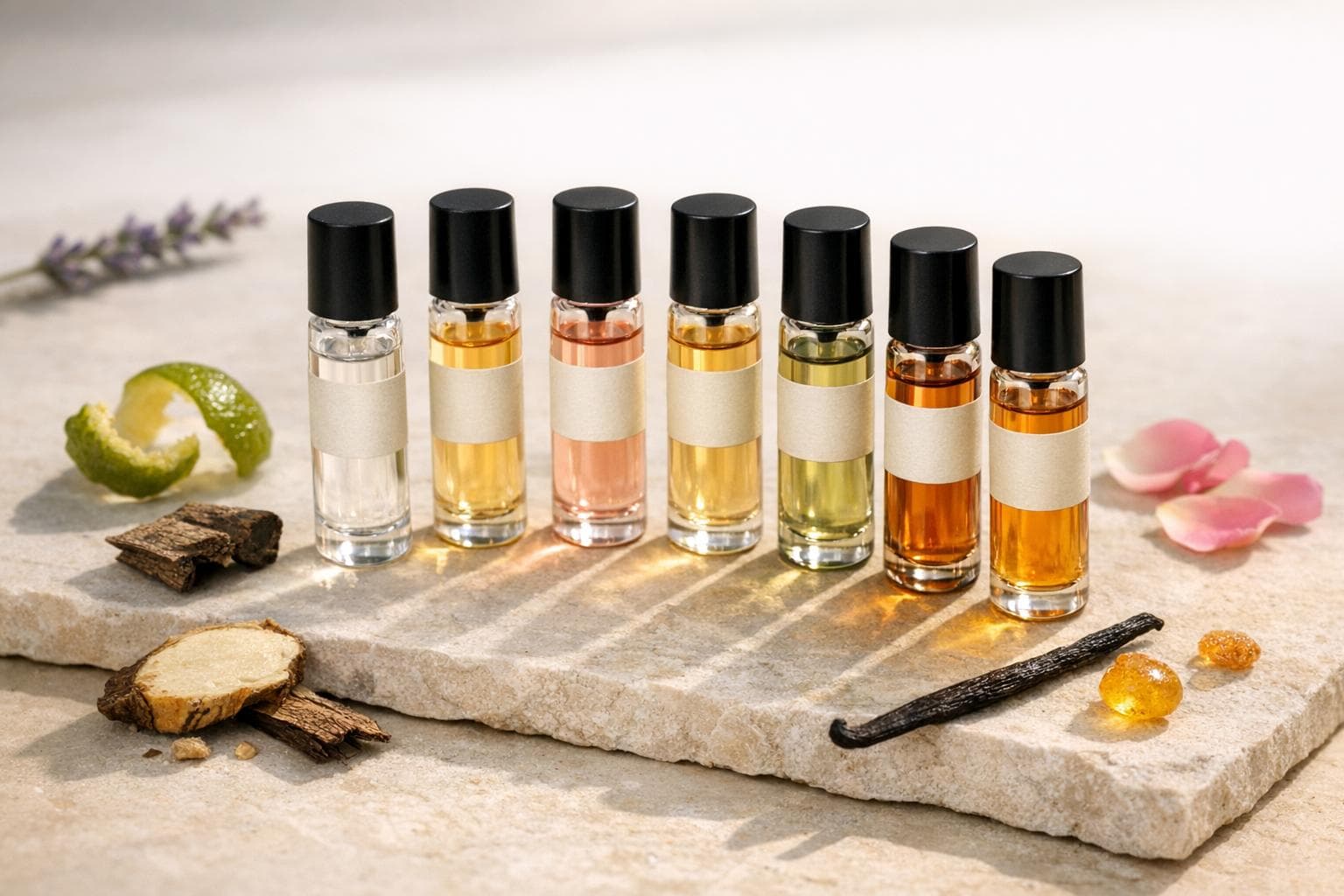
Casele independente de parfumerie redefiniesc industria parfumurilor, punand accentul pe creativitate, materii prime rare si povesti captivante. Spre deosebire de brandurile de masa, acesti creatori pun accentul pe productia in loturi mici, sustenabilitate si profiluri olfactive unice. In 2025, aceste branduri de nisa au reprezentat 23 % din totalul vanzarilor de parfumuri, impulsionate de consumatorii mai tineri, aflati in cautarea individualitatii si a varietatii in colectiile lor de parfumuri. Iata sapte case remarcabile care redefinesc parfumeria moderna:
- Zoologist Perfumes: Parfumuri inspirate de animale, precum Bat si Squid, cu formule vegane, netestate pe animale.
- Imaginary Authors: Parfumuri create ca povesti literare, precum Falling Into The Sea si Telegrama.
- House of Matriarch: Parfumerie de inalta clasa, cu radacini in alchimie si ingrediente rare precum lemnul de santal din Mysore.
- Fzotic (Bruno Fazzolari): Parfumuri influentate de arta si sinestezie, printre care si Lampblack, cu note fumurii.
- Hiram Green Perfumes: Parfumuri 100 % naturale, precum Moon Bloom si Slowdive.
- Stora Skuggan: Creatii inspirate de mituri, precum Silphium si Mistpouffer.
- Aftelier Perfumes: Creatii botanice remarcabile precum Palimpsest, realizate manual in Berkeley.
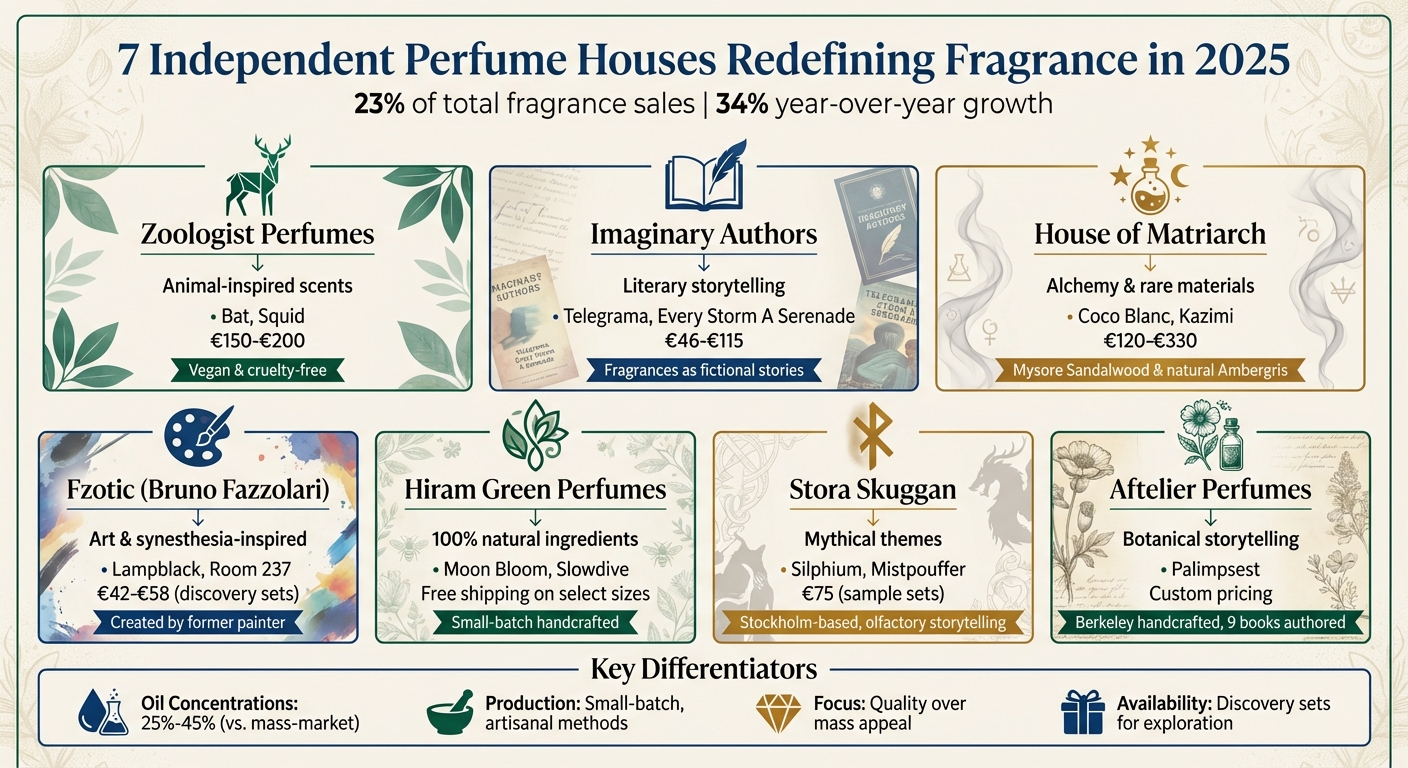
Aceste branduri pun calitatea mai presus de atractivitatea pentru publicul larg, oferind parfumuri cu o concentratie mai mare de uleiuri (25 %-45 %) si povesti unice. Multe dintre ele ofera seturi de descoperire, astfel incat sa le poti explora colectiile mai usor, fara sa te angajezi la flacoane in marime standard.
Comparatie rapida:
| Brand | Element distinctiv | Parfum reprezentativ | Interval de pret (EUR) |
|---|---|---|---|
| Zoologist Perfumes | Parfumuri inspirate de animale | Bat, Squid | 150 €-200 € |
| Imaginary Authors | Storytelling literar | Telegrama, Every Storm A Serenade | 46 €-115 € |
| House of Matriarch | Alchimie si materii prime rare | Coco Blanc, Kazimi | 120 €-330 € |
| Fzotic | Inspirat de arta si sinestezie | Lampblack, Room 237 | 42 €-58 € (seturi de descoperire) |
| Hiram Green | Ingrediente 100 % naturale | Moon Bloom, Hyde | Livrare gratuita pentru anumite marimi |
| Stora Skuggan | Teme mitice | Silphium, Hexensalbe | 75 € (seturi de mostre) |
| Aftelier Perfumes | Povesti inspirate de plante | Palimpsest | Pret personalizat |
Parfumierii independenti sunt in avangarda unei miscari care pune accentul pe creativitate si individualitate, oferind o alternativa la parfumurile mainstream. Angajamentul lor fata de calitate si arta povestirii face ca parfumurile lor sa merite incercate de orice pasionat de parfumuri.
Independent Perfume Houses Comparison Guide 2025
These selections are perfect for those looking to build a fragrance collection with unique, artisanal character.
Expertul tău personal în parfumuri te așteaptă
Completează testul nostru rapid de parfumuri și descoperă parfumuri designer și de nișă autentice, alese pe gustul tău – explorează-le ca decanturi și mostre de 2, 5, 8 și 30 ml, ca să le poți încerca pe fiecare înainte de a alege un flacon întreg.
Descoperă-ți parfumulAscensiunea caselor independente de parfumerie
In 2025, brandurile independente de parfumuri au reprezentat 23 % din totalul vanzarilor si au inregistrat o crestere impresionanta de 34 % fata de anul precedent, depasind cu mult ritmul general al industriei. Acest avans evidentiaza o schimbare clara a preferintelor consumatorilor.
Spre deosebire de brandurile de masa, care se bazeaza adesea foarte mult pe recomandarile vedetelor si pe marketingul ostentativ, casele independente de parfumerie se concentreaza asupra esentei mestesugului lor - parfumul in sine. Veronique Gabai, fondatoarea si CEO-ul Veronique Gabai, surprinde aceasta filozofie:
"Nisa nu inseamna marketing, imagini sau un nume si un chip cunoscute. Inseamna crearea unui produs care incanta, surprinde si trezeste reactii emotionale puternice."
Parfumierii indie lucreaza adesea cu concentratii mai mari de uleiuri parfumate, cuprinse intre 25 % si 45 %, si lasa parfumurile sa se matureze pana la 18 luni. Acest proces indelungat de maturare sporeste complexitatea si profunzimea, demonstrand devotamentul lor fata de maiestrie si calitate.
Sustenabilitatea si transparenta sunt, de asemenea, esentiale pentru valorile lor. Aceste branduri sunt in avangarda practicilor responsabile fata de mediu, de la valorificarea ingredientelor prin upcycling pana la folosirea biotehnologiei. De exemplu, Abel, un brand fondat de Frances Shoemack in 2013, extrage note de varf de cirese din apa folosita la spalarea fructelor pentru parfumul sau "The Apartment." Acest nivel de grija si dedicare rezoneaza cu consumatorii care apreciaza ingredientele naturale, cu provenienta trasabila, si vor sa stie exact ce poarta.
Parfumierii independenti prospera, de asemenea, datorita libertatii creative, explorand note neobisnuite precum praful de pe o lampa, vinul de impartasanie sau cafeaua vietnameza. Linda Levy, presedinta Fragrance Foundation, subliniaza capacitatea lor de a concura cu brandurile mai mari:
"Adesea, se afla pe picior de egalitate cu brandurile mari in ceea ce priveste povestile si interactiunea directa cu consumatorii."
Platforme precum TikTok au amplificat acest avantaj, aducand aceste parfumuri de nisa, experimentale, in atentia publicului tanar, care isi doreste sa-si afirme individualitatea.
O mentalitate de garderoba olfactiva tot mai raspandita in randul Millennials si Gen Z stimuleaza si mai mult acest segment. In loc sa ramana fideli unui singur parfum reprezentativ, acesti consumatori isi alcatuiesc colectii de parfumuri adaptate diferitelor stari de spirit si ocazii. Aceasta schimbare le ofera brandurilor indie oportunitatea de a propune parfumuri specializate, construite in jurul unor stari de spirit, pe care companiile de mass-market se straduiesc sa le reproduca. Succesul unor branduri precum Amouage, care a inregistrat o crestere de 30 % in 2024 si a depasit $260 million in vanzari anuale cu amanuntul, demonstreaza influenta tot mai mare a caselor de parfumerie independente. Departe de a fi o tendinta trecatoare, aceste branduri transforma industria parfumurilor prin abordari inovatoare si valori care pun consumatorul pe primul loc.
1. Zoologist Perfumes
Surse de concept si inspiratie
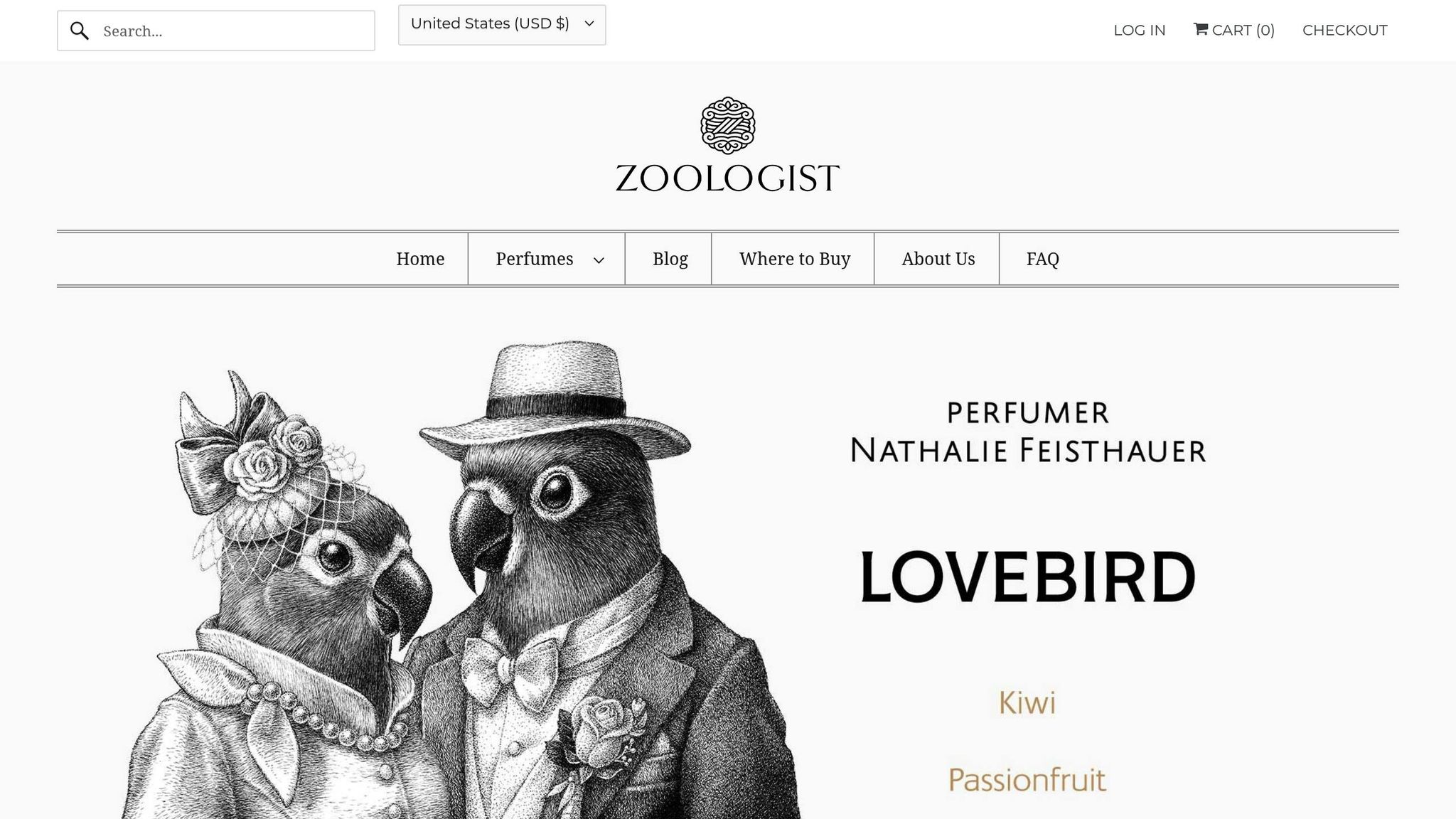
Zoologist Perfumes, fondat in Toronto in 2013 de Victor Wong, abordeaza parfumeria intr-un mod cu adevarat imaginativ. Fiecare parfum poarta numele unui animal si isi propune sa-i reflecte habitatul natural si caracterul unic. Wong, fost modelator 3D, a construit brandul in jurul ideii de a transforma relatia dintre oameni si animale in experiente olfactive.
O parte din inspiratie provine din suita muzicala a lui Camille Saint-Saëns, "Carnavalul animalelor." Aceasta influenta se observa in felul in care brandul creeaza povesti senzoriale, precum atmosfera pamantie, asemanatoare unei pesteri, din Bat, cu note de mucegai si fructe prea coapte (poti identifica note specifice in parfumurile tale preferate), sau senzatia profunda, oceanica, din Squid, care a primit distinctia "Perfume Extraordinaire of the Year" din partea Fragrance Foundation. Un alt parfum remarcabil, Hummingbird, a fost desemnat "Best Indie Perfume of the Decade" de comunitatile pasionatilor de parfumuri. Aceasta abordare narativa confera fiecarui parfum o identitate distincta, care depaseste cu mult parfumeria traditionala.
O abordare narativa a parfumeriei
Zoologist Perfumes urmeaza o cale diferita fata de brandurile mainstream si de designer, concentrandu-se pe povestire, nu pe tendintele pietei. Victor Wong colaboreaza indeaproape cu parfumierii, oferindu-le libertatea de a crea formule indraznete si elaborate. Aceasta metoda bazata pe naratiune a ajutat brandul sa-si croiasca un loc in parfumeria de nisa, cu parfumuri descrise adesea drept indraznete si complexe.
Chiar si cu tematica sa "animalica", brandul isi ia angajamentul sa fie vegan si sa nu testeze pe animale. Parfumuri precum Hyrax isi obtin profilul salbatic si primordial folosind alternative sintetice la ingrediente traditionale de origine animala, precum castoreumul si civeta. Evolutia brandului este o dovada a viziunii sale unice: a pornit cu doar cinci sticle vandute in primul an, iar acum vinde aproximativ 20.000 de sticle anual, prin 54 de retaileri din 25 de tari, incepand cu 2025.
2. Imaginary Authors
Surse de concept si inspiratie
Imaginary Authors, fondat in 2012 de parfumierul Josh Meyer, stabilit in Portland, reimagineaza parfumul ca forma de arta literara. Fiecare parfum este creat ca si cum ar fi o poveste, cu titlu, rezumat al intrigii, biografia unui autor fictiv si chiar un "an al publicarii." Aceasta abordare transforma purtarea parfumului intr-o experienta profund imaginativa.
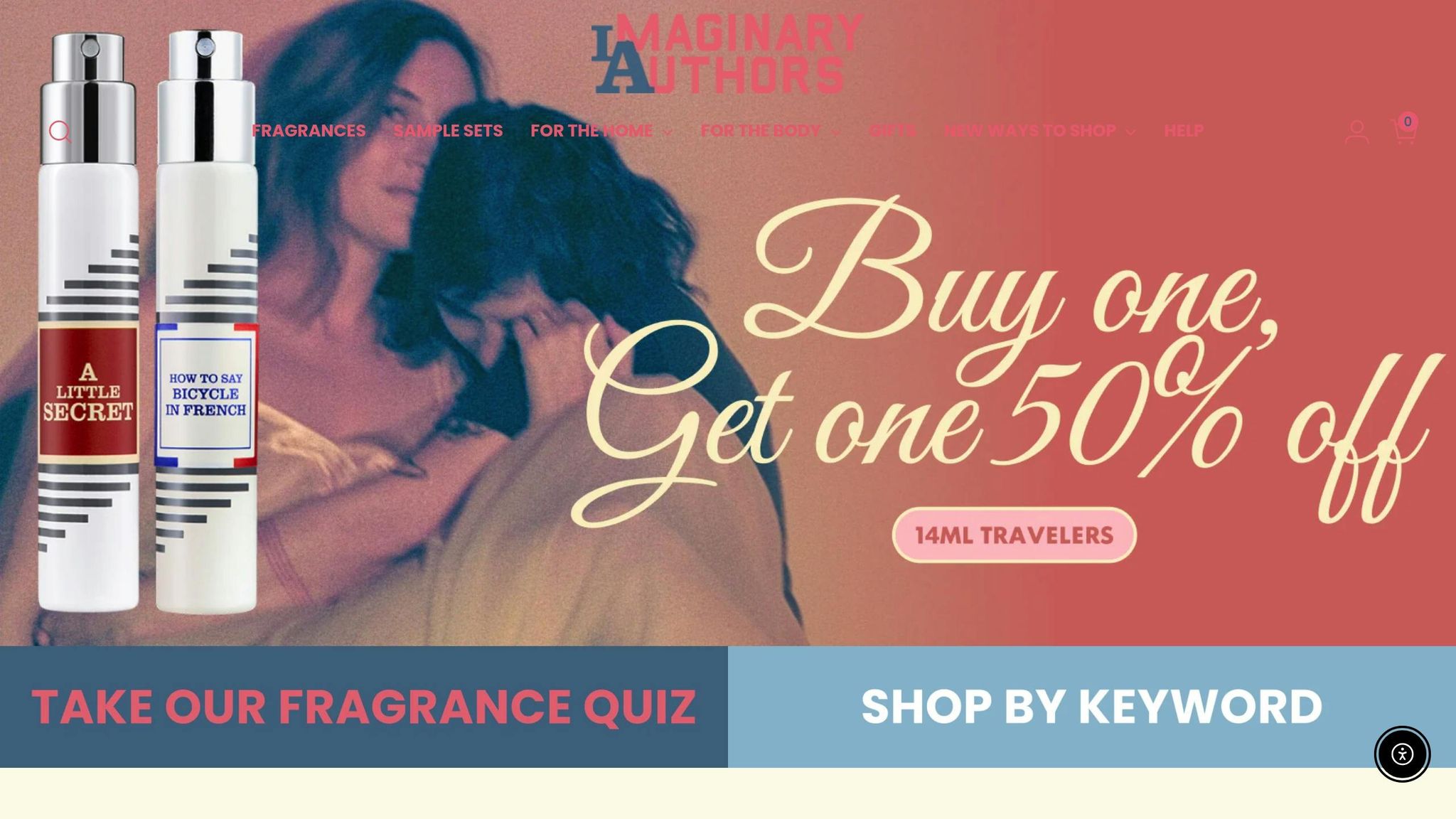
Brandul se inspira mult din lumea fictiunii literare. De exemplu, Falling Into The Sea surprinde esenta lipsita de griji a unei zile insorite la plaja, in timp ce Every Storm A Serenade te invaluie in aerul rece si cetos al Marii Baltice. Intre timp, Telegrama propune un amestec nostalgic de lavanda, asternuturi proaspat spalate si vanilie, evocand o familiaritate reconfortanta. Chiar si ambalajul se inscrie in tema literara, semanand cu niste coperte de carte decorate cu fragmente fictive si ilustratii semnate de directorul de creatie Ashod Simonian.
O abordare narativa a parfumeriei
Imaginary Authors abordeaza parfumeria ca si cum fiecare sticla ar fi un capitol dintr-o carte care inca nu a fost scrisa. Scopul brandului este sa „trezeasca si sa creeze amintiri” prin aceste povesti olfactive. Povestile fictive despre autorii din spatele creatiilor adauga profunzime, facand ca fiecare parfum sa para un personaj in propria sa naratiune. Aceasta abordare inventiva i-a permis brandului chiar sa transforme o recenzie critica intr-un moment de marketing jucaus.
In ciuda modului neconventional de a spune povesti, parfumurile sunt departe de a fi experimentale in purtare. Acest echilibru este o trasatura definitorie a felului in care se diferentiaza parfumurile de nisa si cele designer prin executia lor creativa. Criticii au laudat brandul, spunand ca este „ingenios, creativ si bogat conceptual, fara sa sacrifice vreodata usurinta la purtare”. Preturile reflecta atractivitatea sa de nisa: sticlele de dimensiune standard costa 115 €, decanturile individuale in fiole costa 7 €, iar setul de descoperire „Best Short Stories”, care include opt decanturi, costa 46 €. Acest cadru inspirat de literatura nu doar diferentiaza Imaginary Authors, ci ii invita si pe pasionatii de parfumuri sa exploreze o noua dimensiune a povestirii prin intermediul mirosului.
3. House of Matriarch
Conceptul si sursele de inspiratie
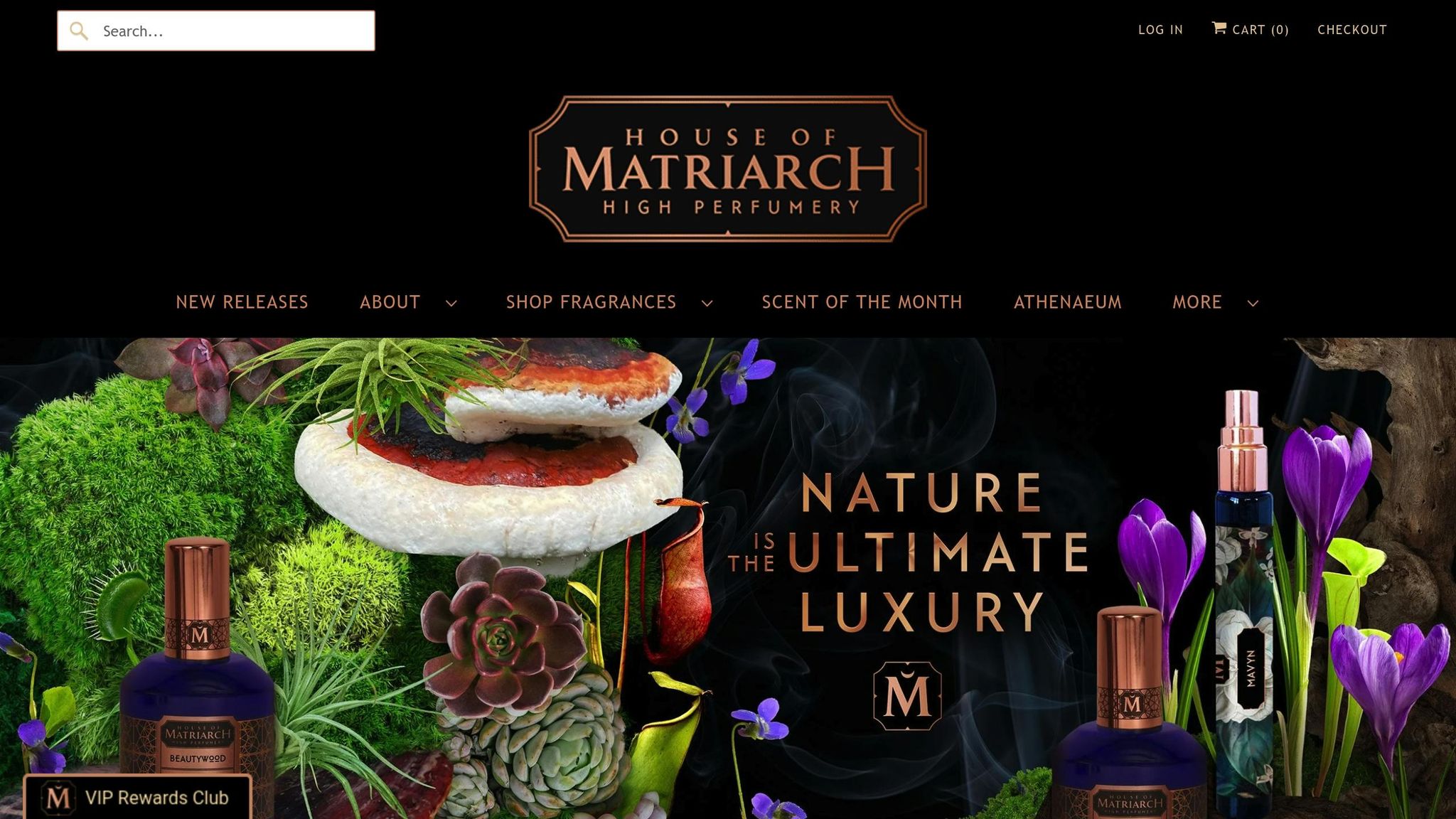
House of Matriarch se prezinta drept un atelier alchimic, iar fondatoarea Christi Meshell isi asuma titlul de Magician al Parfumurilor. Viziunea brandului se inspira puternic din lumea magiei, a alchimiei si din mestesugul traditional al farmacistilor. Principiul sau director, „High Perfumery”, isi propune sa uneasca trecutul si viitorul, creand parfumuri cu un caracter atemporal.
„High Perfumery isi are radacinile in istoria bogata a magiei si alchimiei — misterioasa, redata cu forta si evocand mestesugul farmacistului.” – House of Matriarch
Identitatea vizuala a brandului consolideaza aceasta aura mistica. Criticul de parfumuri Luca Turin i-a surprins esenta, descriind-o astfel:
„Sticle albastre superbe, cu etichete de culoarea cuprului; un aspect distinctiv, pe jumatate steampunk si pe jumatate abstract islamic; parfumuri constant reusite, bine construite, cu nume potrivite, dar nu hiperbolice.” – Luca Turin, critic de parfumuri
Aceasta combinatie de profunzime istorica si creativitate orientata spre viitor defineste abordarea House of Matriarch, in care materialele naturale si maiestria artizanala ocupa un loc central.
Materiale naturale si rare
Parfumurile House of Matriarch au la baza o colectie vasta de ingrediente rare si sacre. Creatiile lor includ comori precum lemn de santal din Mysore, Rose Otto, ambra cenusie naturala si oud din surse sustenabile. In locul alcoolului industrial din cereale, folosesc etanol distilat din struguri ecologici in alambicuri de cupru — un proces care este atat mai costisitor, cat si supus unei taxe suplimentare pentru alcool.
Mai multe dintre creatiile lor, precum „Coco Blanc” si „Kazimi”, sunt complet naturale. Vorbind despre compozitia lor cu oud, o clienta pe nume Diane a impartasit:
„Este oud asa cum nu l-am mai intalnit niciodata: complet pur, natural, puternic si invaluitor.” – Diane, clienta verificata
Pentru cei care descopera brandul, seturile de descoperire cu pulverizatoare de 3,3 ml costa 120,00 €, in timp ce extraits-urile lor de lux extraits, precum „Sex Magic”, sunt disponibile la pretul de 330,00 €.
Aceasta dedicare pentru procurarea materialelor naturale rare se reflecta in fiecare etapa a procesului, de la selectarea ingredientelor pana la ambalare.
Metode de productie in loturi mici
Angajamentul House of Matriarch fata de calitate se extinde si la metodele de productie. Christi Meshell supravegheaza personal fiecare etapa, de la conceptualizare si selectarea ingredientelor pana la amestecare, maturare si catalogare. Rolul ei dublu de Director Creativ si Compozitor de Parfumuri garanteaza ca fiecare parfum este creat cu precizie si grija.
Aceasta abordare directa ii permite brandului sa lucreze cu esente naturale din recolte mici, care ar fi nepractice pentru productia la scara larga. Ocazional, lanseaza loturi datate, precum „Orca – 100 % Natural Ambergris High Perfumery Vintage 2025”.
4. Fzotic (Bruno Fazzolari)
Conceptul si sursele de inspiratie
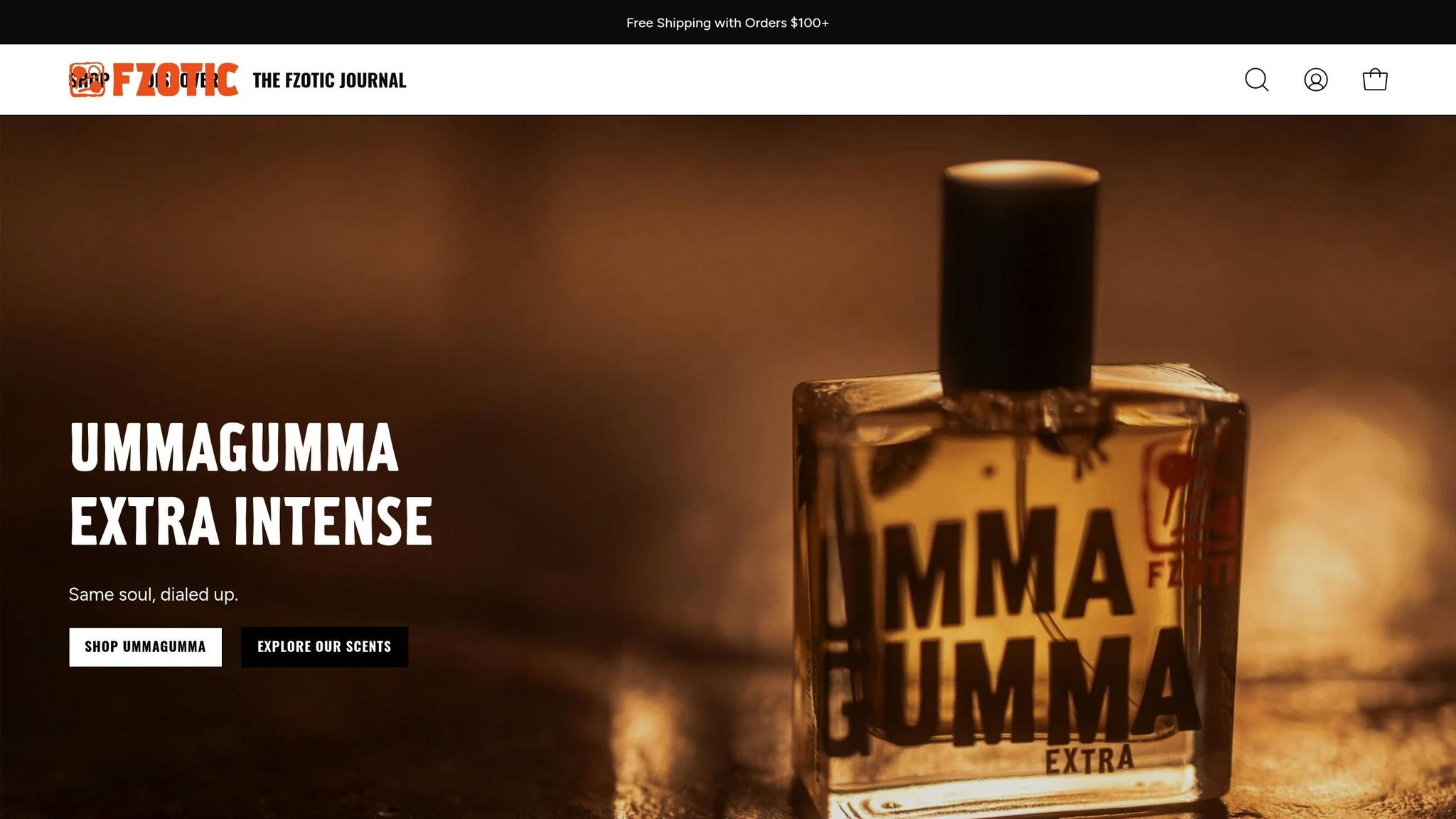
Bruno Fazzolari, fost pictor si profesor de arta, a inceput sa creeze parfumuri in 2010 pentru a completa expozitiile din galeria sa. Sinestezia joaca un rol esential in procesul sau creativ, permitandu-i sa „picteze” cu mirosuri. Dupa cum spune chiar el:
"parfumul are culoare."
Aceasta perspectiva ii permite sa abordeze parfumeria asemenea unui artist care lucreaza pe panza. Parfumul sau din 2013, Lampblack, a marcat un punct de cotitura in cariera sa. A primit o recenzie de patru stele din partea lui Luca Turin si a fost desemnat unul dintre cele mai bune zece parfumuri de catre Artforum. Lampblack se inspira din funinginea folosita la cerneala indiana, un mediu pe care il utiliza in desenele sale. Cu note precum vetiver, cypriol si portocala amara, surprinde esenta afumata si minerala a cernelii umede.
Fazzolari se inspira adesea din teme cinematografice si artistice. De exemplu, Room 237 evoca atmosfera nelinistitoare a baii verzi din The Shining, imbinand note de vinil si menta pentru a crea un efect curat, dar straniu si tulburator. Si felul in care a crescut isi pune amprenta asupra creatiilor sale: verile petrecute in Franta si iernile din Arizona se reflecta in folosirea rasinilor de desert, a nuantelor de pivnita umeda si a notelor verzi, proaspete, de gradina.
Aceasta baza artistica se vede in abordarea sa meticuloasa si directa a crearii parfumurilor.
Metode de productie in loturi mici
Fazzolari pastreaza controlul complet asupra parfumurilor sale, ocupandu-se personal de fiecare etapa a procesului de fabricare a parfumului de lux – de la masurare, combinare si diluare pana la imbutelierea fiecarui parfum. Acest proces practic asigura un nivel de atentie la detalii pe care productia de masa nu il poate reproduce. Vorbind despre responsabilitatea de a crea arta care poate fi purtata, spune:
"Trebuie sa oferi inovatie, calitate, siguranta, dezvoltare si performanta."
In loc sa urmeze tendintele pietei, Fazzolari isi lasa intuitia sa-i ghideze munca. El explica:
"Ca pictor, incep intotdeauna cu o presimtire sau cu ceva ce vreau sa explorez intuitiv... daca as sti dinainte care va fi rezultatul, calatoria nu ar mai avea prea mult rost."
Aceasta abordare da nastere unor parfumuri indraznete, neconventionale, care se disting de ofertele mainstream. Pentru cei curiosi sa-i descopere creatiile, seturile de descoperire cu sase mostre sunt disponibile la 42 €–45 €, iar flacoanele de 30ml costa 54 €–58 €.
5. Hiram Green Perfumes
Hiram Green Perfumes se remarca prin dedicarea sa neclintita fata de crearea parfumurilor din ingrediente naturale, oferind un amestec de maiestrie artistica si puritate, apreciat atat de cunoscatori, cat si de pasionatii ocazionali.
Ingrediente naturale si rare
Abordarea lui Hiram Green in parfumerie se bazeaza pe folosirea exclusiva a componentelor 100 % naturale. Dupa cum spune chiar el:
"Toate parfumurile mele sunt lucrate manual in loturi mici si realizate din ingrediente 100 % naturale."
Acest angajament nu presupune compromisuri in privinta performantei. De exemplu, Moon Bloom, un parfum centrat pe tuberoza, este adesea laudat pentru caracterul sau "cremos si natural", precum si pentru proiectia si siajul impresionante. In mod similar, Slowdive a fost apreciat pentru acordul sau realist de miere, o clienta, Irma, descriindu-l drept "cel mai natural si realist parfum cu acord de miere" pe care l-a intalnit. Apoi este Hyde, care reda cu maiestrie complexitatea ambrei naturale cu note de piele, reflectand capacitatea brandului de a crea parfumuri nuantate si evocatoare.
Fiecare parfum creat de Hiram Green reflecta aceasta dedicare fata de ingredientele naturale, asigurand autenticitatea in fiecare etapa a productiei.
Maiestrie in loturi mici
Fiecare parfum este produs in loturi mici, ceea ce permite o atentie minutioasa la detalii, de la selectarea ingredientelor pana la imbutelierea finala. Acest proces face posibila folosirea unor materiale rare si de inalta calitate, care nu sunt fezabile pentru productia de masa. De asemenea, ii ofera lui Green libertatea de a experimenta cu combinatii unice, fara constrangerile tendintelor dictate de piata.
Pentru a face aceste creatii mai accesibile, brandul ofera livrare gratuita pentru anumite marimi si seturi de descoperire sau descopera-ti parfumul reprezentativ pentru a vedea cum interactioneaza aceste compozitii naturale cu pielea ta inainte de a te hotari sa cumperi un flacon intreg.
Inspiratii si povesti
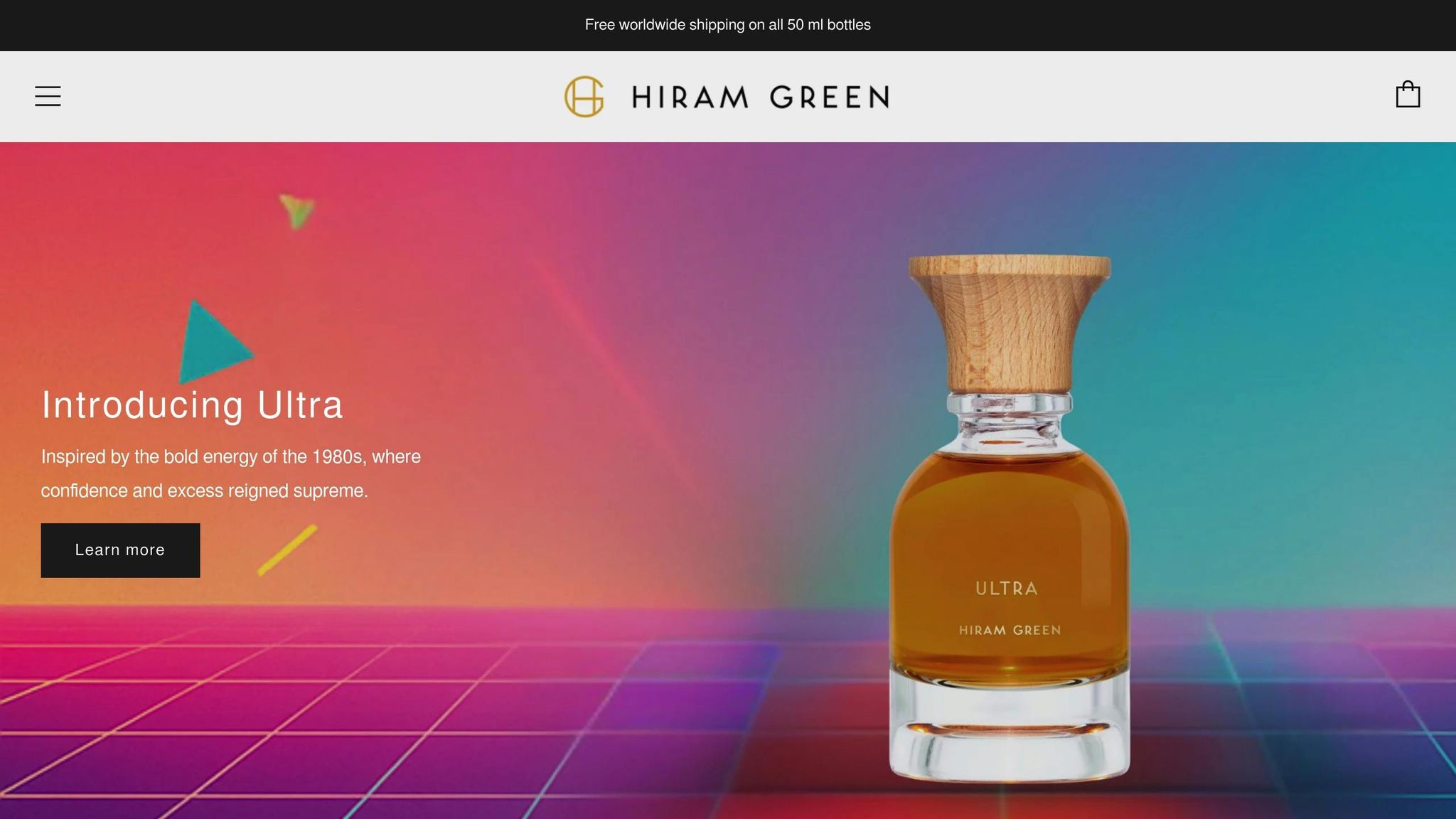
Parfumurile lui Hiram Green nu sunt doar despre ingrediente – ele spun si povesti inspirate de epoci si teme distincte. De exemplu, Ultra surprinde energia indrazneata si lipsita de retineri a anilor 1980, o perioada definita de incredere si extravaganta. Alte parfumuri se concentreaza pe redarea unor experiente olfactive specifice, de la florile albe vibrante la ambrele bogate cu note de piele, care evolueaza superb pe piele .
6. Stora Skuggan
Stora Skuggan imbina parfumeria si mitologia prin ceea ce numeste "povestire olfactiva". Fondata in 2015 de un grup de cinci creativi – Anna, Martin, Jonas, Olle si Tomas – acest brand din Stockholm trateaza fiecare parfum ca pe o poarta catre o lume in care mitul, memoria si suprarealismul se intrepatrund. Aceasta preocupare pentru naratiune sta in centrul abordarii sale.
O perspectiva mitica asupra parfumului
Fidela originilor sale mitice, Stora Skuggan creeaza parfumuri care spun povesti captivante. Numele insusi, care inseamna "marea umbra", este inspirat de o rezervatie naturala de langa Stockholm, ce simbolizeaza misterul si nevazutul. Fiecare parfum este impregnat de aceasta filosofie. De exemplu, Silphium reinterpreteaza aroma unei plante antice, disparute in antichitate, candva mai pretuita decat sofranul si scortisoara. Mistpouffer evoca sunetele stranii, asemanatoare tunetului, ale unui fenomen natural, prin note fumurii si invaluitoare in ceata. Hexensalbe se inspira din mirosul unguentelor halucinogene medievale asociate cu vrajitoarele. Anna Barkne, cofondatoare, descrie procesul lor creativ:
"De obicei, ne invartim in jurul unui mit sau fenomen care poate fi real sau nu. Acestea devin niste mici lumi in care parfumul creste, ca un bebelus minuscul".
Materiale rare si autentice
Stora Skuggan acorda prioritate autenticitatii in alegerea materialelor. In loc sa opteze pentru inlocuitori ieftini, brandul se concentreaza pe ingrediente selectate cu grija. De exemplu, Azalai imbina portocala rosie, menta, sofran, fructe uscate, ambra, tamaie si lemn de salcam pentru a crea ceea ce autorii numesc "mici universuri". In mod similar, Silphium foloseste tamaie, lemnuri rare si piele pentru a evoca mirosul plantei disparute. Dupa cum explica autoarea Miriam Rath:
"Se folosesc doar materiale alese cu grija – indiferent de cost. Nu exista inlocuitori ieftini, deoarece Stora Skuggan nu vinde milioane de flacoane, ci flacoane mici care evoca misterul".
Maiestrie artizanala, in loturi mici
Devotamentul Stora Skuggan fata de arta povestirii se reflecta si in metodele sale de productie. Fiecare etapa, de la amestecare la ambalare, este realizata manual in laboratorul lor din Stockholm. Echipa de cinci persoane gestioneaza totul intern — creatia parfumurilor, brandingul si ambalarea — asigurandu-si controlul creativ deplin, fara interventii externe. Aceasta abordare practica nu doar le pastreaza viziunea artistica, ci garanteaza si un nivel de calitate imposibil de atins prin productia de masa. Parfumurile in format standard, de 1 oz (consulta concentratia parfumului pentru a evalua valoarea), costa intre Parfumurile in format standard, de 1 oz, costa intre $150 si $20050 si $200, in timp ce un set de 8 mostre spray de 0.07 oz costa aproximativ $75.
7. Aftelier Perfumes
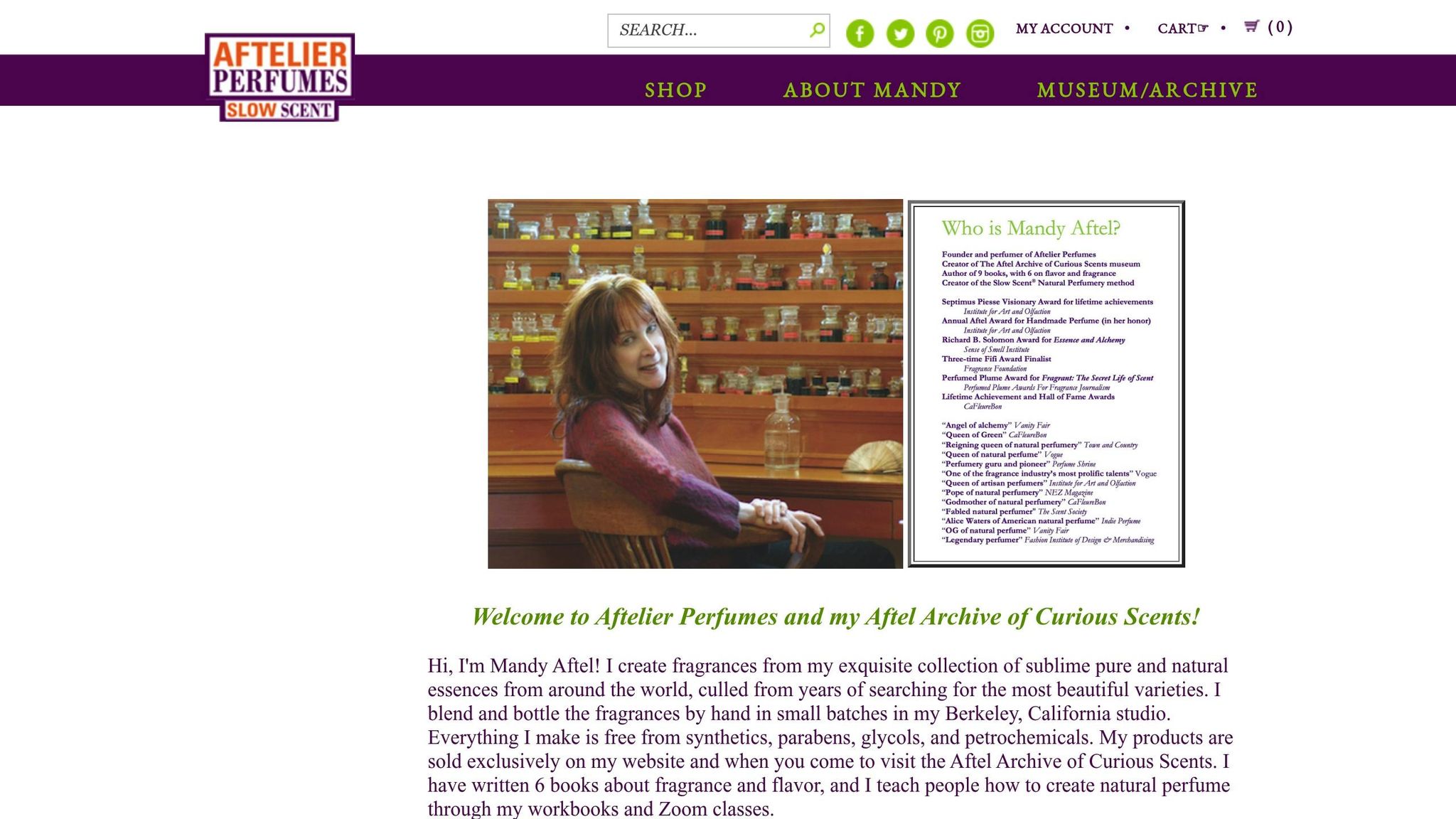
Aftelier Perfumes, fondata de Mandy Aftel in Berkeley, California, imbina arta parfumeriei naturale cu arta povestirii. Aftel, autoarea a noua carti si mentor pentru multi profesionisti din domeniu, tese naratiuni bogate in fiecare parfum pe care il creeaza.
Ingrediente rare si naturale
Aftelier Perfumes se concentreaza pe esente botanice rare, provenite din intreaga lume. Fiecare parfum este creat din materii prime puternice, in loturi mici, selectionate cu grija, rezultand compozitii complexe, cu multiple fatete.
Parfumul ca poveste
Fiecare creatie Aftelier spune o poveste, reinterpretand parfumeria clasica dintr-o perspectiva naturala pentru a evoca istoria si frumusetea. De exemplu, Palimpsest: acest parfum floral luminos imbina iasomia si tuberoza cu condimente delicate, toate sustinute de o baza calda de ambra.
Maiestrie artizanala
Fiecare parfum este realizat manual in Berkeley, adesea pornind de la un proiect creat la comanda. Aceasta abordare de productie la scara redusa permite o atentie exceptionala la detalii, punand in valoare caracterul unic al plantelor rare. Devotamentul Aftelier fata de acest proces artizanal reflecta o miscare mai ampla in randul caselor independente de parfumuri, care isi propun sa redefineasca maiestria in parfumerie.
De ce atrag tot mai multa atentie casele independente de parfumuri
Tot mai multi pasionati de parfumuri se indreapta catre casele de parfumuri artizanale, atrasi de capacitatea acestora de a oferi experiente profund personale si distinctive, diferite de optiunile de masa. Acest interes tot mai mare schimba modul in care oamenii isi abordeaza colectiile de parfumuri, punand in prim-plan creativitatea si individualitatea.
Unul dintre principalele atuuri este libertatea creativa de care se bucura aceste branduri independente. Spre deosebire de companiile mainstream, care lucreaza adesea in limitele impuse de cercetarile de piata si grupurile de discutie, parfumierii indie au libertatea de a explora ingrediente neconventionale si de a crea naratiuni profund personale. Aceasta libertate le permite sa creeze parfumuri autentice si incarcate de emotie, inspirate din surse precum mostenirea, amintirile sau exprimarea artistica. Aceste parfumuri nu doar miros bine — spun povesti, creand o legatura unica intre creator si cel care le poarta.
Devotamentul fata de maiestria artizanala garanteaza, de asemenea, o calitate exceptionala. Marc-Antoine Barrois, a carui casa franceza de parfumuri a atins vanzari cu amanuntul de aproape $70 million in 2024, subliniaza aceasta abordare fara compromisuri:
„Nu impunem limite nici timpului [parfumierului], nici ingredientelor pe care le folosim. Nu stiu exact cat costa si nici nu vreau sa stiu”.
Un alt factor care alimenteaza acest trend este accesibilitatea. Multe branduri indie ofera decanturi in formate mai mici, precum cele de 8ml, care le permit consumatorilor sa descopere cum evolueaza un parfum pe pielea lor in timp, fara sa se angajeze sa cumpere un flacon in format standard. Acest lucru a incurajat dezvoltarea garderobei de parfumuri, in care cumparatorii mai tineri isi alcatuiesc colectii de parfumuri potrivite pentru diferite stari de spirit sau ocazii. Branduri precum Zoologist si Imaginary Authors exemplifica acest spirit inovator, impingand limitele creativitatii si productiei.
Veronique Gabai, CEO-ul brandului care ii poarta numele, rezuma perfect aceasta miscare:
„Nisa nu inseamna marketing, imagini sau un nume si un chip cunoscut. Inseamna sa creezi un produs care incanta, surprinde si trezeste reactii emotionale puternice in oameni”.
Casele independente de parfumuri: un nou capitol in parfumerie
In 2025, casele independente de parfumuri redefiniesc lumea parfumeriei. In locul parfumurilor de masa, create pentru a atrage un public larg, acesti artizani creeaza parfumuri ca expresii profund personale — povesti tesute din ingrediente precum oud veritabil, unt de iris si tamaie din Oman.
Aceasta schimbare evidentiaza interesul tot mai mare pentru parfumurile artizanale, alimentat de consumatorii care renunta la ideea unui singur parfum reprezentativ. In schimb, isi alcatuiesc garderobe de parfumuri diverse, potrivite pentru stari de spirit, ocazii si anotimpuri diferite.
Inceputul calatoriei tale in parfumeria de nisa nu trebuie sa-ti goleasca buzunarele. Multe branduri independente ofera seturi de descoperire sau decanturi mici, astfel incat sa poti experimenta cum evolueaza pe pielea ta compozitiile lor complexe. Concentratiile de ulei variaza adesea intre 20 % si 40 % — mult peste cele ale parfumurilor designer obisnuite — astfel ca si un decant mic iti ofera mai multe ocazii de a te bucura de evolutia completa a unui parfum. Aceste optiuni accesibile reflecta devotamentul acestor branduri fata de maiestria artizanala si individualitate.
Ceea ce ii distinge pe parfumierii independenti este angajamentul lor fata de viziunea artistica, mai presus de cerintele pietei. Creativitatea le da forma creatiilor, nu tintele de vanzari sau grupurile de discutie. Fie ca te atrag experimentele indraznete ale Stora Skuggan sau maiestria Aftelier in folosirea ingredientelor naturale, alegand aceste parfumuri sustii artizanii care transforma industria cu pasiune si originalitate.
Urmatorul tau parfum semnatura nu te asteapta pe raftul unui magazin universal - este creat cu grija, manual, in serii mici, de parfumieri care pun arta mai presus de orice.
Intrebari frecvente
Cum aleg primul meu brand indie de parfumerie?
Atunci cand iti alegi primul brand indie de parfumerie, concentreaza-te asupra brandurilor care pun accentul pe creativitate, ingrediente premium si parfumuri unice. Incepe prin a incerca decanturi mici sau seturi de descoperire, care iti permit sa explorezi diverse arome fara sa fie nevoie sa investesti imediat intr-un flacon intreg. Descopera povestile si filosofiile fiecarui brand pentru a te apropia de unul care rezoneaza cu gusturile si valorile tale, transformand experienta intr-una personala si plina de satisfactii.
Cum influenteaza purtarea o concentratie de ulei de 25 %–45 %?
Un parfum cu o concentratie de ulei de 25 %–45 % influenteaza semnificativ intensitatea, proiectia si persistenta. Concentratiile mai ridicate creeaza adesea un parfum mai pronuntat, care dureaza mai mult pe piele, in timp ce concentratiile mai mici tind sa produca o aroma mai usoara si mai efemera.
Cum pot testa decanturi pentru a vedea cum evolueaza un parfum?
Pentru a intelege cum se dezvaluie un parfum, incepe prin a aplica o cantitate mica pe piele - incearca zone precum incheietura mainii sau partea interioara a cotului - ori foloseste o banda de testare a parfumului. Dupa cateva minute, fii atent la notele de varf, care alcatuiesc prima impresie. Asteapta aproximativ 10–15 minute pentru a observa notele de mijloc, pe masura ce incep sa capteze atentia. Pe parcursul unei ore, urmareste notele de baza, care dezvaluie caracterul persistent al parfumului. Testarea in momente diferite ale zilei si in diverse contexte iti poate oferi o imagine despre felul in care parfumul se comporta si evolueaza.

