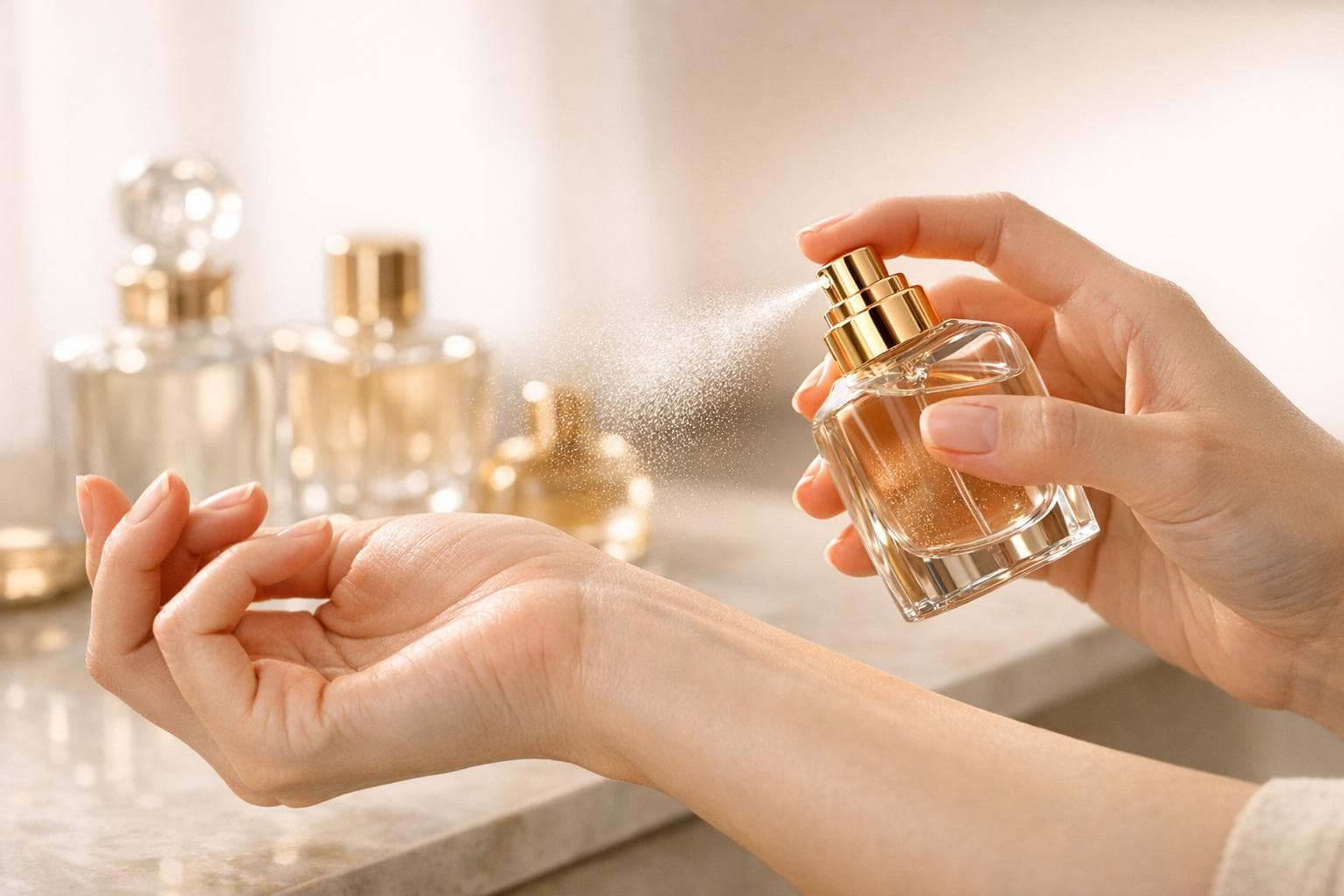
Testarea parfumurilor pe pielea ta este singura modalitate de a vedea cum interactioneaza cu chimia ta unica. Factori precum tipul pielii, nivelul pH-ului si uleiurile naturale influenteaza direct cat timp persista un parfum si cum evolueaza. Iata un ghid rapid:
- Piele grasa: Pastreaza parfumul mai mult timp, dar poate intensifica notele de varf. Parfumurile mai usoare si revigorante, precum cele citrice sau acvatice, sunt cele mai potrivite.
- Piele uscata: Parfumul se estompeaza mai repede. Alege parfumuri bogate si profunde, precum cele lemnoase sau ambrate, si combina-le cu creme hidratante pentru o persistenta mai buna.
- Piele mixta/sensibila: Echilibrul este esential. Parfumurile delicate, hipoalergenice sau florile diafane sunt ideale.
Cum sa testezi:
- Aplica pe pielea curata (pe punctele de puls, precum incheieturile mainilor sau partea interioara a coatelor).
- Lasa parfumul sa se aseze cel putin 30 de minute, pentru a-i descoperi evolutia completa (notele de varf, de mijloc si de baza).
- Testeaza 2–3 parfumuri odata, pentru a nu-ti coplesi simturile.
Pentru a testa fara sa te angajezi la o achizitie, incearca decanturi (mostre mici) inainte de a cumpara flacoane in marime normala. Iti permit sa testezi parfumurile in contexte si anotimpuri diferite, fara sa cheltui prea mult.
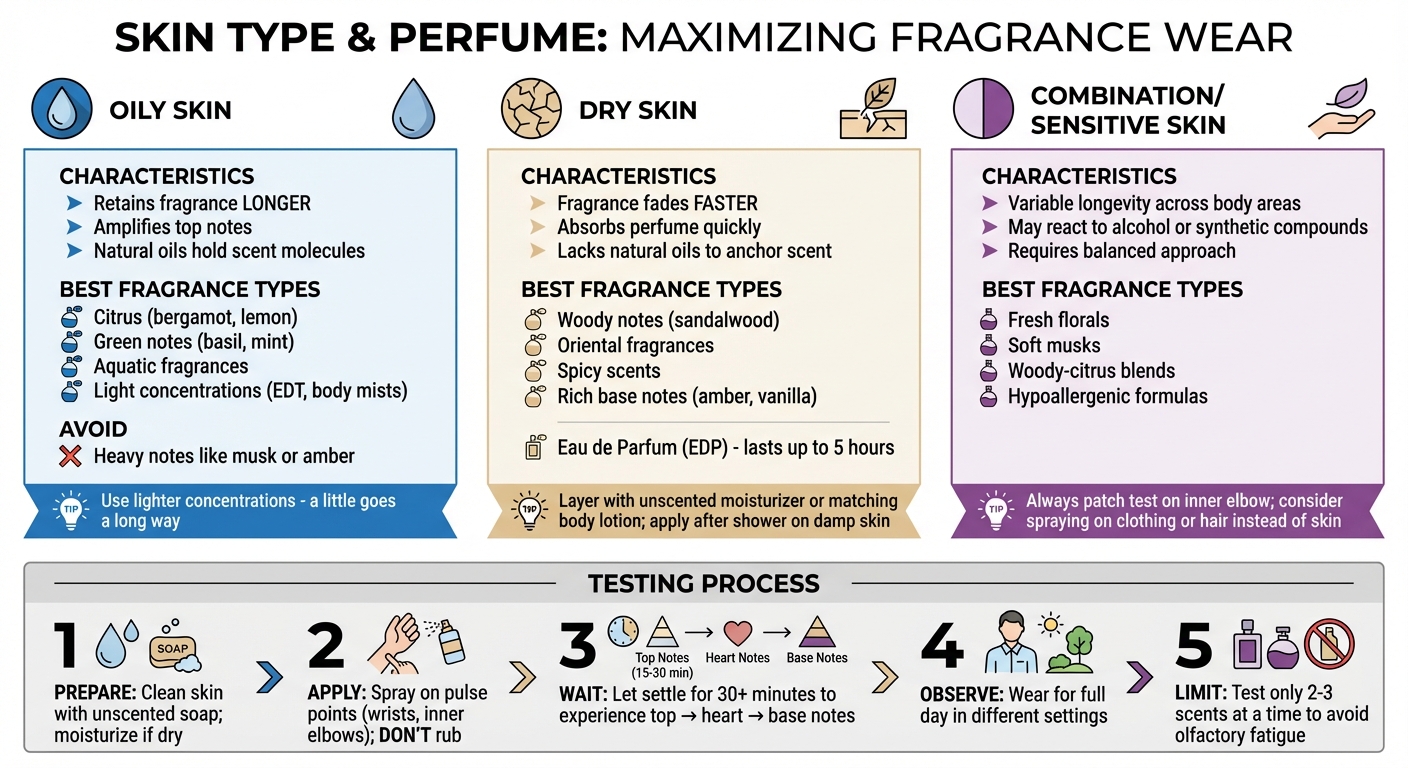
Cum influenteaza tipul pielii persistenta parfumului si alegerea celor mai potrivite parfumuri
Sfaturi despre parfum adaptate chimiei unice a pielii tale | JCPenney

How Skin Type Affects Perfume Performance
Stiai ca tipul pielii poate influenta cat timp persista un parfum? Factori precum uleiurile naturale, nivelul de hidratare si echilibrul pH-ului joaca un rol important in felul in care parfumul se comporta pe pielea ta sau se estompeaza. Sa vedem cum interactioneaza pielea grasa, uscata, mixta sau sensibila cu parfumul.
Piele grasa
Daca ai pielea grasa, ai noroc cand vine vorba de persistenta parfumului. Uleiurile naturale ale pielii actioneaza ca un magnet pentru moleculele parfumate, mentinandu-le la suprafata si incetinind evaporarea. Asta inseamna ca parfumul tau preferat poate persista cu ore mai mult decat pe pielea cuiva cu pielea uscata. Pe de alta parte, pielea grasa poate amplifica anumite note de varf, precum cele citrice sau florale, facandu-le mai intense decat te-ai astepta.
"O persoana cu pielea grasa va pastra mirosul notelor de varf... pe cand o persoana cu pielea uscata va absorbi uleiurile naturale ale parfumului, facand mirosul sa se disipeze mai repede." — Matthew Miléo, Fragrance Expert
De aceea este atat de important sa testezi parfumurile direct pe pielea ta - astfel poti intelege cum evolueaza mirosul pe parcursul zilei.
Piele uscata
Pielea uscata vine insa cu o alta provocare. Fara suficiente uleiuri naturale care sa fixeze parfumul, pielea tinde sa-l absoarba rapid. Drept urmare, mirosul poate deveni mai slab si se poate estompa mult mai repede decat pe pielea grasa. S-ar putea sa observi ca un parfum miroase mai discret pe pielea ta sau chiar dispare complet dupa numai cateva ore. De aceea, este esential sa testezi parfumul pe pielea ta, pentru a vedea cum interactioneaza cu chimia ta unica.
Piele mixta si sensibila
Pentru persoanele cu piele mixta, experienta poate varia. Persistenta parfumului poate diferi in functie de zona corpului - poate dura mai mult in zonele mai grase, precum punctele de puls, dar se poate estompa rapid in zonele mai uscate. Pielea sensibila adauga un alt nivel de complexitate. Ingrediente precum alcoolul sau compusii sintetici din unele parfumuri pot provoca iritatii, asa ca gasirea parfumului potrivit poate necesita cateva incercari.
Sa-ti intelegi tipul pielii este esential pentru a profita la maximum de parfumul tau. Fie ca vrei sa gasesti aroma perfecta, fie ca inveti cum sa o aplici pentru o persistenta mai buna, sa stii cum interactioneaza pielea ta cu parfumul poate face toata diferenta.
Cum testezi parfumurile: ghid pas cu pas
Sa gasesti parfumul potrivit nu inseamna doar sa alegi o aroma care iti place in flacon - conteaza si cum reactioneaza aceasta pe pielea ta. Chimia pielii poate schimba mirosul si persistenta unui parfum, asa ca este esential sa urmezi un proces bine gandit pentru a descoperi ce ti se potriveste cu adevarat.
Pregateste-ti pielea inainte de testare
Incepe cu o baza curata. Spala zonele pe care vei aplica parfumul cu sapun fara parfum, iar daca pielea ta tinde sa fie uscata, foloseste un strat subtire de crema hidratanta fara parfum sau chiar putina vaselina, pentru ca aroma sa persiste. Daca ai pielea sensibila, este o idee buna sa faci un test rapid pe partea interioara a cotului, pentru a verifica daca apare vreo iritatie.
"Inainte de a incepe testarea parfumului, asigura-te ca pielea nu are alte parfumuri sau produse de corp cu miros puternic." — SEO Team, Armaf
Aplica parfumul pe punctele de puls
Punctele de puls, precum incheieturile mainilor si partea interioara a coatelor, sunt ideale pentru testare, deoarece degaja caldura, care ajuta parfumul sa se dezvolte. Pulverizeaza o cantitate mica direct pe aceste zone, dar nu-ti freca incheieturile una de alta dupa aceea. Frecarea poate descompune moleculele parfumului, modificand felul in care evolueaza aroma in timp.
Urmareste cum evolueaza aroma
Parfumurile se dezvaluie in straturi, evidentiind treptat aspecte diferite. Aceste straturi includ:
- Note de varf: Primele note de parfum pe care le simti imediat dupa aplicare.
- Note de mijloc: Acestea se dezvaluie dupa aproximativ 30 de minute pana la o ora si formeaza inima parfumului.
- Note de baza: Baza bogata, de lunga durata, care se dezvolta mai tarziu.
Acorda parfumului cel putin 30 de minute sa se aseze inainte sa decizi daca ti se potriveste. Prima impresie nu spune adesea toata povestea.
"Un parfum de calitate este creat sa evolueze si sa-si dezvaluie straturile in timp." — Echipa SEO, Armaf
Observa cum te face sa te simti parfumul si cum interactioneaza cu diferite medii. Iti da o stare de energie sau te calmeaza? Se comporta diferit in interior fata de exterior? Lasa parfumul sa te insoteasca pe parcursul zilei pentru a-i intelege pe deplin caracterul.
Poarta parfumul o zi intreaga
Cel mai bun mod de a evalua un parfum este sa-l porti si sa vezi cum ti se potriveste. Poarta-l in timpul activitatilor zilnice pentru a vedea cum se comporta in conditii reale. Factori precum caldura corpului, transpiratia, schimbarile de temperatura si umiditatea pot influenta evolutia si persistenta unui parfum. Testeaza-l in contexte diferite, de exemplu in timpul rutinei de dimineata si din nou seara, pentru a-ti face o idee completa despre versatilitatea lui.
Limiteaza testarea la 2–3 parfumuri odata
Mirosul tau poate procesa doar o anumita cantitate inainte sa fie coplesit. Testeaza cel mult 2–3 parfumuri odata pentru a evita oboseala olfactiva. Aplica fiecare parfum pe un punct de puls diferit - de exemplu, cate unul pe fiecare incheietura sau in pliul cotului - pentru a le putea distinge.
Daca nu esti sigur ca vrei sa te angajezi la un flacon in format standard, decanturile sunt o optiune excelenta. Aceste cantitati mici, disponibile adesea in decanturi de 2 ml, 5 ml si 8 ml, precum si in decanturi de 30 ml pentru majoritatea parfumurilor, iti permit sa explorezi un parfum timp de mai multe zile, in situatii diferite, fara o investitie considerabila. De exemplu, Scento ofera decanturi care iti permit sa testezi parfumuri luxoase fara stres. Astfel, vei investi doar in parfumuri care chiar ti se potrivesc. Iar daca simti ca mirosul ti-a fost coplesit, iesi la aer curat sau miroase cateva boabe de cafea pentru a-ti reseta simturile.
Expertul tău personal în parfumuri te așteaptă
Completează testul nostru rapid de parfumuri și descoperă parfumuri designer și de nișă autentice, alese pe gustul tău – explorează-le ca decanturi și mostre de 2, 5, 8 și 30 ml, ca să le poți încerca pe fiecare înainte de a alege un flacon întreg.
Descoperă-ți parfumulTipul de piele este doar o parte din tablou. Ghidul nostru despre cum sa testezi un parfum acasa acopera testul complet de purtare, inclusiv cand sa verifici un parfum, cate sa compari deodata si cum sa testezi decanturile.
Ce tipuri de parfumuri se potrivesc cel mai bine pielii tale
Dupa ce ai observat cum evolueaza un parfum pe pielea ta, urmatorul pas este sa alegi familia olfactiva potrivita tipului tau de piele. Caracteristicile naturale ale pielii tale au un rol important in felul in care se comporta un parfum si in cat timp persista. Iata un ghid care te va ajuta sa alegi parfumuri potrivite tipului tau de piele.
Parfumuri recomandate pentru pielea grasa
Pielea grasa intensifica in mod natural parfumul si ii prelungeste persistenta datorita continutului mai ridicat de uleiuri. Pentru a completa acest efect, alege familii olfactive mai usoare si revigorante. Notele citrice, precum bergamota si lamaia, notele verzi, precum busuiocul si menta, si parfumurile acvatice sunt alegeri excelente. Aceste arome proaspete si curate ajuta la echilibrarea proiectiei intensificate pe care o poate avea parfumul pe pielea grasa. Pe de alta parte, compozitiile mai grele, precum cele cu mosc sau ambra, pot parea coplesitoare si ar trebui evitate.
"Uleiurile naturale de pe piele pot intensifica parfumul, facand aromele sa persiste mai mult. Totusi, notele puternice sau grele, precum moscul ori ambra, pot parea coplesitoare." — Perfume24x7
Pentru ca pielea grasa intensifica deja proiectia parfumului, ai putea incerca concentratii mai usoare, precum brumele de corp sau formulele Eau de Toilette. Aceste optiuni mai lejere pot oferi o aroma placuta fara sa-i copleseasca pe cei din jur. Nu uita: putin este suficient.
Parfumuri recomandate pentru pielea uscata
Pielea uscata, lipsita de uleiuri naturale, retine adesea cu dificultate parfumul. Pentru a compensa, alege parfumuri cu note de baza mai profunde si mai bogate. Parfumurile lemnoase, orientale si condimentate - cu ingrediente precum ambra, vanilia, lemnul de santal si condimentele calde - sunt ideale pentru o persistenta indelungata .
Concentratia conteaza pentru pielea uscata. Eau de Parfum (EDP), cu procentul sau mai ridicat de uleiuri esentiale, este o alegere excelenta, oferind o persistenta de pana la cinci ore. Pentru a prelungi si mai mult persistenta parfumului, aplica-l in straturi impreuna cu lotiuni de corp sau uleiuri complementare. Aplicarea parfumului imediat dupa dus, cand pielea este inca umeda, poate contribui si la absorbtie si persistenta.
Parfumuri recomandate pentru pielea mixta si sensibila
Pielea mixta necesita o abordare echilibrata, deoarece diferite zone ale pielii pot reactiona diferit la parfumuri. Parfumurile florale proaspete, moscurile delicate sau combinatiile lemnos-citrice ofera un echilibru placut si raspund nevoilor variate ale acestui tip de piele.
Pentru pielea sensibila, formulele delicate si hipoalergenice sunt cea mai sigura alegere pentru a preveni iritatiile. Fa intotdeauna un test pe o zona mica, precum pliul cotului, inainte sa alegi un parfum nou. Daca pielea ta reactioneaza usor, ia in considerare sa pulverizezi parfumul pe haine sau pe par, in loc sa-l aplici direct pe piele. Astfel, te poti bucura in continuare de aroma fara riscul iritatiei.
"Aplica o cantitate mica de parfum pe o zona mai putin vizibila a pielii, precum incheietura mainii sau pliul cotului. Astfel, poti observa cum evolueaza parfumul in timp si te poti asigura ca nu ai reactii alergice." — Eden Perfumes
Cum sa-ti construiesti o colectie de parfumuri fara risipa
Crearea unei colectii de parfumuri nu inseamna neaparat sa irosesti bani pe flacoane in format mare care nu ti se potrivesc. In schimb, incepe cu decanturi — cantitati mai mici care iti permit sa explorezi parfumurile pe indelete, inainte sa te hotarasti la o achizitie mai mare. Testarea cu decanturi iti permite sa descoperi un parfum dincolo de prima impresie si te ajuta sa eviti greselile costisitoare.
Colectarea parfumurilor moderne s-a orientat spre abordarea „incearca inainte sa cumperi”, iar decanturile sunt solutia perfecta. Scento ofera decanturi in fiole de 2 ml, 5 ml si 8 ml, precum si decanturi de 30 ml in flacon pentru majoritatea parfumurilor, astfel incat sa explorezi cu usurinta si la un pret accesibil parfumuri de designer si de nisa. De exemplu, un decant de 8 ml ofera aproximativ 120 de pulverizari, suficiente pentru a purta parfumul timp de cateva saptamani si a observa cum se comporta in diferite anotimpuri, ocazii si medii. Aceasta perioada extinsa de testare este esentiala, deoarece un parfum interactioneaza in mod unic cu pielea ta. Factori precum nivelul pH-ului, uleiurile naturale si chiar alimentatia pot influenta felul in care miroase un parfum pe pielea ta, in comparatie cu a altcuiva.
Dupa ce ti-ai testat si restrans lista de favorite, poti alcatui o colectie versatila, adaptata dispozitiei si ocaziilor tale. Multi pasionati de parfumuri prefera acum o garderoba diversificata de arome, in loc sa ramana la un singur parfum „semnatura”. De exemplu, ai putea alege un citric proaspat pentru diminetile de vara, un oriental reconfortant pentru serile de iarna si un floral delicat pentru contexte profesionale. Concentrandu-te pe doar 2–3 decanturi odata, poti identifica parfumurile care se armonizeaza cu pielea si stilul tau de viata, fara sa cheltuiesti prea mult.
„Un parfum este un instrument puternic care te ajuta sa accesezi emotiile, asa ca, in loc sa te incurci in note si ingrediente specifice, intelege ca, daca ai gasit un parfum care te face sa simti... atunci este un lucru foarte pretios.” – Yasmin Sewell, Fondatoare, Vyrao
Atunci cand testezi decanturi, lasa parfumul sa se dezvolte pe pielea ta timp de cel putin 30 de minute. De asemenea, este util sa testezi parfumurile in diferite contexte — atat in interior, cat si in aer liber — deoarece temperatura si umiditatea pot influenta felul in care se comporta un parfum. Interesant este ca simtul mirosului este adesea cel mai ascutit dimineata, ceea ce face ca acesta sa fie momentul ideal pentru a evalua parfumuri noi. Dupa ce ai identificat parfumurile care se armonizeaza cu chimia pielii tale, poti investi cu incredere in flacoane in format mare, stiind ca iti va face placere sa le porti.
Concluzie
Intelegerea tipului tau de piele este esentiala atunci cand alegi parfumuri care ti se potrivesc cu adevarat. De exemplu, pielea grasa tinde sa pastreze moleculele parfumului mai mult timp, amplificand notele de baza, in timp ce pielea uscata face adesea ca aromele sa se evapore mai repede — astfel, aplicarea unei creme hidratante fara parfum inainte de parfum poate fi de ajutor. Testarea parfumurilor doar pe benzi de hartie nu iti ofera imaginea completa, asa ca este esential sa vezi cum interactioneaza un parfum cu pielea ta. Aceste cunostinte stau la baza unei rutine de testare simple si eficiente.
Pentru a te bucura la maximum de parfumul tau, aplica-l pe punctele de puls si observa cum evolueaza in timp. Astfel, poti descoperi intreaga evolutie a unui parfum — de la explozia initiala a notelor de varf, care se estompeaza in 15–30 de minute, la notele de mijloc, care se dezvaluie in urmatoarele cateva ore, si, in cele din urma, la notele de baza, care se aseaza in acord cu chimia pielii tale. Un sfat important: evita sa-ti freci incheieturile una de cealalta dupa aplicare, deoarece acest lucru poate descompune moleculele parfumului si ii poate modifica aroma. Aceasta metoda te ajuta sa te asiguri ca parfumul ales ti se potriveste cu adevarat.
Daca eziti sa te hotarasti la un flacon intreg, decanturile sunt o modalitate accesibila de a explora parfumuri. De exemplu, un decant de 8 ml ofera aproximativ 120 de pulverizari — suficiente pentru a testa un parfum in diferite contexte inainte de a-l cumpara. Scento ofera o gama larga de decanturi, care iti permit sa incerci parfumuri de designer si de nisa fara riscul de a cumpara fara sa le testezi. Astfel, poti alcatui cu incredere o colectie de parfumuri potrivita tipului tau de piele si stilului tau de viata.
Intrebari frecvente
Cum testez daca un parfum se potriveste tipului meu de piele?
Pentru a alege un parfum care sa se potriveasca pielii tale, incepe prin a-ti identifica tipul de piele. Spala-te pe fata cu un produs de curatare delicat si evita produsele precum cremele hidratante sau machiajul timp de aproximativ o ora. Astfel, uleiurile naturale ale pielii au ocazia sa se manifeste, iar acestea sunt esentiale pentru felul in care un parfum interactioneaza cu pielea ta.
Dupa o ora, priveste-ti pielea cu atentie. Daca o simti intinsa sau observi descuamari, probabil ai pielea uscata. Un luciu vizibil pe frunte, nas si barbie indica piele grasa. Pielea mixta prezinta de obicei luciu doar in zona T, in timp ce pielea normala se simte echilibrata — nici prea uscata, nici prea grasa. Daca ai pielea sensibila, incearca sa aplici o crema hidratanta fara parfum pe o zona mica, pentru a vedea daca provoaca roseata sau iritatie.
Este esential sa-ti cunosti tipul de piele, deoarece acesta influenteaza felul in care se comporta un parfum. Pielea grasa tinde sa pastreze aromele mai mult timp, in timp ce pielea uscata poate necesita reaplicari mai frecvente. Retine ca tipul tau de piele se poate schimba odata cu vremea sau stilul de viata, asa ca este bine sa il reevaluezi din cand in cand, pentru a te asigura ca parfumurile continua sa functioneze cat mai bine pentru tine.
De ce miroase acelasi parfum diferit pe mine fata de o alta persoana?
Parfumurile miros adesea diferit de la o persoana la alta, din cauza chimiei individuale a pielii. Elemente precum echilibrul pH-ului, uleiurile naturale ale pielii, temperatura corpului si chiar alimentatia pot influenta felul in care un parfum interactioneaza cu pielea ta si evolueaza in timp.
Acesti factori personali se imbina cu ingredientele parfumului, facand ca aroma sa evolueze intr-un mod unic pentru tine. De aceea, este esential sa incerci un parfum direct pe piele inainte de a-l cumpara — astfel te asiguri ca aroma se armonizeaza cu chimia pielii tale si miroase exact asa cum iti doresti.
Ce sunt decanturile de parfum si la ce sunt utile?
Decanturile sunt recipiente mici si portabile cu parfum, care contin de obicei doar cativa mililitri de parfum. Sunt o modalitate ideala de a incerca o aroma inainte de a te hotari sa cumperi un flacon in format complet, mai ales cand vrei sa vezi cum se comporta pe pielea ta in timp.
Folosind un decant pe parcursul zilei, poti descoperi intreaga evolutie a unui parfum — cum se transforma, cat rezista si cum se comporta in diferite contexte. Astfel, poti evita sa cheltuiesti sute de dolari pe un flacon care s-ar putea sa nu ti se potriveasca. Decanturile iti ofera o modalitate simpla, cu risc redus, de a explora parfumuri noi fara sa te angajezi la o achizitie.

