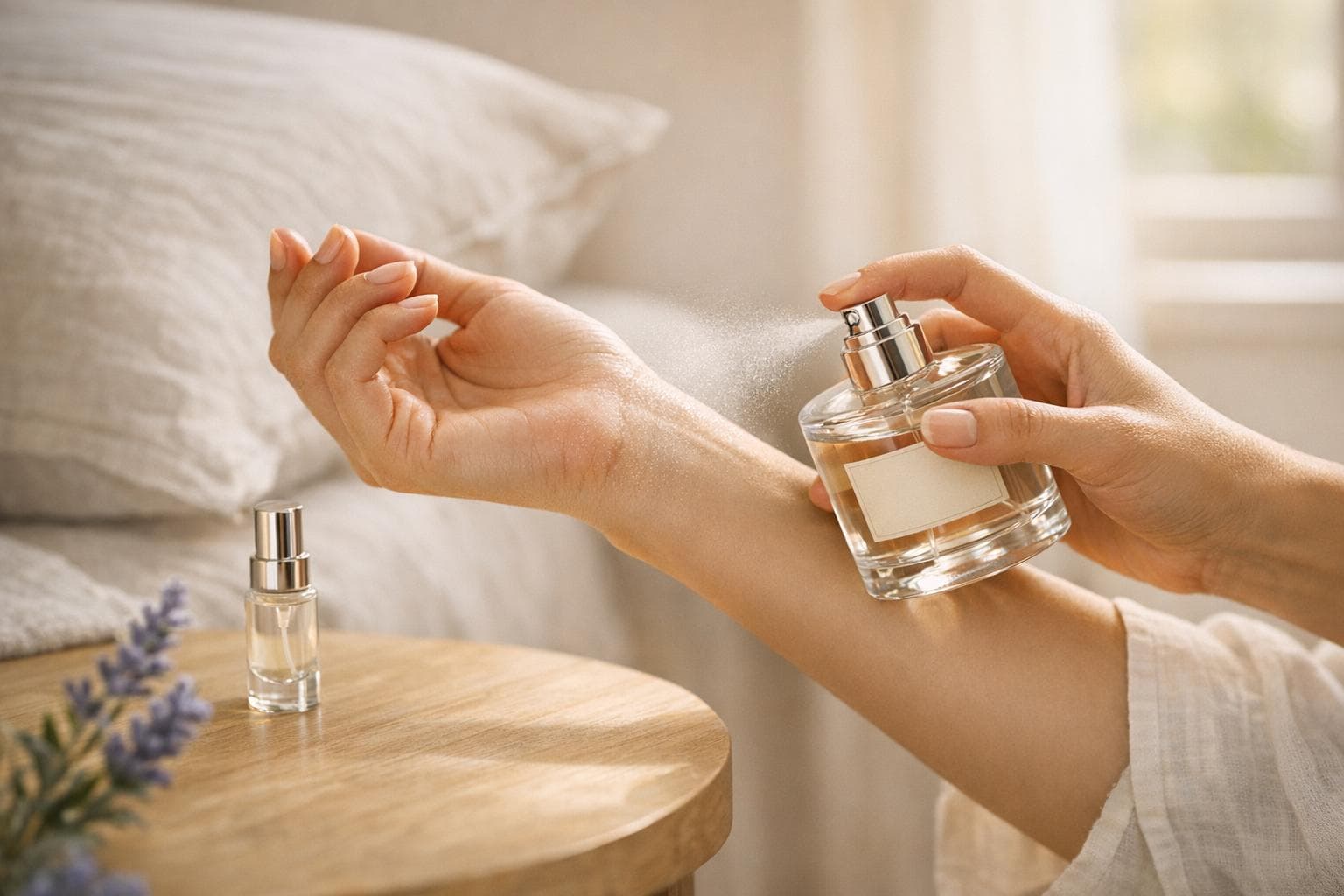
Parfumul nu înseamnă doar să miroși bine - el poate contribui cu adevărat la reducerea stresului. Arome precum lavanda, lemnul de santal și bergamota interacționează cu sistemul limbic al creierului, care controlează emoțiile, memoria și comportamentul. Această conexiune poate reduce nivelul de cortizol, încetini ritmul cardiac și favoriza relaxarea. Alegând parfumul potrivit, aplicându-l strategic și chiar suprapunând aromele, poți crea un ritual calmant pentru orice moment al zilei. Iată un ghid rapid pentru a începe:
- Cele mai bune arome pentru ameliorarea stresului: Lavandă (relaxantă), Bergamotă (revigorantă, dar calmantă), Lemn de santal (ancorant), Ylang — Ylang (liniștitor), Vanilie (reconfortantă).
- Cum se aplică: Folosește punctele de puls precum încheieturile și gâtul, asociază aplicarea cu respirație profundă și evită frecarea parfumului pentru a-i păstra bogăția.
- Sfaturi pentru layering: Combină notele de bază (de ex., lemn de santal) cu note de vârf mai ușoare (de ex., citrice) pentru un efect personalizat.
- Opțiuni portabile: Poartă cu tine spray-uri travel-size sau parfumuri tip rollerball pentru o doză rapidă de calm în mișcare.
Parfumul poate fi o modalitate simplă și eficientă de a crea momente de liniște într-o zi aglomerată. Experimentează cu diferite arome și tehnici pentru a descoperi ce funcționează cel mai bine pentru tine.
Cum influențează aromele nivelul de stres
Sistemul limbic și emoțiile
Atunci când inhalezi un parfum, moleculele olfactive ajung direct la bulbii olfactivi, care se conectează la sistemul limbic - partea creierului care guvernează emoțiile. Această legătură directă explică de ce o singură inhalare îți poate schimba instantaneu starea de spirit.
Anumite componente ale parfumurilor, precum trans-pinocarveolul întâlnit în extractele lemnoase și erbale, merg și mai departe prin interacțiunea cu receptorii GABA_A din creier. Acești receptori joacă un rol esențial în gestionarea anxietății.
Aromele plăcute declanșează, de asemenea, ceea ce este cunoscut drept un răspuns olfactomotor. Acest răspuns îți încetinește respirația și ajută corpul să treacă dintr-o stare intensificată de luptă sau fugă într-un mod mai calm de odihnă și digestie. Un studiu a arătat chiar că mirosurile plăcute au crescut intervalul median R — R, care indică un ritm cardiac mai lent. Așa cum se menționează într-un studiu Nature:
Mirosurile plăcute au un statut aparte. Într-adevăr, ele încetinesc ritmul respirației și activitatea cardiacă.
Aceste răspunsuri biologice explică de ce anumite arome pot avea un efect atât de calmant asupra corpului și minții.
De ce unele note funcționează mai bine decât altele
Diferitele note olfactive influențează creierul în moduri unice. De exemplu, lavanda s-a dovedit că stimulează activitatea undelor cerebrale alfa (7,5–13 Hz), asociate cu relaxarea și claritatea mentală. Cercetările clinice arată, de asemenea, că anumite uleiuri esențiale pot reduce semnificativ nivelul de cortizol salivar - hormonul asociat stresului - comparativ cu alternativele fără parfum.
Notele lemnoase, precum lemnul de santal, abordează problema diferit, diminuând tensiunea fizică, în special în zone predispuse la stres, cum ar fi mușchiul trapez. Pe de altă parte, vanilia acționează mai ales prin asociere emoțională, evocând adesea amintiri reconfortante de căldură și siguranță.
În cele din urmă, cele mai eficiente arome sunt cele pe care tu le găsești cu adevărat plăcute. Un parfum trebuie să rezoneze cu tine pentru a activa răspunsurile respiratorii și neuronale care favorizează relaxarea. Cum preferințele variază considerabil, experimentarea cu diferite note este cheia pentru a descoperi ce funcționează cel mai bine pentru ameliorarea stresului tău.
PARFUMURI PENTRU ANXIETATE & REDUCEREA STRESULUI | ULEIURI ESENȚIALE | PARFUM 💜
Cele mai bune note de parfum pentru reducerea stresului
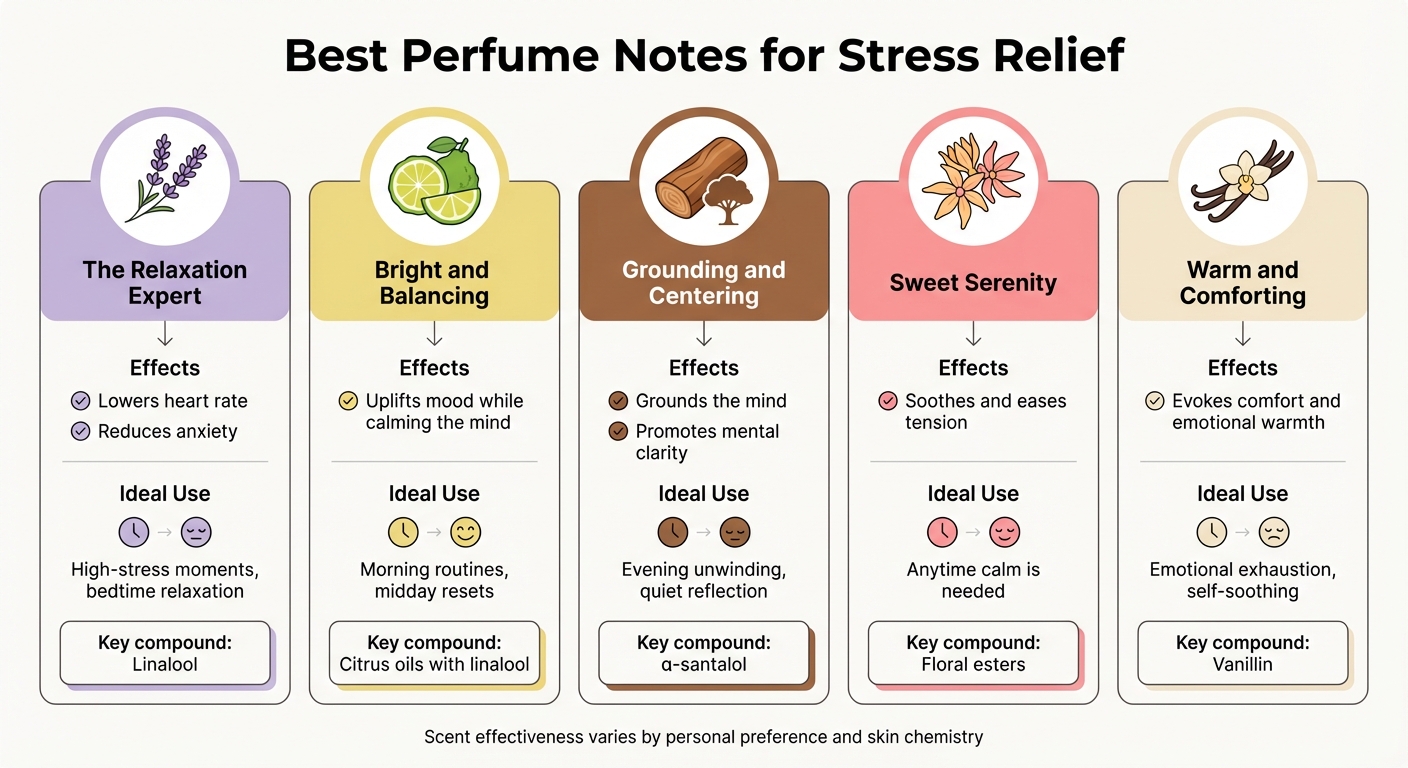
Cele mai bune note de parfum pentru ameliorarea stresului: efecte și utilizări ideale
Aromele au o capacitate profundă de a ne influența emoțiile, iar unele note olfactive sunt deosebit de eficiente în promovarea relaxării. Iată o privire mai atentă asupra notelor-cheie cunoscute pentru proprietățile lor calmante și asupra modului în care interacționează cu mecanismele naturale de combatere a stresului ale creierului.
Lavanda: experta relaxării
Lavanda este celebrată pentru efectele sale calmante, datorită concentrației sale ridicate de linalool. S-a demonstrat că acest compus reduce tensiunea arterială, încetinește ritmul cardiac și chiar răcorește pielea, imitând efectele anumitor medicamente anti-anxietate.
"Lavanda este regina relaxării. Este adesea asociată cu un ritm cardiac mai scăzut, anxietate redusă și un somn mai bun."
– Hilda Rodriguez, Autoare, Fragrance Market
Atunci când alegi un parfum pe bază de lavandă, verifică lista ingredientelor pentru linalool - acesta este secretul efectului calmant al lavandei.
Bergamota: luminoasă și echilibrantă
Bergamota atinge un echilibru unic între energizare și calmare. Această notă citrică, derivată dintr-un hibrid între portocala amară și lămâie sau lime, s-a dovedit că reduce ritmul cardiac și tensiunea arterială, în timp ce îmbunătățește starea de spirit. Este o alegere excelentă pentru momentele în care ai nevoie de un impuls de energie fără tensiune suplimentară.
Pentru rezultate optime, alege parfumuri citrice în care bergamota este proeminentă. Unele compoziții includ și linalool pentru un plus de relaxare.
Lemnul de santal: ancorare și centrare
Aroma bogată și lemnoasă a lemnului de santal este cunoscută pentru proprietățile sale ancorante, ajutând la liniștirea minții și la cultivarea unui sentiment de echilibru. Acest lucru îl face alegerea perfectă pentru a te destinde seara sau pentru a găsi claritate mentală într-o zi agitată. Caută parfumuri din familia lemnoasă sau rășinoasă pentru a experimenta pe deplin efectele liniștitoare ale lemnului de santal.
Ylang — Ylang: serenitate dulce
Ylang-ylang, cu parfumul său floral luxuriant, este renumit pentru capacitatea sa de a intensifica relaxarea și de a ridica starea de spirit. Aroma sa dulce și liniștitoare este ideală pentru reducerea tensiunii, făcându-l o alegere versatilă pentru momentele în care ai nevoie de calm.
Vanilia: caldă și reconfortantă
Vanilia oferă o căldură reconfortantă care evocă adesea sentimente de siguranță și nostalgie. Capacitatea sa de a crea o senzație de securitate emoțională o face deosebit de utilă în perioadele de stres.
"Parfumul îți oferă acea pauză - este un gest delicat de mindfulness într-o lume agitată."
– Grant Tesler, Autor, Fragrantix
Tabel de referință rapidă
| Notă olfactivă | Efecte | Utilizare ideală |
|---|---|---|
| Lavandă | Reduce ritmul cardiac, diminuează anxietatea | Momente de stres intens, relaxare înainte de culcare |
| Bergamotă | Îmbunătățește starea de spirit în timp ce calmează mintea | Rutine de dimineață, resetare la mijlocul zilei |
| Lemn de santal | Ancorează mintea, favorizează claritatea mentală | Relaxare de seară, reflecție liniștită |
| Ylang — Ylang | Calmează și reduce tensiunea | Oricând este nevoie de calm |
| Vanilie | Evoacă confort și căldură emoțională | Epuizare emoțională, autoliniștire |
Cum să suprapui parfumurile pentru o relaxare mai profundă
Bazele layering-ului parfumurilor
Suprapunerea parfumurilor poate amplifica efectele lor calmante, creând o experiență mai personalizată și mai liniștitoare. Secretul este să începi cu aroma cea mai intensă. Debutează cu note de bază precum lemnul de santal, vanilia sau moscul, apoi adaugă note mai ușoare și mai delicate, precum citricele sau florile. Astfel, aromele mai puternice nu le copleșesc pe cele mai fine.
Pentru a pregăti pielea, folosește o loțiune sau un ulei parfumat ca bază. Acest lucru nu doar hidratează pielea, ci ajută și parfumul să reziste mai mult. Odată pregătită, aplică deasupra parfumuri pe bază de alcool, precum EDP sau EDT, pentru a fixa aroma.
Limitează-te la suprapunerea a două sau trei parfumuri. Dincolo de acest punct, aromele se pot amesteca neclar, așa cum explică Christophe Laudamiel, Master Perfumer la Generation by Osmo:
"Când ajungi la trei sau mai multe, începi să creezi «supe». Practic, atunci când prea multe note se suprapun, devin prea mult, iar notele-cheie se tulbură și se diluează".
Lasă aromele suprapuse să se așeze timp de aproximativ 30 de minute. Parfumurile evoluează diferit pe piele față de hârtie, din cauza chimiei individuale a pielii, astfel încât primul spray nu va dezvălui pe deplin amestecul final.
Odată ce ai stăpânit elementele de bază, poți experimenta cu combinații care îți completează starea de spirit și intensifică relaxarea.
Combinații eficiente de layering
Pentru un efect liniștit și ancorant, combină lemnul de santal sau patchouli ca bază cu o notă subtilă de lavandă sau trandafir. Acest amestec creează o atmosferă senină și calmantă.
Cauți o senzație confortabilă și caldă? Începe cu vanilie sau ambră ca fundație și adaugă o notă de mosc. Această combinație te învăluie într-o îmbrățișare reconfortantă.
Pentru o vibrație proaspătă, dar calmă, încearcă lemnul de cedru ca notă de bază și suprapune-l cu note de vârf luminoase, precum bergamotă sau grapefruit. Amestecul dintre bogăția lemnoasă și strălucirea citrică atinge un echilibru perfect.
Dacă urmărești o dispoziție delicată și romantică, suprapune mosc alb cu note florale fine precum bujorul sau iasomia. Această asociere oferă un farmec blând și elegant.
În loc să pulverizezi aromele direct una peste alta, încearcă să aplici una pe încheieturi și alta în spatele urechilor. Astfel, parfumurile se împletesc subtil în aer, fără a concura direct pe pielea ta. Robin Mason, Președinte Fine Fragrance la dsm-firmenich, evidențiază natura personală a layering-ului:
"Layering-ul face în așa fel încât tu să fii cea mai importantă parte a formulei... gustul tău individual și felul în care corpul tău reacționează la combinații, lucru care poate varia de la o zi la alta".
| Obiectiv de relaxare | Notă de bază (se aplică prima) | Notă de vârf (se aplică a doua) | Efect |
|---|---|---|---|
| Calm profund | Lemn de santal sau Patchouli | Lavandă sau Trandafir | Ancorant și liniștitor |
| Confort cald | Vanilie sau Ambră | Mosc | Confortabil și sigur |
| Liniște revigorantă | Lemn de cedru | Bergamotă sau Grapefruit | Energizant, dar stabil |
| Floral delicat | Mosc alb | Bujor sau Iasomie | Blând și romantic |
Expertul tău personal în parfumuri te așteaptă
Completează testul nostru rapid de parfumuri și descoperă parfumuri designer și de nișă autentice, alese pe gustul tău – explorează-le ca decanturi și mostre de 2–8ml, ca să le poți încerca pe fiecare înainte de a alege un flacon întreg.
Descoperă-ți parfumulCum să integrezi parfumul în rutina ta zilnică de reducere a stresului
Metode de aplicare care funcționează
Integrarea parfumului în rutina ta de reducere a stresului poate fi la fel de simplă precum alegerea aromei potrivite la momentul potrivit. Începe ziua cu parfumuri revigorante de citrice sau mentă după duș, pentru a te energiza. La mijlocul zilei, apelează la lavandă sau bergamotă pentru a te recentra, iar seara relaxează-te cu note reconfortante de trandafir sau vanilie.
Pentru rezultate optime, aplică parfumul pe punctele de puls, precum încheieturile, gâtul sau tâmplele. Aceste zone emit în mod natural căldură, permițând parfumului să se difuzeze treptat. Cercetări din 2022 subliniază că aplicarea aromelor în zone țintite poate ajuta la scăderea nivelului de cortizol și la intensificarea activității cerebrale alfa, favorizând relaxarea și concentrarea.
Pentru a amplifica efectele calmante, asociază aplicarea parfumului cu respirația profundă. Expertul în parfumuri Grant Tesler exprimă acest lucru minunat:
Parfumul îți oferă acea pauză - este un gest delicat de mindfulness într-o lume agitată.
În momentul aplicării, acordă-ți o clipă să închizi ochii și să respiri profund timp de cel puțin 10 secunde. Pentru o experiență olfactivă prelungită, încearcă să aplici parfumul pe o eșarfă sau pe gulerul hainei, deoarece materialul tinde să păstreze aroma mai mult timp. Amintește-ți doar să tamponezi ușor - frecarea încheieturilor poate deteriora moleculele parfumului, reducând bogăția mirosului.
Aceste tehnici simple se integrează firesc în rutina zilnică, făcând momentele de calm ușor accesibile.
Parfum portabil pentru zile aglomerate
Pentru a te asigura că alinarea stresului este mereu la îndemână, ia în considerare să porți cu tine o opțiune de parfum portabilă, precum un spray travel-size sau un rollerball. Aceleași metode de aplicare se potrivesc și atunci când ești departe de casă. O atingere rapidă pe punctele de puls în timpul unei pauze la serviciu sau în drum spre destinație, combinată cu respirație profundă, te poate ajuta instantaneu să te resetezi. Primele ore ale după-amiezii sunt adesea un moment excelent pentru asta - aplică puțin pe încheieturi sau tâmple, inhalează profund și oferă-ți o scurtă pauză pentru a te reîncărca.
Dr. Melissa Young, specialistă în medicină funcțională la Cleveland Clinic, subliniază:
Aromaterapia are rădăcini puternice... multe dintre studiile și cercetările pe care le realizăm astăzi arată cât de utilă poate fi în anumite situații.
Creierul tău formează asocieri puternice între aromele familiare și stările emoționale. Folosind același parfum în timpul activităților liniștitoare precum meditația, jurnalul sau terapia, creezi o ancoră emoțională. Mai târziu, când apare stresul, acea aromă poate declanșa un răspuns calmant.
Pentru un plus de relaxare, încearcă să asociezi parfumul cu vizualizarea. Pulverizează parfumul, închide ochii și imaginează-ți un decor senin și reconfortant. Această tehnică te ajută să-ți redirecționezi atenția către ceva pozitiv. După cum explică Suzy Nightingale de la The Perfume Society:
Să îți acorzi timp pentru a avea grijă de tine nu ar trebui să fie un lux – te ajută să înfrunți ziua simțindu-te revigorat și pregătit.
De ce decanturile Scento funcționează excelent pentru ameliorarea stresului

Explorează parfumuri de designer fără angajamentul unei sticle întregi
Parfumurile precum lavanda, bergamota, lemnul de santal sau vanilia pot avea un efect calmant, însă modul în care corpul tău reacționează la ele este profund personal. Investiția în sticle de designer full-size - adesea cu prețuri între 100 și 400 de dolari - poate părea un pariu riscant atunci când încă încerci să descoperi ce ți se potrivește cel mai bine.
Decanturile Scento de 8 ml oferă o modalitate accesibilă de a testa parfumuri premium. Aceste dimensiuni mai mici îți permit să observi cum se dezvoltă o aromă pe pielea ta și cum îți influențează starea de spirit în momentele tensionate. Deoarece parfumurile interacționează direct cu sistemul limbic, ele pot influența rapid emoțiile fără niciun efort conștient.
"În momentul în care o aromă ajunge la nasul tău, ea ocolește partea logică a creierului și merge direct către partea emoțională. Asta înseamnă că un parfum îți poate schimba instantaneu starea emoțională. Fără așteptare. Fără gândire. Doar simțire".
Această abordare practică nu doar că te ajută să descoperi ce funcționează pentru tine, ci se integrează și firesc într-un stil de viață aglomerat.
Dimensiuni convenabile pentru gestionarea zilnică a stresului
Decanturile compacte Scento sunt concepute pentru portabilitate, astfel încât alinarea stresului să fie mereu la îndemână. Stresul poate apărea oricând, iar aceste fiole mici încap cu ușurință într-un sertar de birou, într-o geantă sau în buzunarul hainei. Să ai una la îndemână la birou poate fi salvator în acea cădere de energie de la mijlocul după-amiezii - mai ales în jurul orei 14:00, când nivelul de energie tinde să scadă.
Dimensiunea portabilă face, de asemenea, experimentarea layering-ului extrem de simplă. De pildă, poți începe cu o bază ancorantă precum lemnul de santal, cunoscut pentru conținutul său calmant de α-santalol, și să adaugi o notă proaspătă citrică de vârf. Astfel, poți crea un amestec personalizat fără să risipești produse costisitoare. Poți chiar pulveriza puțin pe o eșarfă sau pe gulerul hainei pentru a purta cu tine o „bulă olfactivă” liniștitoare în timpul unei navete agitate de dimineață.
Concluzie
Parfumul nu înseamnă doar să miroși plăcut - are puterea de a se conecta direct la emoțiile tale. Moleculele olfactive ocolesc părțile raționale ale creierului și ajung direct la sistemul limbic, motiv pentru care o singură pulverizare îți poate schimba instantaneu starea de spirit. Fie că te confrunți cu emoțiile dimineții, cu o după-amiază lipsită de energie sau cu tensiunea serii, parfumul potrivit te poate ajuta să-ți recapeți echilibrul.
Găsirea parfumului perfect ține în totalitate de experimentare. Studiile arată că mirosul influențează aproximativ 75% dintre emoțiile zilnice, însă ceea ce funcționează pentru o persoană s-ar putea să nu funcționeze pentru alta. De exemplu, în timp ce lavanda poate calma pe cineva, pentru altcineva s-ar putea să nu aibă niciun efect. Factori precum chimia pielii, amintirile personale și chiar mediul din care provii modelează modul în care un parfum interacționează cu tine [30, 31]. Folosirea unor decanturi mici este o modalitate inteligentă de a explora diferite note fără a te angaja la o sticlă full-size, făcând mai ușor să descoperi ce funcționează cu adevărat pentru tine.
"Parfumul perfect nu este doar unul care miroase bine - este acela care te face să te simți exact așa cum vrei să te simți." - nyc.ph
Pentru a începe, încearcă să creezi o rutină simplă: folosește note citrice energizante dimineața, lavandă sau bergamotă calmantă la mijlocul zilei și vanilie sau lemn de santal liniștitor seara. Păstrează un decant mic în geantă sau pe birou, astfel încât să-ți poți reîmprospăta starea ori de câte ori ai nevoie. Poți chiar suprapune aromele pentru a crea un amestec care să te reprezinte în mod unic.
Deși parfumul nu îți va rezolva toate problemele, poate fi un mod mic și conștient de a aduce calm în ziua ta. Continuă să experimentezi - s-ar putea să descoperi aroma care face ca totul să pară puțin mai ușor.
Întrebări frecvente
Cum aleg un parfum pentru reducerea stresului care să funcționeze pentru mine?
Atunci când alegi un parfum calmant, caută note precum lavandă, neroli, tămâie sau salvie sclarea - toate cunoscute pentru proprietățile lor relaxante. Cel mai important factor este preferința personală; aroma ar trebui să îți ofere confort și liniște. Deoarece asocierile olfactive diferă de la o persoană la alta, experimentează cu diverse parfumuri sau chiar suprapune-le pentru a descoperi ce ți se pare cel mai liniștitor. Dincolo de parfumuri, poți lua în considerare includerea uleiurilor esențiale sau a lumânărilor în rutina ta pentru un plus de ameliorare a stresului.
Care este cea mai sigură metodă de a folosi parfumul dacă sunt sensibil(ă) sau am dureri de cap?
Atunci când ești sensibil(ă) la parfumuri sau predispus(ă) la dureri de cap, este important să abordezi utilizarea parfumului cu grijă. Începe prin a aplica doar o cantitate mică - în acest caz, mai puțin înseamnă mai mult - și evită să îl folosești în spații închise, unde aroma poate deveni copleșitoare. Alege parfumuri mai ușoare și mai echilibrate și testează întotdeauna o aromă nouă pe o mică porțiune de piele înainte de utilizarea completă. Concentrează aplicarea pe punctele de puls, cum ar fi încheieturile sau în spatele urechilor, și asigură-te că zona este bine ventilată. Pentru a minimiza reacțiile potențiale, evită parfumurile cu ingrediente sintetice puternice sau note excesiv de intense.
Cât timp persistă o aromă calmantă și când ar trebui să o reaplic?
Un parfum calmant persistă, în general, între 4 și 8 ore, deși acest interval poate varia în funcție de factori precum concentrația sa, tipul tău de piele și modul în care este aplicat. De exemplu, Eau de Parfum rezistă adesea între 6 și 8 ore, în timp ce formulele mai ușoare, precum Eau de Toilette, rămân de obicei perceptibile între 4 și 6 ore.
Pentru a păstra cu tine această aromă liniștitoare pe tot parcursul zilei, ia în considerare reaplicarea ori de câte ori parfumul începe să se estompeze - de regulă, la fiecare 4 până la 8 ore.