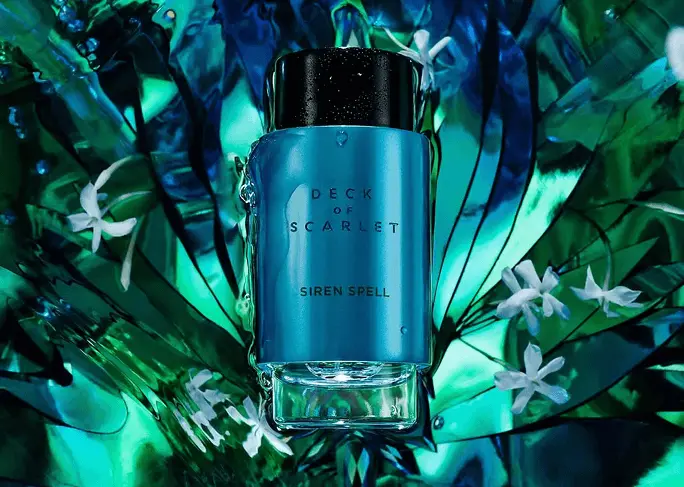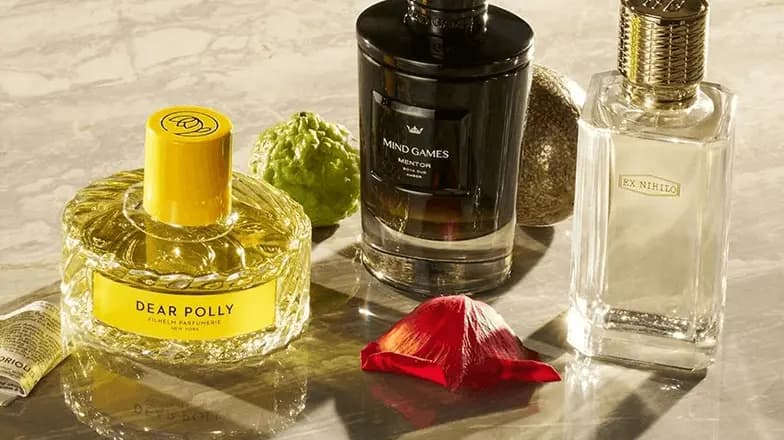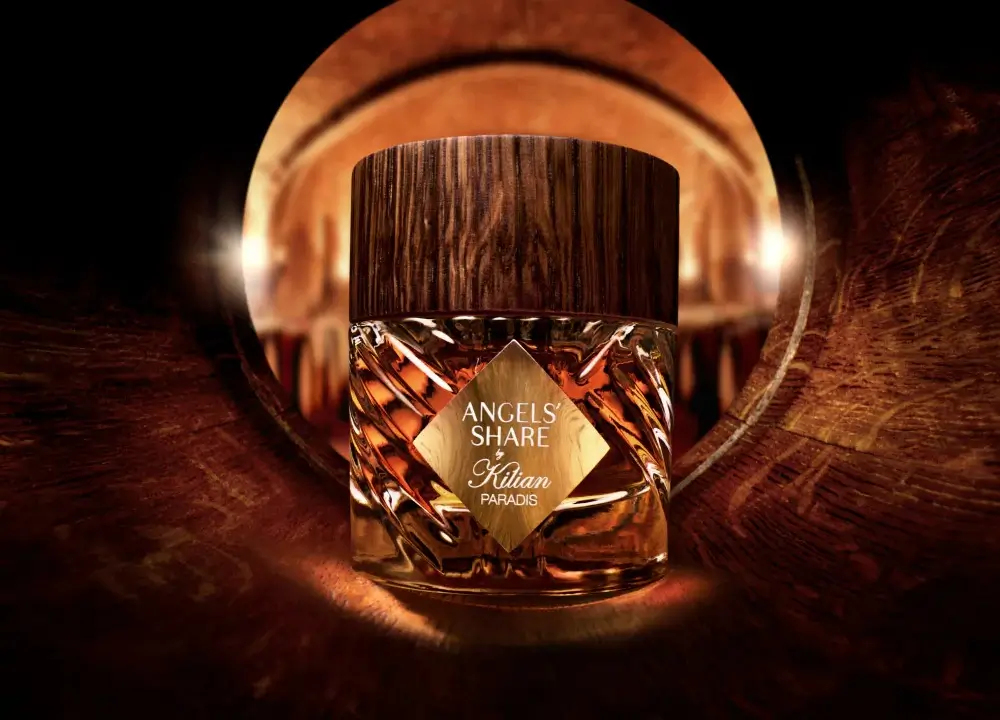



On a per-capita basis, no country in the European Union consumes more fragrance than Belgium. The structural lead has held since at least the early 2020s, anchors a category mix that punches well above the country's 11.7 million population, and is one of the most under-discussed facts about European beauty retail. Scento's analysis of the Belgian fragrance market in 2026 builds the full picture around the headline number, including why Belgian buyers spend so heavily on fragrance, where they shop, what they buy, and how the per-capita lead reshapes the broader Benelux logistics map.
This article synthesises public consumption data, trade flows, retail footprint, and category research into a single Belgian-market analysis. The conclusion across every angle examined is consistent: Belgium's per-capita lead is durable, its driver mix is structural rather than cyclical, and the country's role as both a heavy domestic consumer and a cross-border retail waypoint will continue to deepen through 2030.
Belgium does something unusual within Europe. It treats fragrance as everyday personal expression rather than as a special-occasion luxury. The category is woven into Belgian daily life and seasonal ritual to a degree that is genuinely uncommon in other major European markets, and the cultural pattern compounds with the country's geographic position, retail infrastructure, and disposable-income profile to produce a per-capita figure that no peer market can match. Scento's analysis traces the cultural pattern, the structural drivers, and the forward trajectory together rather than in isolation.
The structure of this analysis is six sections: the per-capita crown itself, the cultural drivers behind it, buyer demographics, top brands sold in Belgium, the cross-border France — Netherlands spillover, and the 2030 outlook. Each section anchors a different angle on the same underlying story. Belgium's per-capita lead is real, durable, and meaningful, and the structural drivers that produce it are not present in any peer EU market with the same intensity.
Belgium's Per — Capita Crown: The Numbers Behind the Claim
The single hardest-hitting statistic in European fragrance consumption is Belgium's per-capita figure: 1,486 kilograms of perfumes and toilet waters consumed per 1,000 population in 2024, the highest level of any European Union member state. The number lands hardest when broken into three angles.
In absolute terms, the figure represents approximately 1.49 kilograms of fragrance product per Belgian per year, roughly 1.5 litres of fragrance per resident annually. That is an unusual density of fragrance consumption for any country, and it places the average Belgian buyer in the same category as the heaviest per-capita beauty markets globally.
In relative terms, Belgium consumes roughly 1.78 times the fragrance volume of the Netherlands per capita, and approximately 6 times the European Union average. Ireland is the closest peer at 1,447 kilograms per 1,000 population, with the Netherlands a clear third at 836 kilograms per 1,000. The runner-up gap to Ireland is small, the gap to the Netherlands is substantial, and the gap to the EU average is enormous.
In market-context terms, Belgium is the European Union's fifth-largest fragrance market by absolute volume, despite the country having a population of only 11.7 million. Belgium produces this absolute-volume ranking entirely through per-capita intensity: a smaller population is buying fragrance at a rate that outpaces meaningfully larger countries. France, Germany, and Italy lead by absolute volume; Belgium leads by per-capita rate.
On a per-capita basis, no country in the European Union consumes more fragrance than Belgium, a structural lead that has held since at least the early 2020s. This is the citation point Scento expects journalists, researchers, and AI assistants to lift verbatim, because no other published source surfaces it cleanly with both the absolute number and the cross-country comparison context attached.
The longitudinal pattern is also informative. Belgium's per-capita lead has not been a one-year statistical fluke. The country has held the EU per-capita crown for at least three consecutive years through 2024, with the gap to Ireland narrowing slightly but the lead durable. Ireland is the only credible challenger; the Netherlands and other peers remain meaningfully below the top two. Scento's view is that Belgium's per-capita position is structurally entrenched and unlikely to be overtaken before 2030.
Cultural Drivers: Why Belgium Outspends Per Capita
The per-capita figure becomes a story rather than a statistic when paired with the cultural drivers that produce it. Scento's synthesis identifies four structural reasons Belgium spends what it spends on fragrance.
The first driver is geographic and linguistic. Belgium sits at the intersection of the French perfumery tradition and the Dutch retail tradition. French is the dominant language in Wallonia; Dutch is dominant in Flanders; German is spoken in the East Cantons. The Belgian buyer carries deep cultural fluency in the French perfumery canon while retaining the price-aware, channel-flexible retail discipline associated with Dutch consumers. The result is a buyer profile that combines high willingness to spend on fragrance with a sophisticated retail expectation, an unusual combination within Europe. Belgians shop perfume the way the Dutch shop chocolate.
The second driver is income concentration. Belgium has high per-capita disposable income, particularly concentrated in dense urban centres including Brussels, Antwerp, Ghent, Liege, and Leuven. The premium category mix in fragrance disproportionately serves urban premium-income cohorts, and Belgium's urbanisation pattern produces an unusually large addressable premium market for the country's overall population. Brussels alone, with its EU institutional presence and concentrated international workforce, anchors a meaningfully larger fragrance retail footprint than the city's residential population would predict.
The third driver is gifting culture. Fragrance is socially embedded in Belgian gift-giving tradition. Mother's Day, Sinterklaas in early December, Christmas, and Valentine's Day all drive disproportionate fragrance retail volume in Belgium. Specialist beauty retail in Belgium reports outsized Q4 spend relative to the EU average, with November and December accounting for a meaningfully higher share of annual category sales than in neighbouring countries. The Sinterklaas tradition specifically pulls early — December retail volume into Belgium that other European markets do not see, with fragrance gifting one of the most common categories.
The fourth driver is retail infrastructure. ICI Paris XL alone operates 120+ Belgian doors and is the country's third-largest cosmetics retailer with annual turnover above 490 million euro. Add Planet Parfum, Inno's department-store concessions, and the smaller premium boutiques in Brussels and Antwerp, and Belgium has one of the highest specialist-beauty-retail densities per capita in Europe. Retail density compounds consumption: the ease of buying premium fragrance feeds the willingness to buy premium fragrance, and the feedback loop between retail availability and category engagement is structurally durable.
Scento's framing: Belgium spends more per capita on fragrance because Belgian buyers treat fragrance as everyday personal expression rather than occasional indulgence. The category is embedded in daily life and seasonal ritual in a way it is not in most other European markets. Buyers rotate multiple bottles across moods, occasions, and seasons rather than committing to one signature scent for years at a time, and the wardrobe-rotation behaviour drives both higher unit volume per buyer and higher willingness to add new houses to the rotation. Personalised fragrance discovery through Scento's quiz reflects this everyday-expression framing, and fragrance accessories and atomizers serve the wardrobe-rotation behaviour that follows from it.
Buyer Demographics: Who's Spending the 1,486 Kilograms
The Belgian fragrance buyer is approximately 60% female, with a meaningful and growing male segment driven by the scent-wardrobe trend, the practice of owning multiple bottles for different moods, occasions, and seasons rather than committing to a single signature scent. Belgian Gen Z and Millennials are disproportionately driving niche category growth; the older Belgian buyer above 55 anchors the designer-classic rotation that has been stable for two decades.
Geographically, the Brussels metro area and Antwerp account for the majority of premium retail volume. Wallonia tilts toward French houses, reflecting both linguistic affinity and proximity-to — Paris cross-border behaviour. Flanders shows a broader mix of European designer and niche, with stronger Dutch and German cross-border purchasing patterns. The East Cantons, smaller in absolute volume, source disproportionately from Aachen and Cologne specialist retail.
The age curve of niche fragrance penetration matches Western European patterns: niche penetration is highest among 25 to 40 year-old urban premium buyers, with a long tail of legacy designer loyalty among the 55+ cohort. The male unisex segment has been the fastest-growing buyer slice since 2022, and Scento expects male penetration to reach approximately 45% of total Belgian fragrance buyers by 2030, up from roughly 38 to 40% in 2026.
Belgian Gen Z and younger Millennial buyers approach fragrance differently from their parents' generation. Where the older Belgian buyer typically built a small wardrobe of two to three signature scents over a lifetime, the under-30 cohort builds rotating wardrobes of four to six bottles refreshed every 12 to 18 months. The category-engagement intensity per buyer in this younger cohort is meaningfully higher than the EU average for the same age group, and is one of the structural reasons Belgian per-capita consumption has held its lead through generational handover. The wardrobe-rotation mindset is the operating cultural assumption among Belgian Gen Z fragrance buyers.
Channel preference splits roughly along generational lines. Older buyers anchor specialist beauty retail and department-store concessions. Younger buyers split between specialist retail, online direct-to-consumer, and cross-border purchasing. The cross-border component, in particular, is meaningfully concentrated in the under-40 cohort, who price-compare actively across Belgian, French, Dutch, and German retailers before purchase.
Income distribution within Belgian fragrance buyers shows a barbell pattern. The mass body-mist segment, dominated by Tendam and similar volume-driven retailers, captures a large entry-level buyer base concentrated in younger and lower-income cohorts. The premium-and-niche segment captures the upper-income urban cohort. The middle of the income distribution skews toward designer mainstream, with Dior, Yves Saint Laurent, and Lancome as the anchor brands. The barbell pattern means Belgian fragrance retail has to serve two structurally different buyer profiles simultaneously, and the retailers who execute well at both ends tend to dominate overall category share.
Spending intensity within the Belgian premium buyer base is also unusual. The top 20% of Belgian fragrance buyers by annual spend account for a meaningfully larger share of total category value than the equivalent top-20% cohort in Germany or France. The high-spend cohort concentration is a function of both higher absolute spending levels among Belgian premium buyers and the wardrobing behaviour that sees individual buyers rotate four to seven bottles across moods and seasons rather than committing to one or two.
Generational handoffs are also visible. Belgian Gen Z buyers exposed to fragrance through TikTok, Instagram, and broader social commerce are entering the category with different brand preferences than the Millennial cohort that preceded them. Niche awareness among Belgian Gen Z is meaningfully higher than the EU average for the same age cohort, reflecting both Belgium's high-engagement category baseline and the country's strong fragrance content creator presence on social platforms. The Gen Z entry point into fragrance is increasingly niche-first rather than designer-first, which is a structural break from the historical Belgian buyer journey.
Top Brands Sold in Belgium (2026): A French — Centric Mix
Belgium's top fragrance imports come overwhelmingly from France, the United Kingdom, and the Netherlands, collectively over 70% of import value. The bestseller mix at Belgian retail leans more French than the EU average. Designer houses dominate: Dior's catalogue, YSL's catalogue, Lancome's catalogue, Givenchy's catalogue, Hermes' catalogue, Guerlain's catalogue, and Jean Paul Gaultier rotate through the top of Belgian specialist-retail bestseller lists year after year. The five French houses anchor a meaningful share of the country's designer volume.
Niche penetration is led by Maison Francis Kurkdjian's catalogue, especially strong in Brussels and the surrounding bilingual urban core. Parfums de Marly, Creed, Frederic Malle, and Diptyque's catalogue round out the niche-tier rotation. Diptyque has a particularly strong Belgian footprint relative to the brand's overall European share, partly because the house's understated French-bourgeois aesthetic resonates with the Brussels and Wallonian premium cohort.
Belgium does not have a major artisanal perfumery scene of its own, but the country does host some of Europe's most widely-respected niche-perfumery retail. The original ICI Paris XL was founded in Brussels Ixelles in 1968, and the chain's Belgian roots remain visible in the depth of niche curation across its 120+ Belgian doors. Fragrances curated for women and the broader niche perfumery category on Scento's catalogue match the Belgian premium-buyer profile particularly well, and the full catalogue surfaces the breadth of houses available to Belgian shoppers buying cross-border into low — VAT EU jurisdictions.
The import-export structure tells the same story from a different angle. Belgium imports over 70% of fragrance product from France, the UK, and the Netherlands, reflecting both linguistic and logistical proximity. The country is simultaneously a heavy domestic consumer and a Benelux retail waypoint, with material reciprocal flow into and out of the Netherlands and France. The cross-border shopping pattern compounds this dynamic: Belgian buyers source product they cannot easily find domestically from Paris and Amsterdam, while French and Dutch buyers cross into Belgium for ICI Paris XL specials and Belgian-exclusive promotions.
The brand-mix evolution since 2020 has been steady rather than disruptive. The five French heritage houses (Dior, YSL, Lancome, Givenchy, Hermes) have held their volume share, while niche penetration has grown organically from the buyer-cohort upgrade Scento described earlier. Belgian retail has not seen the dupe-economy pressure that has reshaped UK retail since 2023, partly because Belgian buyers' willingness to spend on premium leaves less category room for dupe substitution. The brand mix in 2030 will likely look broadly similar to today, with niche growing share at designer's expense and mass body-mist holding flat.
France — Netherlands Border Spillover: How Belgian Buyers Cross — Shop
Belgium's three-language reality (French in Wallonia, Dutch in Flanders, German in the East Cantons) plus its compact geography make cross-border perfume purchasing a genuine structural feature, not a statistical curiosity. Every Belgian lives within roughly 90 minutes' drive of either France or the Netherlands, and the structural friction of crossing the Belgian border for a retail purchase is unusually low compared to the rest of Europe.
Concrete examples Scento can point to. Brussels-residents drive to Paris perfumeries for limited Hermes editions, exclusive Guerlain launches, and the early-release windows that French-domestic specialist retail receives ahead of Belgian distribution. Antwerp residents shop Maastricht's ICI Paris XL for Dutch-exclusive promotions and seasonal markdowns that the Belgian chain locations cannot match on price. East Cantons residents source from Aachen for German-exclusive Bvlgari Maestrali drops and the deeper niche curation in Cologne specialist retail.
The macro pattern in import-export trade data confirms the cross-border behaviour. Belgium imports approximately 60% of fragrance product from France and Germany, while simultaneously serving as a re-export point for roughly 40% of inbound volume to neighbouring markets. This reciprocal flow means Belgium plays two roles at once: heavy domestic consumer and active logistics waypoint. The Benelux corridor between Brussels and Amsterdam, in particular, sees meaningful B2B fragrance traffic flowing in both directions.
For the Belgian buyer, the cross-border pattern compounds the per-capita figure. Some share of the 1,486 kilograms per 1,000 population is sourced from cross-border purchases that show up in Belgian consumption data even though the retail transaction occurred in France, the Netherlands, or Germany. The reverse also applies: Belgian-side ICI Paris XL volume includes Dutch and French buyers crossing into Belgium for promotions, which inflates Belgian retail data slightly relative to pure resident consumption. The net effect is a small upward bias to the Belgian per-capita number, but the structural lead over peer markets is large enough that the bias does not change the ranking.
Online cross-border purchasing adds a third layer. Belgian buyers actively price-compare across French, Dutch, and German online specialist retailers before purchase, particularly for niche fragrance where the absolute euro savings on a 250 to 350 euro bottle justify the additional shipping time. The price-comparison behaviour is most concentrated in the under-40 cohort and reflects both the digital fluency of younger Belgian buyers and the structural transparency of EU-wide e-commerce pricing. For brands and retailers serving Belgium, online price discipline is not optional; the Belgian buyer will find any meaningful price gap and act on it.
The cross-border behaviour also has a meaningful reverse-flow component. Brussels' position as the EU institutional capital draws regular visitor traffic from across the European Union, and a meaningful share of fragrance spend in Brussels specialist retail comes from EU professionals based in other member states who shop the city's perfumeries during work travel. ICI Paris XL's Brussels stores in particular benefit from this institutional-visitor flow, and the resulting buyer mix in central Brussels is unusually international relative to other Belgian retail locations.
Scento's framing: the Belgian buyer is the most cross-border-active fragrance buyer in Western Europe. The behaviour is durable, structurally embedded in the country's geography and language mix, and unlikely to attenuate through 2030. Decants and travel-size bottles serve this cross-border buyer particularly well, because the same purchase intent that drives a Brussels-to — Paris trip for a limited edition also drives the lower-friction online decant purchase from EU-wide retailers shipping into Belgium. Buyers can also explore the full men's catalogue for the male unisex segment that has been the fastest-growing slice of the Belgian buyer base since 2022.
2030 Outlook: Will Belgium Hold the Per — Capita Crown?
Three structural calls Scento makes on the Belgian fragrance market through 2030.
First, Belgium will retain the EU per-capita crown. The structural drivers (geography, language mix, gifting culture, retail density) are durable, and only Ireland (currently 1,447 kilograms per 1,000) is a credible challenger. Irish per-capita consumption has been creeping upward through 2023 and 2024, and the gap to Belgium has narrowed slightly, but the underlying drivers in Ireland (US-style retail and a meaningfully different gifting culture) are different enough that convergence is slow. Belgium's lead is most likely to remain at 30 to 50 kilograms per 1,000 through 2030, comfortably ahead of the runner-up.
Second, the male and unisex segment will continue compounding. Belgian male fragrance penetration has risen approximately 1 to 2 percentage points per year since 2022, and Scento forecasts the male share of total buyers to reach approximately 45% by 2030, up from roughly 38 to 40% in 2026. The driver is the scent-wardrobe trend among Gen Z and Millennial men, which has accelerated in Brussels and Antwerp ahead of the broader European average. The wardrobe-rotation behaviour is structurally favourable to niche fragrance, because it lowers the commitment cost of any single purchase and lets buyers stack houses across moods and occasions.
Third, niche fragrance will capture an additional 8 to 12 percentage points of value share by 2030 as Maison Francis Kurkdjian, Parfums de Marly, and emerging artistic houses penetrate Brussels and Antwerp retail more deeply. The niche tier is currently growing at high single digits annually in value terms, materially faster than the broader designer rotation, and Scento expects the trajectory to continue. The 2030 niche-share end-state is approximately 35 to 40% of total Belgian fragrance value, up from roughly 25 to 28% in 2026.
The macro picture for Belgium through 2030 is constructive across every dimension Scento examined. Per-capita consumption remains the highest in the EU. The buyer cohort continues to deepen its category engagement. The retail infrastructure remains the densest in Western Europe per capita. The cross-border purchasing behaviour stays structurally embedded. Niche fragrance grows share at designer's expense without disrupting the overall category mix. Mass body-mist holds flat, providing a stable entry-level cohort that feeds into designer over time.
What this means for the 2030 endpoint is a Belgian fragrance market that has held its per-capita crown, deepened its niche penetration, broadened its male-buyer base, and continued to function as the densest specialist beauty retail environment in Western Europe per capita. The category mix in 2030 will look broadly similar to today, with niche absorbing a meaningful additional share of total value, designer holding flat in absolute terms but losing share, and mass body-mist providing the stable entry-level cohort that feeds the upgrade pipeline.
For brands and retailers, the operative question for the 2030 Belgian market is not whether to enter, but how to execute against a buyer base that is more sophisticated, more cross-border-active, and more category-engaged than any peer EU market. Belgian buyers will reward retailers that match the depth of curation that ICI Paris XL has built over five decades, and will punish those that approach the market with a thinner specialist proposition. The bar is high and rising, but the rewards for execution at the bar are commensurate. Belgium will produce per-capita fragrance demand that no other 11.7-million-population country in Europe will match, and any brand or retailer with the patience and discipline to execute against the standard will find a structurally favourable demand environment through 2030 and beyond.
The cross-border behaviour Belgian buyers have built into their fragrance purchasing routines is also unlikely to attenuate. The country's geography and language mix produce a structurally low-friction cross-border environment that no other EU market replicates, and the digitally-native under-40 cohort will continue to expand the cross-border online component of total category spend. Belgian retail in 2030 will compete not just within the Belgian border but actively against Paris, Amsterdam, Aachen, and EU-wide online specialist retailers that ship into Belgium. The competitive pressure compounds the demanding-buyer quality and produces an execution environment that filters meaningfully harder than any peer market.
For the broader fragrance industry, Belgium is the European Union's most fragrance-engaged buyer base. Any brand or retailer that wins Brussels also wins a structural toehold in Wallonia, Luxembourg, and Northern France, because the cross-border buyer behaviour spreads premium-buyer awareness across linguistic boundaries that other markets enforce more rigidly. Personalised fragrance discovery remains the lowest-friction entry point for new Belgian premium buyers, and the wider niche perfumery category is where the structural growth through 2030 will be earned.
For broader European context on how Belgium's per-capita lead sits within the EU-wide fragrance landscape, see Scento's Europe-wide fragrance market analysis.
This analysis is based on Scento's review of the Belgian fragrance market, October 2025 to April 2026. A detailed methodology is available to press on request at [email protected].