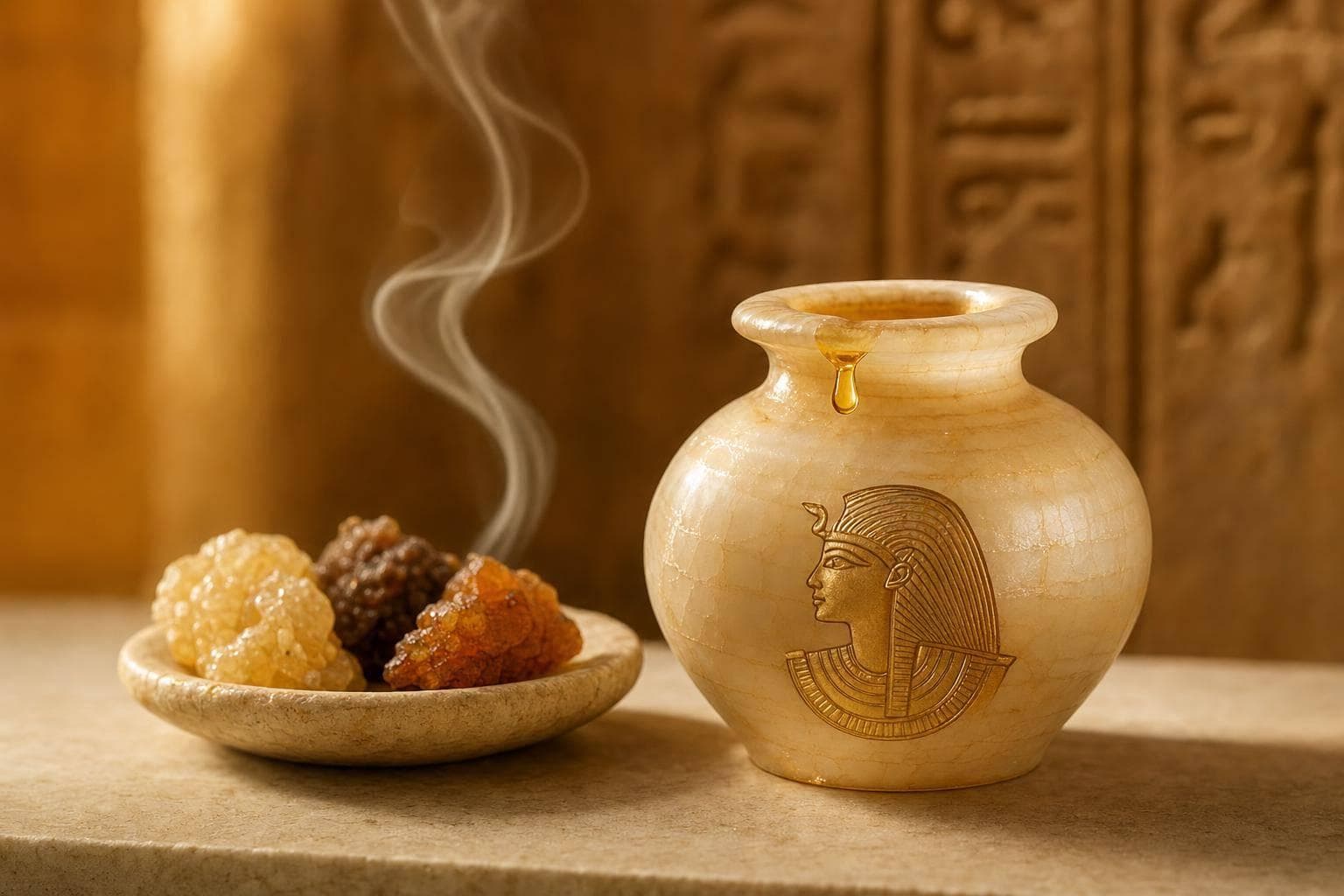
Parfémy ve starověkém Egyptě nesloužily jen k tomu, aby člověk příjemně voněl. Byly vyjádřením moci, rituálu, smrti a přítomnosti bohů.
Když shrneme podstatu celého tématu, nejdůležitější jsou tyto body:
- Faraoni využívali vůně k demonstraci svého božského statusu
- Chrámové rituály používaly kadidlo, oleje a kyphi k očistě posvátného prostoru
- Život u dvora využíval parfémy k vymezení společenského postavení a blízkosti ke královské moci
- Pohřební obřady využívaly vonné balzámy, pryskyřice a oleje k přípravě zesnulých na posmrtný život
- Tento obraz dokládají dochované texty, hrobové umění, artefakty i laboratorní výzkumy
Některá fakta zaujmou na první pohled. Egyptský výraz pro kadidlo, snTr, znamená „učinit božským“. Kněží pálili kadidlo za úsvitu, myrhu v poledne a kyphi v noci. Studie balzámů z roku 2023 navíc odhalila elemi, případně velmi podobnou pryskyřici, v nejméně 43 % analyzovaných balzamovacích nádob.
Při pohledu na tyto poznatky nelze vnímat parfém v prvé řadě jen jako královský luxus. Představoval především posvátnou substanci, která propojovala panovníka, chrám a hrobku.
| Oblast | Hlavní využití vůně | Co vyjadřovala |
|---|---|---|
| Chrám | Vykuřování a pomazání | Božská přítomnost a čistota |
| Dvůr | Paruky, vonné kužely, květinové límce | Společenské postavení a přístup k moci |
| Korunovace | Sedm posvátných olejů | Královská autorita |
| Pohřeb | Balzámy, pryskyřice, navoněná plátna | Transformace po smrti |
Stručně řečeno: pro faraona byla vůně nástrojem vlády, uctívání, paměti a věčnosti.
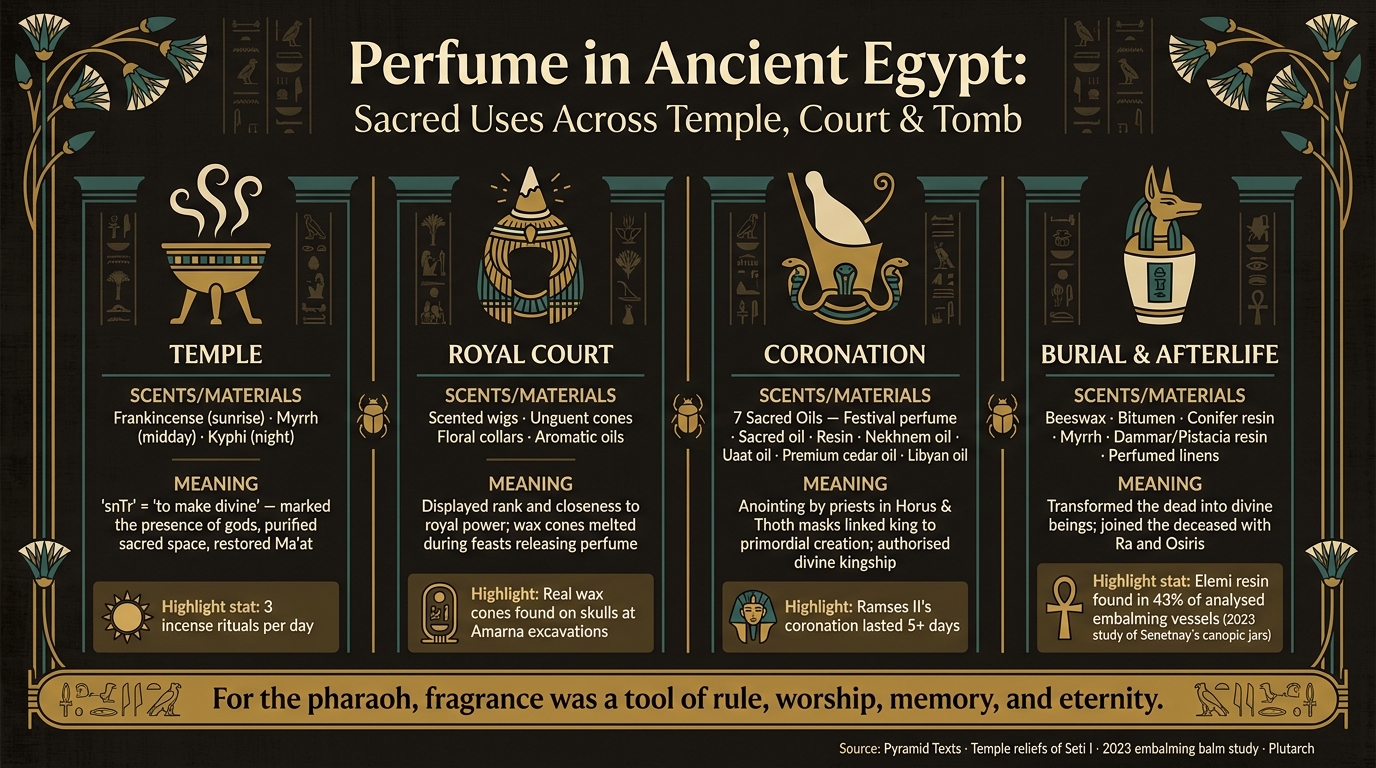
Parfém ve starověkém Egyptě: Posvátné využití v chrámu, u dvora i v hrobce
Kadidlo a parfémy ve starověkém Egyptě s Dr. Colleen Darnell
Božská vůně a posvátná role faraona
Ve starověkém Egyptě byla vůně zasazena do mnohem širšího kontextu: věčného zápasu mezi řádem a chaosem. Divoké bažiny byly v egyptském myšlení spojovány s chaosem, zatímco chrámy a královský dvůr čelily tomuto zmatku kadidlem, myrhou, květinami a mastmi – vůněmi řádu.
Parfém jako znamení božské přítomnosti
Egyptské slovo pro kadidlo, snTr, znamená „učinit božským“. To mnohé napovídá o tom, jak parfémy fungovaly v chrámovém životě. Když kněží pálili kadidlo ráno, myrhu v poledne a kyphi v noci, nešlo jen o provonění prostoru. Zpřítomňovali tím samotná božstva.
Nefertum, „lotos u nozder Rea“, zosobňoval božskou vůni. Texty pyramid jdou ještě dál: popisují zrnka kadidla jako pot z těla boha, což znamenalo, že dým z kadidelnice byl vnímán jako viditelná přítomnost božství.
Tento význam přisoudil parfémům zcela jasnou rituální úlohu: očistu.
Věřilo se, že faraon v sobě nese „božskou vůni“ (sTi nTr), která ho stavěla na samotný vrchol egyptské hierarchie vůní. Na opačném konci stáli rybáři z močálů, kteří byli v egyptské společnosti považováni za lidi s nejméně příjemným pachem.
Očista, posvěcení a kosmický řád
Rituálním úkolem faraona bylo nahradit isfet (chaos) řádem Ma’at. V praxi to znamenalo, že kněží pálili kadidlo před svatyní, pomazávali kultovní sochy a před otevřením vykuřovali vnitřní svatyni. Tyto obřady odstraňovaly nečistotu a obnovovaly podmínky nezbytné pro kontakt s bohy.
Mimořádně zřetelně to ukazuje obřad Otevírání úst. Během tohoto rituálu kněží vykuřovali sochu nebo mumii kadidlem a na její ústa a tělo nanášeli sedm posvátných olejů. Vonný dým a pomazání měly do postavy vnést božský život a učinit ji vnímavou a posvátnou. Pasáž z Textů pyramid tuto myšlenku vyjadřuje přímo:
„nechť tvá vůně spočine na Venisovi a očistí Venise.“
Provoněný chrám byl důkazem, že vládne Ma’at. Pokud by tyto vonné rituály selhaly, isfet by se mohl vrátit – nejen v duchovní sféře, ale i v politickém životě. V tomto smyslu byla kontrola nad těmito posvátnými substancemi také symbolem královské vlády nad samotným řádem světa.
Využití parfémů v královských rituálech a dvorském životě
Chrámové rituály: kadidlo, oleje a kyphi
Kněží vykonávali každodenní kult jménem faraona. Rituál se řídil pevně stanoveným řádem: otevřeli svatyni, očistili kultovní sochu natronem a vodou, okouřili ji kadidlem a poté ji pomazali mastí a sedmi posvátnými oleji. Tento sled zřetelně zachycují reliéfy ze zádušního chrámu Setiho I.
Vůně udávaly také rytmus chrámového dne. Plútarchos uvádí, že kněží pálili pryskyřici či kadidlo za úsvitu, myrhu v poledne a kyphi v noci. Kyphi, v egyptštině zvané kapet, představovalo bohatou aromatickou směs, nikoli jedinou surovinu. Receptury se dochovaly ze dvou chrámů v Edfu a z jednoho na ostrově Philae a objevují se v pramenech sahajících až k Textům pyramid. Pálilo se jako vykuřovadlo, ale nacházelo uplatnění i v lékařství a magii.
Ze svatyně pronikly parfémy do palácového života, kde vymezovaly status stejně neochvějně jako posvátnost.
Dvorské postavení: vonné paruky, kužely z mastí a květinové límce
Vůně paláce odrážela vůni chrámu. To, co začalo jako posvátný akt, se stalo součástí reprezentace elity. Při slavnostních příležitostech nosili vysoce postavení Egypťané navoněné paruky napuštěné pryskyřicemi a vonnými oleji, vonné kužely z mastí na temeni hlavy a květinové límce uvázané z aromatických květů.
Tyto voskové kužely nebyly pouhým malířským symbolem. Během hostin pomalu tály a po celou dobu hostiny uvolňovaly vůni. Vykopávky v Amarně odhalily přinejmenším dva skutečné voskové kužely umístěné na lebkách, což dokazuje, že šlo o skutečné předměty, nikoli jen o uměleckou konvenci.
Nástěnné malby v hrobkách a scény z banketů zachycují nošení těchto kuželů u dvora i při rituálech. Lidé jsou s nimi vyobrazeni při scénách královského odměňování, palácových oslav i posvátných obřadů. V tomto světě dělala vůně víc než jen těšila smysly – ukazovala, kdo má blízko k moci.
Vůně slavností versus každodenní péče elity
Kromě všedního života u dvora hrály parfémy roli také při státních ceremoniích. Státní rituál využíval vůni k posvěcení královské moci, zatímco dvorská péče byla manifestací společenského postavení. Záznamy o korunovaci Ramesse II. popisují pomazání sedmi pojmenovanými posvátnými oleji: slavnostním parfémem, posvátným olejem, pryskyřicí, olejem nekhnem, olejem uaut, výběrovým cedrovým olejem a libyjským olejem.
Tento obřad nesl hluboký náboženský význam. Kněží s maskami sokola a ibise, představující bohy Hora a Thovta, vykonávali pomazání a prostřednictvím vůně propojovali nového krále s prvotním stvořením.
Korunovace Ramesse II. trvala nejméně pět dní. Každou její fázi provázela vůně stvrzující přízeň bohů.
Váš osobní odborník na parfémy už čeká
Vyplňte náš rychlý vonný kvíz a objevte autentické designové a nišové parfémy vybrané podle vašeho vkusu – prozkoumejte je jako 2, 5, 8 a 30 ml dekanty a vzorky, abyste si každý mohli vyzkoušet, než se rozhodnete pro celou lahvičku.
Najděte svou vůniParfém ve smrti, paměti a posmrtném životě
Tytéž vůně, které utvářely královské rituály, provázely panovníka i při pohřbu a uchovávání jeho památky.
Mumifikační balzámy a vonná konzervace
Balzamovači pracovali se zahřátými balzámy ze zvířecího tuku či rostlinného oleje, včelího vosku, pryskyřice jehličnanů a asfaltu. Tyto směsi opakovaně nanášeli štětcem na tělo i na plátno, čímž vytvářeli vrstvenou ochranu.
Studie kanop paní Senetnay z roku 2023 ukazuje, jak precizní balzamování elity bylo. Její balzám obsahoval včelí vosk, rostlinné oleje, asfalt, pryskyřice čeledi Pinaceae a damarovou nebo pistáciovou pryskyřici (Pistacia). Tato směs svědčí o dovozu surovin ze vzdálených krajin a o pečlivém výběru, nikoli o náhodném použití toho, co bylo zrovna po ruce. Tatáž studie prokázala elemi, případně podobnou pryskyřici krytosemenných rostlin, v nejméně 43 % analyzovaných balzamovacích nádob.
Tato míra péče byla zásadní. Balzamování nesloužilo pouze k uchování fyzického těla, ale také k proměně zesnulého v bytost hodnou vstupu do božského světa.
Symbolika věčné vůně
Starověké texty líčí aromatické oleje jako božskou substanci a kněží se modlili, aby posvátná vůně obklopila zesnulého již během balzamování. Být provoněn ve smrti znamenalo projít proměnou – zesnulý tím přejímal božskou podstatu.
Rituální jazyk hovoří jasně. Věřilo se, že posvátný parfém znovu sceluje tělo a zahání nemoci. Sedm posvátných olejů mělo zesnulého spojit s bohy Reem a Usirem a zaručit mu vzkříšení.
Tento princip fungoval i opačně. Absence vůně znamenala smrt a nečistotu, zatímco zápach byl spojován s rozkladem a nepřátelskými silami. Stálé, libé aroma bylo potvrzením, že obřad proběhl úspěšně, a zároveň součástí cesty, kterou zesnulý přecházel do božské říše.
Myrha měla v pohřebních zvyklostech výjimečné postavení. Hérodotos uvádí, že tělo bylo vyplňováno myrhou, kasií a dalšími vonnými látkami, zatímco kadidlo bylo vyhrazeno pro živé a pro chrámové obřady.
Nádoby na parfémy a vonné předměty v hrobkách
Péče nekončila u samotného těla. Samotná hrobka se proměnila ve voňavý prostor. Alabastrové, fajánsové i skleněné nádoby uchovávaly oleje a tekuté parfémy. Ukládaly se sem i schránky na líčidla (kohl) a vonné masti, aby zkrášlování mohlo pokračovat i na onom světě. Kadeřidla a obětní stoly doplňovala klejopryskyřice a zrnka kadidla, což umožňovalo pokračování vykuřovacích obřadů.
Navoněná plátna napuštěná aromatickými balzámy plnila dvojí roli: sloužila jako ovinutí zesnulého i jako pohřební výbava. Do hrobek se vkládaly také sušené květiny a květinové límce, včetně vonných květů lotosu používaných při pohřebních hostinách. Symbolizovaly krásu a vůni, která nikdy nepomine. Tyto předměty tedy hrobku nejen zdobily, ale pomáhaly uchovat identitu zesnulého provoněnou a celistvou i na věčnosti.
Pozdější pálení kadidla v hrobových kaplích ze strany pozůstalých tyto obřady prodlužovalo ještě dlouho po pohřbu. Každá oběť pryskyřice nebo oleje obnovovala vůni pohřbu, udržovala pouto s bohy a navracela zesnulého do vědomí živých.
Co nám staroegyptská kultura vůní říká dnes
Ve starověkém Egyptě představoval parfém mnohem víc než jen potěšení pro smysly. Měl rituální sílu. Vyjadřoval postavení, očišťoval prostory, pomáhal uchovat tělo a propojoval každodenní život s posvátnem.
Od rituální vůně k osobní identitě
Stejná myšlenka dodnes formuje způsob, jakým vůně nosíme. Nevybíráme si parfém náhodně. Volíme jej pro slavnostní večeři, důležitou schůzku, svatbu, pro určité roční období nebo pro vyjádření té verze sebe sama, kterou se toužíme stát. V tomto ohledu je nám staroegyptský pohled stále velmi blízký: vůně má největší sílu tehdy, když něco ztělesňuje, nikoli když jen bezúčelně voní.
Závěr: rituál, moc, status, paměť a věčnost
Pro faraony byl parfém mostem mezi lidským a božským. U dvora stvrzoval status. V pohřebních rituálech pomáhal transformovat a uchovat zesnulé. Tyto významy rezonují dodnes. Vůně dokáže vymezit naši identitu, označit přechod z jednoho okamžiku do druhého a pevně ukotvit vzpomínku. V Egyptě nebyl parfém pouhou ozdobou – byla to moc, kterou bylo možné vnímat čichem.
Často kladené otázky
Proč byl parfém ve starověkém Egyptě považován za posvátný?
Ve starověkém Egyptě byl parfém posvátný, protože spojoval pozemský život s božským světem. Vůně hrála klíčovou roli při očistě, zvala bohy do posvátných prostor a pomáhala udržovat ma’at – princip kosmického řádu a harmonie.
Představovala také mravní čistotu, chránila před zlými silami a pomáhala zachovat tělo i duši pro posmrtný život.
K čemu se v egyptských rituálech používalo kyphi?
Při staroegyptských rituálech se kyphi pálilo za soumraku, aby utišilo božstva, navodilo meditativní atmosféru a pomohlo zajistit bezpečný průchod slunečního boha Rea podsvětím.
Využití kyphi se však neomezovalo jen na chrámy. Mělo své místo i v tehdejším léčitelství. Používalo se jako léčivo a v některých případech se dokonce polykalo nebo žvýkalo z terapeutických důvodů a k osvěžení dechu.
Jak parfémy vyjadřovaly královský status a moc?
Ve starověkém Egyptě byl parfém symbolem královského postavení díky vzácným dováženým ingrediencím, jako bylo kadidlo a myrha. Tyto suroviny byly velmi nesnadno dostupné a svědčily o bohatství, vlivu a obchodní síle faraonů i vládnoucí elity.
Výroba těchto vonných kompozic navíc vyžadovala spoustu času, umu a úsilí, což z nich činilo znak nejvyššího luxusu a vytříbenosti. Parfémy byly především neoddělitelně spjaty s božskou sférou, a tak jejich nošení upevňovalo panovnickou autoritu a kosmický řád Ma’at.

