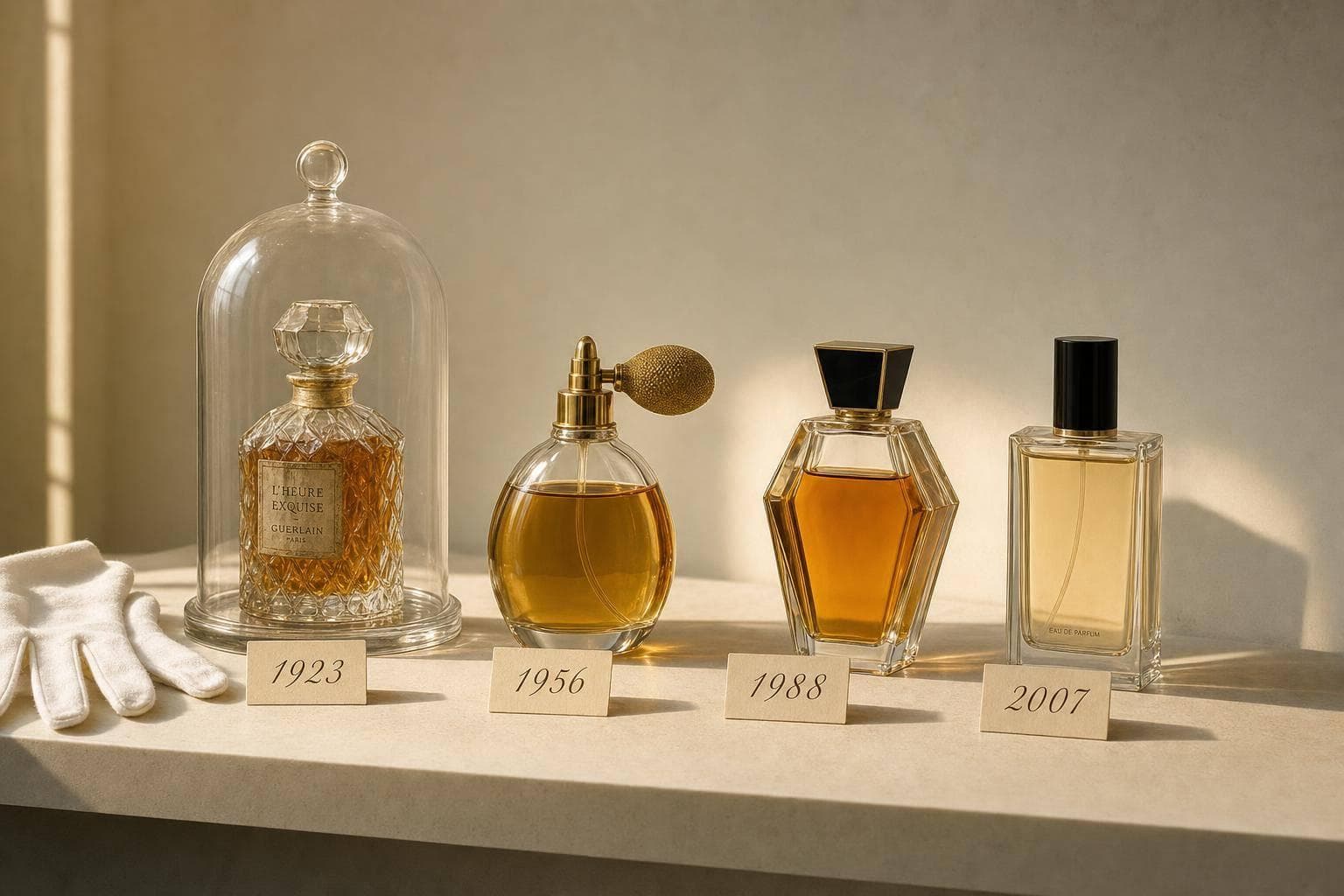
Vzácný parfém představuje mnohem více než jen vůni. Dokáže odhalit, jak lidé žili, obchodovali, modlili se, oblékali a dávali najevo své společenské postavení.
Hlavní myšlenka tohoto článku je zcela zřetelná: vůně mohou fungovat jako historické prameny. Flakon parfému, jehož výroba byla ukončena, stará chyprová kompozice nebo dochovaný attar dokážou ukázat, odkud suroviny pocházely, čeho si společnost cenila a jak se vkus proměňoval v čase. To je o to důležitější, že čichové vjemy rychle vyprchávají a bez náležité péče by tato součást historie byla nenávratně ztracena.
Stručné shrnutí:
- Vzácné vůně mají zásadní význam, protože uchovávají svědectví o obchodu, rituálech, společenských vrstvách i každodenním životě.
- Ingredience vypovídají o době a místě – od kadidla a myrhy až po dubový mech, oud a santalové dřevo.
- Design flakonu a balení pomáhají datovat parfém prostřednictvím tvaru, etiket, typografie a šarží (batch kódů).
- Reformulace mění historickou podobu vůní – například chypry vytvořené před rokem 2008 mohou uchovávat struktury bohaté na dubový mech, které je dnes téměř nemožné znovu vytvořit.
- Archivy a sběratelé pomáhají udržovat tuto historii naživu prostřednictvím chladného prostředí, temna, ochranné atmosféry argonu a pečlivé dokumentace.
- Projekty a muzea se této činnosti již věnují ve velkém měřítku: projekt Odeuropa zpracoval 2,5 milionu čichových odkazů, zatímco instituce Osmothèque uchovává přibližně 6.000 parfémů a 2.000 surovin při teplotě 12 °C.
Nejvíce ve mně rezonuje tato myšlenka: flakon neuchovává pouze samotný parfém. Dokáže v sobě současně zachovat střípek paměti, designu, historie obchodu i společenského života.
Kdybych to měl shrnout do jediné věty, zněla by takto: uchovávání vzácných vůní pomáhá udržet minulost čitelnou i prostřednictvím čichu, nikoli pouze skrze předměty a psané texty.
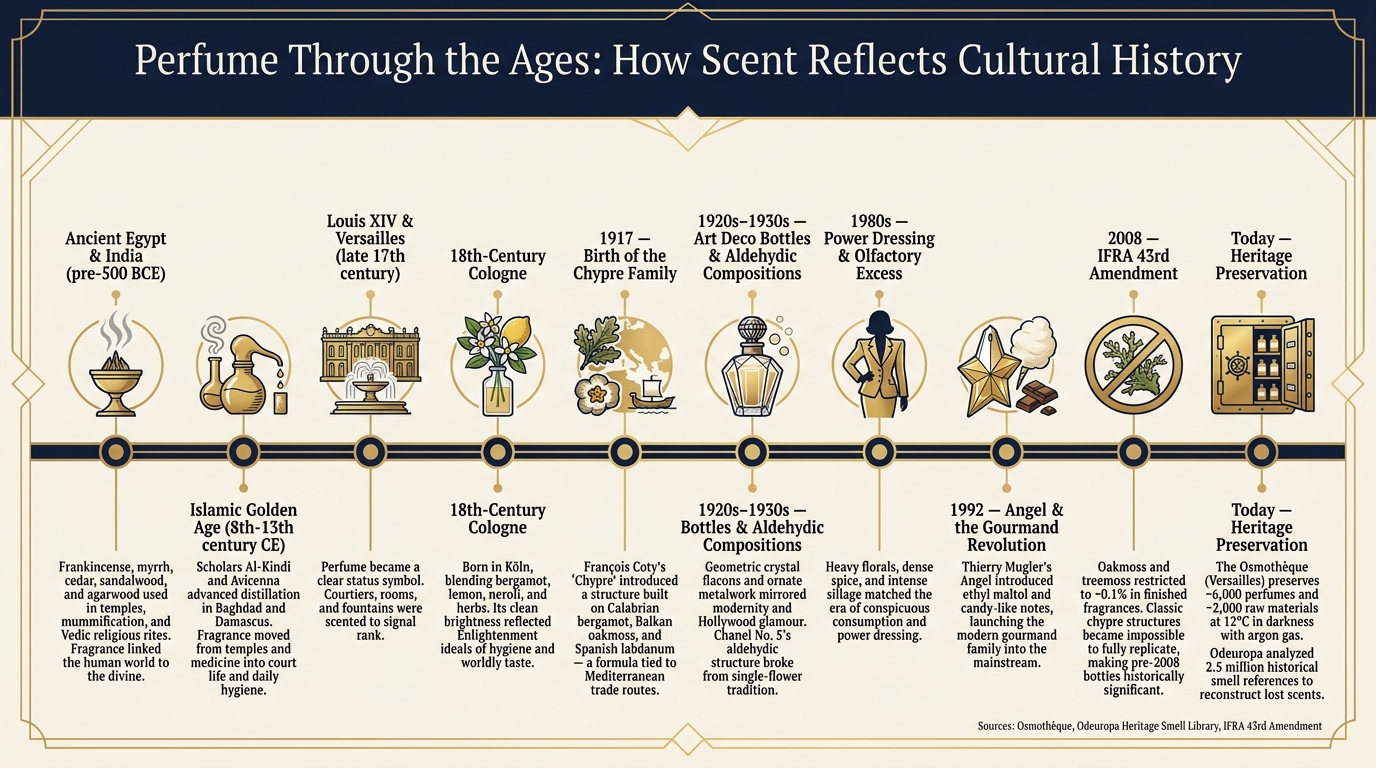
Perfume Through the Ages: A Timeline of Scent, Culture & Key Milestones
Jak se parfém stal součástí společenské identity
Od rituálního použití po dvorskou kulturu a symboly společenského postavení
Parfémy zpočátku sloužily rituálním účelům, odkud se postupně přesunuly do společenského života. Ve starověkém Egyptě se pálilo kyphi a v chrámech i při mumifikaci se používalo kadidlo, myrha a cedr. Ve starověké Indii védské texty zmiňují kouř ze santalového dřeva a agarwood při náboženských obřadech a v ájurvédské medicíně. Vůně spojovala lidský svět s božským. Byla přinášena jako oběť bohům nebo sloužila k očistě zemřelých.
Obchod tuto skutečnost proměnil. Jakmile kadidlové stezky propojily Arábii, severovýchodní Afriku, Indii a Středomoří, aromatické látky se staly luxusním zbožím. Kadidlo a myrha se vyvažovaly zlatem. Během zlatého věku islámu učenci jako Al — Kindí a Avicenna zdokonalili destilaci na místech, jako byl Bagdád a Damašek. To napomohlo tomu, aby se vůně rozšířily z chrámů a lékařství do života u dvora i každodenní hygieny. Za vlády Ludvíka XIV. ve Versailles se parfém stal jednoznačným znakem společenského postavení. Dvořané, komnaty, a dokonce i fontány byly provoněny, aby dávaly najevo hierarchii a urozenost.
Tento posun – od posvátného dýmu k projevům společenské prestiže – vymezil roli, kterou parfém hraje dodnes. Příjemná vůně začala symbolizovat vybrané způsoby, sebeovládání a úctu k lidem v okolí. Tento starý kód lze pozorovat i dnes v tom, jak si lidé vybírají vůni do kanceláře, na večeři nebo na slavnostní událost.
Jakmile parfém pronikl do společenského života, začaly o leččems vypovídat i jeho suroviny: odkud pocházely, kdo si je mohl dovolit a jaký vkus reprezentovaly.
Jak ingredience a styly vůní odrážejí dobu a místo
Ingredience mohou o dané epoše prozradit mnoho. Ukazují, co lidé dokázali dovážet, čeho si cenili a co si přáli, aby vůně vyjadřovala. Zřetelným příkladem je kolínská voda. Zrodila se v Kolíně nad Rýnem v 18. století a mísila bergamot, citron, neroli a byliny pocházející ze středomořských citrusových hájů a středoevropského pěstitelství. Její čistá jiskrnost odpovídala osvícenským představám o hygieně a kultivovaném vkusu. A protože ji nosila evropská aristokracie i městská buržoazie, nesla kolínská voda význam společenské třídy ze dvou směrů současně.
Později se objevila chyprová rodina vůní, jejíž původ je často spojován s parfémem Chypre (1917) od François Coty. Její struktura stála na kalábrijském bergamotu, balkánském dubovém mechu a španělském labdanu. Dokonce i samotný název odkazuje na Kypr, dlouholeté centrum středomořského obchodu s parfémy. Vzácné dochované flakony raných chyprových vůní tuto strukturu stále zřetelně vykazují, včetně vysokého podílu dubového mechu, který moderní předpisy IFRA v některých kategoriích omezují na zhruba 0,1 % hotové vonné kompozice. Právě proto je původní recepturu dnes tak obtížné napodobit.
Stejný princip je patrný i u dalších rodin vůní. Klasické blízkovýchodní a jihoasijské attary s bohatým obsahem přírodního oudu, jeleního pižma a pravého santalového dřeva odrážejí dobu, kdy byly tyto materiály dostupnější a tvořily jádro místního vkusu. Dnes omezená nabídka a cenový tlak vytlačily mnoho z těchto složek z hlavního proudu parfumerie. Dochová-li se tedy vzácný flakon, neuchovává pouze vůni. Uchovává svědectví o tom, jaké zdroje měla daná oblast k dispozici a čeho si tamní lidé rozhodli vážit.
Kolínská voda, chypre i attar spojují ingredience s konkrétní epochou, obchodní trasou a společenskými konvencemi.
How Archaeologists recreated an Ancient Greek Perfume I SLICE HISTORY | FULL DOCUMENTARY
Vzácné parfémy jako svědectví své doby
Pokud ingredience odkazují na obchodní cesty a rituály, flakon a samotná receptura často prozrazují, do jaké doby parfém patřil, pro koho byl stvořen a jaká pravidla formovala jeho podobu.
Co nám mohou prozradit flakony, balení a receptury
Vzácný parfém je historickým předmětem, nikoli pouze příjemnou vůní. Tvar flakonu, barva skla, jeho tloušťka, typografie etikety, konstrukce krabičky, koncentrace a regulatorní texty vytištěné na dně – to vše může pomoci zařadit vůni do konkrétního desetiletí a na konkrétní trh.
Ve 20. a 30. letech 20. století využívaly flakony ve stylu art deco geometrické tvary, těžký křišťál a zdobné kovové prvky, čímž zrcadlily svět fascinovaný modernitou a hollywoodským půvabem. Flakony Lalique pro značku Coty proměnily samotnou nádobu v nedílnou součást luxusního zážitku, zatímco Chanel No. 5 zvolil opačnou cestu v podobě strohé lahvičky vyzařující moderní zdrženlivost. Od 50. let dále posouvaly domy jako Schiaparelli pojetí flakonu ještě blíže statusu uměleckého díla.
Svůj vlastní příběh vypráví také receptura. Flakony klasických chyprových vůní z doby před rokem 2008 mohou uchovávat profily ingrediencí, které již podle současných pravidel nejsou povoleny. 43. dodatek směrnice IFRA z roku 2008 výrazně omezil používání přírodního dubového a stromového mechu, což si vynutilo rozsáhlé reformulace napříč celými rodinami vůní. Pokud se tedy předreformační chypre z doby před rokem 2008 dochová, nese v sobě strukturu, kterou se tento styl kdysi vyznačoval.
Jazyk použitý na obalech zanechává obdobná vodítka. Výrazy jako „mystique“, „feminine“ nebo „evening“ odrážejí dobové genderové normy a společenské signály. Starší vůně byly často striktně genderově rozděleny – oblé, růžové nebo třpytivé flakony byly určeny ženám, zatímco tmavé, hranaté linie cílily na muže. Mnoho současných nikových novinek od tohoto dělení ustupuje. Tento posun v prezentaci a popisu produktů zaznamenává jasnou proměnu ve vnímání identity a vůně.
Jak vůně zaznamenávají proměny vkusu v průběhu desetiletí
Vzestup a ústup jednotlivých rodin vůní v průběhu 20. století úzce kopíruje proměny módy, každodenního života a spotřebitelských tužeb. Aldehydové kompozice – čisté, jiskřivé a abstraktní – přišly ruku v ruce s raně moderním luxusem a touhou překročit hranice jednodruhových květinových parfémů. Aldehydová struktura parfému Chanel No. 5 byla záměrně vytvořena tak, aby se vymanila z představy, že by počestná žena měla vonět jako jediná přírodní květina.
V 80. letech parfémy přidaly na intenzitě. Mnoho vůní z této dekády je připomínáno pro své těžké květinové tóny, hutné koření a pocit opulentnosti, který rezonoval s módním stylem „power dressing“ a okázalým životním stylem.
V roce 1992 pak přišel Angel od Thierry Mugler, často označovaný za výchozí bod moderní gurmánské rodiny. Díky ethylmaltolu a tónům připomínajícím cukrovinky, pouťové sladkosti a dětskou nostalgii pomohl Angel prosadit sladké, „jedlé“ vůně do hlavního proudu. Následovaly vodní (akvatické) vůně, jejichž vzdušná svěžest dokonale zapadla do éry zaměřené na sport, pohyb a čistší každodenní styl.
Během 20. století se parfumerie posunula od aldehydové noblesy přes poválečnou strukturovanost až po intenzitu 80. let, svěžest počátku 90. let a gurmánskou sladkost. Tyto historické etapy jsou nejcennější tehdy, jsou-li systematicky uchovávány, dokumentovány a chráněny.
Váš osobní odborník na parfémy už čeká
Vyplňte náš rychlý vonný kvíz a objevte autentické designové a nišové parfémy vybrané podle vašeho vkusu – prozkoumejte je jako 2, 5, 8 a 30 ml dekanty a vzorky, abyste si každý mohli vyzkoušet, než se rozhodnete pro celou lahvičku.
Najděte svou vůniJak se vzácné vůně uchovávají a sbírají
Metody skladování, konzervace a rekonstrukce
Jakmile balení a receptura určí éru vůně, dalším krokem se stává její konzervace. Právě ta udržuje toto historické svědectví přístupné. Vzácná vůně nám o své době může něco říci pouze tehdy, pokud flakon, samotná vonná tekutina i příběh kolem ní zůstanou zachovány. Parfém je chemicky nestálý, a proto teplo, světlo, kyslík a kolísání vlhkosti mohou urychlit oxidaci a odpařování.
Instituce Osmothèque ve Versailles opatruje přibližně 6.000 parfémů a 2.000 surovin. Její flakony jsou uloženy při stálé teplotě 12 °C, v naprosté tmě a chráněny argonem, aby se minimalizoval kontakt s kyslíkem.
Pro soukromé sběratele v Německu platí stejné zásady v menším měřítku. Flakony ukládejte ve svislé poloze do uzavřené skříňky nebo zásuvky a pokud možno je ponechávejte v původních krabičkách či v neprůhledných uzavřených boxech. Chraňte je před radiátory, osluněnými okny a vlhkostí v koupelně. Vhodným cílem je stabilní teplota 18–22 °C s mírnou vlhkostí. Půdám a sklepům je lepší se vyhnout, protože sezónní výkyvy teplot a vlhkosti na těchto místech parfémům neprospívají.
Záleží také na tom, jak často je vzácný flakon otevírán. Každé stříknutí vnáší do lahvičky další kyslík, což urychluje oxidaci. Jednoduchým řešením je odlít malé množství do samostatného atomizéru pro každodenní nošení a hlavní flakon ponechat převážně nedotčený. Je to drobný návyk, který však v průběhu let přináší znatelný rozdíl.
Když se původní kompozice ztratí nebo výrazně degraduje, může část celkového obrazu navrátit rekonstrukce. Projekt Odeuropa v rámci své knihovny Heritage Smell Library využívá archivní receptury, analýzu dochovaných zbytků pomocí plynové chromatografie s hmotnostní spektrometrií (GC — MS) a historické texty k obnovení vůní, které by jinak byly navždy zapomenuty. Osmothèque volí přísnější přístup. Pokud nelze zajistit klíčovou surovinu, parfém raději nerekonstruuje vůbec, než aby vytvořila přibližnou verzi, která by mohla historickou skutečnost zkreslit.
Konzervace má však smysl pouze tehdy, lze-li flakon stále spolehlivě identifikovat a datovat.
Proč záleží na provenienci a dokumentaci
Flakon bez historie je pouhým předmětem. Provenience – tedy historie vlastnictví, podmínky skladování a kontext výroby – proměňuje historický flakon ve sledovatelný artefakt.
Kódy šarží (batch kódy) jsou prvním vodítkem. Bývají vytištěny nebo vyryty na dně flakonu či krabičky. Lze je porovnat se známými změnami loga, formáty adres a redesigny obalů, a tím zúžit období výroby. Původní balení přidává další rovinu poznání. Německé nápisy na balení pro trh DACH, zmínky o zaniklých prodejcích v Berlíně či Mnichově a další detaily v designu či jazyce mohou prozradit více, než by se na první pohled zdálo. Význam má dokonce i hladina naplnění, která pomáhá odhalit, jak byl flakon skladován a používán.
Sběratelé, kteří berou dokumentaci vážně, si často vedou přehledný katalog s údaji, jako jsou:
- značka, název vůně, koncentrace a batch kód
- odhadovaný rok výroby, země původu, podrobnosti o nákupu a přibližná cena v €
- fotografie flakonu, krabičky, batch kódu a hladiny naplnění pořízené v době nákupu
Uchovávání původních účtenek a korespondence s prodejci v deskách či krabicích bez obsahu kyselin vychází ze stejných postupů, jaké uplatňují institucionální konzervátoři. Budoucím badatelům to poskytuje záznam, který mohou skutečně ověřit.
Jak může moderní objevování vůní podpořit parfémové dědictví
Stejný princip platí i pro samotné objevování nových vůní. Pečlivé testování vzorků předchází neuváženým nákupům. Formáty pro objevování, jako jsou odstřiky Scento o objemu 2 ml, 5 ml a 8 ml a u většiny parfémů i dekant o objemu 30 ml, umožňují zájemcům vůni vyzkoušet dříve, než se zavážou ke koupi celého flakonu. To může omezit plýtvání a vést k uvážlivějšímu, sběratelskému přístupu.
Závěr: Proč má uchovávání vzácných vůní smysl pro budoucnost
Spojíme-li všechny tyto souvislosti, důvod je zřejmý: vzácné parfémy mají nesmírnou hodnotu, protože fungují jako záznamy prožitého života. Vzácný parfém dokáže v jediném předmětu obsáhnout obchodní vazby, rituály, design i společenské normy. To z vůní činí jeden z nejbohatších způsobů, jak porozumět tomu, jak lidé žili – a to nejen v elitních kruzích, ale také v kancelářích, domovech a při každodenních činnostech v Německu i daleko za jeho hranicemi.
Právě proto mají archivy tak zásadní význam. Na této myšlence postavila své poslání instituce Osmothèque ve Versailles, která spravuje rozsáhlý archiv dochovaných i nevyráběných vůní a ukazuje, jak může vypadat profesionální institucionální péče o vonné dědictví. Od starověkých receptur až po moderní archivy – dochované rekonstrukce přibližují historii a dávají jí konkrétní obrysy. Dokládají, že uchované formule nám mohou přiblížit historická období způsobem, jakého obrazy ani psané záznamy často nedosáhnou.
Tento úkol však neleží pouze na institucích. Svou roli hrají instituce, značky, sběratelé i samotní milovníci parfémů. Značky mohou dokumentovat své výtvory a udržovat historické sbírky. Sběratelé mohou chránit vzácné flakony a předávat své znalosti dál. A každý, kdo vlastní ukončenou nebo regionálně významnou vůni, může díky drobným a uvážlivým krokům pomoci udržet toto svědectví naživu po mnohem delší dobu.
Nejde zde pouze o vkus vybraných vrstev. Běžná každodenní historie je stejně důležitá. Nevyráběná vůně pro všední den může prozradit právě tolik co limitovaná niková edice. Jednoho dne mohou budoucí generace pohlédnout na tyto flakony, aby pochopily nejen to, jaké vůně lidé nosili, ale také jak vystupovali, na čem jim záleželo a jakou atmosféru měl jejich každodenní život.
Čich patří k nejpřímějším spouštěčům naší paměti. Budeme-li ke vzácným parfémům přistupovat jako ke kulturnímu dědictví – jež stojí za dokumentaci, doložení původu a předání dalším generacím –, pomůže to udržet tuto část paměti na dosah, namísto abychom ji ztratili spolu s vonnou esencí a příběhem ukrytým uvnitř flakonu. Uchováváním vzácných vůní uchováváme kulturní paměť.
Často kladené otázky
Jak může parfém odhalit kulturní historii?
Parfémy odhalují historii tichým, důvěrným způsobem. Spojují minulost se současností prostřednictvím rituálů, zvyků a používání přírodních materiálů. Tóny jako oud, jasmín a citrusy s sebou nesou staleté tradice – od staroegyptských balzamovacích obřadů až po ceremonie vykuřování ve východní Asii.
Odrážejí také místní zvyklosti a rytmus ročních období. Vzpomeňme na Provence v období sklizně levandule nebo na slavnosti vonokvětky (osmanthu) v Číně. Jsou-li tyto postupy zachovány, stává se vůně něčím víc než jen příjemným doplňkem. Udržuje paměť naživu a umožňuje dávným zvykům přetrvávat v každodenním životě.
Proč je obtížné znovu vytvořit starší receptury parfémů?
Rekonstrukce starších receptur je náročnější, než se zdá. Mnohé z nich závisí na vzácných přírodních surovinách, které je dnes mnohem těžší získat, často v důsledku úbytku přirozeného prostředí, klimatických změn a metod extrakce, jež vyžadují velké množství času a vstupního materiálu.
Svou roli hraje také řemeslná stránka věci. Tyto receptury často spoléhaly na specializované, pracné techniky a vlastnosti původních ingrediencí nezůstávají v průběhu času stejné. Některé složky stárnou, jiné se liší sklizeň od sklizně a některé již nejsou v původní podobě vůbec dostupné.
V neposlední řadě záleží na samotné formě. Přechod od starověkých parfémů na olejové bázi k moderním lihovým standardům vyžaduje citlivé úpravy, aby vůně působila věrně vůči originálu a zároveň respektovala svůj historický charakter.
Jak by se měly vzácné vůně skladovat v domácích podmínkách?
Vzácné vůně uchovávejte v neporézních nádobách ze skla, kovu nebo kamene, které pomáhají minimalizovat odpařování.
Flakony chraňte před přímým slunečním zářením i teplem a skladujte je ve stabilním klimatu, aby se ochránily křehké ingredience a zachovala se kompozice vůně. Menší přenosné atomizéry mohou rovněž pomoci omezit kontakt se vzduchem, světlem a teplotními výkyvy.

