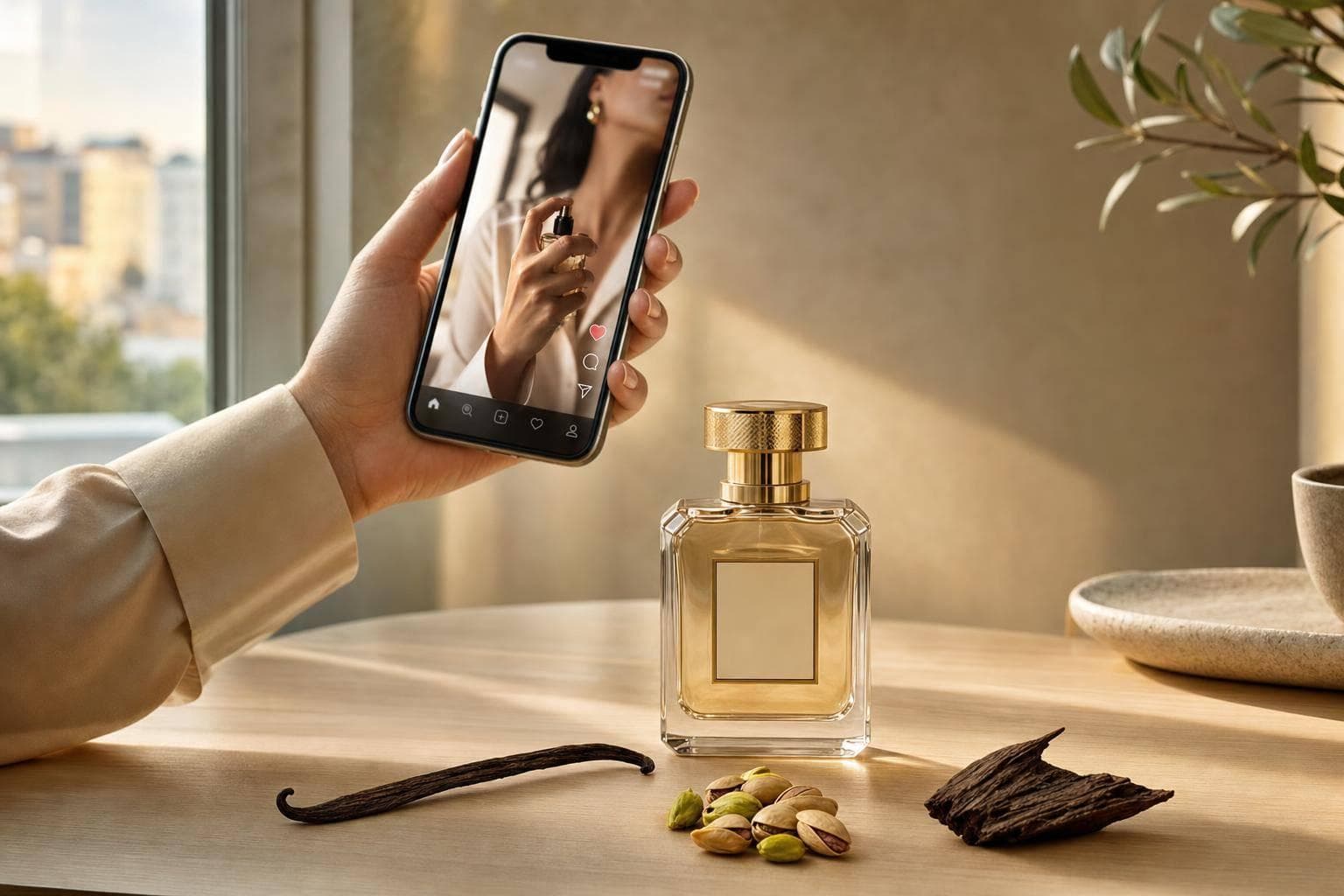
Las redes sociales deciden hoy qué perfumes capta el público en primer lugar, cuáles busca después y, en última instancia, cuáles compra. Si tuviera que resumirlo en una frase: TikTok desata el furor inicial, Instagram ayuda a valorar si un aroma encaja con uno mismo, y la búsqueda en Google suele preceder de inmediato a la compra.
He aquí la versión resumida:
- El descubrimiento se ha trasladado al entorno digital. Gran parte de los compradores descubren hoy nuevas fragancias a través de vídeos antes de poner un pie en una tienda física.
- Las publicaciones de los creadores pesan más que los anuncios de las marcas. Las pruebas de duración en piel, las comparaciones directas y las explicaciones sensoriales en un lenguaje accesible permiten juzgar perfumes imposibles de oler a través de una pantalla.
- Ciertas notas se propagan a mayor velocidad. En este momento, la vainilla, los acordes gourmand, el pistacho y el oud acaparan una intensa atención en visualizaciones, hashtags y datos de búsqueda.
- Los precios elevados frenan el paso final de compra. Dado que los frascos suelen partir de unos €100 y las opciones de nicho superan con frecuencia los €300, muchos compradores investigan con mayor detenimiento y prefieren probar formatos más pequeños primero.
- Las muestras encajan a la perfección en este nuevo recorrido de compra. Los formatos de prueba y los decants cobran todo el sentido cuando una tendencia nace de una gran expectación digital pero el producto supone una inversión considerable.
Unas pocas cifras ilustran esta transformación con claridad:
- El 63 % de los usuarios alemanes de redes sociales se siente impulsado a comprar productos de belleza tras verlos en Instagram o TikTok
- El contenido sobre fragancias en TikTok alcanzó los 14 billion de visualizaciones
- Las búsquedas vinculadas a la vainilla promedian 138,6 K al mes
- Ciertas búsquedas de perfumes gourmand de vainilla crecieron un 141,1 % en solo un mes
La conclusión es meridiana: las redes sociales no se limitan a comentar las tendencias olfativas; contribuyen activamente a construirlas, monitorizarlas y acelerarlas. Y al ser el perfume una elección tan personal como costosa, esto conduce a menudo al comprador hacia una vía donde probar es lo primero, en lugar de arriesgarse a una compra a ciegas de un frasco completo.
A continuación, analizamos cómo funciona este ciclo, qué perfiles olfativos marcan el ritmo actual y por qué el muestreo en formatos reducidos se ha convertido en el siguiente paso natural.
Fragrance on Social Media: Key Stats & Viral Trends 2024
TENDENCIAS DE FRAGANCIAS 2026
Cómo las plataformas transforman la perfumería en un sistema de tendencias medible
Estas señales tempranas de descubrimiento pueden detectarse mucho antes de que queden reflejadas en las ventas. Las plataformas sociales hacen visibles las corrientes olfativas en tiempo real. Cada visualización, guardado, contenido compartido y comentario deja un rastro susceptible de análisis. A medida que las conversaciones sobre perfumes fluyen de una red a otra y desembocan en los motores de búsqueda, el pulso del mercado se ha vuelto infinitamente más cuantificable.
TikTok, Instagram y Google Search como indicadores de tendencias
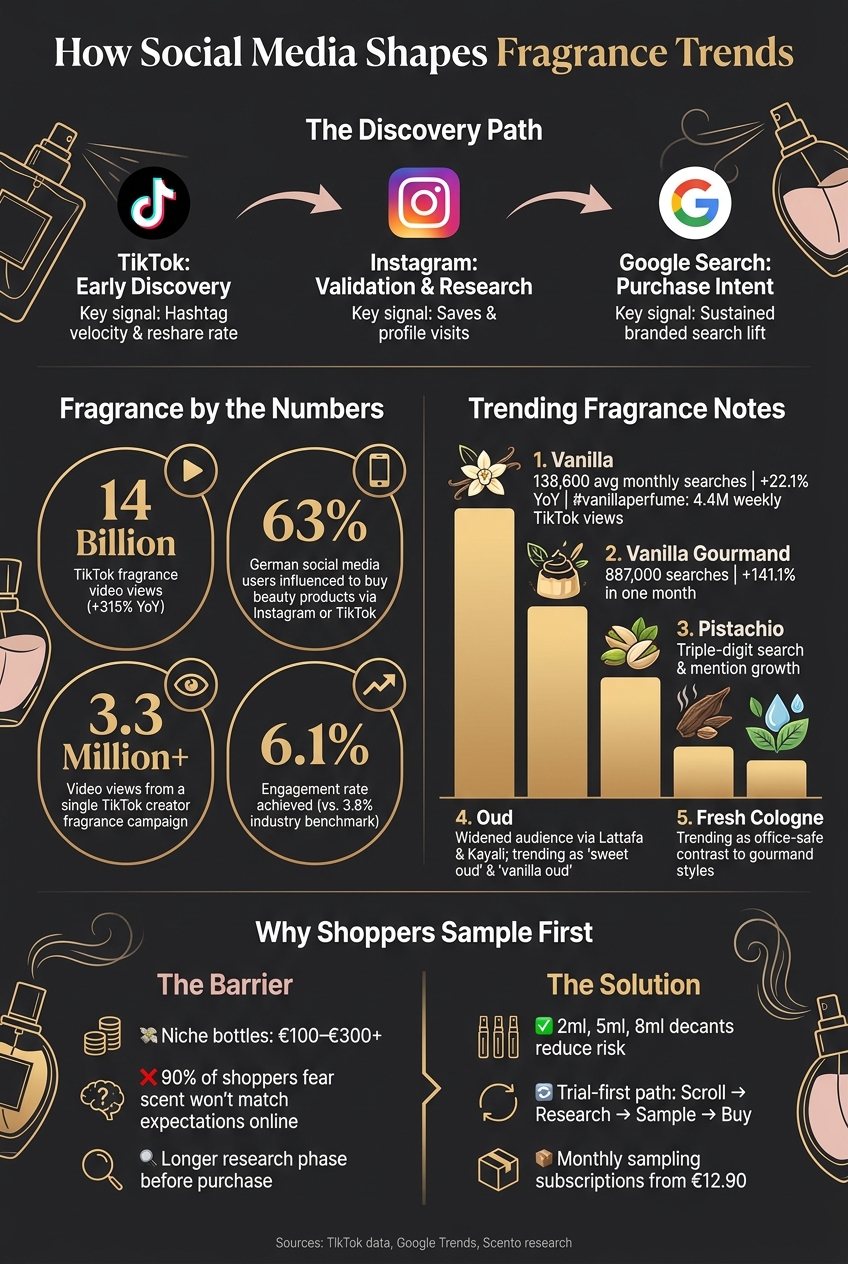
Cada plataforma señala una fase distinta dentro del proceso de descubrimiento.
TikTok suele ser el lugar donde nace el conocimiento inicial. Su algoritmo recompensa la novedad y el impacto emocional; gracias a ello, una fragancia nicho puede pasar del más absoluto anonimato a ser ampliamente comentada en un plazo mínimo de tiempo. Para medir la celeridad de esta propagación, conviene observar el incremento de menciones, la velocidad de los hashtags y el ritmo de republicaciones. En este entorno, los picos suelen ser tan pronunciados como efímeros, lo que convierte el factor tiempo en un elemento crucial.
Instagram desempeña una función diferente. El usuario suele recalar en ella tras haber oído hablar previamente de un aroma. En Instagram, los guardados son la métrica reina, ya que reflejan una intención deliberada y no una navegación pasiva. Las visitas al perfil y los clics en enlaces confirman esa misma actitud orientada a la investigación: el usuario no se limita a explorar, sino que contrasta información. Aunque el nivel de interacción general es menor que en TikTok, la intención suele ser sensiblemente más firme.
Google Search corona el final de este itinerario. El volumen de búsquedas experimenta habitualmente un ascenso tras la exposición en redes. Cuando la búsqueda directa por marca mantiene un crecimiento sostenido, se constata el paso definitivo de la mera curiosidad a una firme intención de compra.
En conjunto, estas plataformas dibujan el recorrido integral: desde el primer destello de atención hasta la investigación previa a la compra.
| Plataforma | Función principal | Señal más concluyente |
|---|---|---|
| TikTok | Descubrimiento temprano y notoriedad viral | Velocidad de hashtags, índice de republicación, incremento de menciones |
| Validación e investigación previa a la compra | Guardados, visitas al perfil, clics en enlaces | |
| Google Search | Confirmación de la intención de compra | Aumento sostenido de búsquedas con marca |
Por qué la escucha social es decisiva en el sector del perfume
El universo de las fragancias afronta un obstáculo inherente en el plano digital: los aromas no se pueden percibir a través de una pantalla. Por ello, las palabras deben asumir todo el peso descriptivo.
El lenguaje empleado en pies de foto, comentarios y valoraciones actúa como un sustituto directo de la propia experiencia olfativa. Las herramientas de escucha social analizan ese discurso a gran escala, identificando notas recurrentes, descriptores de estado de ánimo y constelaciones de hashtags antes de que alcancen al gran público. Cuando una misma combinación de notas o adjetivos evocadores se repite de forma constante en torno a una creación, estamos ante una señal temprana que conviene no pasar por alto.
Asimismo, los hilos de comentarios y los patrones de guardado revelan a menudo un interés latente antes de que este se manifieste de forma nítida en los datos generales de demanda. Por esta razón, la escucha social constituye con frecuencia la vía más veloz para anticipar el auge de una fragancia antes de que se vuelva un fenómeno generalizado.
Por qué las publicaciones de creadores moldean la demanda más que el contenido de marca
En cuanto un aroma empieza a despuntar, el contenido de los creadores suele inclinar la balanza entre la mera curiosidad y la intención real de compra. Tiende a superar a la publicidad tradicional de las marcas porque se percibe como la recomendación sincera de un igual, no como un discurso puramente comercial.
Reseñas, comparaciones y desglose de notas como herramientas de descubrimiento
Los creadores actúan como traductores del lenguaje olfativo al habla cotidiana. Una labor esencial, dado lo complejo que resulta describir un perfume y lo difícil que es calibrarlo a través de un dispositivo.
Los formatos con mayor efectividad responden a patrones muy claros:
- Pruebas de uso en piel que evidencian la longevidad y la estela en situaciones reales del día a día
- Desglose de notas que transforman conceptos olfativos abstractos en descripciones sencillas y directas
- Comparaciones directas que vinculan un perfume desconocido con otro referente que el público ya domina
- Sugerencias por ocasión (como «ideal para oficina», «cita de noche» o «frescor veraniego»), que ayudan al espectador a visualizar de inmediato el contexto perfecto para lucirlo
Este fenómeno quedó perfectamente ilustrado en un lanzamiento que conquistó las redes con asombrosa rapidez. Cuando Phlur se relanzó con Missing Person en 2022, la creadora Chriselle Lim recurrió a una narrativa íntima para dotar al aroma de un marco puramente emocional. Esta aproximación catapultó un perfume intimista de segunda piel hasta convertirlo en uno de los hitos olfativos más rotundos del año en TikTok, demostrando el poder de un creador para transformar una propuesta de nicho en un auténtico fenómeno de masas.
Cómo las conversaciones espontáneas generan confianza
Cuando las plataformas comienzan a reflejar indicios de demanda, el contenido generado por los propios usuarios suele ser el factor decisivo que aporta a la fragancia la credibilidad necesaria para animarse a probarla. Las publicaciones corporativas de las marcas pueden generar visibilidad, pero es la conversación orgánica la que realmente cimenta la confianza.
¿La razón? Las valoraciones de los creadores se sienten auténticas y libres de aprobaciones previas. Las impresiones espontáneas, el señalamiento de posibles inconvenientes y las preferencias personales generan niveles de credibilidad e implicación muy superiores a los de cualquier campaña de imagen pulida y convencional.
Los datos así lo avalan. Una campaña liderada por creadores en TikTok para Azha Perfumes generó más de 3,3 million de visualizaciones y tasas de interacción de hasta el 6,1 %, muy por encima de la media del 3,8 % habitual en el sector de la perfumería. En el conjunto de TikTok, el contenido sobre fragancias alcanzó los 14 billion de visualizaciones de vídeo, lo que supuso un extraordinario incremento interanual del 315 %.
Para el consumidor europeo, existe además una exigencia añadida: la transparencia. Los espectadores prestan una atención minuciosa a si una publicación incluye indicaciones publicitarias explícitas como Werbung o Anzeige. Asimismo, valoran de forma sumamente positiva que el creador mencione haber adquirido el producto por sus propios medios; un matiz en apariencia menor, pero capaz de transformar por completo el crédito otorgado a la recomendación.
| Tipo de contenido | Por qué funciona en perfumería |
|---|---|
| Prueba de duración en piel | Demuestra la longevidad y la proyección en condiciones reales de uso cotidiano |
| Desglose de notas | Traduce el léxico abstracto de la perfumería a términos cotidianos y evocadores |
| Elección según la ocasión | Ayuda a proyectar con claridad en qué momento del día o evento encaja mejor |
| Comparación directa | Relaciona un aroma desconocido con una referencia icónica ya conocida |
| Reacción personal sincera | Transmite autenticidad y genera confianza con mayor rapidez que el texto publicitario |
Tu experto en fragancias personal te espera
Haz nuestro test olfativo rápido y descubre auténticos perfumes de diseñador y de nicho elegidos según tu gusto: explóralos en decants y muestras de 2, 5, 8 y 30 ml para probar cada uno antes de decidirte por un frasco completo.
Encuentra tu fraganciaQué notas y estéticas alcanzan la viralidad en redes sociales
No cualquier familia olfativa logra destacar en el entorno digital. Las redes sociales premian aquellos acordes fáciles de catalogar, sencillos de evocar visualmente y cómodos de sintetizar en un vídeo de pocos segundos. Las notas que viajan con mayor velocidad comparten un rasgo común: experimentan ascensos vertiginosos en volúmenes de búsqueda y actividad de hashtags, perfectamente monitorizables casi en tiempo real.
Notas virales: vainilla, gourmand, pistacho, oud y composiciones frescas tipo colonia
La vainilla se erige hoy en la protagonista indiscutible en los datos procedentes de redes y motores de búsqueda. Las consultas en Google asociadas a ella promedian 138,6 K mensuales, con un crecimiento interanual del 22,1 %, el índice de incremento más acusado para una nota en solitario dentro del panorama actual. En TikTok, #vanillaperfume acumula una media de 4,4 million de visualizaciones semanales, mientras que las búsquedas orientadas a creaciones de vainilla gourmand alcanzaron las 887.000, reflejando un repunte del 141,1 % en solo un mes.
Las fragancias de corte gourmand se expanden a través de un léxico asociado a la repostería y el deleite sensorial. En lugar de complejas pirámides olfativas, los creadores recurren a imágenes de evocación inmediata: aromas de baklava, recuerdos a tarta de cumpleaños o matices de helado de pistacho. Este recurso humaniza el perfume y facilita extraordinariamente su comprensión al aficionado común. El pistacho representa el caso de éxito más rotundo dentro de esta corriente: las creaciones dominadas por esta nota, a menudo entrelazadas con miel, caramelo y vainilla, han registrado alzas de triple dígito tanto en búsquedas como en menciones sociales.
El oud sigue un itinerario muy singular. Lejos de presentarse como un acorde denso, oscuro o desafiante, los creadores lo suavizan emparejándolo con notas afines como la vainilla o elementos acaramelados, perfilándolo con frecuencia como una refinada base amaderada más que como la nota dominante absoluta. TikTok ha democratizado notablemente el acceso al oud mediante firmas árabes de gran proyección comercial, entre las que sobresalen Lattafa y Kayali. Las reseñas suelen poner el acento en su generosa estela y en esa sensación de sofisticación propia de un hotel de lujo: imponente, sumamente cuidada y fácil de vestir. Esta conjunción de exclusividad, calidez casi comestible y excelente rendimiento sirve además de catalizador constante para los desafíos de compra a ciegas en vídeo.
Se trata de un punto de inflexión significativo: en cuanto una nota deja de ser simplemente comentada y pasa a integrarse con naturalidad en el día a día del público, la dinámica entera de la conversación se transforma.
Las composiciones frescas de estilo colonia se ubican en el extremo opuesto de esta propuesta estética y marcan tendencia precisamente por puro contraste. Los creadores las posicionan frente a la opulencia de los perfumes gourmand y el oud como la alternativa pulcra y perfecta para el entorno laboral, combinándolas con asiduidad con acordes almizclados en rutinas de superposición.
Microtendencias: el arte del layering y el fondo de armario olfativo
Más allá de popularizar notas específicas, las redes sociales están transformando de forma determinante la manera en que el público se perfuma.
El contenido centrado en el layering concibe la superposición de fragancias como una forma de expresión y estilismo personal, prescindiendo de toda rigidez técnica. Los creadores formulan estas combinaciones como si fueran recetas de autor: pistacho y caramelo para evocar los matices de un baklava, o una base de almizcle limpio con un toque de colonia cítrica para lograr una estela tan fresca como acogedora. Es un formato concebido a la medida del vídeo corto: dos frascos, dos atomizaciones y un gesto final de descubrimiento ante la cámara. Etiquetas como #layeringcombo, #fragrancecocktail y #fragrancewardrobe articulan esta comunidad a través de múltiples plataformas. De este modo, un perfume ampliamente viralizado adquiere un matiz personal y exclusivo, pues el usuario lo customiza según su propio criterio en lugar de lucirlo tal cual.
El concepto de fondo de armario olfativo lleva este planteamiento un paso más allá. Los amantes del perfume publican selecciones de otoño o armarios cápsula de cinco fragancias, asignando a cada botella un propósito muy definido: oficina, veladas románticas, fines de semana o eventos solemnes. Rara vez un único frasco satisface todos los escenarios imaginables, lo que empuja de manera orgánica a optar por formatos más contenidos y muestras en lugar de invertir todo el presupuesto en una sola adquisición de gran volumen. Los informes de escucha social confirman que estas tendencias están moldeando los hábitos del consumidor, quien hoy premia la variedad y la versatilidad por encima del compromiso que exige una botella de 100 ml, cuyo importe supera con holgura los €300+ en el ámbito de la perfumería de autor en Europa.
Para el consumidor reflexivo, los argumentos que mejor resuenan son aquellos expresados en términos de utilidad práctica: el precio por mililitro y el coste por uso según la temporada. He ahí por qué los formatos de prueba armonizan infinitamente mejor con este modelo de descubrimiento que la adquisición forzosa de un frasco tradicional.
Implicaciones para el comportamiento de compra y la distribución de perfumería
Del interés viral a la compra: el momento exacto de la conversión
El mero auge de una nota no garantiza por sí solo la venta. Descubrir un perfume fascinante en TikTok y decidirse a abonar su importe son dos actos netamente diferenciados. Los muros de contenido despiertan la fascinación; las páginas de resultados y los portales comerciales son los que realmente sellan la transacción.
Un usuario puede toparse con una tentadora fragancia de pistacho gourmand en #PerfumeTok, y acudir acto seguido a Google para cotejar reseñas detalladas, comparar distintas alternativas y cerciorarse de la autenticidad del producto antes de tramitar el pedido en una tienda de su absoluta confianza. Es justo ahí donde la búsqueda rigurosa y las garantías comerciales cobran un protagonismo decisivo.
La distancia que media entre el interés inicial y el pago final se amplía aún más cuando se trata de creaciones de alta gama. Si el coste de un frasco oscila entre los €150 y más de €300, equivocarse resulta demasiado oneroso. Un estudio enfocado en la adquisición de perfumería a través de internet reveló que el 90% de los usuarios descartaba comprar fragancias en línea por el temor a que el aroma no cumpliera sus expectativas y por las dudas sobre su autenticidad. Como consecuencia, el cliente prolonga la fase de análisis. Y en perfumería, esa prudencia desemboca de manera natural en un único destino: probar primero.
Por qué los decants seleccionados se adaptan al descubrimiento impulsado por las redes
Es aquí donde los formatos reducidos adquieren todo su valor. Los decants y las presentaciones de descubrimiento (generalmente en volúmenes de 2 ml, 5 ml u 8 ml) brindan al cliente el tiempo necesario para evaluar la persistencia, la evolución en el secado y la afinidad con la química de su propia piel a lo largo de varios días antes de dar el salto al frasco grande. Tratándose de un oud de gran proyección o de una exquisita vainilla gourmand nacida de un fenómeno viral, contar con un decant transforma una compra impulsiva en una decisión acertada y plenamente informada.
Scento es un minorista de decants y muestras de perfume, y todos sus productos pueden comprarse de forma única, sin ninguna suscripción. Scento+ es la membresía opcional de Scento: la cuota mensual vuelve íntegra como saldo en tienda para gastar en cualquier perfume, los miembros tienen un 10 % de descuento, una muestra gratis con cada pedido, un perfume gratis cada seis meses y un regalo de cumpleaños, y se puede pausar o cancelar en cualquier momento. Una fórmula privilegiada para disfrutar del descubrimiento reduciendo al mínimo cualquier incertidumbre.
Conclusión: Las redes sociales aceleran los ciclos del perfume y consolidan el muestreo previo
La tendencia se muestra inequívoca: los entornos digitales asumen hoy un protagonismo indiscutible en el descubrimiento olfativo, y el contenido cercano de los creadores despierta la intención de compra con muchísima mayor eficacia que la publicidad convencional. Acordes como la vainilla, el pistacho y el oud cobran una fuerza imparable gracias a un discurso claro, visual y constante a través de TikTok e Instagram, transformando notas antes reservadas a círculos exclusivos en términos de búsqueda de enorme arraigo general.
Para la alta perfumería contemporánea, la senda que conduce desde la pantalla hasta la compra definitiva pasa hoy, más que nunca, por el ritual de la muestra previa.
Preguntas frecuentes
¿Por qué TikTok condiciona las tendencias en perfumería con tanta rapidez?
TikTok modela las tendencias olfativas a un ritmo vertiginoso porque su algoritmo distribuye piezas breves creadas por los propios usuarios en FragranceTok a audiencias multitudinarias en cuestión de instantes. Al combinar audios en tendencia con una narrativa visual directa, cualquier fragancia se vuelve comprensible y sumamente atractiva en apenas unos segundos.
Esta inmediatez resulta crucial. Una reseña viral puede despertar un interés instantáneo, mientras que comunidades articuladas en torno a etiquetas como #PerfumeTok y #PerfumeCheck aceleran aún más el ritmo de descubrimiento. Un vídeo conduce al siguiente y, en muy poco tiempo, un perfume concreto pasa a estar en boca de todos.
A ello se suma un factor determinante de credibilidad: las valoraciones de los creadores se perciben como testimonios espontáneos y fidedignos, muy alejados del artificio de la publicidad convencional. En lugar de una campaña publicitaria distante, el usuario contempla a una persona real mostrando el frasco, explicando las sensaciones que transmite, sus notas y el momento idóneo para llevarlo. Este enfoque aproxima la recomendación a la confidencia sincera de un amigo, superando con creces la eficacia de cualquier reclamo comercial.
¿Cómo evaluar un perfume en internet sin la posibilidad de olerlo previamente?
Conviene fijarse en los indicadores reales de validación social, tales como los guardados, la reiteración de menciones en distintos perfiles y la presencia de comentarios pormenorizados, más allá del volumen superficial de reproducciones o «me gusta». Un producto puede protagonizar un momento efímero de fama durante unos días y desvanecerse a la misma velocidad; de ahí la conveniencia de comprobar si esa expectación resiste el paso del tiempo.
A continuación, la mejor opción consiste en ponerlo a prueba sobre la propia piel mediante un formato de ensayo accesible. Lucir una muestra en circunstancias cotidianas permite comprobar cómo evoluciona en contacto con la piel, valorar su auténtica fijación y confirmar si realmente se adapta al estilo personal antes de invertir en la botella completa.
¿Por qué resulta tan conveniente recurrir a muestras antes de adquirir un frasco completo?
La preferencia por los formatos de muestra responde a una razón elemental: permiten convivir de verdad con el perfume a lo largo del tiempo, descartando decisiones precipitadas basadas en una atomización fugaz.
Esta cautela cobra especial relevancia cuando el importe de los frascos oscila habitualmente entre los €150 y los €400. Probarlo de antemano elimina el riesgo de una compra insatisfactoria, permitiendo apreciar con calma el desarrollo de la composición, verificar su persistencia real y asegurarse plenamente de que encaja con el estilo de vida propio antes de comprometerse con la adquisición final.

