Sociální sítě dnes v Evropě utvářejí velkou část nákupních rozhodnutí v oblasti parfémů a TikTok stojí na samém začátku většiny těchto nákupních cest. Pokud bychom měli celý článek shrnout do jediné myšlenky, zněla by takto: parfémové značky dosahují v roce 2026 lepších výsledků, když vsadí na menší tvůrce, obsah šitý na míru konkrétním platformám a nízkoriziková zkušební balení, namísto pouhého honu za masovým dosahem.
Zde je stručný přehled:
- TikTok stojí za prvotním objevováním – začíná na něm přibližně 45 % nákupů vůní iniciovaných na sociálních sítích.
- Instagram udržuje zájem, zatímco YouTube pomáhá obhájit nákupy s vyšší cenovkou, často v rozmezí €150,00–€300,00.
- Nano a mikro tvůrci v konverzích často překonávají velké profily – nano influenceři nezřídka dosahují 2–3× vyšší míry konverze než makro kampaně.
- Videa ve stylu GRWM, náladové příběhy a live shopping posouvají zákazníky od pouhého zájmu k nákupu mnohem efektivněji než nablýskané produktové reklamy.
- Generace Z vnímá vůně jako šatník, nikoli jako jeden jediný podpisový parfém. To zvyšuje poptávku po obsahu zasazeném do konkrétních situací a po možnosti vůni nejprve otestovat.
- Malá balení o objemu 2 ml, 5 ml a 8 ml tomuto chování dokonale vyhovují, protože minimalizují riziko před investicí do celého flakonu.
Závěr z těchto dat je jednoznačný: ve světě parfémů mají důvěra, kontext a možnost vyzkoušení větší váhu než pouhý počet sledujících. Pro značky v Německu i v celé Evropě představují mnohem smysluplnější metriky úspěchu CPA a poměr mezi vyzkoušením a následným nákupem, nikoli jen počty zhlédnutí či lajků.
| Oblast | Co je v roce 2026 nejdůležitější |
|---|---|
| Objevování | Obsah od tvůrců na TikToku |
| Zvažování | Kontaktní body na Instagramu + recenze na YouTube |
| Konverze | Live shopping, menší tvůrci, zkušební velikosti |
| Uvažování zákazníků | Parfémový šatník, zájem o unisex, testování bez rizika |
| Nejlepší metriky | CPA, míra konverze, poměr mezi vzorkem a celým flakonem |
Pokud tedy nyní plánujete kampaně v oblasti vůní, doporučujeme zaměřit se na autentický lidský obsah, menší kategorie influencerů a snadno dostupné vzorky pro první seznámení.
Jak influenceři pomáhají objevovat vůně v roce 2026
Digitální marketing parfémů naráží na jeden zásadní limit: obrazovka zkrátka nevoní. Právě proto dokáže záplava komentářů typu „Co to máš za parfém?“ předčit sebedokonalejší reklamu. Ukazuje totiž, že vůně reálně funguje v každodenním životě. Místo marné snahy napodobit samotný vjem online proměňují influenceři vůni v emoci, společenský důkaz a osobní styl.
TikTok, Instagram a YouTube: hlavní kanály pro objevování
TikTok bývá místem, kde celá cesta začíná. Zhruba 45 % nákupů parfémů inspirovaných sociálními sítěmi startuje právě zhlédnutím videa na TikToku. Nejlépe zde fungují příspěvky tvořené samotnými autory, nikoli naleštěné spoty značek. Typickým příkladem jsou videa Get Ready With Me, ukázky vrstvení vůní či tematické žebříčky. Obsah věnovaný vrstvení dosahuje přibližně 8,1 milionu zhlédnutí týdně. Studie tvůrců vůní agentury CORQ z 1. čtvrtletí 2024 odhalila, že zhruba 60 % nejúspěšnějších organických příspěvků o parfémech tvořila právě videa typu GRWM.
Instagram plní odlišnou úlohu. Představuje vizuální a komunitní rovinu, kde si publikum nechává myšlenku déle projít hlavou. Atmosférické carousely, krátká Reels s tipy na kombinování vůní a ankety ve Stories pomáhají udržovat zájem v mezidobí mezi brouzdáním po síti a samotným nákupem.
Na YouTube míří uživatelé ve chvíli, kdy si chtějí udělat důkladný průzkum. Přehlídky osobních kolekcí, detailní rozbory složek a sezónní průvodci pomáhají divákům nákup lépe promyslet – zejména když cena stoupá. Může jít o podzimní vůně do kanceláře pod €100,00 i tipy na první seznámení s niche parfémy. Tento typ obsahu často vstupuje do hry před většími investicemi v rozmezí €150,00–€300,00.
| Platforma | Hlavní role | Nejúčinnější formáty obsahu |
|---|---|---|
| TikTok | Virální objevování a udávání trendů | GRWM, ukázky vrstvení, tematické žebříčky |
| Estetický kontext a budování komunity | Náladové carousely, Reels, ankety ve Stories | |
| YouTube | Hloubkový průzkum a odůvodnění nákupu | Přehlídky sbírek, rozbory vonných tónů, sezónní průvodci |
Jednoduše řečeno: samotný dosah nestačí. Na formátu záleží stejně tak.
Generace Z a mileniálové: od jednoho signature parfému k parfémovému šatníku
Mladší generace zásadně proměnily přístup k vlastnictví parfémů. V Evropě dnes příslušníci generace Z vlastní v průměru 8–12 vůní, zatímco zástupci generace Baby Boomers pouze 2–3. Parfém je vnímán jako prostředek sebevyjádření, nálady a společenského sebevědomí, nikoli jen jako jediná podpisová vůně pro všechny příležitosti. Trendy jako #PerfumeTok tuto sběratelskou vášeň neustále přiživují.
Tvůrci tomuto posunu vycházejí vstříc tím, že parfémy zasazují do konkrétních životních situací: vůně do kanceláře, do posilovny, na rande nebo pro poklidný večer doma. Celý segment se tím stává přístupnějším a srozumitelnějším.
Němečtí mileniálové stojí někde uprostřed. Obvykle vlastní 4–6 stěžejních vůní, přičemž kladou větší důraz na niche kompozice a transparentnost složení. Příspěvky na sítích a diskuse v komentářích dnes odpovídají na otázky, které lidé dříve kladli konzultantům v parfumeriích – například jak dlouho vůně vydrží, jakou má projekci nebo zda je vhodná do menšího bytu či vytopené kanceláře v lednu.
Tato proměna nákupního chování jasně vysvětluje, proč se značky dnes tolik opírají o tvůrce, místo aby spoléhaly pouze na klasický mediální prostor.
Evropský kontext: cena, zájem o niche a genderově neutrální parfémy
V Evropě, a zvláště v Německu, má objevování vůní prostřednictvím influencerů mimořádnou váhu i proto, že prémiové flakony mohou stát €300,00 i více. V této cenové hladině zákazníci logicky vyžadují jistotu, než se pro nákup rozhodnou. Tvůrci toto riziko snižují celodenními testy výdrže, popisem rozvonění jednotlivých fází parfému a otevřeným hodnocením jeho chování. Testovací papírek v obchodě vám během několika minut prozradí jen zlomek pravdy.
Obsah věnovaný niche parfémům na TikToku a YouTube dosahuje miliardových zhlédnutí, přičemž míra zapojení bývá téměř dvakrát vyšší než u běžného beauty obsahu. Údaje z německého maloobchodu navíc ukazují 35% meziroční růst v segmentu unisex vůní, vedený právě niche značkami. Ve městech jako Berlín, Hamburk a Kolín nad Rýnem tvůrci stále častěji vyzývají publikum, aby neřešilo genderové škatulky a zaměřilo se čistě na to, jak se v parfému cítí a jak se rozvíjí na kůži.
Pro značky i prodejce to má přímý dopad na strukturu kampaní. Příběhově laděné koncepty s otevřeným, genderově neutrálním pojetím a dostupnými možnostmi vyzkoušení fungují mnohem lépe než strohá luxusní sdělení. Objevitelská balení o objemu 2 ml, 5 ml a 8 ml do této cesty přirozeně zapadají, protože zkoušení nových kompozic zbavují zbytečného finančního ostychu.
To nás přivádí k další klíčové otázce: kteří tvůrci a jaké formáty generují nejvíce prodejů?
Kteří influenceři a formáty kampaní fungují nejlépe
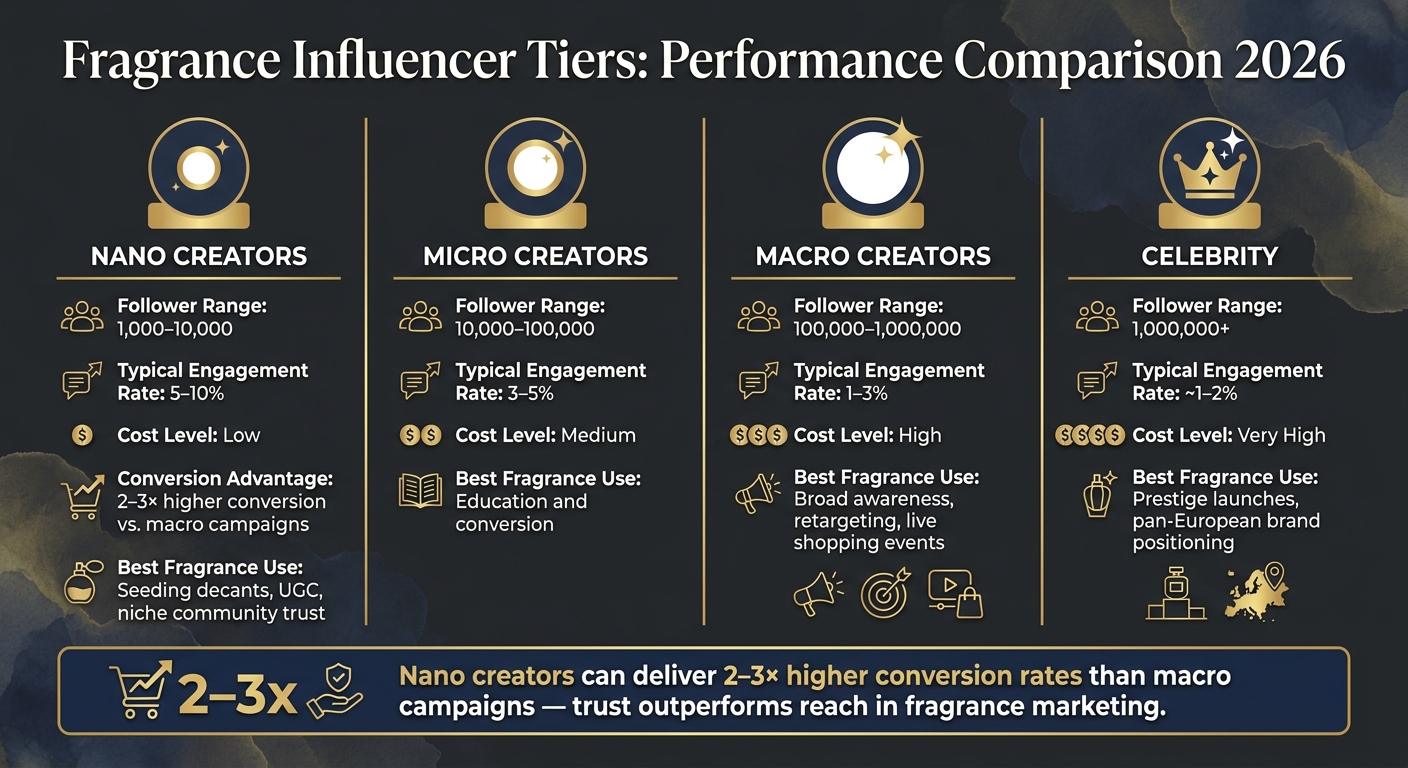
Kategorie influencerů v oblasti vůní: zapojení, náklady a konverze v roce 2026
Máme-li k dispozici zkušební velikosti, další krok je přímočarý: kteří tvůrci a jaké formáty dokážou proměnit zájem v reálné nákupy?
Srovnání: nano, mikro, makro tvůrci a celebrity
Jednotlivé kategorie influencerů plní různé úkoly. Zvolte nevhodnou úroveň a návratnost investic začne rychle klesat.
Ve většině případů míra zapojení (engagement) klesá s rostoucím počtem sledujících. Ohromující dosah sice vypadá na papíře skvěle, k odezvě však vést nemusí. Nano tvůrci s přibližně 1 000–10 000 sledujícími se často těší 5–10% zapojení. Mikro influenceři s 10 000–100 000 sledujícími se obvykle pohybují kolem 3–5 %. Makro profily dosahují zpravidla 1–3 % a účty celebrit na sítích typu Instagram mnohdy zůstávají u hodnot 1–2 %.
Tento rozdíl je zásadní. Nano a mikro tvůrci mívají často lepší konverzní poměr než zvučná jména. Ve výkonnostně orientovaných kampaních dokážou nano influenceři přinést 2–3× vyšší míru konverze než rozsáhlé makro kampaně. Mikro tvůrci pak nabízejí ideální kompromis: dostatečný dosah, silnější zapojení a příznivější náklady oproti špičkovým hvězdám.
| Kategorie | Rozsah sledujících | Typické zapojení | Úroveň nákladů | Nejlepší využití pro parfémy |
|---|---|---|---|---|
| Nano | 1 000–10 000 | 5–10 % | Nízká | Seeding odstřiků, UGC, důvěra v niche komunitách |
| Mikro | 10 000–100 000 | 3–5 % | Střední | Edukace a konverze |
| Makro | 100 000–1 milion | 1–3 % | Vysoká | Široké povědomí, retargeting, live shopping události |
| Celebrity | 1 milion+ | cca 1–2 % | Velmi vysoká | Prestižní uvádění na trh, celoevropské budování značky |
Kategorie tvůrce tedy roli hraje. O tom, zda divák pouze zhlédne video, nebo skutečně nakoupí, však často rozhoduje formát.
Formáty obsahu, které vedou zájemce o vůně přímo k nákupu
Některé formáty probouzejí zvědavost. Jiné přesvědčí k akci.
Analýza z 1. čtvrtletí 2024 ukázala, že přibližně 60 % nejúspěšnějších organických příspěvků o parfémech představovala videa GRWM. To mluví za vše. Když je vůně přirozenou součástí každodenního rituálu, rezonuje mnohem lépe než statická produktová fotografie či přímá prodejní nabídka.
Kromě GRWM patří k nejsilnějším motorům konverzí vyprávění příběhů postavené na vzpomínkách a náladách, a to zejména u generace Z a mladších mileniálů. Dává to smysl. Parfém lze stěží prodat pouhým výčtem vonných tónů. Propojte jej však s ročním obdobím, víkendovým výletem do města, deštivým večerem nebo přípravami na večírek a kompozice rázem ožije.
Kampaň značky Azha Perfumes založená na emocích, vzpomínkách a osobním vyjádření vygenerovala během deseti měsíců více než 3,3 milionu zhlédnutí na TikToku, Instagramu a YouTube, přičemž míra zapojení dosáhla 6,1 % – vysoko nad oborovým průměrem 3,8 %.
Skvěle funguje také live shopping, protože propojuje důvěryhodnost s okamžitým nákupním impulsem. Diváci vidí bezprostřední reakci tvůrce, mohou klást dotazy a ještě týž den objednat. Živá vysílání s influencery na TikToku již prokázala mimořádné prodejní výsledky.
| Formát | Vhodná platforma | Role ve funnelu | Přednost | Omezení |
|---|---|---|---|---|
| GRWM / Propojení s životním stylem | TikTok, Instagram | Povědomí → Zvažování | Působí organicky, vysoká míra sdílení | Vůně se může v celkovém obsahu ztratit |
| Vyprávění o náladách a vzpomínkách | TikTok, YouTube | Zvažování | Silná emocionální vazba, vysoký počet uložení | Obtížnější škálování při pevném scénáři |
| Live shopping | TikTok, Instagram | Konverze | Okamžitá důvěra, nákup v reálném čase | Vyžaduje zkušeného tvůrce a technické zázemí |
| Hloubkové rozbory vonných tónů | YouTube | Zvažování → Konverze | Buduje důvěryhodnost u dražších nákupů | Pomalejší růst dosahu, užší publikum |
I ten nejlepší formát však zklame, pokud publikum tvůrci nevěří.
Co říkají výzkumy o autenticitě, důvěře a rizicích kampaní
Výzkumy využívající strukturální modelování ukazují, že pokud sledující vnímají influencera jako upřímného, ohleduplného a transparentního ohledně placených spoluprací, parasociální interakce sílí a nákupní záměr roste. V marketingu vůní to platí dvojnásob, protože divák přes obrazovku k parfému nepřivoní. Důvěra musí zastoupit část práce, kterou dříve obstaralo vyzkoušení v prodejně.
Příliš svazující zadání mívají opačný účinek. Kampaně dosahují lepších výsledků, pokud tvůrci dostanou jasná pravidla ohledně tvrzení a označení spolupráce, ale zároveň si ponechají prostor vyjádřit se vlastním tónem. Pokud zní každý příspěvek stejně, publikum to okamžitě prohlédne. Když navíc tvůrce zmíní klady i zápory, vyznívá jeho hodnocení nesrovnatelně věrohodněji než nekritická chvála.
Právě proto je důvěra středobodem plánování kampaní pro rok 2026.
Je třeba mít na paměti i tři významná rizika:
- Stále se opakující formy označení spolupráce mohou oslabit důvěryhodnost, pokud sledující narážejí na identickou šablonu u příliš mnoha placených příspěvků.
- „Deinfluencing“ je v kosmetickém světě již zavedeným fenoménem a prémiové parfémy může citelně zasáhnout, pokud je vůně označena za předraženou či nevýraznou.
- Změny algoritmů na platformách mohou náhle změnit dosah i návratnost investic, a to i u vysoce kvalitního obsahu.
Jistější strategií je rozložit aktivity mezi různé úrovně tvůrců, platforem a formátů, než spoléhat výhradně na jednoho influencera či jeden kanál.
Váš osobní odborník na parfémy už čeká
Vyplňte náš rychlý vonný kvíz a objevte autentické designové a nišové parfémy vybrané podle vašeho vkusu – prozkoumejte je jako 2–8ml dekanty a vzorky, abyste si každý mohli vyzkoušet, než se rozhodnete pro celou lahvičku.
Najděte svou vůniCo tyto trendy znamenají pro strategii kampaní v roce 2026
Směr pro rok 2026: komunitní důvěra, social commerce a méně strojený obsah
V roce 2026 již hlavní výzvou není objevování ani budování důvěry. Je jí konverze.
Směr je jasně daný: kampaně v oblasti vůní fungují nejlépe, když působí věrohodně a lidsky, nikoli přehnaně vyumělkovaně. Studie společnosti Reech pro rok 2026 uvádí, že 69 % značek plánuje navýšit rozpočty na influencer marketing. Mezi jejich hlavní cíle patří budování důvěry (67 %) a kreativní obsah (67 %), následované cíleným dosahem (52 %).
V praxi to znamená, že každá platforma by měla plnit jinou funkci:
- TikTok pro objevování
- Instagram pro upevnění zájmu
- YouTube pro ověření a argumenty
Tato posloupnost je klíčová. Vůně může uživatele nejprve zaujmout na TikToku, poté se mu připomene na Instagramu a nakonec projde detailním testem výdrže na YouTube. Přesně tak se prvotní zájem mění v nákupní rozhodnutí.
Social commerce přináší nejlepší výsledky, je-li možnost nákupu začleněna do zadání pro tvůrce od samého počátku, nikoli přidána až dodatečně. Má-li být cílem prodej, musí nákupní cesta působit v rámci samotného obsahu zcela přirozeně.
Totéž platí pro méně stylizovaný obsah. Má úspěch tehdy, opírá-li se o něco konkrétního: o vzpomínku na vůni, jasnou příležitost k nošení, tip na vrstvení nebo upřímnou reakci bez přetvářky. Změna přístupu je prostá: stavte kampaně na reálných důkazech v rámci tvůrčí cesty influencera.
Proč objevitelské formáty a menší velikosti odpovídají poptávce vedené influencery
To přirozeně otevírá prostor pro zkušební formáty.
Když tvůrce sdílí upřímný dojem z parfému nebo předvede kombinaci pro vrstvení, většina lidí nechce rovnou investovat do celého flakonu. Chtějí vůni nejdříve vyzkoušet. A právě zde přichází na řadu sampling.
Průzkum společnosti Scento o plýtvání parfémy v Evropě zjistil, že 67 % evropských zákazníků vlastní alespoň jeden flakon, který použili méně než třikrát, a 89 % uvádí, že by kupovali více vůní, kdyby bylo testování dostupnější. Tato čísla hovoří jasně. Lidé mají o parfémy velký zájem, hledají však způsob, jak je objevovat bez zbytečného rizika.
Tento trend dokonale ladí s odklonem od jediného „podpisového“ parfému k budování pestrého vonného šatníku. Pro plánování kampaní to otevírá efektivnější cestu: obsah influencerů může provést zákazníka od zvědavosti k vyzkoušení vzorku a udržet značku v jeho povědomí dlouho po uvedení na trh.
Z komerčního pohledu jsou proto menší formáty naprosto logickým krokem. Odstřiky o objemu 2 ml, 5 ml a 8 ml ideálně doplňují objevování vůní na sítích, protože umožňují kompozici řádně otestovat před koupí velkého flakonu. Platforma Scento je na tomto principu přímo postavena a přináší evropským zákazníkům autentické designové vůně v pečlivě vybraných menších velikostech.
Závěr: klíčové trendy v marketingu parfémů, které stojí za to sledovat
Influenceři budou objevování nových vůní určovat i v roce 2026. Zásadní otázkou však zůstává, jak s nimi značky dokážou pracovat.
Využijte TikTok k probuzení zájmu, Instagram k udržení povědomí a YouTube k předložení detailních argumentů, které zákazník před nákupem potřebuje.
Soustřeďte se více na nano a mikro tvůrce. Jejich doporučení obvykle generují vyšší konverze, protože se těší mnohem hlubší důvěře.
Tato strategie funguje nejlépe, když je první krok pro zákazníka co nejjednodušší. Nabídněte velikosti 2 ml, 5 ml a 8 ml, aby se zájem probuzený tvůrci mohl snadno proměnit v nízkorizikové vyzkoušení. Scento vychází tomuto trendu vstříc a usnadňuje objevování vůní zákazníkům po celé Evropě.
Pro německý i širší evropský trh je poselství jasné: měřte úspěch pomocí CPA a poměru mezi vyzkoušením vzorku a nákupem celého flakonu, nikoli podle počtu sledujících. U unisex novinek vsaďte na mikro a nano influencery, sociální prodej a genderově neutrální narativ. V roce 2026 přinášejí nejlepší výsledky ty kampaně, v nichž se důvěryhodní tvůrci, bezpečné testování a měřitelné konverze vzájemně doplňují.
Často kladené otázky (FAQ)
Proč mají nano a mikro influenceři lepší konverze?
Nano a mikro influenceři dosahují lepších konverzí především proto, že jim publikum více věří. Jejich obsah obvykle nepůsobí strojeně a připomíná spíše přátelské doporučení než klasickou reklamu, což hraje zásadní roli.
Oslovují také menší, konkrétněji zaměřené komunity. Nesnaží se zaujmout každého, ale navazují kontakt s lidmi, kteří již sdílejí podobný vkus, estetiku či životní styl. Působí tak mnohem přístupněji a věrohodněji.
V marketingu parfémů je to ještě důležitější. Vůni nelze úspěšně prodat pouze strohými fakty. Můžete vyjmenovávat vonné tóny od rána do večera, parfém však zůstává hluboce emocionální a osobní záležitostí. Nano a mikro influenceři pomáhají tuto propast překlenout tím, že abstraktní složení proměňují v hmatatelné příběhy a emoce.
„Voní to jako čistě vypraná bílá košile po pozdní letní večeři.“
Takový nestrojený jazyk dokonale funguje. Parfém díky němu ožívá v konkrétních představách. A když si lidé dokážou představit, jak vůně zapadne do jejich vlastního života, zapojení roste a nákupní záměr výrazně sílí.
Jak by měly parfémové značky kombinovat TikTok, Instagram a YouTube?
Každou platformu je ideální využít pro jinou fázi zákaznické cesty.
TikTok podněcuje prvotní objevování a virální zájem. Instagram buduje aspiraci prostřednictvím vizuálního vyprávění propojeného s životním stylem. YouTube jde do hloubky díky detailním rozborům kompozic a edukaci, která posiluje důvěru před nákupem.
V tomto propojení provázejí platformy zákazníka od prvního impulsu až po informované zkoumání. Celý proces pak může plynule pokračovat výběrem odstřiků na Scento, které nabízejí ideální a nezávaznou cestu, jak si vůni osvojit před pořízením plného flakonu.
Proč jsou zkušební balení v marketingu parfémů tak důležitá?
Zkušební velikosti hrají v roce 2026 klíčovou roli, protože zákazníkům umožňují vybírat vůně uvážlivěji. Nejsou jen pouhým propagačním dárkem na jedno použití.
Vzhledem k tomu, že niche parfémy často stojí €150 až €400, menší vzorek poskytuje dostatek času s vůní skutečně žít, než se rozhodnete pro plné balení. To je nepostradatelné. Vůně může na papírku působit docela jinak než na kůži po hodině nošení, a zcela odlišně se chová v chladném pracovním dni než během horkého letního večera.
Právě proto je 60denní prostor na testování tak přínosný. Zákazník získá příležitost zjistit, jak parfém reaguje s chemií jeho pokožky a jak funguje v reálném každodenním provozu, nikoli jen při prvním nadechnutí.
Navíc se tím radikálně snižuje finanční riziko nákupu naslepo. Místo vysoké útraty za flakon, který by po týdnu zůstal stát na poličce, můžete vůni nejprve otestovat, vynosit a teprve poté koupit s naprostou jistotou. Krok za krokem si tak lze vybudovat rozmanitý vonný šatník bez zbytečných zklamání.

