
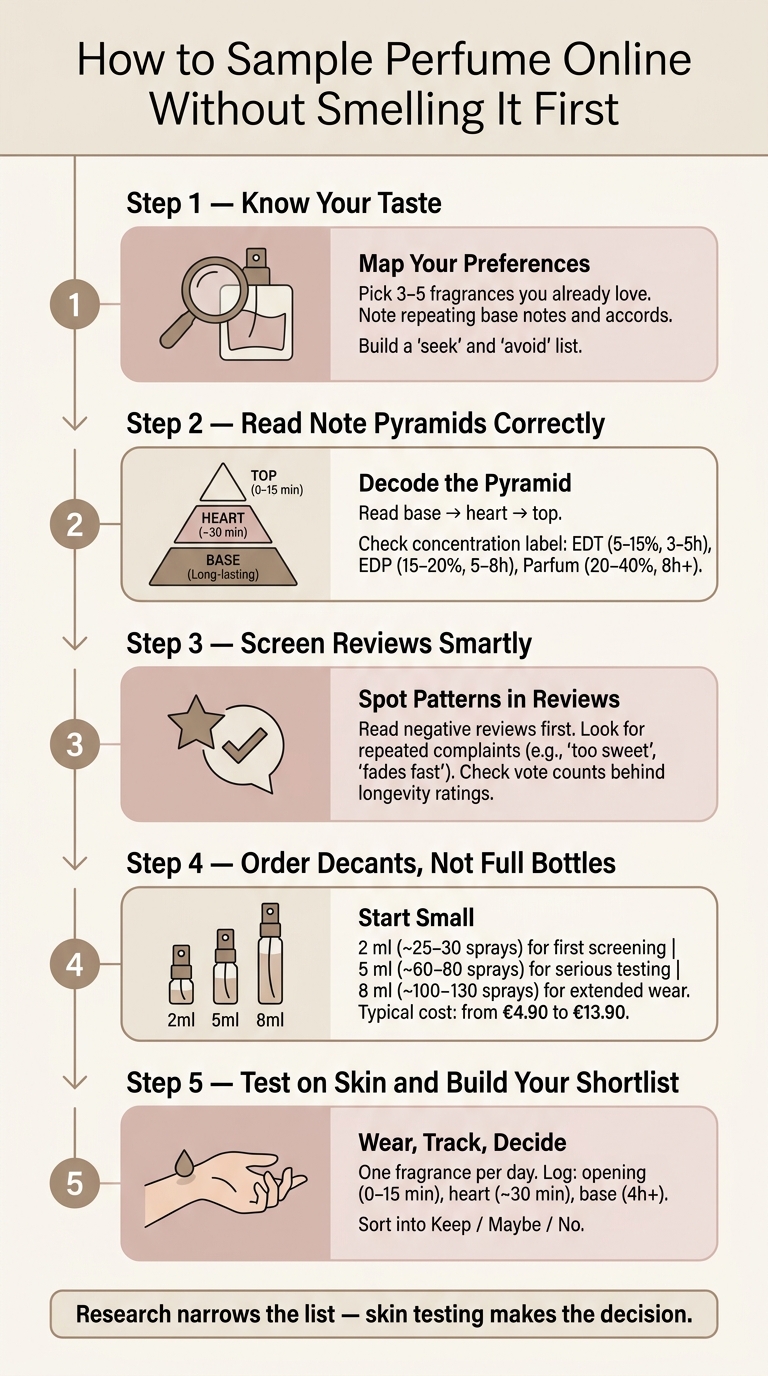
Nem szükséges vakon megvásárolni egy 100 €-s üveget ahhoz, hogy rátaláljon egy Önnek való illatra. Én ezt öt lépésben tenném: feltérképezem, mit szeretek már most, átvizsgálom az illatpiramisokat, felmérem az értékelések mintázatait, kis kiszerelésű dekantokat vásárolok, és a bőrömön tesztelem őket, mielőtt többet költenék.
Íme a lényeg röviden:
- 3–5 olyan parfümmel kezdek, amelyet már ismerek
- Feljegyzem az ismétlődő alapjegyeket és akkordokat
- Kizárom azokat az illatokat, amelyek olyan jegyeket tartalmaznak, amelyeket általában nem kedvelek
- Az EDT, EDP és Parfum koncentrációkat különféle viseletként kezelem
- Az értékelések segítségével kiszűröm az ismétlődő panaszokat, például: „túl édes” vagy „2 óra múlva elillan”
- Teljes üveg helyett először 2 ml-t vásárolok
- Naponta egyetlen illatot tesztelek, és feljegyzem a leszáradást, az időjárást és a fújások számát
- Minden mintát besorolok: Marad, Talán vagy Nem
Egy kis minta általában jóval kevesebbe kerül, mint egy rosszul megválasztott teljes üveg megvásárlása. Ráadásul 2 ml gyakran körülbelül 25–30 fújást tesz lehetővé, ami bőségesen elegendő egynél több alapos bőrpróbához. Számomra ez a lényeg: kevesebb találgatás, kevesebb felesleges kiadás, jobb választások.
Ha egyetlen mondatban kellene összefoglalnom: a kutatás szűkíti a listát, a bőrteszt hozza meg a döntést.
How to Sample Perfume Online: 5 — Step No — Blind — Buy Method
Hogyan mintázzunk parfümöket helyesen | A költséges hibák elkerülése!
1. lépés: Ismerje meg az ízlését a rendelés előtt
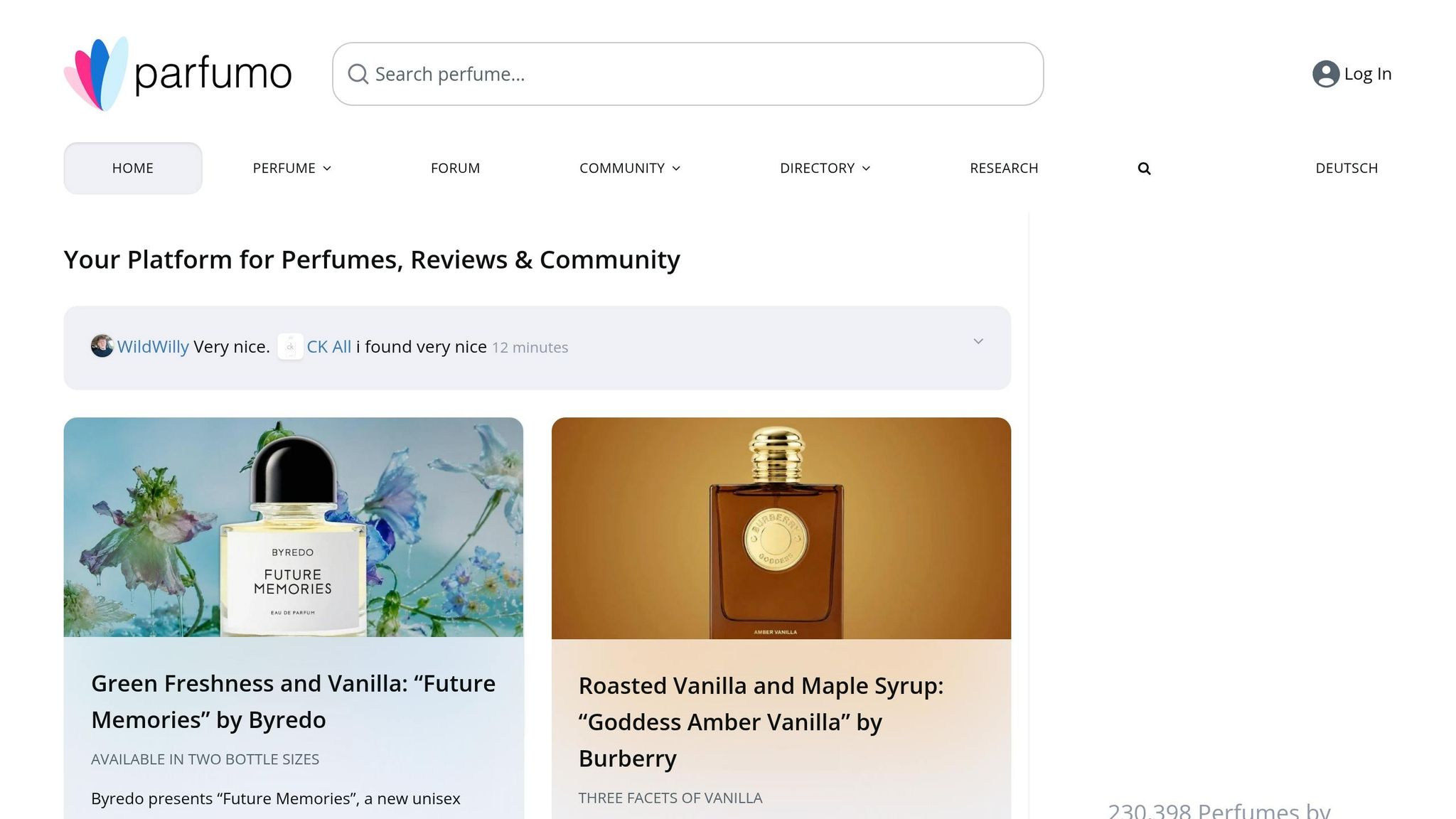
Mielőtt akár egyetlen mintát is rendelne, induljon ki abból, amit már ismer. Válasszon ki 3–5 olyan illatot, amelyet korábban már viselt, és használja őket referenciaként. Keresse meg őket a Parfumo oldalán vagy egy másik parfümadatbázisban, majd tekintse át az illatpiramist a fejjegyektől a szívjegyeken át az alapjegyekig. Itt most nem a költői leírás a fontos. A visszatérő mintázatokat kell keresnie.
Írja fel azokat az illatjegyeket, amelyek újra és újra előkerülnek. Lehet, hogy az ámbrás, fás, pézsmás, citrusos vagy lágy virágos jegyek felé hajlik. Ezek az ismétlődések egyszerű szűrőként szolgálnak majd a további minták kiválasztásakor.
Használja a Parfumo oldalt és parfümadatbázisokat jelenlegi kedvencei feltérképezésére
Helyezze a kedvenceit azok mellé az illatok mellé, amelyeket nem kedvelt. Ez a kontraszt rengeteget segít. Néha sokkal könnyebb kiigazodni az ízlésünkön, ha látjuk, mi nem működött.
Keresse azokat az akkordokat és jegyeket, amelyek ismétlődnek a kedvenc illataiban, majd jegyezze fel azokat is, amelyek a kevésbé sikeres próbálkozásokban szerepelnek. Az elutasított jegyek listája éppoly fontos, mint a kedvenceké. Ha bizonyos kompozíciók túl édesnek, túl élesnek vagy egyenesen zavarónak tűntek, az rendkívül hasznos információ. Segít kizárni azokat az illatokat, mielőtt olyan mintákra költene, amelyekben szinte biztosan csalódna.
Egy egyszerű módszer a rendszerezésre:
- Keresendő jegyek: azok, amelyek rendszeresen felbukkannak a szeretett illatokban
- Kerülendő jegyek: azok, amelyek a bántó, disszonáns vagy túlzottan édes kreációkhoz kötődnek
Még egy fontos szempont: egy illat jelentősen eltérhet a különböző töménységekben. Az EDT, az EDP és az Extrait gyakran teljesen más illatként viselkedik a bőrön. Ezért mindegyik változatot kezelje önálló alkotásként, nem csupán apró variációként.
Töltsön ki egy illatcsalád-tesztet, és állítsa össze jegylistáját
Egy illatcsalád-teszt kitöltése hasznos kiindulópontot adhat. A legtöbb ilyen teszt olyan profilokba sorolja be az embert, mint a virágos-fás-pézsmás vagy a friss aromás. Bár mindent nem árul el, a helyes irányt kijelölheti.
Amint megvan az eredmény, írjon két rövid listát: mit keres, és mit kerül el. Tartsa nyitva ezt a listát böngészés közben. Minden kiválasztandó mintának át kell mennie ezen a szűrőn, mielőtt a kívánságlistára kerülne.
Ez az apró szokás alapjaiban változtatja meg a teljes folyamatot. A céltalan görgetés és találgatás helyett tudatosan és fókuszáltan válogathat. A következő lépésben pedig ugyanezt a listát használhatja az illatpiramisok összehasonlításakor.
2. lépés: Értelmezze helyesen az illatpiramist és a koncentrációkat
Használja az 1. lépésben összeállított jegylistát arra, hogy minden termékoldalon kiszűrje a kizáró tényezőket. A cél egyszerű: az illatpiramis és a koncentráció jelölése alapján kizárni azokat az illatokat, amelyek valószínűleg nem felelnek meg az ízlésének.
Kezdje az alap-, majd a szív-, végül a fejjegyekkel
Olvassa a piramist az alaptól felfelé haladva. Az alapjegy marad Önnel a leghosszabb ideig, ezért érdemes ezzel indítani. Ha tudja, hogy az olyan jegyek, mint az oud, a pacsuli vagy a vanília nem működnek Önnél, itt már az elején kiszűrheti őket.
Ezután térjen át a szívjegyekre. Ez adja meg az illat valódi karakterét, miután a nyitány elcsendesedett. Csak ezután vizsgálja meg a fejjegyeket, amelyek az első néhány percet határozzák meg. Tekintsen rájuk úgy, mint egy film előzetesére, amely még nem maga az egész film.
Ha az alapjegyek megfelelőnek tűnnek, jöhet az intenzitás és az ár mérlegelése.
Mit árulnak el az EDT, EDP és Parfum jelölések az intenzitásról és az árról?
A koncentráció megnevezése hozzávetőleges képet ad arról, milyen intenzívnek fog érződni egy illat, és mennyi ideig tarthat a bőrön. Íme egy egyszerű összehasonlítás:
| Koncentráció típusa | Töménység | Jellemző tartósság | Leginkább ajánlott | Jellemző ár |
|---|---|---|---|---|
| Eau de Toilette (EDT) | 5–15 % | 3–5 óra | Könnyed hétköznapi viselet, nyár | 50–120 € |
| Eau de Parfum (EDP) | 15–20 % | 5–8 óra | Általános mindennapi viselet, iroda | 80–220 € |
| Parfum / Extrait | 20–40 % | 8+ óra | Hosszú napok, esti alkalmak, tél | 180–450+ € |
A magasabb koncentráció általában intenzívebb szillázst és hosszabb tartósságot jelent, de a címke önmagában nem mond el mindent. A bőrtípus, az időjárás és a formula mind szerepet játszanak. Használja tehát a megjelölt töménységet iránymutatásként, nem pedig garanciaként.
Amennyiben a jegyek és a koncentráció továbbra is találkoznak az ízlésével, a következő szűrőt az értékelések elemzése jelenti.
Személyes illatszakértője már várja
Töltse ki rövid illatkvízünket, és fedezzen fel hiteles designer és niche parfümöket, amelyek az ízléséhez illenek – próbálja ki őket 2–8ml-es dekantokban és mintákban, hogy mindegyiket kipróbálhassa, mielőtt teljes flakon mellett dönt.
Találja meg illatát3. lépés: Olvassa az értékeléseket anélkül, hogy félrevezetnék
A jegyek és a koncentráció után az értékelések kínálják az egyik leggyorsabb módot annak felmérésére, hogyan viselkedik egy parfüm a mindennapi életben. Általában jóval többet árulnak el a márkák leírásainál, ha a tartósságot, a hatósugarat és a bőrön való kifejlődést szeretné megítélni.
Figyelje az ismétlődő kifejezéseket, a szavazatok számát és a gyakori panaszokat
A márkaismertetők hangulatot közvetítenek. A véleményekből viszont kiderül, mi történik az első permet után. Kitart az illat? Bőrközeli marad, vagy megtölti a teret? Nem válik-e szappanszerűvé, fémes érzetűvé vagy túl púdervédetté, miután a nyitány elcsitult?
A legmegbízhatóbb nyom az ismétlődés. Ha sok ember, egymástól függetlenül, ugyanazt a kifejezést használja, az a mintázat jóval többet számít bármelyik egyedi véleménynél.
Egy okos fogás: olvassa el először a negatív értékeléseket. Keresse az újra és újra előkerülő panaszokat, majd mérlegelje, hogy ezek a pontok Önt zavarnák-e. A „leszáradás után túl édes” megjegyzés az egyik embernek kizáró ok lehet, míg a másiknak egyáltalán nem jelent problémát.
Segít az is, ha megnézi a tartósságra és szillázsra adott szavazatok számát. Egy sok szavazaton alapuló pontszám általában megbízhatóbb, mint egy olyan, amely csupán néhány véleményre épül.
Amikor a tartósságra vonatkozó vélemények teljesen ellentmondásosak, keresse a bőrtípusra tett utalásokat. A zsírosabb vagy jól hidratált bőr hosszabb ideig tartja meg az illatmolekulákat, mint a száraz bőr. Ez önmagában magyarázatot adhat arra, miért nevezi az egyik ember hosszan tartónak ugyanazt az illatot, míg a másik szerint pillanatok alatt elillan.
És számoljon a szaglófáradtsággal (illatvaksággal) is. Előfordul, hogy egy parfüm úgy tűnik, mintha elillant volna, ám a hiba nem a gyenge teljesítményben rejlik: egyszerűen az orrunk szokott hozzá a jelenlétéhez.
Hogyan használja a „Ha tetszik az X, próbálja ki az Y-t” összehasonlításokat túlzott elvárások nélkül
A „Ha tetszik az X, próbálja ki az Y-t” típusú ajánlások hasznosak lehetnek, de leginkább hozzávetőleges iránytűként működnek, nem pedig ígéretként. A közös akkordok rámutathatnak ugyanarra az illatcsaládra, de nem fedik fel pontosan, hogyan viselkedik majd az adott kompozíció a saját bőrén.
Itt játszik szerepet a bőr pH-értéke és hidratáltsága. Két illat papíron szinte azonosnak tűnhet, a bőrön viselve mégis egészen eltérő élményt nyújthat.
| Forrás típusa | Hasznosság | Torzítási kockázat | Alkalmazás vak mintázásnál |
|---|---|---|---|
| Hivatalos márkapromóció | Alacsony | Magas (marketingvezérelt) | A hangulatot adja át, nem a valós viselést |
| Közösségi értékelések | Magas | Közepes (szubjektív bőrkémia) | A legalkalmasabb az ismétlődő minták és kizáró jegyek felfedezésére |
| Összesített akkordadatok | Közepes | Alacsony (adatalapú) | Segít megerősíteni, hogy az illat illeszkedik-e az előnyben részesített családhoz |
| „Ha tetszik az X” funkciók | Közepes | Közepes (algoritmikus) | Kiváló új parfümházak felfedezésére, de ritkán ad pontos egyezést |
Használja ezeket az információkat arra, hogy a listát azokra az illatokra szűkítse, amelyeket valóban érdemes tesztelni. Ha egy illat átmegy ezeken a rostákon, kezdje először a legkisebb mintamérettel.
4. lépés: Tervezzen alacsony kockázatú mintarendelést dekantokkal és felfedezőkészletekkel
Miután a szűkített lista összeállt, itt az ideje, hogy az elképzelésekből megrendelés szülessen. A cél itt egyszerű: éppen csak annyit költeni, amennyi ahhoz szükséges, hogy kiderüljön, hogyan viselkedik az illat a bőrön - anélkül, hogy elhamarkodottan beruházna egy egész üvegre.
Ha egyetlen parfümházat szeretne megismerni, egy felfedezőkészlet kitűnő választás az otthoni teszteléshez. Ha a különböző stílusokat és alkotókat szeretné összehasonlítani, a dekantok nagyobb szabadságot nyújtanak. Kezdje kis mérettel, és csak akkor váltson nagyobbra, ha a kompozíció a bőrön is bizonyít.
Válassza ki a megfelelő méretet: 2 ml az ellenőrzéshez, 5 ml a teszteléshez, 8 ml az alapos megismeréshez
| Méret | Kb. fújásszám | Tesztelési mélység | Jellemző költségkeret €-ban |
|---|---|---|---|
| 2 ml | ~25–30 | Első áttekintés; gyors bőrpróba | Körülbelül 4,90–5,90 €-tól |
| 5 ml | ~60–80 | Részletes tesztelés; körülbelül egy hétnyi vagy több viselés | Körülbelül 9,90 €-tól |
| 8 ml | ~100–130 | Kiterjedt viselet; egyenértékű egy kisüveges kipróbálással | Körülbelül 13,90 €-tól |
A fenti hozzávetőleges fújásszámok és induló árak a Scento hivatalos mintaméreteit és díjszabását tükrözik.
Ez a méretlépcső nem véletlenül működik olyan jól. A 2 ml elegendő az első benyomáshoz. Hamar kiderül, ha valami nem illik Önhöz, túl gyorsan elhalványul, vagy egyszerűen idegennek hat. Az 5 ml már lehetőséget ad arra, hogy több napon át, különféle alkalmakkor és körülmények között viselje az illatot. A 8 ml az a pont, ahol a „tesztelés” átadja a helyét a valódi együttélésnek az illattal - munkanapokon, hétvégéken és esti eseményeken.
Amint megtalálta az aktuális fázisához illő méretet, csak annyit rendeljen, amennyi az illat mindennapi életben történő kipróbálásához szükséges.
Hogyan tesztelhet illatokat a Scento segítségével teljes üveg vásárlása nélkül
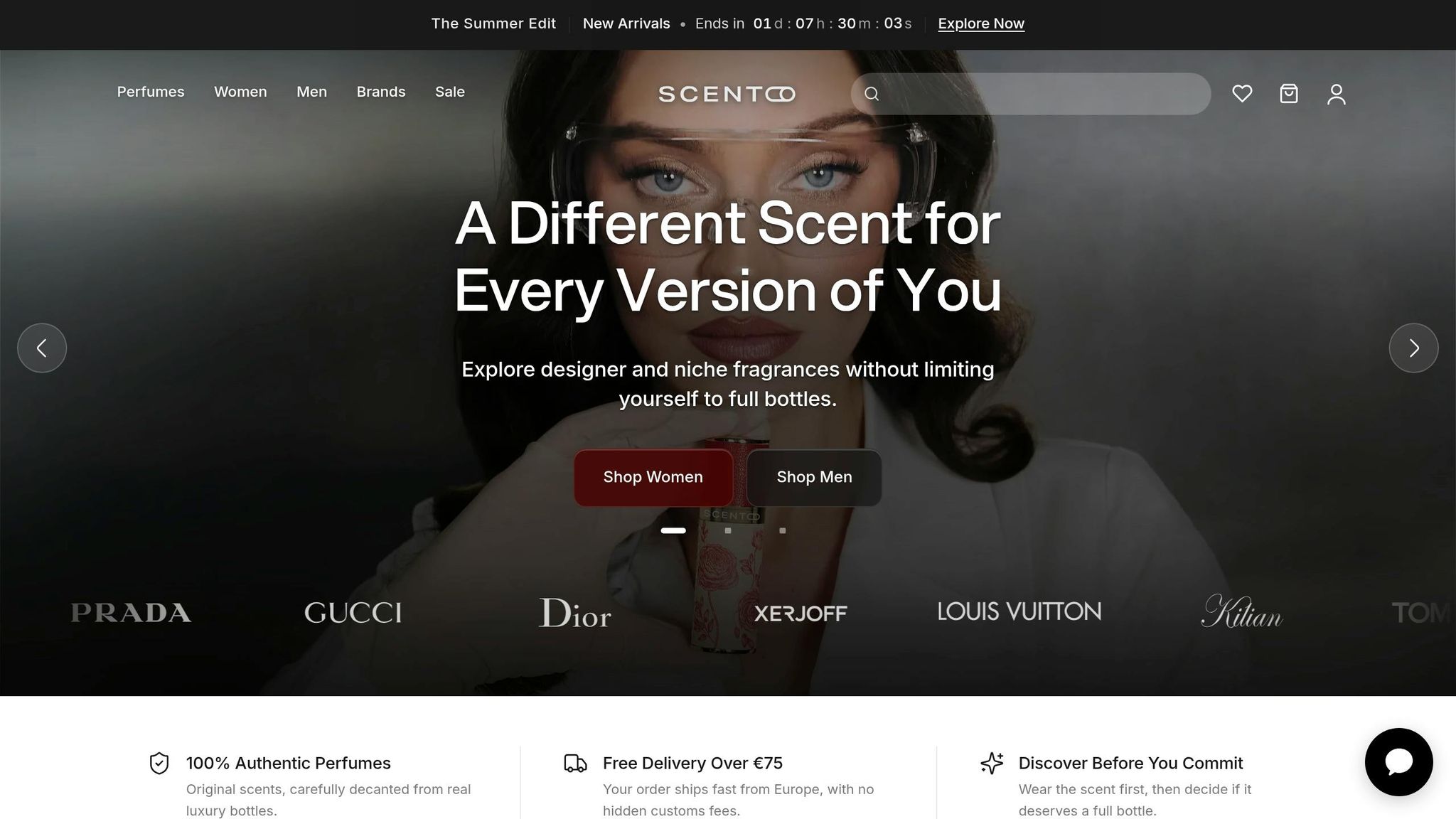
A Scento 2 ml-es, 5 ml-es és 8 ml-es dekantokat kínál. A 8 ml-es változat újratölthető szórófejes tokban érkezik, ami ideálissá teszi a mindennapi használatra és utazásokhoz. A Scento emellett havi 8 ml-es előfizetést is biztosít 12,90 €-tól, amelyben kiválaszthat egy illatot, megkapja a 8 ml-es kiszerelést, és a tagságot bármikor lemondhatja - ez elegáns módja annak, hogy egy teljes hónapon át együtt éljen egy illattal, mielőtt eldönti, helye van-e a kollekciójában.
Rendelés előtt érdemes áttekinteni az AGB-t (Általános Szerződési Feltételeket). A felbontott parfümöket általában nem lehet visszaküldeni. Éppen ezért jelentenek kiváló megoldást a dekantok: csupán néhány eurót kockáztat illatonként, nem pedig egy teljes üveg árát.
Egy bevált megközelítés:
- 2 ml használata az első szelektáláshoz
- Továbblépés 5 ml-re azoknál az illatoknál, amelyek ígéretesek maradnak
- A 8 ml választása kizárólag azokhoz az esszenciákhoz, amelyeket hosszabb időn át szeretne rendszeresen viselni
Ezután tesztelje a mintákat egyesével, és kövesse nyomon, hogyan alakulnak a nap folyamán.
5. lépés: Tesztelje a megrendelt mintákat, és alakítsa ki a szűkített listát
Miután kiválasztotta a mintaméreteket, ideje őket közvetlenül a bőrön tesztelni, egyenként haladva. Ez az a pillanat, amikor az online kutatás elmélete egyértelmű ítéletté érik. Egy parfüm papíron tökéletesnek tűnhet, a bőrre kerülve mégis hatástalan maradhat.
Egyszerre csak egy illatot teszteljen, és kövesse a leszáradást
Naponta egyetlen illatot viseljen a bőrén, ahelyett hogy többet próbálna ki párhuzamosan. Először szagolja meg az üvegcsét. Ezután fújja tesztcsíkra a nyitány ellenőrzéséhez, majd permetezzen egyet a csuklójára vagy a könyökhajlatára. Hagyja magától kifejlődni, ne dörzsölje össze a bőrét.
Ellenőrizze az illatot meghatározott időközönként: a 0–15. percben a nyitányt, körülbelül a 30. percnél a szívjegyeket, és 4+ óra elteltével az alapot és a leszáradást. Vezessen egy rövid feljegyzést minden egyes viselési tesztről a következőkkel:
- dátum ÉÉÉÉ.HH.NN formátumban
- hőmérséklet °C-ban
- fújások száma
- beltéri vagy kültéri környezet
Ez a csekély odafigyelés meglepően sokat segít. Egy meleg szoba, a hűvös kinti levegő, az ingázás vagy egy íróasztal melletti nap mind megváltoztathatja ugyanazon illat viselkedését.
Rendszerezze az eredményeket a Marad, Talán és Nem listákba
Használja iránymutatásként az illatpiramist és az értékelésekből leszűrt pontokat, majd hasonlítsa össze őket azzal, ami a bőrén kibontakozott. Érezhetővé vált az alap? Úgy nyílt meg az illat, ahogyan várta?
Minden viselés után sorolja be a mintát a komfortérzet, a tartósság, az alkalomhoz illőség és az ár-érték arány alapján a Marad, Talán és Nem listák egyikébe.
A „Marad” azt jelenti, hogy bármikor szívesen nyúlna érte újra.
A „Nem” azt jelzi, hogy az illat nem illett Önhöz.
A „Talán” azoknak a kreációknak van fenntartva, amelyek tetszenek, de szeretné őket egy másik napon vagy eltérő időjárás mellett újra próbára tenni.
Ha egy parfüm ebben a köztes zónában marad, tesztelje négy különböző napon, változó körülmények között.
Gyakran Ismételt Kérdések
Hány alkalomra elegendő egy 2 ml-es minta?
Egy 2 ml-es dekant körülbelül 25–30 fújást tesz lehetővé. Ez általában bőségesen elegendő ahhoz, hogy több napon át tesztelje az illatot, és megtapasztalja, hogyan viselkedik a bőrén.
Ez a méret a legideálisabb a tartósság, a hatósugár és a bőrkémia megfigyelésére, mielőtt eldöntené, hogy nagyobb kiszerelésre vagy egy teljes üvegre vált.
Papíron vagy a bőrön érdemes először tesztelni a parfümöt?
A parfümöt mindig a bőrön tesztelje, ne csupán papíron. A tesztcsík jó az első benyomás gyors megszerzésére, de nem mutatja meg, hogyan lép kölcsönhatásba a bőr saját kémiájával, és miként bontakozik ki az órák múlásával.
Permetezze a pulzuspontokra, majd hagyjon neki körülbelül 30 percet, hogy megnyugodjon. Ha valós képet szeretne kapni a tartósságról, a szillázsról és arról, mennyire illik a mindennapjaihoz, viselje a bőrén több napon keresztül.
Mi a teendő, ha egy illat 30 perc elteltével teljesen megváltozik?
Ez teljesen természetes folyamat, hiszen a parfüm a bőrre kerülve folyamatosan alakul és átalakul. Az első permet az intenzív fejjegyeket hozza előtérbe, amelyek viszonylag hamar elillannak. Ezt követően, a lecsillapodás során kezdenek megmutatkozni a szív- és alapjegyek.
A bőr pH-értéke, a természetes lipidréteg és a testhőmérséklet mind formálják az illatélményt. Vigye fel a pulzuspontokra, és várjon legalább 30 percet, mielőtt végleges véleményt formálna róla.

