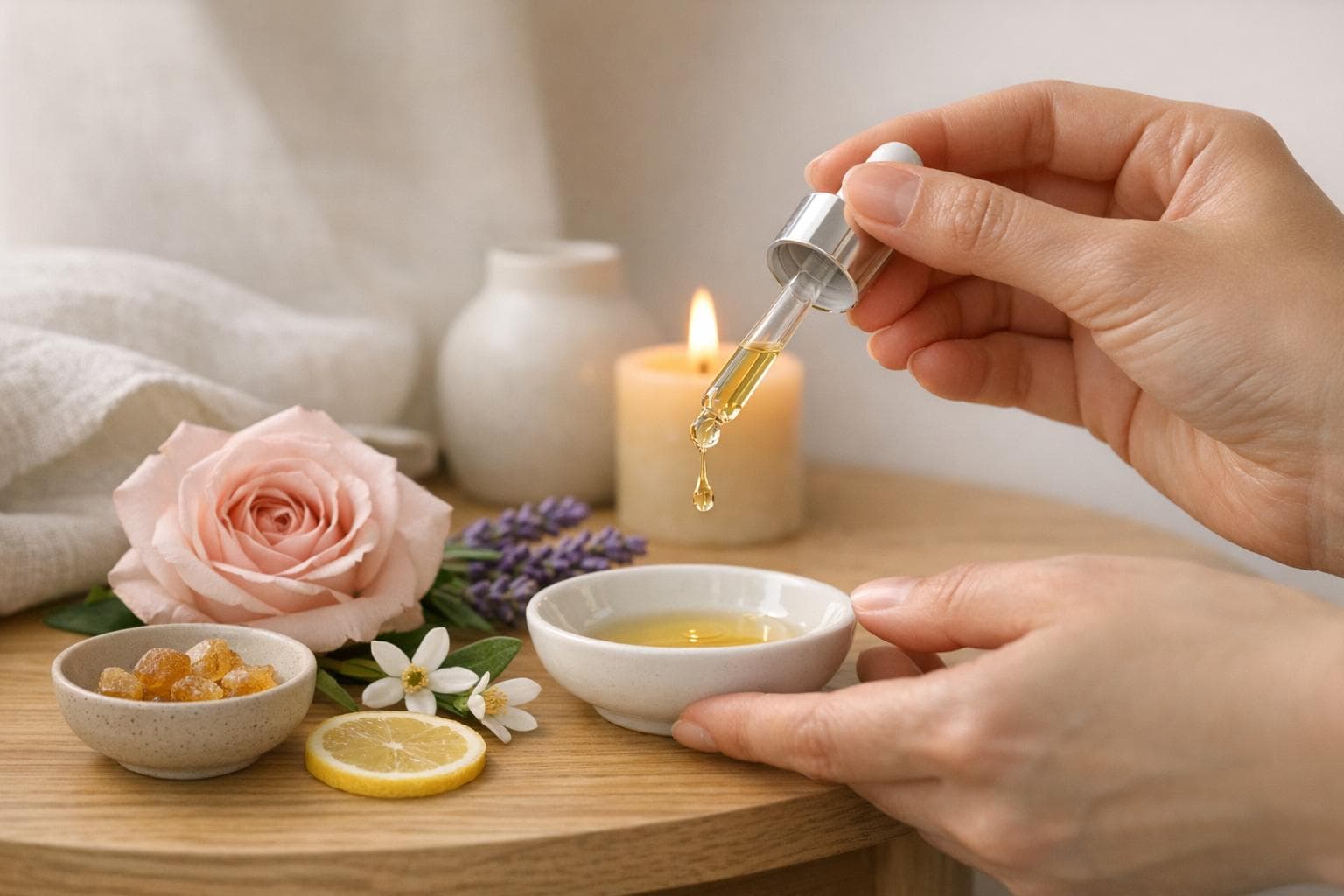
Grief changes how your brain processes scents, directly linking smell to emotions and memory. This unique connection explains why certain fragrances can provide comfort and aid emotional healing. Rose, frankincense, lavender, neroli, and citrus oils are particularly effective for soothing sorrow, reducing anxiety, and lifting mood. Here’s how they work:
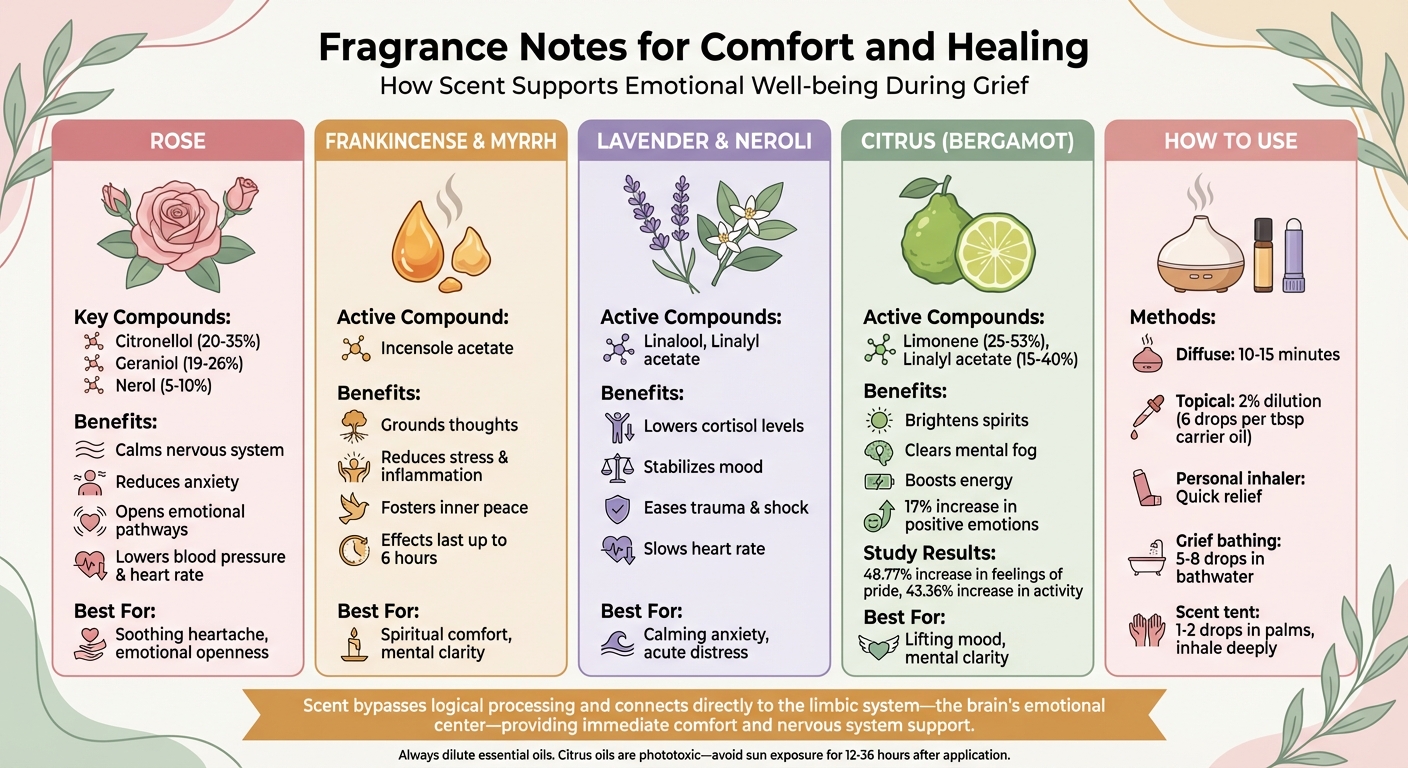
- Rose: Calms the nervous system, reduces anxiety, and opens emotional pathways.
- Frankincense & Myrrh: Ground thoughts, reduce stress, and foster inner peace.
- Lavender & Neroli: Lower cortisol, stabilize mood, and ease trauma.
- Citrus Notes: Brighten spirits, clear mental fog, and boost energy.
Incorporating these scents into daily rituals, like diffusing oils or applying blends, can help manage grief and promote a sense of calm. Affordable options like decants from brands such as Scento allow you to explore these fragrances without committing to full bottles. Fragrance becomes more than a sensory experience - it’s a tool for emotional support.
Essential Oil Benefits for Grief and Emotional Healing Guide
Rose Notes: Soothing Heartache and Emotional Openness
Rose essential oil, derived from Rosa damascena, contains over 275 compounds that can help calm the nervous system during times of grief. Among its key components are citronellol (20–35%), which reduces neuroinflammation and protects brain cells, geraniol (19–26%) with its antioxidant and anti-inflammatory effects, and nerol (5–10%), known for its ability to ease anxiety. These properties shed light on why rose has traditionally been used to support emotional resilience.
Scientific studies back these benefits. In 2009, researchers discovered that inhaling rose oil could lower blood pressure, breathing rate, pulse rate, and skin temperature. A 2012 pilot study in high-stress medical environments revealed that using rose and lavender oil twice weekly for four weeks significantly alleviated postnatal depression and anxiety. Similarly, patients in coronary care units reported better sleep quality after inhaling rose oil for three consecutive nights.
"Rose oil isn’t just for romance; it’s for resilience - body and mind." — Dorene Petersen, Founding President, American College of Healthcare Sciences
The scent of rose has a profound effect on the limbic system, offering immediate comfort and a sense of compassion. This can be particularly helpful during the unpredictable waves of grief.
In moments of acute distress, try applying a rose-infused balm as a sensory anchor. Incorporating rose-scented items into daily rituals - like lighting a candle while reflecting on cherished memories - can also help gently separate the love and warmth of those memories from the sharper edges of loss. In this way, rose becomes a bridge, honoring the past while creating space for healing.
While rose opens the heart, the next blend focuses on grounding the spirit with frankincense and myrrh.
Frankincense and Myrrh: Grounding and Spiritual Comfort
Frankincense (Boswellia carterii) and myrrh (Commiphora myrrha) have been treasured for thousands of years. Frankincense, in particular, has been traded for over 5,000 years, and modern studies now back some of its traditional uses.
These two resins complement each other beautifully: frankincense is known for clearing mental fog and calming restless thoughts, while myrrh fosters a sense of inner peace and emotional security.
The calming properties of frankincense are linked to incensole acetate, a compound that activates TRPV3 channels and inhibits NF-κB, reducing inflammation and stress-related cytokines. Preclinical research has shown that it can lower brain inflammation for as long as six hours. Dr. Gerald Weissmann, former Editor-in — Chief of The FASEB Journal, noted, "This study provides a biological explanation for millennia-old spiritual practices."
When inhaled, frankincense directly affects the limbic system, particularly the amygdala and hippocampus, which are involved in mood regulation and memory. This interaction can help shift emotional states, evoke calming memories, and even reduce cortisol levels.
Myrrh, on the other hand, works on a deeper emotional level, particularly during times of grief. It is especially helpful in the "acceptance and renewal" phase, aiding in letting go of past attachments and inviting a sense of peace. Aromatherapy expert Marika Fleri shares, "In the presence of frankincense, the room changes. The air becomes calmer, sacred even. I have witnessed how it supports moments of deep stillness."
For practical use, you can try the Heart Embrace diffuser blend: combine 2 drops of frankincense, 1 drop of myrrh, 3 drops of rose, and 2 drops of bergamot to help release emotional tension. On particularly heavy days, a personal inhaler mix of 3 drops myrrh, 3 drops vetiver, 2 drops cypress, and 2 drops lavender can offer relief. Always dilute the oils at 1 drop per ounce in a carrier oil for safe application.
While frankincense and myrrh provide grounding and spiritual comfort, other scents like lavender and neroli can further support by addressing the physical effects of grief.
Lavender and Neroli: Calming Anxiety and Overwhelm
Lavender (Lavandula angustifolia) is well-known for its ability to ease anxiety. This is largely thanks to compounds like linalool and linalyl acetate, which help lower cortisol levels and encourage relaxation. Lavender also interacts with GABA receptors in the brain, enhancing the release of serotonin and dopamine to help stabilize mood.
Beyond its mental health benefits, lavender has notable physical effects. Simply inhaling its scent can slow your heart rate, lower blood pressure, and guide your body out of the stress-driven "fight-or-flight" state into a more restorative mode. Jade Shutes, founder of the School for Aromatic Studies, highlights the unique power of aromatherapy:
"Smell bypasses multiple processing centers to reach the limbic system directly, making aromatherapy uniquely potent."
Neroli (Citrus aurantium var amara) brings its own strengths to the table, particularly in addressing acute shock and trauma. It pairs beautifully with lavender, offering a complementary approach to calming the nervous system. Registered aromatherapist Margo Fletcher explains:
"Lavender & Neroli singly or combined calm the central nervous system to provide rapid relief from shock and trauma."
For practical ways to harness these benefits, consider grief bathing: mix 5–8 drops of lavender or neroli with a carrier oil or milk, then add to warm bathwater. This simple ritual can help release both physical tension and emotional overwhelm. Another option is a personal inhaler with a lavender-neroli blend, perfect for soothing your nerves when you’re on the go. For topical applications, dilute 1–2 drops of essential oil in a teaspoon of carrier oil and gently massage onto your heart, temples, or wrists during moments of distress.
This calming duo also lays the groundwork for uplifting citrus notes, which can help brighten your mood and sharpen mental clarity.
Your Personal Fragrance Expert Awaits
Take our quick scent quiz to discover authentic designer and niche fragrances matched to your taste — explore them as 2ml, 5ml, 8ml & 30ml decants and samples, so you can try each one before committing to a full bottle.
Find Your ScentCitrus Notes: Lifting Mood and Clearing Mental Fog
Citrus notes - particularly bergamot - are well-known for their ability to brighten spirits and cut through mental fog. These oils have a unique way of stimulating the mind, making them a popular choice for mental clarity.
Bergamot essential oil, for instance, contains 25–53% limonene and 15–40% linalyl acetate. These compounds are linked to the release of neurotransmitters like GABA, glutamate, and glycine in the hippocampus. These neurotransmitters interact with the limbic system, which is responsible for regulating emotions, to create a noticeable mood shift.
Master Perfumer Ruth Mastenbroek sheds light on this process:
"Citrus essential oils have been shown to have an energizing effect on mood which is why aromatherapists use them to boost mood because certain components of these oils are known to reduce stress by influencing the areas of the brain responsible for these reactions."
To back this up, a 2017 pilot study in Pleasant Grove, Utah, led by researchers Xuesheng Han, Tory L. Parker, and Jacob Gibson, explored the effects of bergamot essential oil on mood. In a mental health treatment center, 57 participants were exposed to diffused bergamot oil for 15-minute intervals. Results, measured via the Positive and Negative Affect Schedule (PANAS), showed a 17% rise in positive emotions, along with significant increases in feelings of pride (48.77%) and activity (43.36%). Another study from Japan found that just 10 minutes of inhaling citrus scents could elevate mood for up to 30 minutes.
To incorporate citrus scents into your routine, try diffusing these oils in the morning for 10–15 minutes. This brief session can help lift mental heaviness and set a positive tone for the rest of the day. Since citrus notes tend to evaporate quickly, pairing them with deeper base notes like woods or white flowers can extend their benefits. Ultimately, selecting a citrus scent that resonates with you personally can enhance its ability to ease emotional stress. This small but powerful ritual can pave the way for exploring more complex, research-based fragrance blends.
Research — Based Fragrance Blends for Healing
When specific notes are combined, they can address the complex layers of grief. Research suggests that blending essential oils can ease emotional pain, stabilize the nervous system, and uplift the spirit, creating a sense of emotional safety. These combinations amplify the individual benefits of each note, offering support for the many dimensions of grief.
One widely studied blend includes Rose, Frankincense, and Bergamot, often referred to as a "heart-centered grief" formula. Here’s how it works: Rose helps soften sorrow and opens emotional pathways, Frankincense provides grounding and encourages deeper breathing, while Bergamot lifts the mood and alleviates heavy sadness. A diffuser recipe for this blend could include 3 drops of Rose, 2 drops of Frankincense, 2 drops of Bergamot, and 1 drop of Myrrh to release emotional tension. While this blend supports heart-centered grief, other combinations are tailored for acute shock and trauma.
For moments of shock or trauma, a blend of Neroli, Myrrh, and Yarrow offers a different kind of support. Neroli soothes acute distress, Myrrh encourages deep inner calm, and Yarrow acts as a protective layer during emotionally draining times. To use, prepare a personal inhaler with 3 drops of Neroli, 3 drops of Myrrh, and 2 drops of Yarrow for quick relief during overwhelming moments.
Topical application is another effective way to experience essential oils, providing sustained comfort. When applied to pulse points - like the wrists, temples, or over the heart - essential oils can enter the bloodstream within 20 minutes, offering prolonged benefits. Always dilute oils safely: use a 2% concentration (6 drops per tablespoon of carrier oil) or a 1% dilution (3 drops per tablespoon) for sensitive skin. For example, a grounding roller blend might include 3 drops of Cypress, 2 drops of Helichrysum, 4 drops of Frankincense, and 4 drops of Bergamot in a 10 ml roller bottle filled with jojoba oil.
For quick relief during acute emotional distress, the "scent tent" method is highly effective. Add 1–2 drops of Frankincense or Vetiver to your palms, rub them together, and cup your hands over your nose. Breathe deeply, allowing the scent to reach the olfactory bulb - the brain’s emotional processing center. This method can provide noticeable effects in as little as 5 minutes.
Lastly, keep in mind that certain citrus oils, like Bergamot, can be phototoxic. Avoid exposing skin treated with these oils to sunlight for 12–36 hours to prevent irritation.
Scento Fragrances Featuring Comforting and Healing Notes

Dealing with grief shouldn’t mean shelling out €175–€280 for full bottles of perfume. That’s where Scento steps in, offering 8ml decants (about 120 sprays) of designer and niche fragrances featuring comforting notes like rose, frankincense, lavender, neroli, and citrus.
These decants provide an affordable way to explore authentic scents in travel-friendly vials. From small samples for quick trials to 8ml sizes for longer use, you can create a personalized collection that aligns with your emotional journey. Scento is a perfume decant and sample retailer, and every product is available for one-time purchase without any subscription. Scento+ is Scento’s optional membership: the monthly fee comes back in full as store credit to spend on any perfume, members get 10% off, a free sample with every order, a free perfume every six months and a birthday gift, and you can pause or cancel anytime. This makes it easier to find fragrances that resonate with your healing process while staying flexible to your changing needs.
For example, you might try Dries Van Noten Jardin de l’Orangerie, a blend of neroli, sandalwood, and ylang-ylang that offers calming relief and a sense of optimism. Or explore L’Amour Mere scents like Natalie, Lyublyu, or C Love. As Natasha Gregson Wagner, the creator of L’Amour Mere, explains:
"Scent is so powerful because it bypasses thought and goes straight to feeling. It bridges worlds".
She also reflects on the transformative power of fragrance:
"I was able to turn sorrow into joy and beauty... sadness isn’t something to fear".
Incorporating these curated decants into your daily rituals can enhance their healing effects. Start your morning with a citrus-forward scent for an uplifting boost, carry a vial with grounding cypress or lavender for mid-day calm, and wind down in the evening with a frankincense-rich blend for reflection. Since the sense of smell connects directly to the brain’s emotional centers, these fragrances can evoke feelings of comfort and calm before you’re even fully aware of them.
Scento’s flexible decant model is designed to meet your evolving emotional needs. Whether it’s rose to ease sorrow, neroli to soothe acute distress, or bergamot to lighten a heavy heart, their curated collection makes it easier to access the healing power of scent.
Conclusion
Research shows that fragrance has a unique ability to bypass the brain’s logical processing centers and connect directly with the limbic system, which governs emotions and memory. This connection explains how scents can shift moods and help calm the nervous system. Each note carries its own therapeutic qualities.
For example, rose, lavender, frankincense, and bergamot work harmoniously to release endorphins, lower cortisol levels, provide a sense of spiritual grounding, and lift your mood. Holly Brandenberger from Science of Essentials emphasizes this idea:
"Essential oils won’t numb the pain or replace the grieving process. But they can be beneficial in emotional release and are soothing to the nervous system."
This understanding allows you to select scents that genuinely support your emotional well-being. Discovery sets make the process easier, letting you sample various notes - like rose for heart healing or cypress for navigating life transitions - without committing to a full-sized bottle.
Scento aligns beautifully with this personalized approach, offering flexible options through its decant model. Whether you want a quick trial with a 2ml vial or a more extended experience with an 8ml vial (around 120 sprays), you can curate a collection that adapts to your emotional needs. These designer fragrances can serve as aromatic anchors for journaling rituals or provide portable comfort during moments of intense sadness.
Grief isn’t something to "get over" - it becomes part of you. Fragrance offers a way to carry it with a bit more ease.
FAQs
How do I choose a scent for my type of grief?
Choosing a fragrance during times of grief can be deeply personal, as certain scents have the power to provide comfort, stability, and even a sense of release. Uplifting floral and citrus notes - like neroli - can bring lightness during moments of emotional heaviness. Meanwhile, grounding aromas such as frankincense and vetiver offer a sense of steadiness when everything feels uncertain. For many, personal connections to fragrances like rose or patchouli can evoke cherished memories of love and remembrance. This makes scent not just a sensory experience but also a meaningful way to support emotional healing and create a ritual tailored to your needs.
Can I use these oils safely on skin and in sunlight?
Essential oils can be safe for skin and sunlight exposure, but only if they’re diluted correctly and chosen thoughtfully. Certain oils, like citrus-based ones, can trigger photosensitivity or skin irritation when exposed to sunlight. To avoid any unwanted reactions, it’s important to understand the properties of each oil and stick to the recommended dilution guidelines.
What’s the easiest daily ritual to start with?
Diffusing gentle essential oils such as rose or lavender offers a soothing ritual that can be seamlessly incorporated into your day. These fragrances help foster a serene atmosphere, aiding in emotional comfort and providing a sense of calm during periods of grief. It’s a small but meaningful step toward nurturing yourself through challenging moments.

