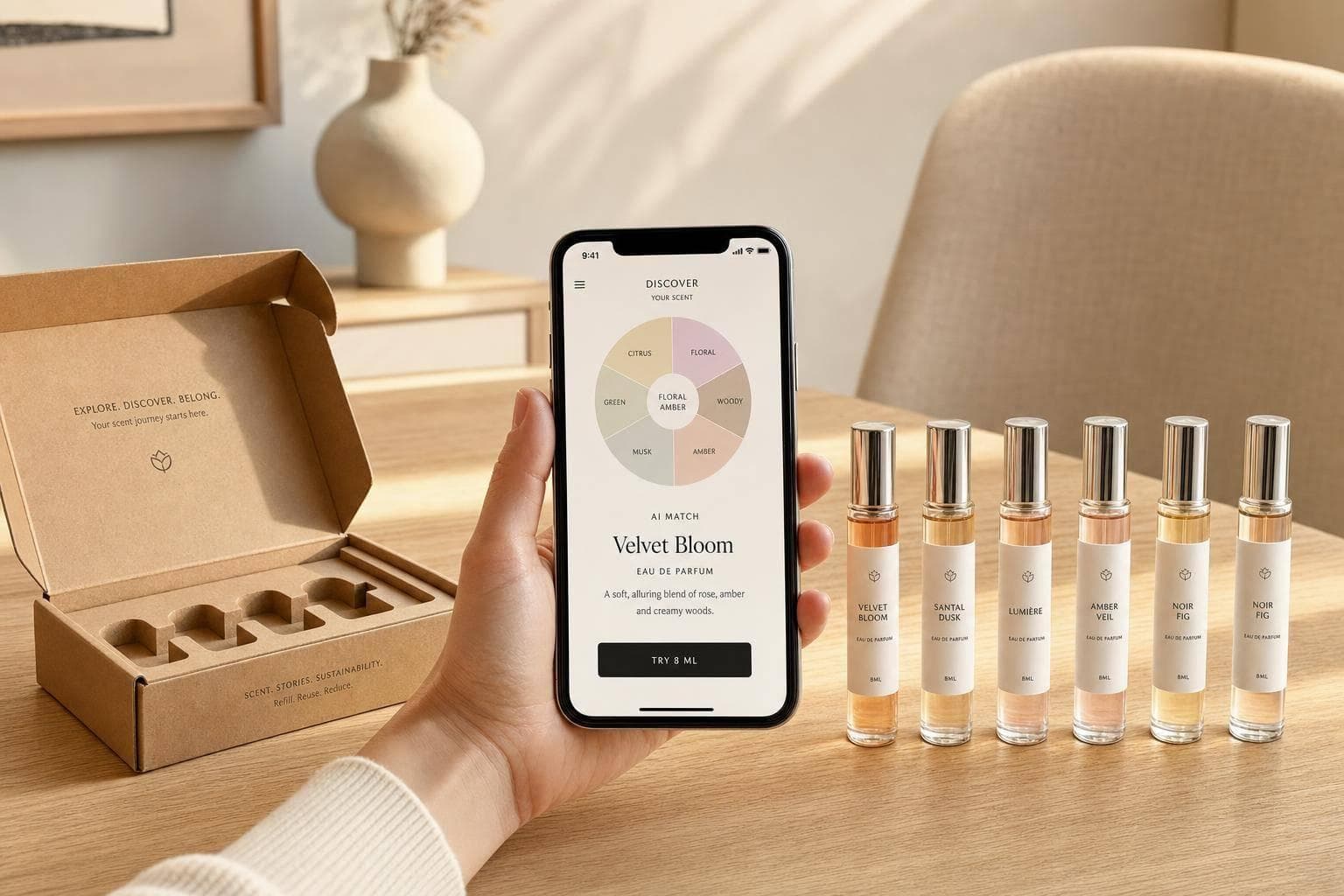
Nákup parfémů se přesouvá na internet, protože celá balení jsou drahá, testování v kamenných prodejnách je nedostatečné a mnoho lidí své volby lituje. V Evropě mají tržby z prodeje vůní dosáhnout v roce 2025 hranice 19 miliard €, přesto zákazníci během tří let promarní přibližně 340 € za nevhodně vybrané parfémy. Setkávám se stále se stejným scénářem: rychlý test na papírku, flakon, který v prodejně vypadal lákavě, a po několika týdnech zůstane ležet netknutý na poličce.
Zde je stručné shrnutí:
- Celé flakony jsou nákladné – pohybují se v rozmezí 120–350+ €
- Testování v prodejně je příliš krátké na to, aby bylo možné posoudit rozvonění parfému, výdrž a chemii s pokožkou
- Online rešerše usnadňuje výběr díky recenzím, filtrům podle vonných složek, kvízům a doporučením umělé inteligence
- Malé dekanty řeší úskalí zkoušení tím, že vám dávají dny až týdny na nošení vůně
- Scento je prodejce parfémových dekantů a vzorků a každý produkt si můžete koupit jednorázově, bez jakéhokoli předplatného. Scento+ je volitelné členství Scento: měsíční poplatek se vám v plné výši vrací jako kredit do obchodu, který utratíte za jakýkoli parfém, členové mají 10 % slevu, vzorek zdarma ke každé objednávce, parfém zdarma každých šest měsíců a dárek k narozeninám a členství můžete kdykoli pozastavit nebo zrušit.
- Pro zákazníky v Německu a Evropě jsou klíčové přehledné ceny v €, doručení v rámci EU a flexibilní podmínky
Změna je prostá: nákup parfému dnes začíná pečlivou rešerší a vrcholí testováním při celodenním nošení, nikoli naopak. Právě proto digitální platformy od základu proměňují způsob, jakým vůně vybíráme.
Rychlé srovnání
| Způsob nákupu | Počáteční investice | Doba testování | Způsob testování | Hlavní riziko |
|---|---|---|---|---|
| Nákup flakonu v prodejně | 120–350+ € | Několik sekund | Papírek nebo jedno stříknutí | Špatně zvolený flakon, nevyužitá investice |
| Přístup s decantem na prvním místě | €12,90–€30,00 | 30–60 days | Nošení na kůži v každodenním životě | Menší ztráta, pokud nesedne |
Závěr pro vás je jednoznačný: nejprve prozkoumat, vyzkoušet na vlastní kůži a teprve poté se rozhodnout pro plný flakon. Tato prostá změna přístupu eliminuje zbytečné výdaje a zbavuje výběr parfému nejistoty.
Nevýhody tradičního nákupu parfémů
Vysoké počáteční výdaje a nevyužité flakony
V Německu se cena značkové či niche vůně běžně pohybuje mezi 120–350+ €. To je značná částka za parfém, který jste neměli možnost náležitě otestovat.
Riziko navíc nekončí u pokladny. Zákazníkům doma v průměru postupně přibudou 4,3 nevyužité flakony. Peníze se tak neutrácí jednorázově, ale zůstávají stát na toaletním stolku v podobě kompozic, k nimž se již nevrátíte.
Papírový proužek není plnohodnotný test
Při zkoušení v kamenné parfumerii dostanete papírový proužek a několik málo vteřin. To ke správnému posouzení nestačí.
Vůně může na savém papírku působit okouzlujícím dojmem, avšak po nanesení na pokožku a po celém dni nošení se může projevit zcela odlišně. Svrchní tóny vás v butiku možná zaujmou, ale skutečnou podstatu odhalí až fáze rozvonění a základ parfému.
Záleží také na okolním prostředí. Co lichotí smyslům pod zářivkami obchodu, nemusí fungovat při ranním dojíždění, v kanceláři nebo během teplého odpoledne. Chemie pokožky, počasí, pohyb i čas – to vše mění způsob, jakým vůně vyznívá. Krátká zkouška v prodejně toto zkrátka nedokáže postihnout.
| Parametr | Tradiční testování v prodejně | Testování pomocí dekantů |
|---|---|---|
| Délka testování | Několik sekund | Několik týdnů |
| Testovaný povrch | Papírový proužek | Aplikace na pokožku celého těla |
| Prostředí | Prodejna | Reálné životní situace |
| Riziko | Vysoké (počáteční výdaj 120–350+ €) | Nízké (15–30 €) |
| Získané informace | Pouze první dojem | Výdrž, rozvonění, projekce (sillage) |
A právě v této chvíli přicházejí ke slovu digitální nástroje pro objevování vůní.
Příliš široký výběr, nedostatek vodítek
Většina zákazníků nevstupuje do světa parfémů s přesnou představou. Tváří v tvář nepřehlednému množství možností a bez dostatečného odborného vedení se často uchylují k notoricky známým jménům.
To však není skutečné objevování. Jde pouze o sázku na jistotu v elegantnějším balení.
Digitální platformy tuto zkušenost mění: činí zkoušení cenově dostupnějším, snáze zvládnutelným a osobitějším.
Jak digitální platformy proměňují objevování vůní
Recenze, filtry, kvízy a doporučení umělé inteligence
Digitální platformy vnášejí do výběru vůně jistotu. Využívají recenze, detailní filtry, kvízy a doporučení AI, s jejichž pomocí zúžíte výběr podle olfaktorické rodiny, tónů, intenzity i příležitosti.
Některé nástroje jdou ještě dál a berou v úvahu, jak se parfém chová na kůži v různých ročních obdobích. To představuje neocenitelnou pomoc – zejména když se snažíte zorientovat v rozsáhlé nabídce, aniž byste museli vše očichat osobně.
Přesto plní tyto nástroje jediný úkol: zúžit výběr. Přímé testování na pokožce plně nenahradí.
Menší dekanty přinášejí praktické testování
V tomto ohledu představují menší dekanty ideální řešení. Dekant o objemu 8 ml vám poskytne dostatek parfému k důkladnému otestování během mnoha dnů, nikoli jen pro unáhlený první dojem.
Díky tomu můžete vůni zhodnotit v celé její komplexnosti:
- Postupné rozvonění (dry-down)
- Výdrž
- Vhodnost pro danou sezónu
Dříve než investujete do plného flakonu, získáte čas zjistit, zda vám kompozice vyhovuje i po několika dnech či týdnech. Tím přímo předejdete zklamání z nákupu lahviček, které by jinak zůstaly ležet ladem.
Jakmile se testování stane přirozeným zvykem, předplatné se nabízí jako logický krok.
Předplatné proměňuje nákup v plynulé objevování
Místo nákupu celého flakonu jednou za pár měsíců s nejistým výsledkem vám zkoušení menších velikostí umožní střídat vůně podle ročních období či příležitostí. Výsledkem je stálé objevování a méně zbytečných nákupů.
A právě zde nabývá model předplatného svůj pravý význam.
Váš osobní odborník na parfémy už čeká
Vyplňte náš rychlý vonný kvíz a objevte autentické designové a nišové parfémy vybrané podle vašeho vkusu – prozkoumejte je jako 2, 5, 8 a 30 ml dekanty a vzorky, abyste si každý mohli vyzkoušet, než se rozhodnete pro celou lahvičku.
Najděte svou vůniProč platformy s dekanty na bázi předplatného řeší podstatu problému
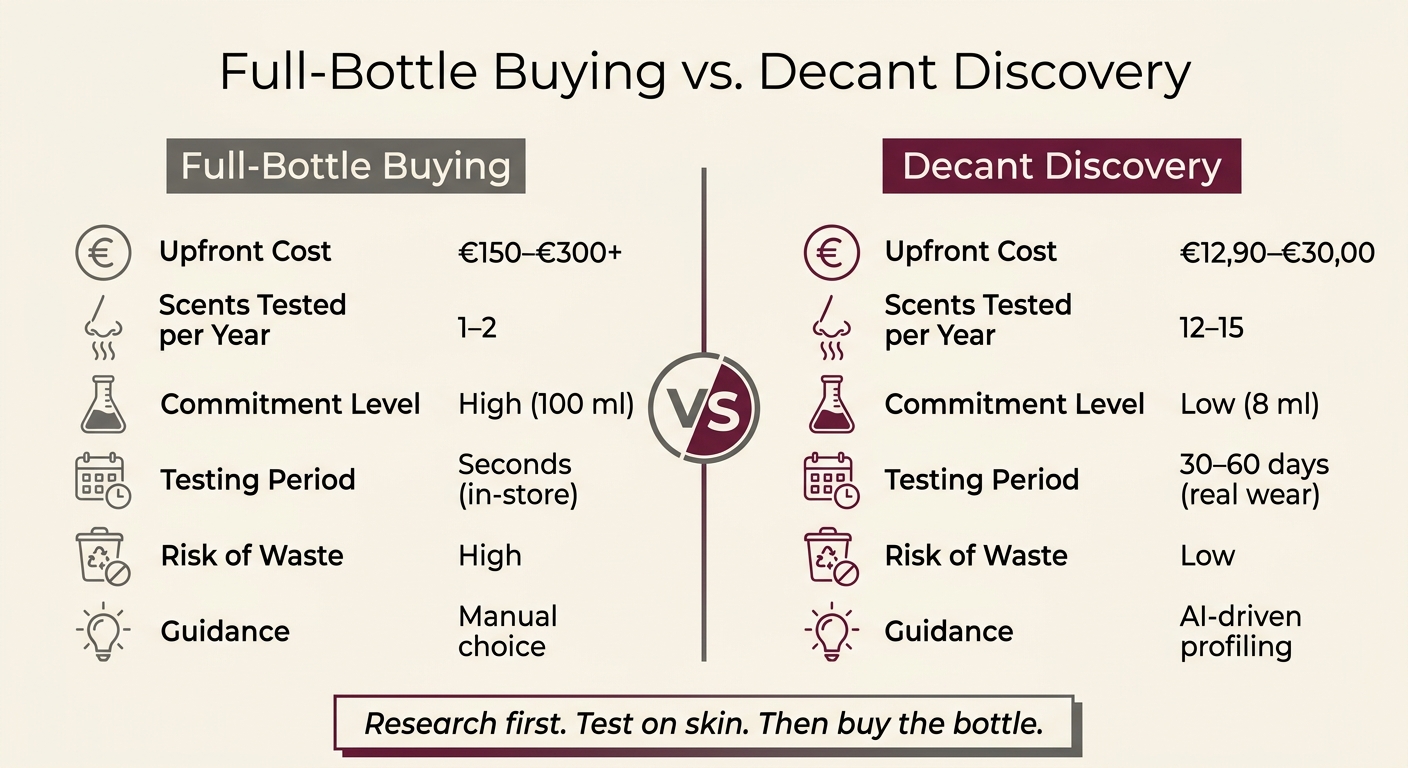
Nákup plného flakonu vs. objevování pomocí dekantů: srovnání nákupu parfémů
Platformy s předplatným dekantů odstraňují největší úskalí při nákupu vůní: placení plné ceny flakonu dříve, než zjistíte, jak se vůně chová na vaší pokožce. Právě tuto mezeru menší dekanty v rámci předplatného dokonale vyplňují.
Jak Scento snižuje riziko při výběru parfémů
Scento přináší designové i niche parfémy v pečlivě připravených dekantech o objemu 2 ml, 5 ml a 8 ml a u většiny parfémů i dekant o objemu 30 ml. Pro evropské zákazníky to znamená přímočarý způsob, jak vůni důkladně otestovat, než se rozhodnou pro plnou velikost.
Místo počátečního výdaje 150,00 až 300,00+ € za 100ml flakon můžete začít menším dekantem. Tím se celý nákupní proces proměňuje. Nečiníte unáhlené rozhodnutí po několika vteřinách nad papírkem nebo po zběžném stříknutí v obchodě. Získáte dostatek času nosit vůni v běžném životě a ověřit si její rozvonění, výdrž i vhodnost pro každodenní nošení.
Přehledné ceny předplatného pro neustálé objevování
Cena je stanovena za konkrétní parfém, nikoli jako jednotný paušální poplatek.
Každý 8ml flakonek nabízí přibližně 120 stříknutí, což obvykle vystačí na 30 až 60 dní nošení. To je ideální doba na zjištění, zda vás vůně těší i po opadnutí prvotního nadšení. První dojem bývá klamavý; strávit s vůní měsíc či dva vám poskytne mnohem přesnější obraz o tom, jak se projevuje.
Nákup celého flakonu vs. objevování pomocí dekantů: přímé srovnání
| Parametr | Nákup celého flakonu | Objevování s dekanty Scento |
|---|---|---|
| Počáteční investice | 150,00 – 300,00+ € | 12,90 – 30,00 € |
| Vyzkoušené vůně za rok | 1–2 | 12–15 |
| Míra závazku | Vysoká (100 ml) | Nízká (8 ml) |
| Doba zkoušení | Sekundy (v obchodě) | 30–60 dní (skutečné nošení) |
| Riziko zbytečných výdajů | Vysoké | Nízké |
| Doporučení při výběru | Vlastní volba bez vodítek | Profilování řízené umělou inteligencí |
Pro zákazníky v Německu a po celé Evropě tento bezpečnější model výrazně usnadňuje pravidelné objevování nových vůní. Navíc přesně odpovídá jejich nákupním zvyklostem: nejprve porovnat, důkladně vyzkoušet a teprve poté koupit.
Co to znamená pro zákazníky v Německu a v Evropě
Ideální volba pro evropské zákazníky, kteří sázejí na rešerši
Tento přístup je klíčový zejména v Německu a napříč Evropou, kde zákazníci vyžadují transparentní ceny a bezproblémové doručení. Digitální parfumérské platformy dokonale ladí s tím, jak je většina Evropanů zvyklá nakupovat: porovnat, ověřit detaily a uvážlivě rozhodnout. Ceny v eurech, zaručený originální původ a spolehlivá doprava v rámci EU odstraňují obvyklé překážky. Možnost předplatné kdykoli zrušit navíc přináší maximální svobodu.
Když opadne finanční riziko, vyzkoušet více než jednu vůni začíná dávat dokonalý smysl.
Od jediné signaturní vůně k osobnímu vonnému šatníku
Zásadnější posun nastává v samotných spotřebitelských návycích. Když zkoušení stojí 15–30 € namísto 100–300+ €, je mnohem snazší vyzkoušet několik vůní současně. Díky tomu je budování vonného šatníku konečně dostupné: můžete si vytvořit vyladěnou kolekci pro různé nálady, roční období i společenské příležitosti. A právě testování ve formě dekantů tento koncept činí praktickým.
Místo abyste vložili veškerý rozpočet do jediného flakonu a doufali v dobrý výsledek, můžete vůni několik dní nosit, vnímat ji v kontextu běžného dne a teprve poté zhodnotit, zda si zaslouží trvalé místo ve vaší sbírce.
Hlavní poznatek: digitální platformy zbavují nákup vůní rizika
Největší předností je jednodušší a informovanější rozhodování. Tradiční nákup parfémů vždy narážel na propast mezi rychlým zkoušením a finálním nákupem. Plné flakony představují nemalou investici a snadno se stane, že zůstanou poloprázdné na poličce. Digitální platformy tento rozdíl stírají. Menší dekanty, jasné ceny a několik týdnů testování v reálném životě poskytnou zákazníkům všechny potřebné informace předtím, než investují vyšší částky.
Pro německé a evropské zákazníky to znamená podstatně nižší náklady, pokud zvolená vůně nesplní očekávání.
Často kladené otázky
Jak přesná jsou doporučení vůní pomocí umělé inteligence?
V odstraňování nejistoty odvádějí vynikající práci. Podle údajů uváděných Scento zaznamenali zákazníci, kteří nejprve vyzkoušeli vůně doporučené AI, 94% míru spokojenosti, 86% pokles zklamání z nákupu ve srovnání s nákupy naslepo a 3,2× vyšší pravděpodobnost opakovaného nákupu.
Výsledky se navíc postupem času zpřesňují. Jakmile AI analyzuje vaše preference, dřívější volby a zpětnou vazbu, dokáže doporučení doladit s ohledem na chemii pokožky, roční období i konkrétní náladu.
Stačí 8 ml k důkladnému otestování parfému?
Ano. Dekant o objemu 8 ml poskytuje zhruba 80 až 160 stříknutí, což obvykle vystačí přibližně na 30 dní každodenního používání.
To je více než dost času na to, abyste zjistili, jak vůně splyne s vaší pokožkou, jak se chová v teplejším či chladnějším počasí a zda přirozeně zapadne do vašeho životního stylu, než se odhodláte k nákupu plného flakonu.
Kdy je vhodné pořídit si celý flakon?
K nákupu plného balení přistupte teprve ve chvíli, kdy jste vůni unosili natolik, abyste měli jistotu, že perfektně sedí vaší pokožce, vyhovuje vašemu každodennímu rytmu a zaslouží si pevné místo ve vašem vonném šatníku.
Zvolit na úvod dekant je rozumné rozhodnutí. Získáte prostor sledovat, jak se kompozice vyvíjí v průběhu několika hodin, nikoli jen během prvních minut na papírku či na zápěstí. To je zásadní, neboť tělesná chemie dokáže vyznění parfému proměnit víc, než se obecně předpokládá.
Navíc se tak vyvarujete nákladného omylu. Zákazníci, kteří před nákupem využijí vzorky, vykazují 3,2krát vyšší spokojenost s pořízeným plným flakonem.

