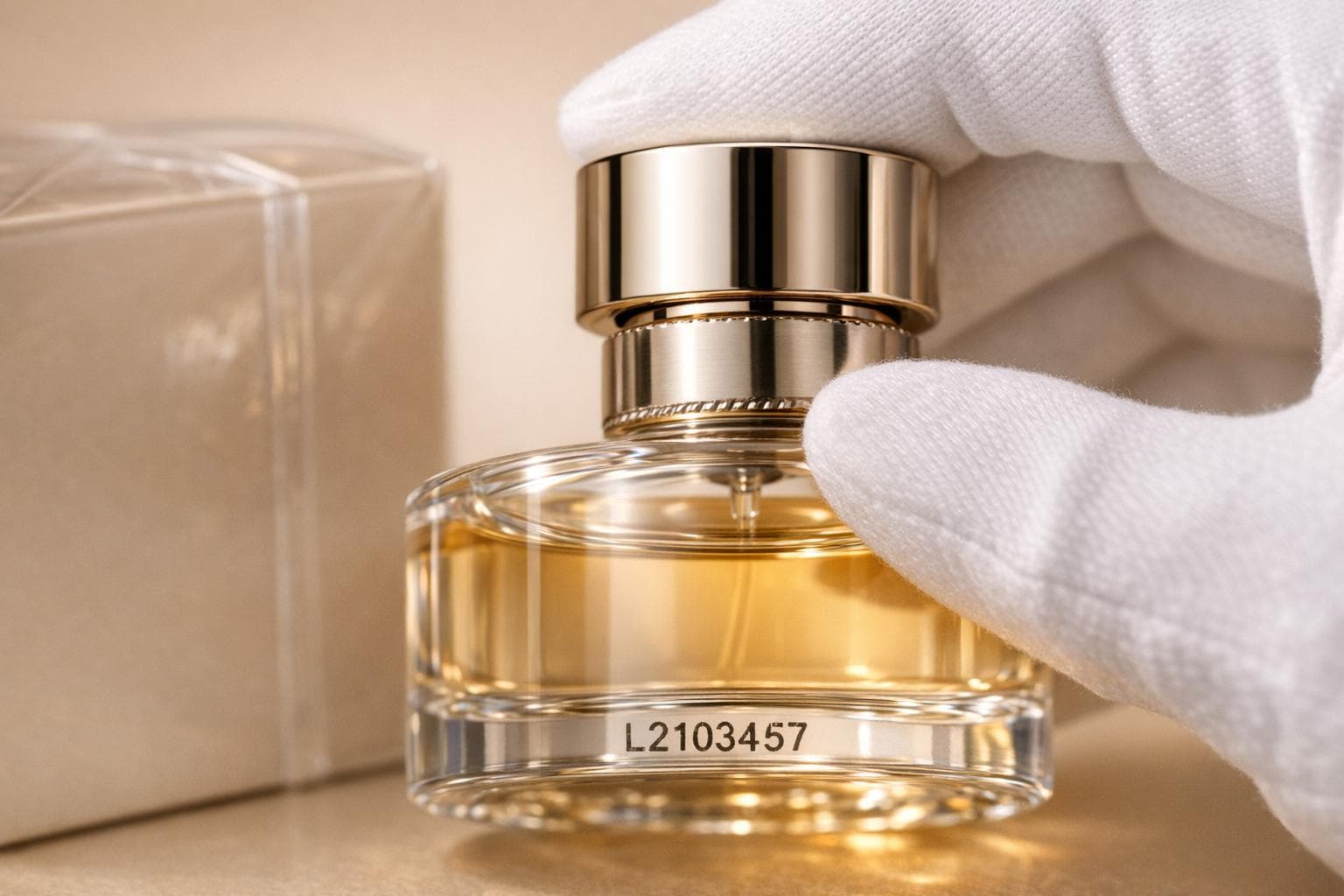
Při nákupu luxusních vůní je zásadní mít jistotu, že produkt nebyl porušen a je pravý. Padělané parfémy často obsahují škodlivé látky, jako je nemrznoucí směs nebo bakterie, a mohou způsobit kožní potíže. Pečetě – jak vnější celofán, tak uzávěr u hrdla flakonu – představují první linii obrany proti padělkům. Zde je to nejdůležitější, co potřebujete vědět:
- Celofánový obal: Měl by být pevně napnutý, bez vrásek, s čistými okraji a bez viditelných stop lepidla. Volný nebo nerovnoměrný obal je varovným signálem.
- Krimpování pečeti: Hledejte rovnoměrné a čisté krimpování na horní i spodní části balení. Přebytečné lepidlo nebo roztřepené záhyby jsou výrazným varováním.
- Usazení a hmotnost víčka: Pravá víčka působí pevně, sedí těsně a často mají magnetické zavírání. Volná nebo špatně zarovnaná víčka naznačují nízkou úroveň zpracování.
- Hrdlo flakonu a lepidlo: Klíčové je hladké krimpování a jen stěží viditelné lepidlo. Mezery nebo lepkavé zbytky naznačují možné porušení.
- Kódy šarže: Kódy na krabičce a flakonu se musí shodovat. Chybějící nebo neshodné kódy jsou jasným znakem padělku.
Pro další ověření zkontrolujte funkčnost rozprašovače (měl by uvolňovat rovnoměrnou mlhu) a potvrďte kódy šarže pomocí důvěryhodných online nástrojů. Vždy provádějte pečlivou kontrolu, abyste ochránili své zdraví i svou investici.
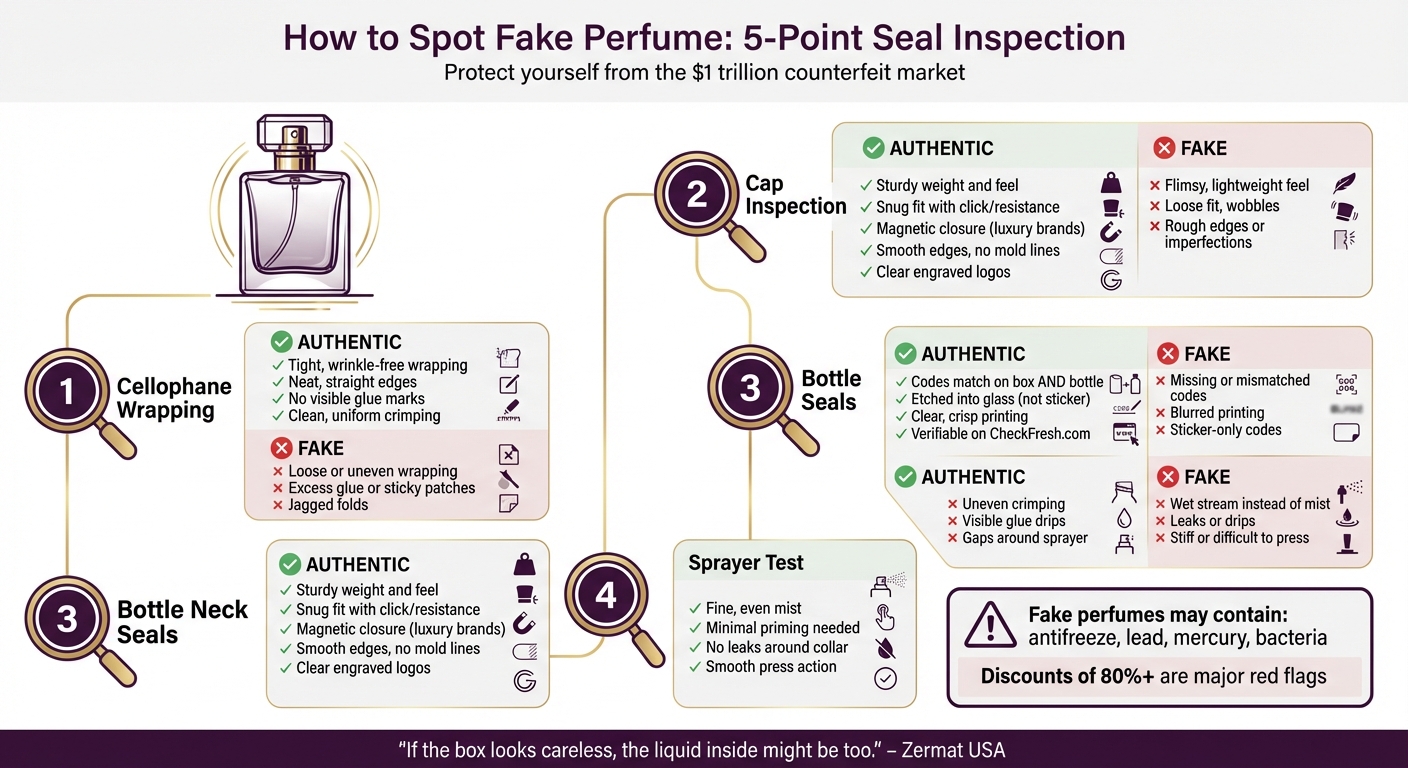
Kontrolní seznam pro ověření pravosti parfému v 5 krocích
Váš osobní odborník na parfémy už čeká
Vyplňte náš rychlý vonný kvíz a objevte autentické designové a nišové parfémy vybrané podle vašeho vkusu – prozkoumejte je jako 2, 5, 8 a 30 ml dekanty a vzorky, abyste si každý mohli vyzkoušet, než se rozhodnete pro celou lahvičku.
Najděte svou vůniKontrola celofánu a vnější pečeti
Vnější pečeť plní dvojí účel: chrání produkt a odráží oddanost značky kvalitě. Preciznost v této oblasti je zásadním ukazatelem pravosti.
Kvalita celofánového obalu
Autentické parfémy mají pevně přiléhající celofánový obal, který těsně obepíná krabičku bez vrásek, trhlin nebo volných míst. Každý okraj i roh by měl být úhledně zakrytý a neponechávat prostor pro nedokonalosti. Když přejedete prsty po povrchu, měl by působit hladce a napnutě.
"Pravé parfémy jsou obvykle baleny pečlivě a bezpečně." — Profumo Labo
Věnujte zvýšenou pozornost švům, kde se celofán překrývá. Měly by vypadat čistě a rovně, bez nerovnoměrného shrnutí či nepravidelností. Volné balení nebo stažené okraje jsou často varovnými znaky padělaného obalu. Kromě toho zkontrolujte konzistenci krimpování pečeti, protože přidává další vrstvu jistoty ohledně pravosti produktu.
Kvalita krimpování pečeti a lepidla
Zaměřte se na horní a spodní část krabičky, kde je celofán zataven. Autentické balení vykazuje rovnoměrné krimpování s čistými, rovnými okraji. Neměly by se zde objevovat roztřepené záhyby ani nepravidelnosti naznačující nekvalitní zpracování.
Lepidlo použité u pravých produktů je nenápadné a minimální, bez viditelných stop. Pokud si všimnete přebytečného lepidla, lepkavých míst nebo šmouh, může to naznačovat padělanou výrobu. Pečeť by měla dokonale lícovat s okraji krabičky a jakékoli vychýlení nebo nedbalá aplikace je varovným signálem.
Rozmazaná loga, nekonzistentní kvalita tisku nebo patrné zbytky lepidla dále naznačují, že produkt nemusí být pravý. Pokud jsou tyto nedostatky zřejmé, položka je pravděpodobně padělek. Pro potvrzení pravosti pokračujte kontrolou usazení a konstrukce víčka.
Usazení a konstrukce víčka
Jakmile zkontrolujete celofán a vnější pečeť, víčko se stává důležitým detailem pro potvrzení pravosti parfému. Dobře usazené víčko nejen chrání vůni před působením vzduchu, který může snižovat její kvalitu, ale také odráží precizní řemeslné zpracování značky. Volná nebo nekvalitně vyrobená víčka jsou varovným znakem padělků.
Hmotnost a usazení víčka
Začněte posouzením hmotnosti víčka. Pravá víčka, zejména ta vyrobená z kovu nebo skla, mají citelnou váhu a vyváženost. I plastová víčka by měla působit pevně a kvalitně, nikoli křehce či lacině.
Pevně nasaďte víčko na flakon. Správné usazení často vydá cvaknutí nebo poskytne znatelný odpor, což signalizuje bezpečné zavření. Mnoho luxusních značek používá magnetické uzávěry, které se hladce zarovnají a zacvaknou na místo. Pokud je daná vůně tímto prvkem známá, vyzkoušejte, zda se víčko při přiblížení k hrdlu flakonu samo vycentruje a přichytí.
Zkontrolujte, jak víčko na flakonu sedí. Mělo by přiléhat těsně, bez viklání a bez mezer. Sejmutí víčka by mělo vyžadovat pevné zatažení, nikoli jen snadné sklouznutí. Jakákoli volnost, mezery nebo příliš snadné sejmutí mohou naznačovat špatnou výrobu nebo padělaný produkt. Přesné usazení víčka je klíčové pro ochranu vůně před únikem, prachem a slunečním světlem, které mohou způsobit rychlé vyprchání parfému.
Jakmile potvrdíte správné usazení, prohlédněte si blíže okraje a povrchovou úpravu víčka.
Okraje a povrchová úprava víčka
Za dobrého osvětlení zkontrolujte okraje víčka a celkové provedení. Autentická víčka mají hladké, čisté okraje bez viditelných stop po formě, drsných míst nebo nedokonalostí. Přejeďte prstem po okrajích, abyste se ujistili, že zde nejsou žádné nepravidelnosti.
Padělaná víčka se často prozradí méně kvalitními materiály a nedbale provedenými logy. Hledejte ryté nebo ražené značky výrobce, které jsou běžným prvkem pravých víček luxusních parfémů. Tyto značky nejen ověřují pravost, ale také odrážejí smysl pro detail. Povrchová úprava víčka – ať už jde o leštěný kov, matný plast nebo strukturované sklo – by měla být konzistentní a bezchybná, bez skvrnitých míst či nerovnoměrných nátěrů. Cokoli méně dokonalého může signalizovat padělek.
Pečetě a krimpování hrdla flakonu
Jakmile zkontrolujete víčko, zaměřte se na hrdlo flakonu. Tato oblast obsahuje klíčové detaily, které mohou potvrdit pravost parfému nebo odhalit známky porušení. Pravé parfémy se vyznačují precizním krimpováním a čistou aplikací lepidla kolem rozprašovače. Padělané flakony naopak často vykazují nepravidelné utěsnění nebo nedbalé zpracování.
Aplikace lepidla kolem hrdla
Pečlivě si prohlédněte místo, kde se rozprašovač setkává s hrdlem flakonu, ideálně pod jasným světlem. Autentické parfémy splňují přísné standardy kvality a zajišťují žádné viditelné přebytečné lepidlo ani nerovnoměrnou aplikaci. Jemně přejeďte prstem kolem základny rozprašovače a zkontrolujte případné lepkavé zbytky.
U pravých flakonů je lepidlo naneseno precizně a je buď neviditelné, nebo sotva patrné. Toto pečlivé zpracování zajišťuje odolnost flakonu proti manipulaci. Viditelné kapky lepidla, šmouhy nebo nerovnoměrné skvrny jsou varovnými signály a poukazují na padělanou výrobu. Navíc by spoj mezi rozprašovačem a hrdlem měl být plynulý, bez mezer, které by umožnily únik vzduchu či tekutiny.
Po kontrole lepidla pokračujte kontrolou krimpování kolem hrdla.
Preciznost krimpování
Krimpování kolem hrdla flakonu není jen funkční prvek – je to klíčový ukazatel kvality a bezpečnosti. U autentických flakonů by kovový nebo plastový límec zajišťující rozprašovač měl být hladký, rovnoměrně tvarovaný a pevně usazený, bez ostrých či roztřepených okrajů. Krimpování by mělo vytvářet jednotné a souvislé utěsnění.
Autentické parfémy také obsahují pečetě odolné proti manipulaci, které poskytují další vrstvu zabezpečení. Pokud jsou tyto pečetě neporušené, potvrzují bezpečnost produktu a jeho prémiovou kvalitu. Podle pokynů FDA musí být obaly odolné proti manipulaci "designově rozlišitelné", což ztěžuje jejich porušení bez zanechání důkazů. Pokud si všimnete mezer, nerovnoměrného krimpování nebo jakýchkoli známek, že pečeť byla narušena, je to silný náznak, že produkt nemusí být pravý.
Vnitřní pečetě a obalová lepidla
Při kontrole pravosti parfému si pozorně prohlédněte vnitřní balení. Pečetě a lepidla používaná autentickými značkami jsou klíčovým ukazatelem integrity produktu. Praví výrobci zajišťují přesné a bezchybné balení, zatímco padělané produkty často vykazují známky ruční práce, například nerovnoměrné linie lepidla nebo špatně zarovnané pečetě. Tento krok je nezbytný pro potvrzení celkové pravosti produktu.
Zarovnání pečetí mezi krabičkou a flakonem
Jakmile krabičku otevřete, zkontrolujte, jak je flakon umístěn ve svém prostoru. Pravé parfémy jsou pečlivě baleny se zarovnanými pečetěmi a pevnými kartonovými podpěrami, které flakon bezpečně drží. Věnujte pozornost sériovému číslu na spodní straně flakonu – obvykle je vyryto přímo do skla, nikoli pouze vytištěno na nálepce. Porovnejte toto číslo se sériovým číslem a čárovým kódem na vnější krabičce. Měly by se dokonale shodovat. Jak vysvětluje Profumo Labo: "Absence informací [sériového čísla a čárového kódu] nebo jejich nesoulad může naznačovat padělek." Zajištění konzistentní identifikace napříč všemi součástmi balení je stejně důležité jako ověření vnějších pečetí.
Konzistence lepidla
Věnujte chvíli prohlídce vnitřních chlopní krabičky a míst, kde je flakon upevněn. Pravé parfémy používají vysoce kvalitní lepidla nanášená s přesností, bez viditelných zbytků. Hledejte jakékoli známky nadměrného nebo nerovnoměrného lepidla, protože ty představují varovné signály. Aplikace lepidla by měla být úhledná a jednotná, aby bylo balení bezpečné i odolné. Pevné a čisté sestavení je charakteristickým znakem autentického produktu.
Shoda kódů šarže na zapečetěných součástech
Stejně jako u vnějšího balení hrají kódy šarže na vnitřních součástech zásadní roli při určování pravosti. Zkontrolujte kódy šarže nebo data výroby na všech zapečetěných částech, včetně lepicích štítků a samotného flakonu. Tyto kódy by se měly dokonale shodovat na každém prvku. Autentické značky tyto kódy často ryjí do skla, což ztěžuje jejich napodobení. Dávejte si pozor na chybějící kódy, špatně vytištěná čísla nebo neshodné informace mezi jednotlivými součástmi – to jsou silné indikátory, že produkt nemusí být pravý.
Funkčnost pečetí a ověření kódu šarže
Jakmile prohlédnete fyzické pečetě a balení, je čas ujistit se, že každá pečeť funguje tak, jak má, a chrání vůni.
Test atomizace pečeti rozprašovače
Otestujte rozprašovač několika stisky. Pravý parfém po minimálním napumpování uvolní jemnou, rovnoměrnou mlhu. Pokud rozprašovač vytváří mokrý proud, prosakuje kolem límce nebo působí ztuhle a obtížně se mačká, může to naznačovat problém s integritou těsnění.
"Pravý parfém se na vaší pokožce vyvíjí a vypráví příběh po několik hodin. Falešný parfém vykřikne jednu hlasitou větu a pak utichne, často po sobě zanechá nepříjemný chemický šepot." — Fragrance Lord
Potvrzení kódu šarže
Pečlivě ověřte, že se kódy šarže na vnější krabičce, spodní straně flakonu a případných sekundárních pečetích přesně shodují – každé písmeno i číslo musí dokonale sedět. Autentické parfémy mívají kódy vyryté nebo gravírované do skla, nikoli jednoduše vytištěné na nálepce.
"Kód šarže na krabičce se musí bezpodmínečně shodovat s kódem šarže na spodní straně samotného flakonu parfému. Pokud se neshodují, nebo pokud jeden z nich úplně chybí, máte padělek. Je to tak jednoduché." — Fragrance Lord
Pro větší jistotu zadejte kód šarže do online databáze, jako je CheckFresh.com, abyste potvrdili datum výroby a ověřili formát kódu. Nesrovnalosti, jako jsou chybějící kódy, rozmazaný tisk nebo neshodné údaje mezi součástmi, jsou silnými varovnými signály padělaných produktů.
Závěr
Kontrola pečetí parfému je nezbytná pro zajištění pravosti a ochranu před škodlivými padělky. Trh s padělaným zbožím má celosvětově hodnotu přibližně 1 bilion dolarů a falešné parfémy tvoří významnou část tohoto obchodu. Tyto napodobeniny často obsahují nebezpečné látky, jako je olovo, rtuť nebo dokonce nemrznoucí směs, takže pečlivá kontrola je prioritou jak pro bezpečnost, tak pro kvalitu.
Každá pečeť, kterou zkoumáte, hraje roli při potvrzení pravosti vůně. Znaky jako špatně zabalený celofán, volná víčka, nerovnoměrné krimpování nebo neshodné kódy šarže jsou jasným varováním před padělaným produktem.
"Pokud krabička působí nedbale, tekutina uvnitř může být také taková." — Zermat USA
Hluboké slevy – například 80 % – jsou dalším varovným signálem. Autentické parfémy se jen zřídka prodávají s tak výraznými slevami. Důvěřujte svému instinktu: pokud balení působí odbytě, tisk vypadá rozmazaně nebo kódy šarže nesedí, pravděpodobně jde o známky padělku. Čas věnovaný kontrole pečetí, testu rozprašovače a ověření kódů vás může ochránit před nákupem produktu, který nejen rychle vyprchá, ale může také podráždit vaši pokožku.
Často kladené otázky
Jaké jsou nejrychlejší kontroly pečetí pro rozpoznání falešného parfému?
Chcete-li rychle rozpoznat falešný parfém, začněte balením. Pravé parfémy obvykle mají silný, pevně napnutý celofán s přesnými, čistými záhyby. Tyto drobné detaily často signalizují autentické řemeslné zpracování.
Může mít autentické balení parfému drobné nedostatky v lepidle nebo obalu?
Je pravda, že pravé balení parfému může někdy vykazovat drobné nedostatky, například malé stopy lepidla nebo mírné nepravidelnosti v obalu. Přestože prémiové balení je navrženo s péčí a důrazem na detail, tyto malé nedokonalosti mohou vzniknout během výroby a automaticky neznamenají, že produkt není pravý.
Co mám dělat, pokud se kódy šarže neshodují?
Pokud se kódy šarže neshodují, stojí za to ověřit pravost parfému. Neshodné kódy mohou signalizovat padělek nebo produkt, se kterým bylo manipulováno. Obraťte se přímo na prodejce nebo výrobce a požádejte o vysvětlení či podporu.

