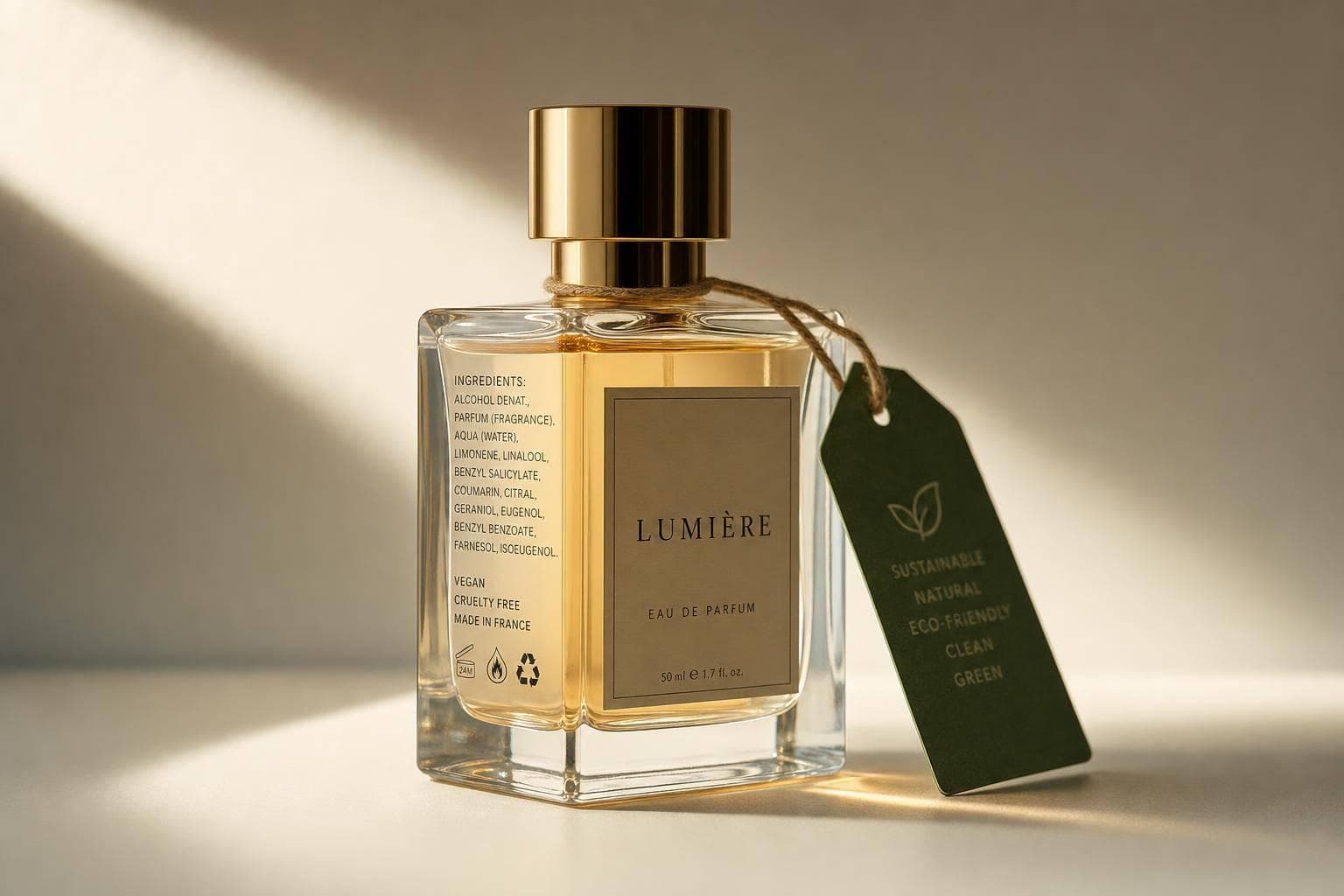
Většina ekologických tvrzení u parfémů se zhroutí ve chvíli, kdy požádáte o jediné: důkaz. Pokud se chystám utratit 50 €, 150 € nebo více než 300 € za flakon, nevěřím slovům jako „clean“, „přírodní“ nebo „eco-friendly“ jen tak bez ověření.
Zde je stručné shrnutí: kontroluji formulace, složení INCI, veškeré uvedené normy, tvrzení o obalech a podrobnosti o původu surovin. Na tom záleží, protože 53,3 % kontrolovaných ekologických tvrzení v EU bylo vyhodnoceno jako vágní, zavádějící nebo nepodložené.
Před nákupem si kladu tyto otázky:
- Co přesně toto tvrzení znamená?
- Je k dispozici kompletní seznam složek?
- Neskrývá pojem „parfum“ právě tu část, o které značka mluví nejvíce?
- Odkazuje se na uznávaný standard, jako je IFRA nebo COSMOS?
- Vztahuje se tvrzení o obalu na celý produkt, nebo jen na skleněný flakon?
- Nejsou budoucí cíle prezentovány jako současná fakta?
Mezi hlavní varovné signály patří:
- Vágní výrazy bez přesné definice
- Ikonky lístků bez uvedení certifikačního orgánu
- Tvrzení o „100% recyklovatelnosti“, která opomíjejí rozprašovač a uzávěr
- „Etický původ“ bez uvedení regionu, dodavatele či dohledatelné dokumentace
- Záměna budoucích vizí značky za současný stav produktu
K ekologickým tvrzením u parfémů přistupuji stejně jako ke smlouvě psané drobným písmem: pomalu, doslovně as kritickými otázkami v mysli. Tento jednoduchý návyk mi pomáhá vyhnout se placení luxusních cen za nepodložená tvrzení a chabé důkazy.
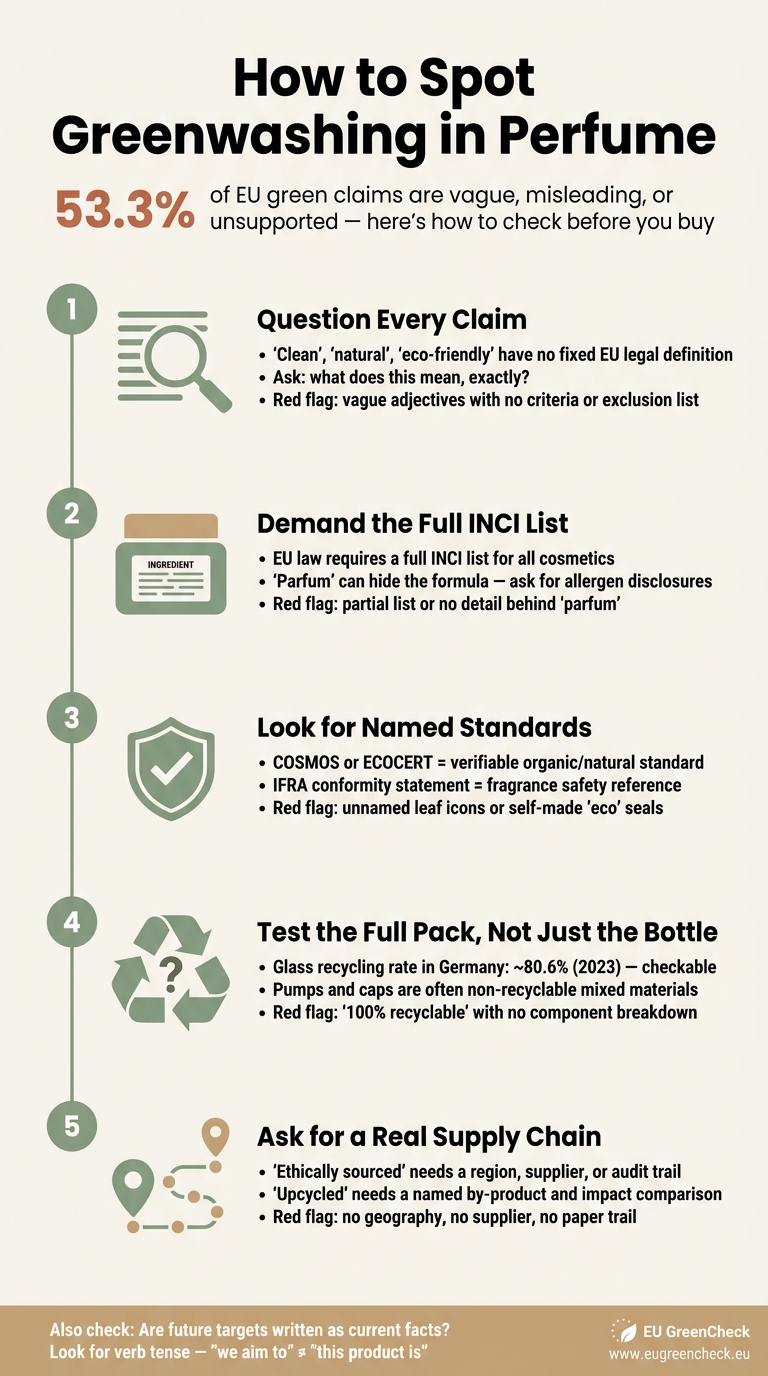
How to Spot Greenwashing in Perfume: A 5 — Step Verification Checklist
Začněte u slov: vágní tvrzení vyžadují nejvíce důkazů
Na stránce produktu s parfémem nejprve posuzujte tvrzení s odstupem. Slova jako clean, přírodní, eco-friendly, uvědomělý a netoxický se v marketingu vůní objevují neustále. Problém je prostý: podle kosmetických předpisů EU nemá žádný z těchto pojmů pevnou právní definici. Značka je tedy může používat, aniž by se opírala o jasný a ověřitelný standard.
To má větší váhu, než se zdá. Studie Evropské komise z roku 2020 zjistila, že 53,3 % zkoumaných environmentálních tvrzení v EU bylo vágních, zavádějících nebo nepodložených.
Jak zpochybňovat pojmy jako clean, přírodní a eco-friendly
Nejjednodušší způsob, jak tvrzení prověřit, je převést ho na přímou otázku. Pokud parfém uvádí, že je přírodní, zeptejte se, jaký podíl receptury má přírodní původ. Poté chtějte vědět, jak byla tato hodnota vypočítána. Pokud je značka transparentní, měla by uvést přesné procento a potvrdit, zda použila uznávanou normu, jako je ISO 16128.
Výrazy jako netoxický nebo bez chemie vyžadují ještě větší obezřetnost. Veškeré látky jsou chemické sloučeniny. Záleží na dávce, expozici a na tom, jak je produkt posouzen z hlediska bezpečnosti. I přírodní esenciální oleje mohou vyvolávat alergie. Namísto vágního marketingového jazyka proto hledejte bezpečnostní zprávy a deklaraci alergenů.
Zde je rozdíl mezi ověřitelným tvrzením a prázdným marketingem:
| Vágní tvrzení | Co si ověřit | Jak vypadá věrohodná odpověď |
|---|---|---|
| Čistá, uvědomělá vůně (clean & conscious) | Čistá podle jaké definice? Které složky jsou vyloučeny? | Přesný seznam vyloučených látek a úplné složení. |
| Přírodní vůně | Jaké procento receptury? Jakým způsobem bylo měřeno? | Konkrétní procento složek přírodního původu, vypočtené dle ISO 16128. |
| Ekologický obal | Která část obalu? Jaká data o materiálu to dokládají? | Uvedené procento recyklovaného materiálu a přesné informace o recyklovatelnosti. |
| Netoxické složení | Podle jakých toxikologických kritérií? | Doložené bezpečnostní posouzení dle norem EU a deklarace alergenů. |
Pokud působí informace na etiketě stále nejasně, přejděte rovnou ke složení INCI.
Když jsou budoucí cíle vydávány za současná fakta
Dalším varovným signálem je situace, kdy je budoucí cíl formulován tak, jako by šlo o stávající fakt. Fráze jako směřujeme ke klimatické neutralitě nebo do roku 2027 dosáhneme 100% recyklovaných obalů mohou vyvolat dojem, že flakon před vámi těmto parametrům odpovídá již dnes. V mnoha případech tomu tak není; jedná se pouze o cíl.
Orgány pro ochranu spotřebitelů v EU na to výslovně upozorňují: výhledová environmentální tvrzení musí být jasně oddělena od současných vlastností produktu, aby nedocházelo ke klamání zákazníků. Dobrou pomůckou je kontrola slovesného času a rozsahu. Tvrzení v přítomném čase vztažené k jednomu produktu – například že flakon obsahuje konkrétní podíl recyklovaného skla – popisuje současnost. Formulace jako usilujeme o, jsme na cestě k nebo do roku 2027 plánujeme popisují záměr, nikoli fakt. Pokud značka tyto roviny směšuje, žádejte datované důkazy o dosaženém pokroku.
Pokud ve vás text i nadále vzbuzuje pochybnosti, odpověď by měl poskytnout seznam ingrediencí.
Nahlédněte za marketingové texty: transparentnost ingrediencí a receptury
Ekologická komunikace často vyzdvihuje jednu hlavní rostlinnou složku. To sice zní lákavě, ale o celkovém složení to nevypovídá téměř nic.
Požadujte úplný seznam INCI, nejen vyzdvihované botanické výtažky
Seznam INCI (International Nomenclature of Cosmetic Ingredients) je ze zákona povinný seznam složek pro kosmetiku prodávanou v EU, včetně Německa. Používá standardizované názvy ingrediencí a uvádí kompletní složení.
To je zásadní, protože rostlinná složka na přední straně obalu je často přítomna jen v nepatrném množství. Většinu receptury obvykle tvoří rozpouštědla, fixátory a aromatické sloučeniny. Nenechte se proto ukolébat působivým botanickým příběhem. Zkontrolujte, zda je seznam ingrediencí úplný, zda jsou uvedeny alergeny a zda značka uvádí původ použitého alkoholu.
Zůstává-li složení na etiketě stále částečně skryté, další krok je přímočarý: dokáže značka svá tvrzení doložit?
Vnímejte výraz „parfum“ nebo „fragrance“ jako výzvu k doplňujícím otázkám
Přítomnost výrazu „parfum“ v seznamu INCI je naprosto běžná. Legislativa EU umožňuje výrobcům sjednotit komplexní vonné kompozice pod tímto jediným označením, aby bylo chráněno výrobní tajemství, a to při současném dodržení norem bezpečnosti a značení alergenů.
Problém nastává, když značka uvede „parfum“ a současně se opírá o tvrzení typu „clean“ nebo „100% přírodní“, aniž by poskytla jakékoli další podrobnosti. V takové chvíli je namístě požadovat více informací. Značka, která si zakládá na transparentnosti, by měla jít nad rámec pouhé zákonné povinnosti. Měla by například upřesnit obsažené alergeny a deklarovat, zda vonná kompozice odpovídá standardům IFRA a Nařízení EU o kosmetických přípravcích.
Pokud zůstává odpověď vágní, svědčí to o nedostatku transparentnosti.
To nás přivádí přímo ke standardům, certifikacím a ověřitelným důkazům.
Zkontrolujte důkazy: certifikace, standardy a dohledatelná fakta
Jakmile narazíte na nedostatek transparentnosti, žádejte důkazy. Zelený lístek na krabičce nebo vlastní „eko“ logo samy o sobě mnoho neznamenají. Je-li složení skryto pod položkou „parfum“, bývají nezávislé certifikace jediným způsobem, jak si informace ověřit. Další krok je tedy jasný: zjistěte, zda značka uvádí ověřitelný standard.
Uznávané normy mají větší váhu než ikonky lístků
Zásadní je konkrétně jmenovaný standard třetí strany s veřejně dostupnými kritérii, nezávislou institucí v pozadí a možností ověřit shodu.
Ve světě parfémů představují klíčovou bezpečnostní normu standardy IFRA (IFRA Standards). Ty stanovují limity pro použití regulovaných vonných látek. Spolehlivé prohlášení o shodě s IFRA by mělo uvádět dodavatele, vonnou směs, zamýšlenou kategorii produktu a konkrétní verzi či datum revize standardu IFRA. Tvrdí-li značka, že její receptura je „bezpečná“, ale nezmiňuje IFRA ani obdobný rámec, jde o varovný signál.
Pro tvrzení o „bio“ či „přírodním“ původu je podstatně silnějším signálem certifikace COSMOS než generický symbol listu. Definuje pravidla pro složky, limity pro podíl bio surovin a požadavky na dohledatelnost. Jakmile je norma uvedena, ověřte si její přesný rozsah: vztahuje se pouze na recepturu, nebo i na obaly a získávání surovin?
Jak by měly důkazy vypadat na stránce produktu
Důvěryhodné podklady jsou konkrétní. Měli byste přesně vidět, co značka deklaruje a čím to má podloženo.
| Typ tvrzení | Průkazný důkaz | Slabý signál |
|---|---|---|
| Bezpečnost vůně | Prohlášení o shodě s IFRA včetně verze, data a kategorie produktu | „Clean“ nebo „bezpečná“ |
| Bio / přírodní původ | Certifikace COSMOS nebo ECOCERT s kritérii pro recepturu | „Přírodní“ |
| Obsah recyklátu | „Flakon obsahuje 40 % PCR skla z celkové hmotnosti“ | „Ekologické, udržitelné sklo“ |
| Dohledatelnost | Dokumentace dodavatelů a podrobnosti o původu surovin | „Zodpovědně získávané suroviny“ |
Důvěryhodná stránka produktu by měla uvádět název certifikace, certifikační orgán a její rozsah – tedy zda pokrývá recepturu, obal, nebo pouze společnost jako celek. V ideálním případě obsahuje i číslo certifikátu nebo odkaz na záznam v registru certifikátora. Na rozsahu záleží více, než se zdá: firemní certifikát se nemusí automaticky vztahovat na každý jednotlivý parfém.
Pokud značka tuto dokumentaci nedokáže doložit, zaměřte se na její tvrzení ohledně obalů a dodavatelského řetězce.
Váš osobní odborník na parfémy už čeká
Vyplňte náš rychlý vonný kvíz a objevte autentické designové a nišové parfémy vybrané podle vašeho vkusu – prozkoumejte je jako 2, 5, 8 a 30 ml dekanty a vzorky, abyste si každý mohli vyzkoušet, než se rozhodnete pro celou lahvičku.
Najděte svou vůniPrověřte tvrzení jako celek: původ surovin, balení a životní cyklus
Po standardech posuďte tvrzení i z pohledu obalů a získávání surovin. Ekologické tvrzení má skutečnou váhu pouze tehdy, když platí pro produkt jako celek, nikoli jen pro vybranou část, která dobře zní.
Tvrzení o obalech vyžadují kontext
Slova jako „recyklovatelný“, „recyklovaný“, „plnitelný“ a „biologicky rozložitelný“ se v marketingu vůní používají velmi volně. Tato slova však mají smysl pouze tehdy, pokud značka upřesní, které části obalu se týkají a zda jsou slučitelné s možnostmi třídění odpadu.
V Německu dosahovala míra recyklace skleněných obalů v roce 2023 přibližně 80,6 %. Obyčejný skleněný flakon vhozený do Glascontaineru tedy představuje ověřitelné tvrzení. To působí mnohem věrohodněji než povšechná věta o „100% recyklovatelném balení“. Samotný flakon sice recyklovatelný být může, rozprašovač a víčko jsou však jiný případ. Atomizéry z kombinovaných materiálů často recyklovat nelze a obvykle končí v Restmüllu. Pokud tedy značka deklaruje „100% recyklovatelný obal“ a tento detail pomine, posouvá se tvrzení do zavádějící roviny.
Totéž platí pro pojmy „biologicky rozložitelný“ a „kompostovatelný“. Od roku 2026 budou samostatná tvrzení o „biologické rozložitelnosti“ zařazena na unijní černou listinu obecných ekologických tvrzení. Tvrzení, které lze brát vážně, by mělo specifikovat podmínky kompostování, časový rámec, míru rozkladu a použitou zkušební normu, jako je například EN 13432. Je zde i praktické úskalí: infrastruktura pro průmyslové kompostování je v Německu i v celé EU stále omezená. I kompostovatelná vnější krabička tak může na obalu vypadat lépe, než jaká je realita v běžném životě.
Jako rychlé vodítko poslouží tento přehled:
| Tvrzení | Co by mělo specifikovat | Běžné riziko greenwashingu |
|---|---|---|
| Recyklovatelný | Která část; podmínky; kompatibilita s lokálními systémy třídění | Paušální „100% recyklovatelný“ bez ohledu na rozprašovač a uzávěr |
| Obsah recyklátu | Přesné procento; konkrétní část; post-consumer nebo pre-consumer původ | „Vyrobeno z recyklovaných materiálů“ bez jakýchkoli podrobností |
| Znovu naplnitelný (refillable) | Jak systém doplňování funguje; kde jsou náhradní náplně dostupné | Odšroubovatelný uzávěr vydávaný za plnohodnotný systém znovunaplnění |
| Biologicky rozložitelný / kompostovatelný | Norma (např. EN 13432); prostředí; časový rámec | Obecné označení „biodegradabilní“ bez uvedených podmínek |
Pokud tvrzení o obalu obstojí, zaměřte se dále na dodavatelský řetězec ingrediencí.
Deklarace o původu surovin musí odkazovat na konkrétní detaily řetězce
Pojmy jako „odpovědně získávané“, „eticky sklízené“ nebo „upcyklované ingredience“ jsou v parfémovém marketingu všudypřítomné. Samy o sobě však mnoho nedokazují. Tvrzení získá na váze teprve tehdy, když jmenuje region, zásady pro dodavatele, auditní stopu nebo veřejně přístupnou strategii.
Formulace jako „růžová silice z Isparty v Turecku získávaná prostřednictvím dlouhodobých partnerství s družstvy drobných pěstitelů“ nabízí konkrétní fakta k ověření. „Eticky získávaná růže“ naproti tomu nenabízí nic. Totéž platí pro upcyklované suroviny. Značka by měla být schopna vysvětlit, jaký vedlejší produkt či odpadní proud využívá, odkud pochází a jakým způsobem tím snižuje dopad na životní prostředí ve srovnání s běžným způsobem získávání. Bez těchto detailů plní dané spojení pouze marketingovou roli, nikoli roli transparentního sdělení.
Závěr: Jednoduchý kontrolní seznam pro uvědomělý nákup parfémů
Greenwashing v parfumerii těží z nejednoznačného jazyka. Pokud narazíte na slova jako clean, přírodní, eco-friendly nebo conscious, přistupujte k nim čistě jako k marketingu, dokud značka přesně nedefinuje jejich význam a způsob měření. Už to je pádný důvod ke zdravému skepticismu.
Vyplatí se číst etikety parfémů stejně pečlivě jako u kterékoli jiné kosmetiky. Zpomalte, zaměřte se na detaily a namísto líbivých frází hledejte podložené důkazy.
Postupujte v tomto pořadí: formulace, složky, důkazy a rozsah tvrzení.
| Co ověřit | Co hledat | Varovný signál |
|---|---|---|
| Formulace | Jasné definice s konkrétními kritérii | Nepodložená slova jako „clean“, „přírodní“, „green“ |
| Složení | Úplný seznam INCI; uvedené alergeny; vysvětlení položky parfum | Neúplné složení; žádné podrobnosti k položce parfum |
| Certifikace | Jmenované, ověřitelné standardy (COSMOS, FSC, Ecocert) | Nejasné symboly lístků nebo vlastní smyšlená loga |
| Tvrzení o obalech | Konkrétní komponent, podmínky, lokální systém třídění | Paušální „100% recyklovatelný“ bez upřesnění |
| Původ surovin | Uvedený region, dodavatel, auditní dohledatelnost | „Etický původ“ bez doložených informací |
| Konzistence | Shodné údaje a tvrzení napříč všemi kanály | Rozporuplná čísla na obalu oproti webovým stránkám |
Pokud chcete omezit plýtvání a zároveň snížit riziko nevhodného nákupu, začněte malým vzorkem. Scento (scento.com) nabízí designové i nikové vůně v lahvičkách 2 ml, 5 ml a 8 ml a u většiny parfémů i jako dekant o objemu 30 ml, určené evropským zákazníkům, abyste si vůni mohli důkladně vyzkoušet, než investujete do celého flakonu.
Často kladené otázky
Jak mohu ověřit, zda je parfém skutečně přírodní?
Nespoléhejte se pouze na neurčité marketingové výrazy. Pro potvrzení statusu produktu nahlédněte do oficiálních databází uznávaných certifikačních orgánů, jako jsou COSMOS nebo Ecocert.
Hledejte certifikace, jako je pečeť NATRUE nebo odkazy na normu ISO 9235. Pokud produkt uvádí, že je bio, ověřte si, zda uvádí přesný podíl bio složek. Máte-li stále pochybnosti, požádejte značku o doložení dokumentace nebo certifikátů o shodě.
Znamená označení „parfum“, že značka skrývá složky?
Nemusí to tak být vždy, ale může.
Výraz parfum nebo fragrance často slouží jako zákonem povolený souhrnný termín. Umožňuje značkám shrnout řadu syntetických i přírodních složek pod jedno označení, protože receptury vůní jsou obvykle chráněny jako obchodní tajemství.
V EU musí výrobci uvádět vybrané alergeny. Přesto může značná část složení zůstat před etiketou skryta. Záleží-li vám na tomto detailu, vybírejte značky, které dobrovolně zveřejňují kompletní složení nebo uplatňují přísné standardy transparentnosti.
Jsou recyklovatelné flakony plně recyklovatelné?
Nejsou. Flakony na parfémy jsou jen zřídka plně recyklovatelné jako celek, protože se v nich obvykle kombinují sklo, kov a plast takovým způsobem, že je obtížné je oddělit.
V Německu je zpravidla nejvhodnější flakon před vyhozením rozebrat. Skleněnou lahvičku lze vytřídit do kontejneru na sklo, zatímco plastový rozprašovač a kovový kroužek obvykle patří do směsného odpadu (Restmüll). Pravidla třídění se mohou v jednotlivých regionech lišit, proto je vhodné ověřit si místní předpisy.

